


Kalshi's Billion-Dollar Gold Rush Needs a Bookkeeper
The exchange layer is crowded, regulated, and capital-hungry. The records layer above it is still up for grabs.
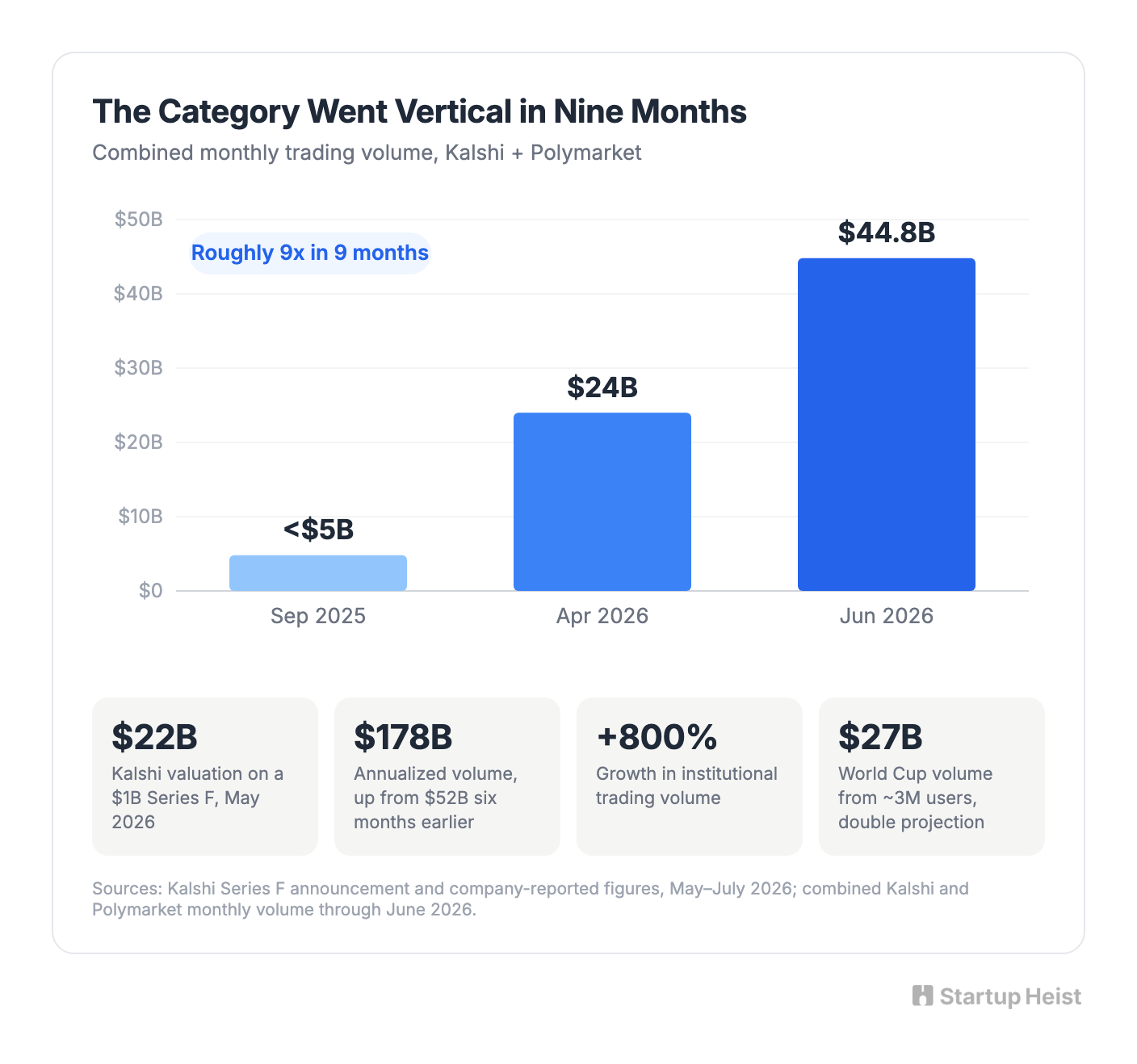
Prediction markets finished their internet-curiosity phase sometime in 2025. The numbers now read like a commodities boom. On May 7, 2026, Kalshi closed a $1 billion Series F at a $22 billion valuation, led by Coatue with Sequoia, Andreessen Horowitz, Paradigm, and Morgan Stanley in the round. Annualized trading volume more than tripled in six months, from $52 billion to $178 billion. Institutional volume grew 800%. The company says annualized revenue now clears $1.5 billion, and by June it was reportedly in talks to raise again at a $40 billion valuation.
Then the 2026 FIFA World Cup poured gasoline on it. Kalshi processed roughly $27 billion in trading volume from about 3 million users during the tournament, double the $13 billion and 1.5 million users it had projected. The category grew with it: combined monthly volume across Kalshi and Polymarket climbed from under $5 billion in September 2025 to about $24 billion by April 2026, then hit $44.8 billion in June. Sports drives 80% of Kalshi's volume. Sports, politics, and crypto together account for 91%.
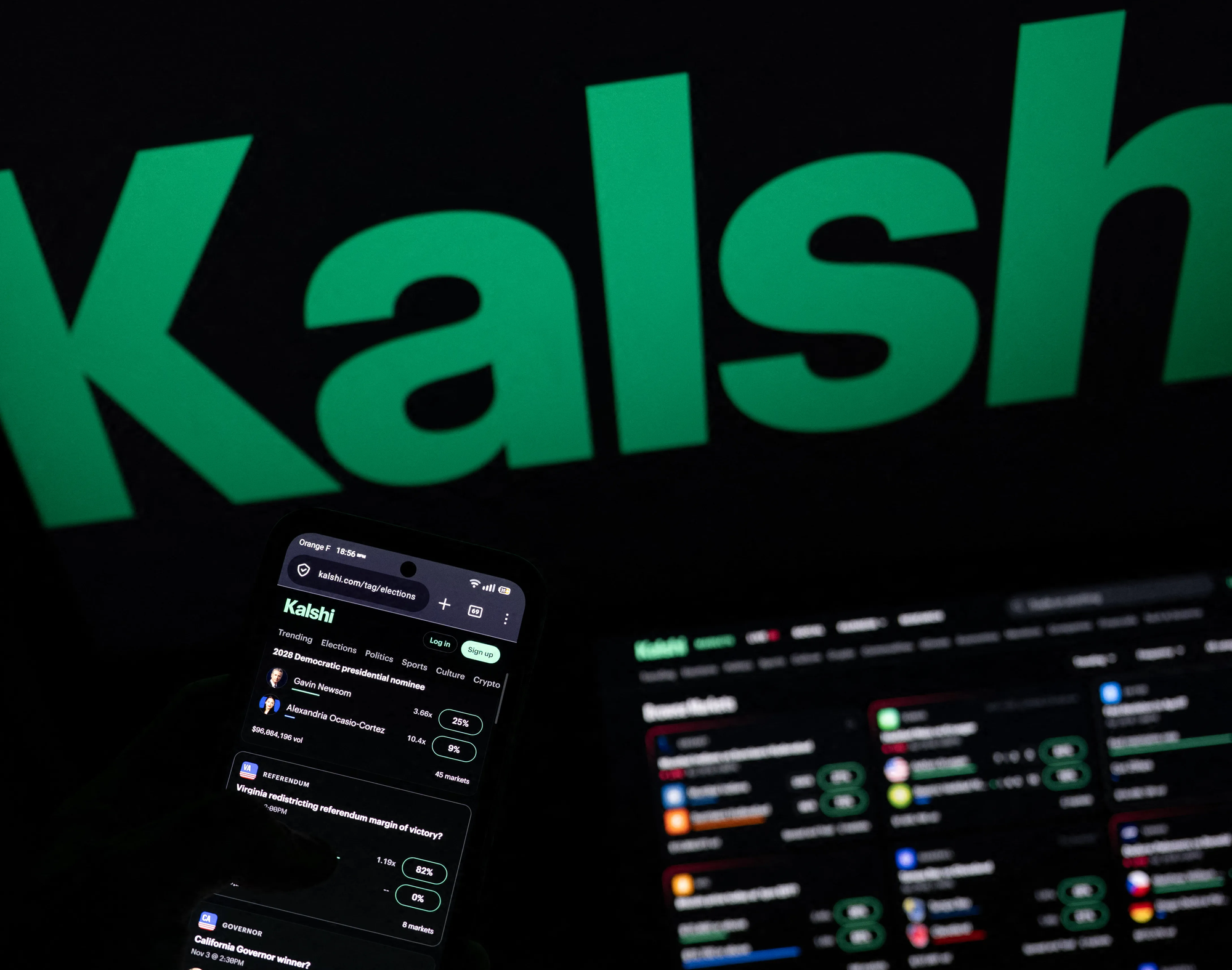
This is a gold rush, and Startup Heist readers know the rule for gold rushes: skip the mine. Building an exchange means regulatory approval, liquidity, market surveillance, and enormous capital. The play sits one layer up.
Build the tax, portfolio, and records system for people trading regulated event contracts.
The product connects to a trader's Kalshi account with a read-only key, reconstructs every fill and settlement, calculates realized and unrealized P&L, reconciles fees, and produces records a taxpayer or accountant can actually use. Traders will sign up for the dashboard on top. The ledger underneath is what they'll pay to keep.
Here's the opportunity:
The money: 1,000 traders at a $90 blended annual price is $90K ARR; 5,000 is $450K. The World Cup just minted millions of new traders with messy records.
Inside:
• Six-week MVP from ingestion to CPA package
• Four-tier annual pricing, $79 to $499
• Free reconciliation tools as the funnel
• Five moats that accumulate in the ledger
The Exchange Shows a Balance. The IRS Wants a Story.
Event contracts price between $0 and $1. A contract at $0.40 implies roughly 40% probability; winners settle at $1, losers at zero. Simple, until someone trades actively. A real trader buys 500 Yes contracts across several prices, sells some before resolution, adds back later, pays maker and taker fees, collects promotional credits, holds positions across December 31, and runs the same act on two platforms at once. At that point "I deposited $5,000 and now have $6,800" isn't an accounting record. The trader needs cost basis per contract, fee attribution, an open-position inventory, a stated accounting method, and a number that reconciles against the exchange's own statement.
Kalshi provides a portfolio screen and an annual P&L figure computed FIFO, inclusive of fees and rebates, updated monthly rather than continuously. Its own documentation states plainly that the figures are not tax advice and that members remain responsible for their returns.
That's the gap. Kalshi tells the trader what happened at the account level. Nobody is telling them how it happened, contract by contract, in a form that survives a skeptical accountant. The difference matters the day a trader has thousands of fills, disagrees with a platform total, changes CPAs, or opens an envelope from the IRS.
Tax Ambiguity Is Both the Pain and the Trap
Nobody disputes that event-contract profits are taxable. The fight is over what kind of income they are. Tax professionals currently argue for at least four treatments: ordinary income, capital gains, gambling income, and Section 1256, the 60/40 rule for regulated futures that Kalshi's status as a CFTC-designated contract market makes at least arguable. The IRS has issued no prediction-market-specific guidance.
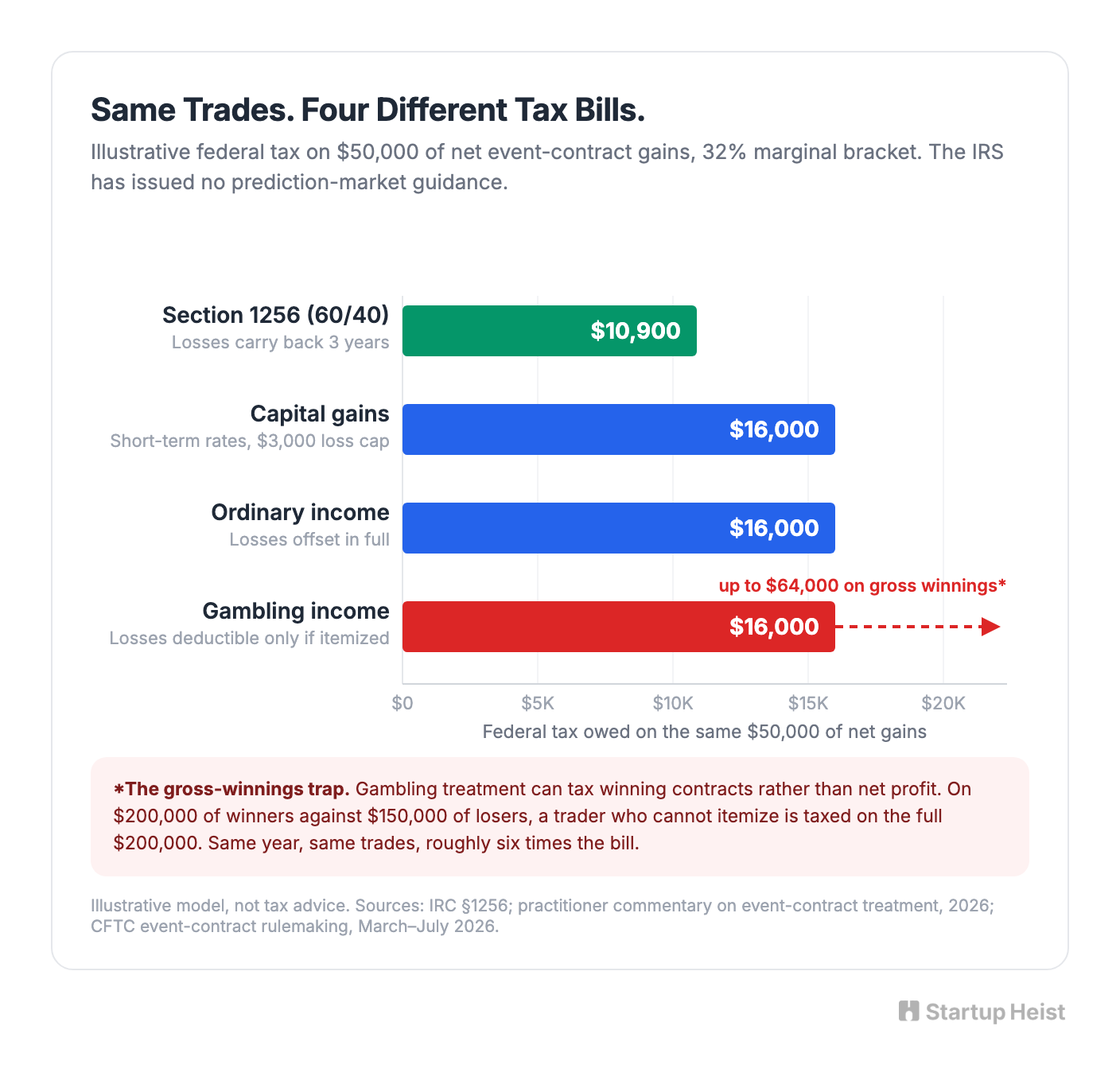
The same ambiguity that creates the demand also creates the liability. The weak version of this product is a calculator that announces "you owe exactly $4,812." The strong version hands over a reconciled ledger, shows the result under each commonly discussed treatment, states its assumptions, and routes the judgment call to a professional. When the rules are unsettled, the durable asset is a clean, inspectable ledger that can be recomputed as guidance changes. Think event-contract accounting infrastructure, then resist every temptation to play robo-tax-adviser.
The rules are moving. The CFTC opened a broad rulemaking on prediction markets in March 2026 and followed with a proposed framework for event contracts in June, with the comment period closing July 27. Every shift in reporting rules makes the trader's records problem worse before it makes it better.
Half a Dozen Teams Are Already Digging
Kill the "CoinTracker for Kalshi, empty field" fantasy early, because this problem has been noticed. PredictionTax imports trades from Kalshi, Polymarket, Robinhood, DraftKings, and FanDuel, compares four tax treatments free of charge, and sells IRS-ready forms with a CPA letter for a one-time $29. Predict Dash syncs Kalshi through a read-only API key and sells lifetime analytics plus a tax CSV for $24.99. PredictBoox tracks Kalshi and Polymarket portfolios behind an invite-only beta with plans advertised at $19.99 to $39.99 a month. Realize pulls four years of Kalshi history, models Section 1256 loss carrybacks, and gives the tracking away free. Smaller tools, an open-source CSV tracker and a macOS menu-bar app among them, round out the field. The pattern across all of them: cheap or free calculators, thin dashboards, a race to the tax-form download button.
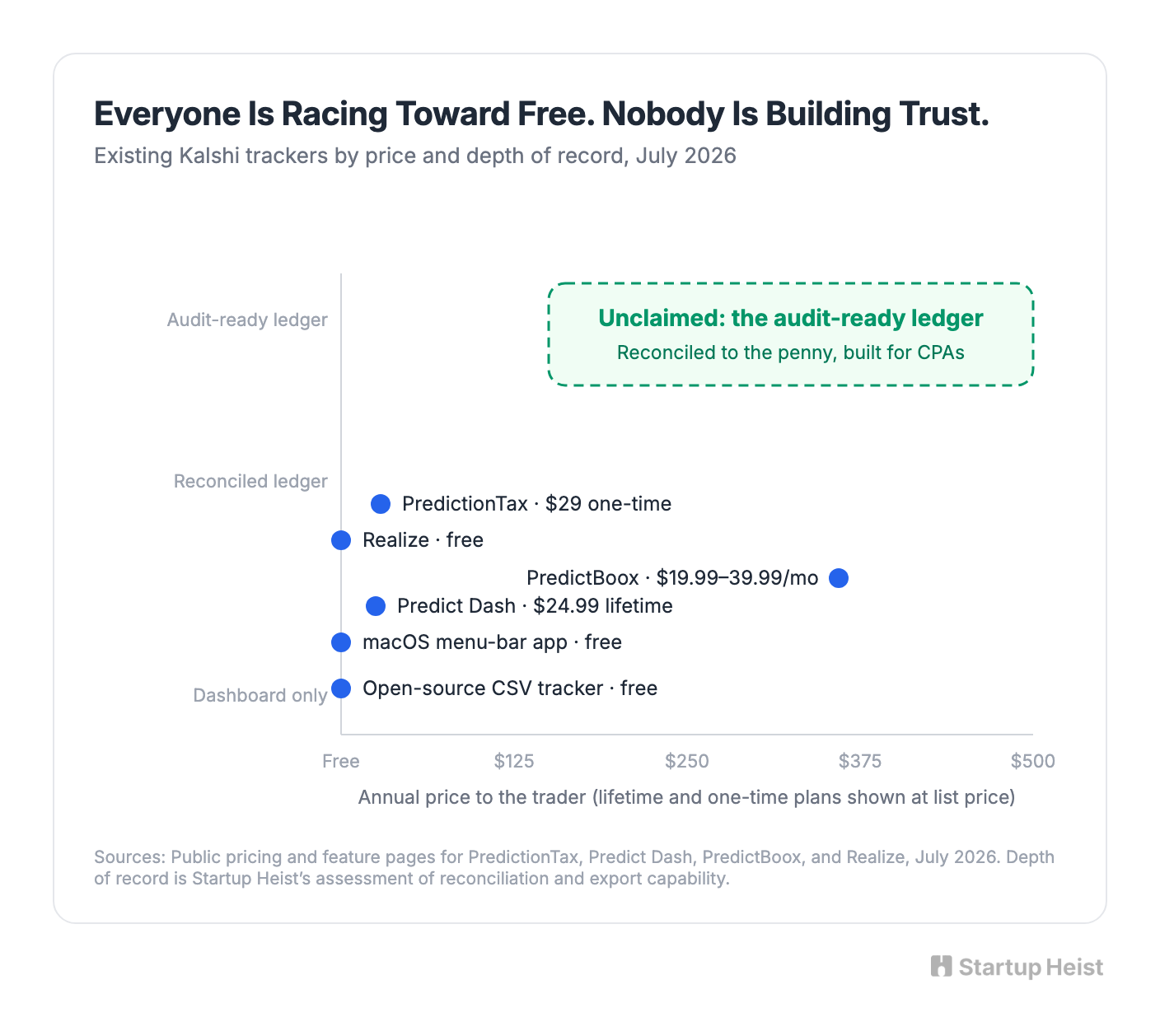
What none of them owns yet is trust. A dashboard can be cloned in a weekend, and this field proves it; a half dozen clones already exist. The defensible position is the authoritative, audit-ready ledger that traders and their accountants rely on year-round, the product whose number the trader, the exchange statement, and the CPA all agree on. That product hasn't been built.
The Product: A Ledger That Looks Like a Dashboard
The front end should feel like a modern trading dashboard; the back end should behave like accounting software.
Unlock the Vault.
Join founders who spot opportunities ahead of the crowd. Actionable insights. Zero fluff.
“Intelligent, bold, minus the pretense.”
“Like discovering the cheat codes of the startup world.”
“SH is off-Broadway for founders — weird, sharp, and ahead of the curve.”


