


In April 2026, Google rolled out a new feature called Aerial and Satellite Insights inside Google Earth AI. The pitch went straight at the enterprise: city planners, infrastructure teams, and large organizations that previously needed weeks to manually review imagery. Yael Maguire, VP and GM of Google Maps Platform and Google Earth, framed it as compressing weeks of analysis into minutes. The marketing imagery showed construction monitoring across whole metro areas, piped through BigQuery, ready for utility planners and government agencies.
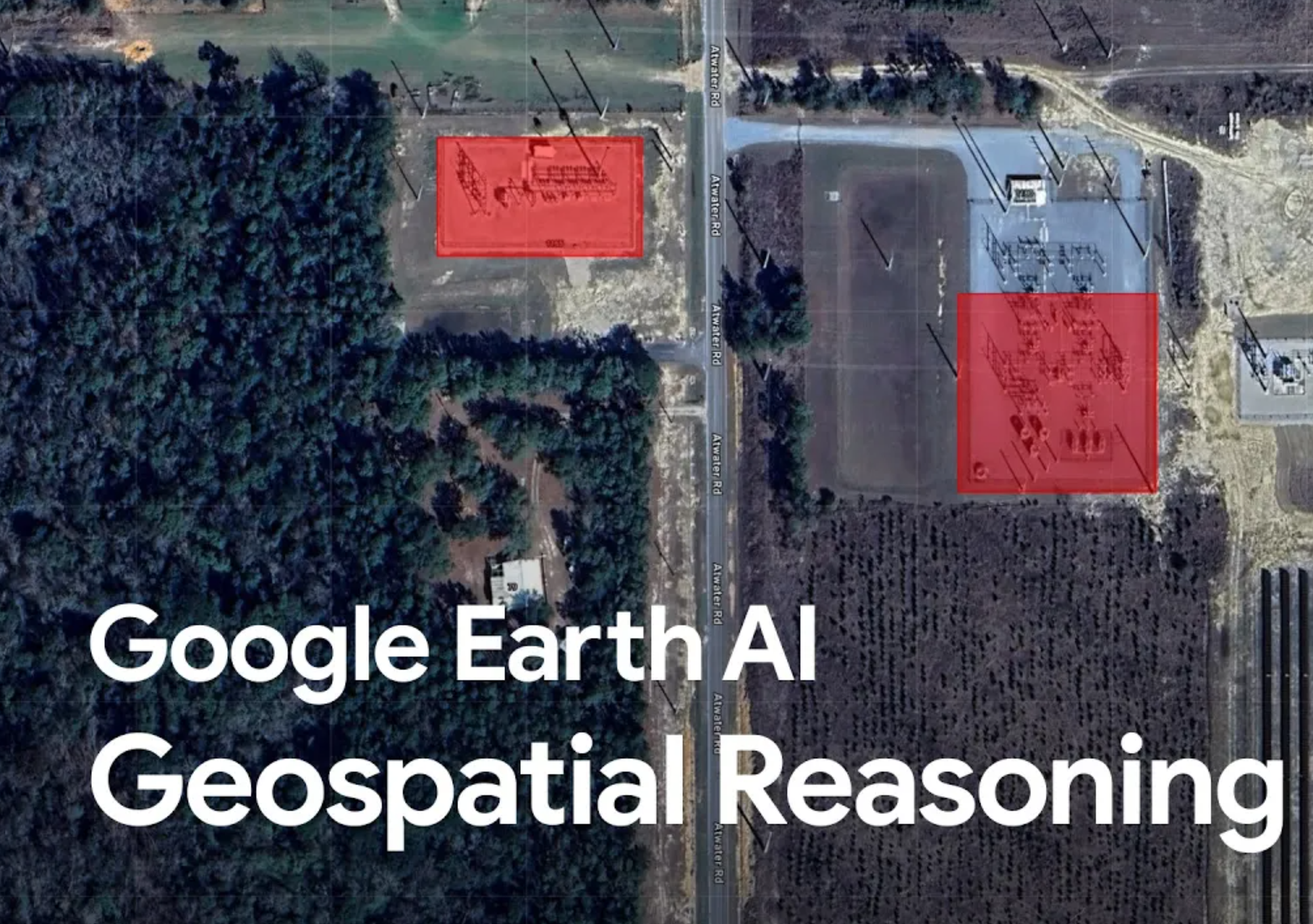
The press coverage took the bait. So did the analysts. Everyone read it as a GIS story.
It's a contractor story disguised as an enterprise launch.
Here's the opportunity.
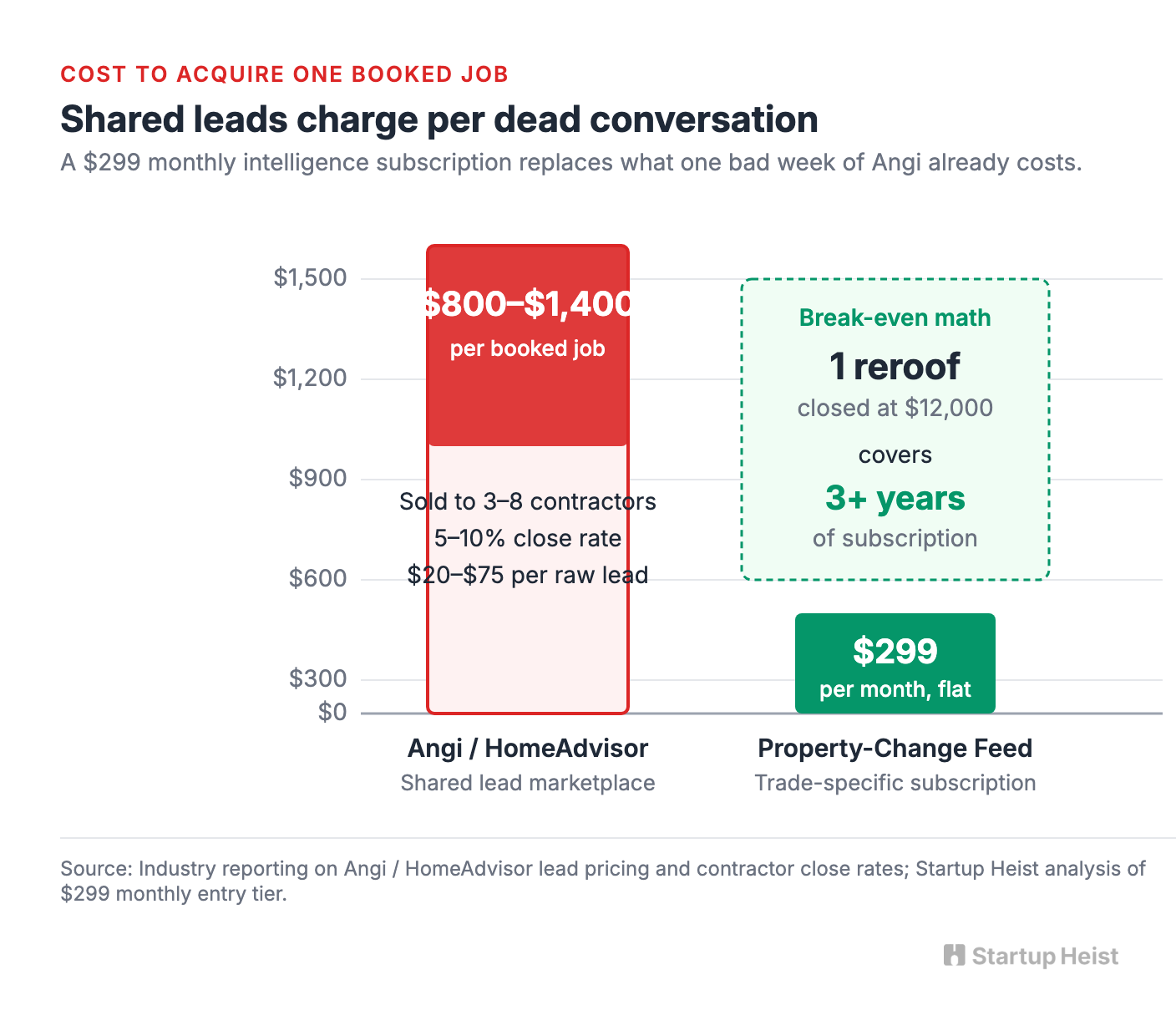
The money: 100 roofing customers at $299/month is $29,900 MRR. One closed reroof clears $12,000 and pays a contractor's annual subscription on the exclusive tier.
Inside:
• One-county MVP scope for roofing leads
• Three-tier pricing up to territory exclusive
• 30-day founder-led outbound playbook
• Five-layer moat against Google and EagleView
The Buyer Isn't a Geospatial Analyst
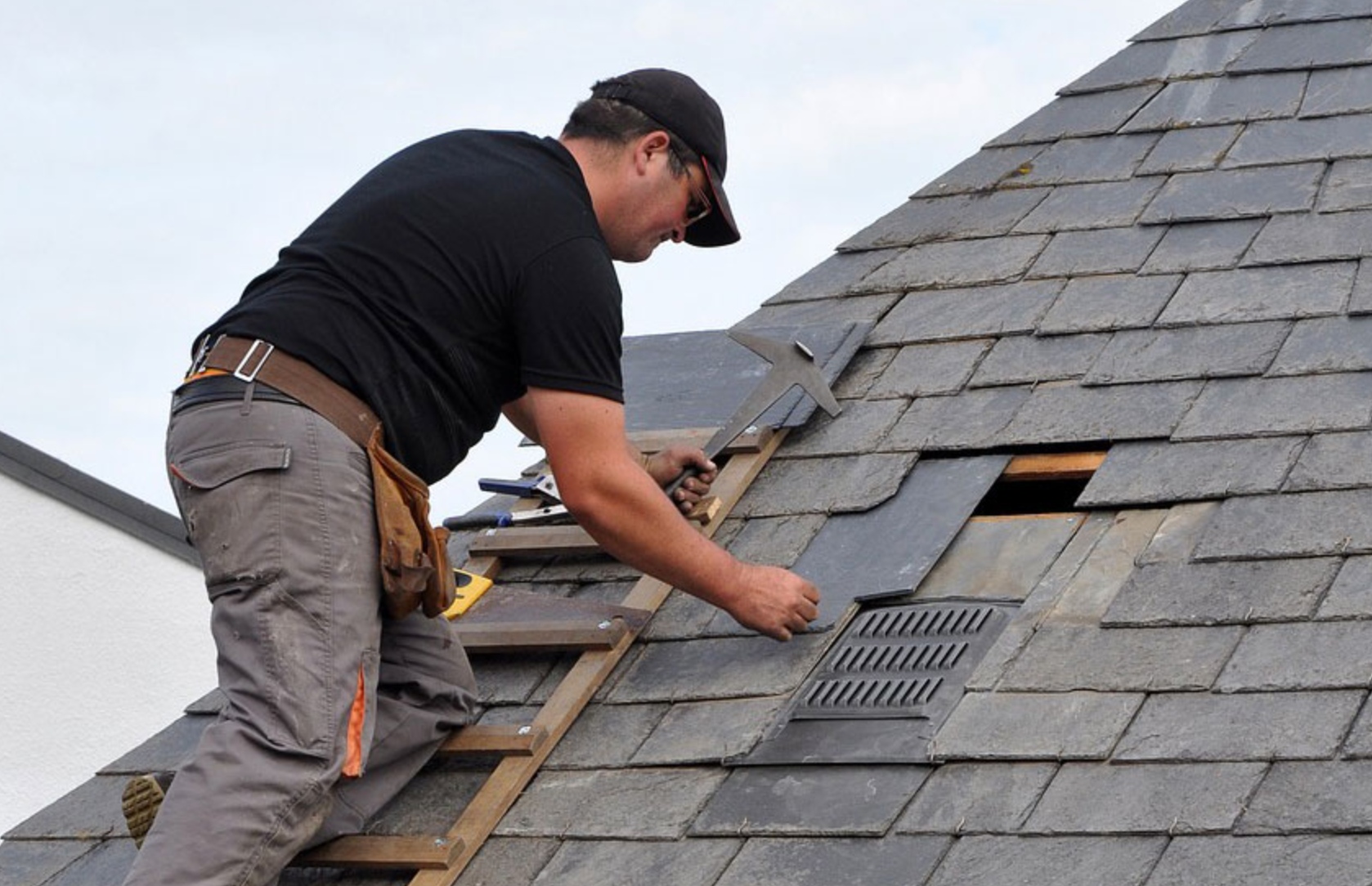
The most valuable customer for property-change intelligence isn't a city planner or a utility engineer. It's a roofing company owner who currently learns about a new job by driving past a damaged house, scrolling a neighborhood Facebook group, or paying for a shared lead that three of his competitors also just bought.
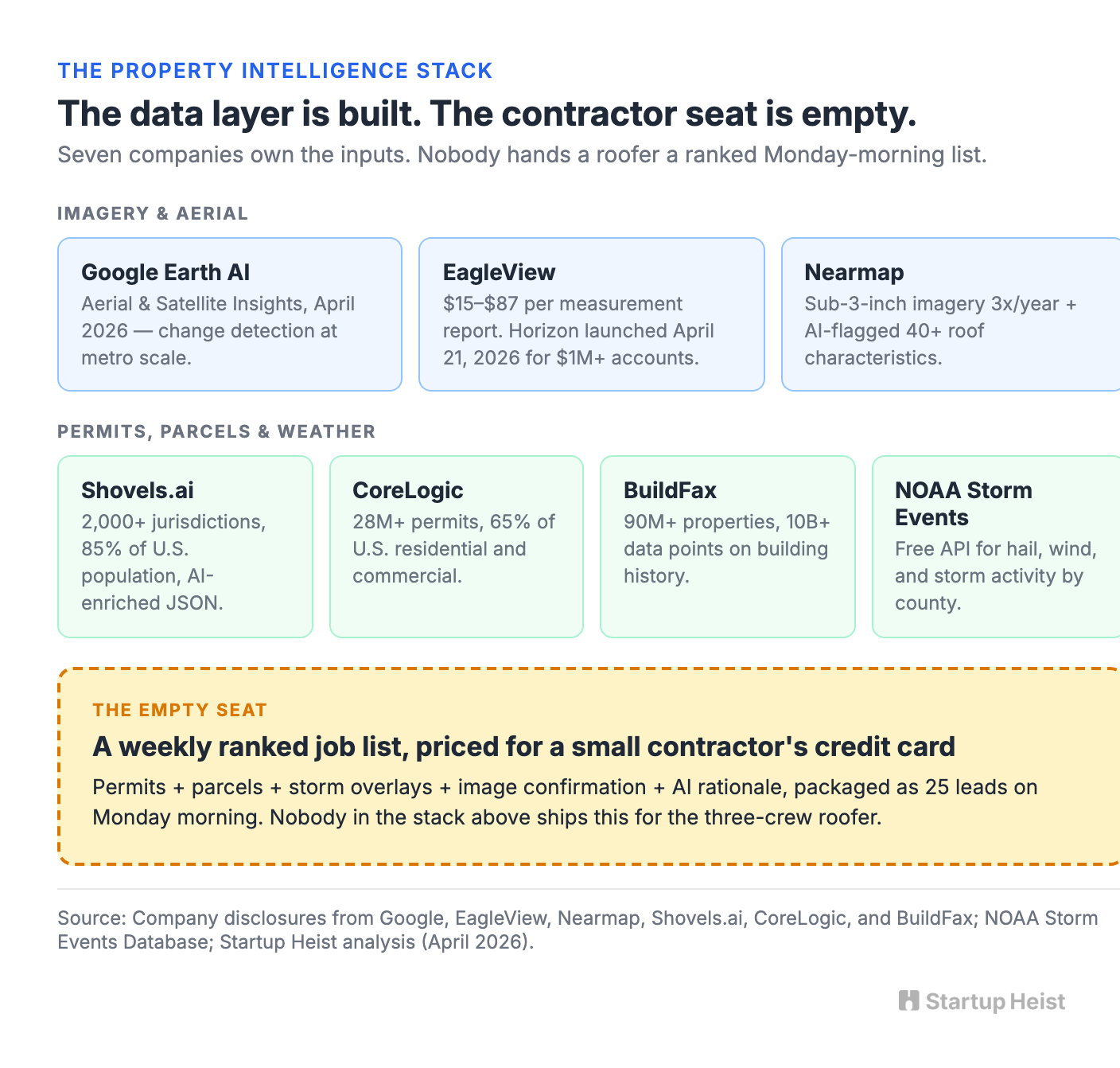
Local contractors are pouring real money into property data. Roofr sells aerial measurement reports starting at $13. EagleView ranges from $15 to $87 per report and steers volume customers into quote-based subscriptions. Nearmap ships sub-3-inch imagery three times a year and now uses AI to flag 40-plus roof characteristics. CoreLogic's permit database covers 65 percent of the U.S. residential and commercial market. Shovels.ai turns 2,000-plus jurisdictions of permits into clean, AI-enriched JSON. BuildFax sits on 90-plus million properties and 10 billion data points.
The infrastructure layer is mature. The data layer is commoditizing. The signals are flowing. What none of these incumbents do is hand a roofer a ranked list of houses worth calling on Monday morning. That gap is the heist.
Why Contractors Pay So Much for Bad Leads
A roofing lead from Angi or HomeAdvisor runs $20 to $75. The same homeowner inquiry gets sold to three to eight contractors, sometimes more in roofing. Close rates collapse to 5 to 10 percent. Cost per booked job lands somewhere between $800 and $1,400 once you average in the dead conversations, the ghosted estimates, and the cousin who already has a roofer.
The home services market spends north of $500 billion a year and averages $144 cost per lead in B2C. Contractors aren't stingy buyers. They're tired buyers. They've been trained that lead generation means a homeowner has already decided to shop, raised their hand on a directory site, and is now being auctioned to the highest bidder.
The opening sits one step earlier in the timeline: the moment the roof event happens. A reroof permit gets filed. A lot gets cleared. A storm rips through one neighborhood and not another. A pool appears on a wealthy parcel. A subdivision starts visible site work. Each of these is a triggering event with a property attached, a homeowner attached, and usually a deadline attached. Reach the homeowner before they search Angi, and you're no longer competing against four other roofers on the same Google Form.
The product is a ranked weekly list of properties where something just changed and where that change is likely to become revenue.
The Wedge: Trade-Specific Alerts, Not Geospatial Curiosity
The instinct on a launch like Google's is to build something broad. "Google Earth for small towns" sounds ambitious. It's also vague enough that no one will pay for it. A weekly heatmap of everything that changed inside a ZIP code looks great in a demo and gets ignored by Tuesday.
Contractors don't want intelligence. They want jobs. The product they'll pay for fits in one sentence:
Every Monday, we send you the 25 best exterior-change leads in your territory, ranked by likelihood of becoming a job.
Each trade gets its own version of that sentence. Roofers want reroof permits, hail overlays, older high-value parcels, and visible tarps. Solar installers want reroof permits, large south-facing roofs, utility interconnection filings, and high-income new construction. Restoration companies want storm-damage clusters and emergency repair permits while urgency is still hot. Pool companies want freshly permitted pool installs in affluent neighborhoods. Landscapers want new construction approaching final-grade or commercial buildouts hitting the exterior phase. Local developers want lots transitioning from vacant to active and early site-prep clusters that signal a neighborhood is heating up.
Same data backbone. Different scoring engine. Different sales pitch. Different price point.
Why Now: Three Curves Crossing
The timing is unusually generous because three curves are crossing at once.
Google's Earth AI announcement is the most visible. It makes change detection from imagery something a small team can plug into without hiring a remote-sensing PhD. Underneath that, the permit-data layer has quietly become a real product category. Shovels.ai now ships standardized permit feeds across 85 percent of the U.S. population. CoreLogic and BuildFax cover the legacy data side. NOAA's Storm Events Database has been free and queryable for years. The raw inputs that used to require six months of plumbing now live behind APIs.
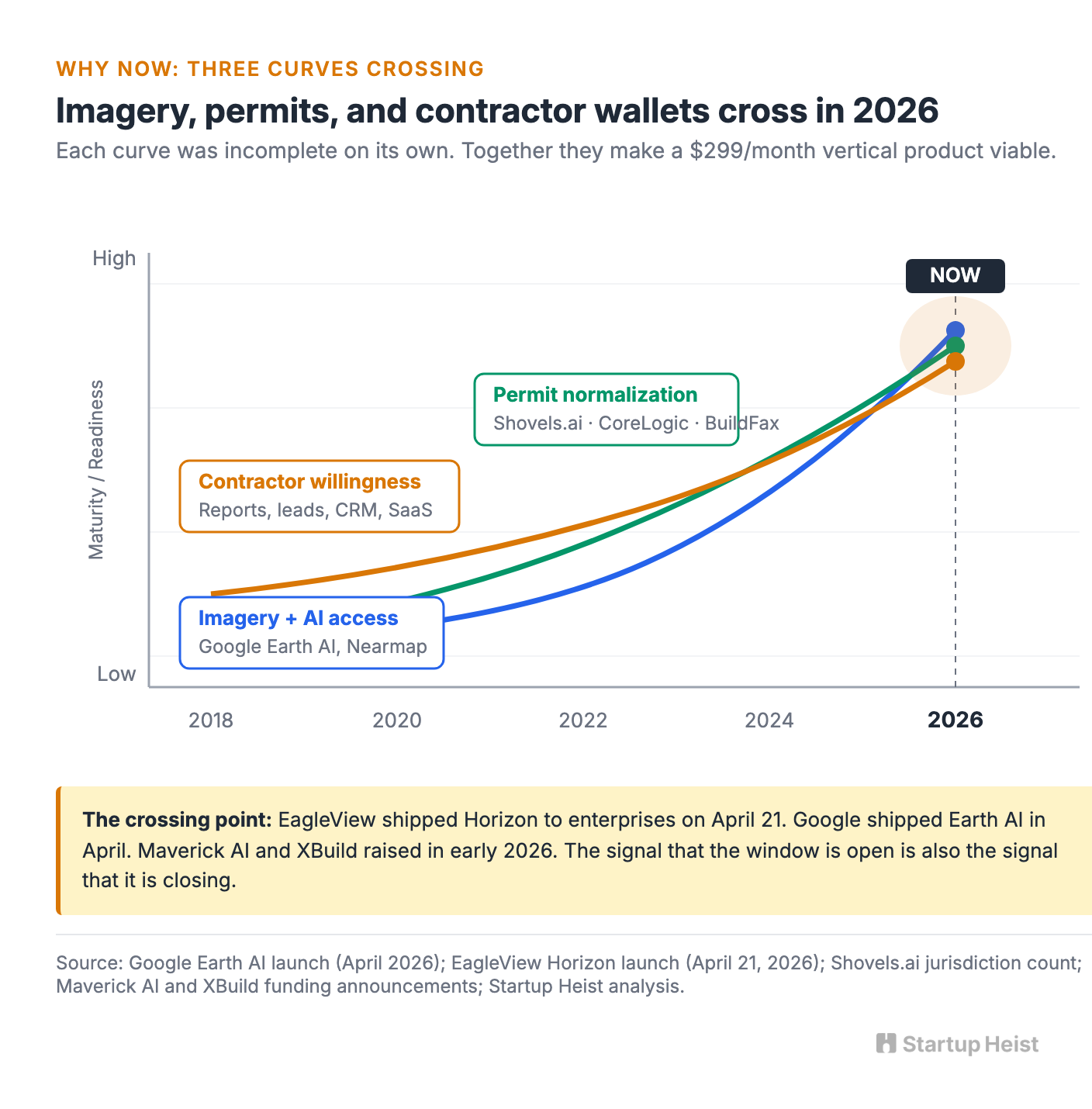
The third curve is the contractor wallet. Roofers, solar installers, and restoration crews already pay for measurement reports, lead memberships, project intelligence, and CRM software. A $199 to $499 monthly product isn't exotic in a market where one closed reroof clears $12,000 in revenue. The buyer is conditioned. The technology is finally cheap enough. The data sources are finally clean enough.
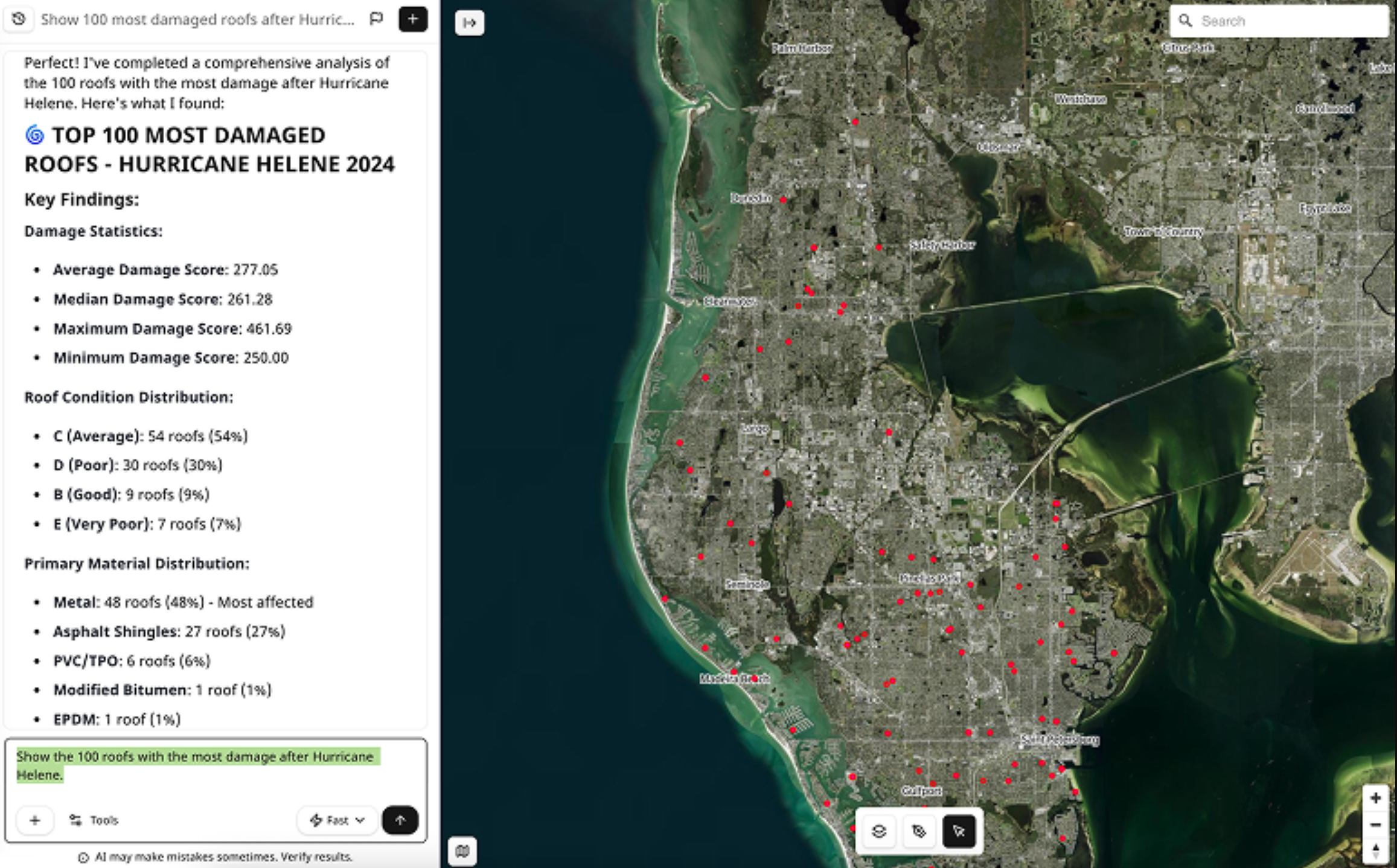
EagleView reinforced the timing on April 21, 2026 by launching Horizon, an agentic GeoAI engine that lets a roofing contractor request a color-coded canvassing map of every roof over 15 years old within two miles of last night's hailstorm. Horizon is enterprise-priced and aimed at $1M-plus accounts, not the three-crew roofer with a credit card. The biggest property intelligence incumbent on earth just validated the thesis. The SMB seat at the same table is still empty. Maverick AI launched out of Richmond in early 2026 chasing roofing contractors with AI lead identification. XBuild raised $19 million in January 2026 for AI-powered roofing estimation. Money is moving. The window is real. It's also moving.
This is the heist window. The platform-makers are pitching enterprises. The contractor sees none of it. A small team can sit between them and quietly run the arbitrage.
What To Build First: Roofing, One County, Five Signals
The temptation is to detect everything. Resist. The first version should pick one trade, one county, three to five high-confidence signals, and one weekly report format.
Unlock the Vault.
Join founders who spot opportunities ahead of the crowd. Actionable insights. Zero fluff.
“Intelligent, bold, minus the pretense.”
“Like discovering the cheat codes of the startup world.”
“SH is off-Broadway for founders — weird, sharp, and ahead of the curve.”


