


The Report That Keeps the Retainer
Every month, thousands of agency account managers perform the same small act of translation.
They open Google Ads, then Meta. They compare this month against last month, checking whether spend moved, whether conversions moved with it, whether cost per lead got ugly, and whether anything strange happened with tracking.
Then they do the part clients actually pay for: they explain what happened.
The explanation doesn't arrive as fourteen charts or a thirty-seven-metric dashboard. It arrives as something closer to this:
Leads increased 18% this month while spend stayed roughly flat, bringing cost per lead down from $71 to $59. The largest improvement came from branded search and the new retargeting campaign. Meta volume was softer after the budget reduction on July 12. Next month we're shifting another 10% of spend toward the campaigns producing qualified leads while testing two new creative angles.
That paragraph is worth more to the relationship than the entire dashboard sitting underneath it.
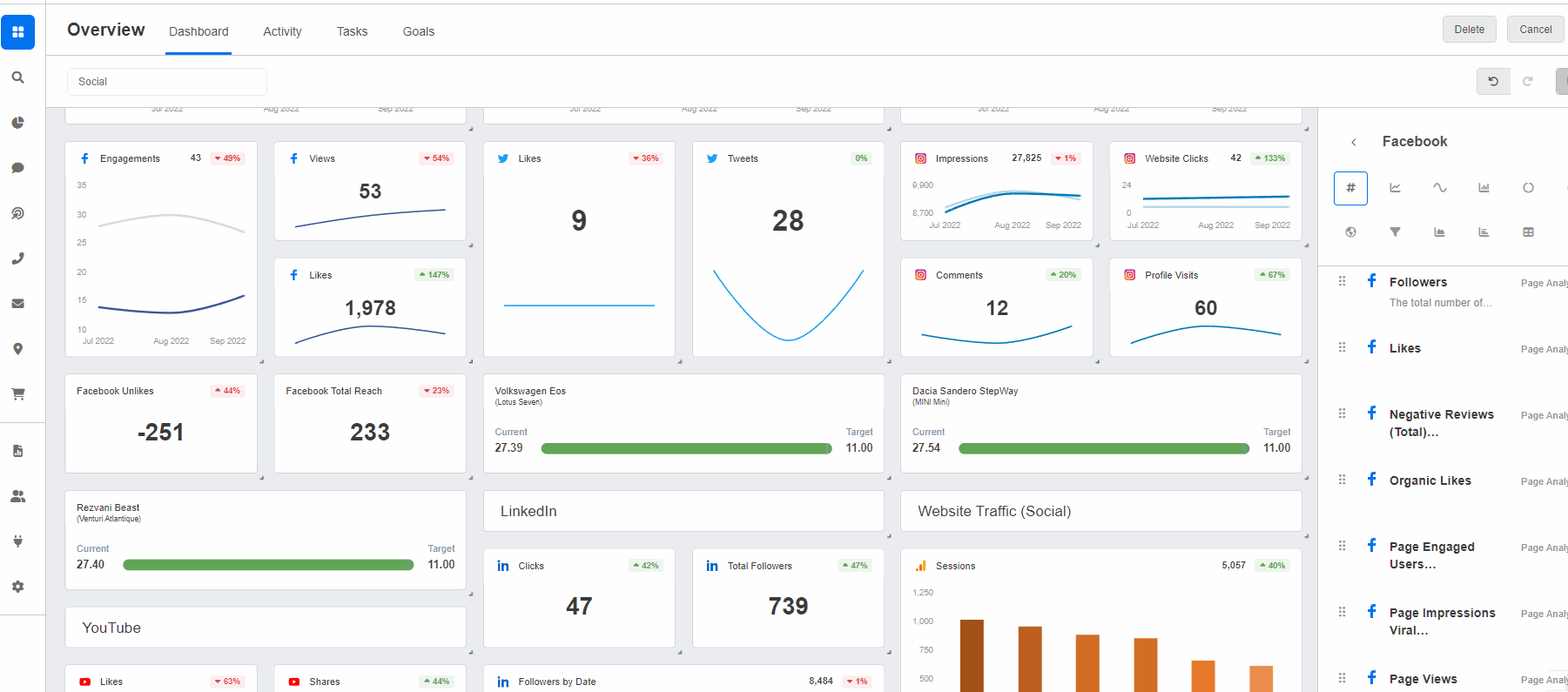
Somebody has to write it, across twenty or fifty client accounts, every month. Whoever does has to get the arithmetic right, compare compatible date ranges, resist inventing a cause for every spike, and avoid telling a client that performance was excellent when the agency knows half those conversions were junk.
There's a startup hiding in that gap, and it lives one layer above the data: the approval step between what the ad platforms report and the story an agency tells its client.
Here's the opportunity:
The money: 300 agencies at $299 a month is $90K MRR. Retainer clients last 56 months, so one saved account pays for years of software.
Inside:
• Full v1 scope, built in two stages
• Three-tier pricing built on liability
• The cold email and the demo that sells it
• Four moats that compound month by month
The dashboard war is over and nobody won the part that matters
Don't build another marketing dashboard. That market is finished, incumbents hold every price point, and the AI features you would pitch as your edge are already bundled into their cheapest tiers. AgencyAnalytics sells a white-label agency reporting suite with automated reports, anomaly detection, AI analysis, and client portals at $20 per client per month on annual billing, and says more than 7,000 agencies use it. Swydo starts at $69 a month for ten data sources and now includes AI report summaries on every plan, with enough monthly credits for roughly 42 of them. DashThis ships AI insights on every tier plus a $19-a-month add-on for conversational analysis and saved client context. Databox puts anomaly detection and AI performance summaries on every paid plan. Whatagraph's white-labeled tiers run several hundred dollars a month and up.
If your pitch is "we connect to Google and Meta and use AI to tell you what happened," you're already dead. That feature shipped several times over, and some of it costs nineteen dollars a month.
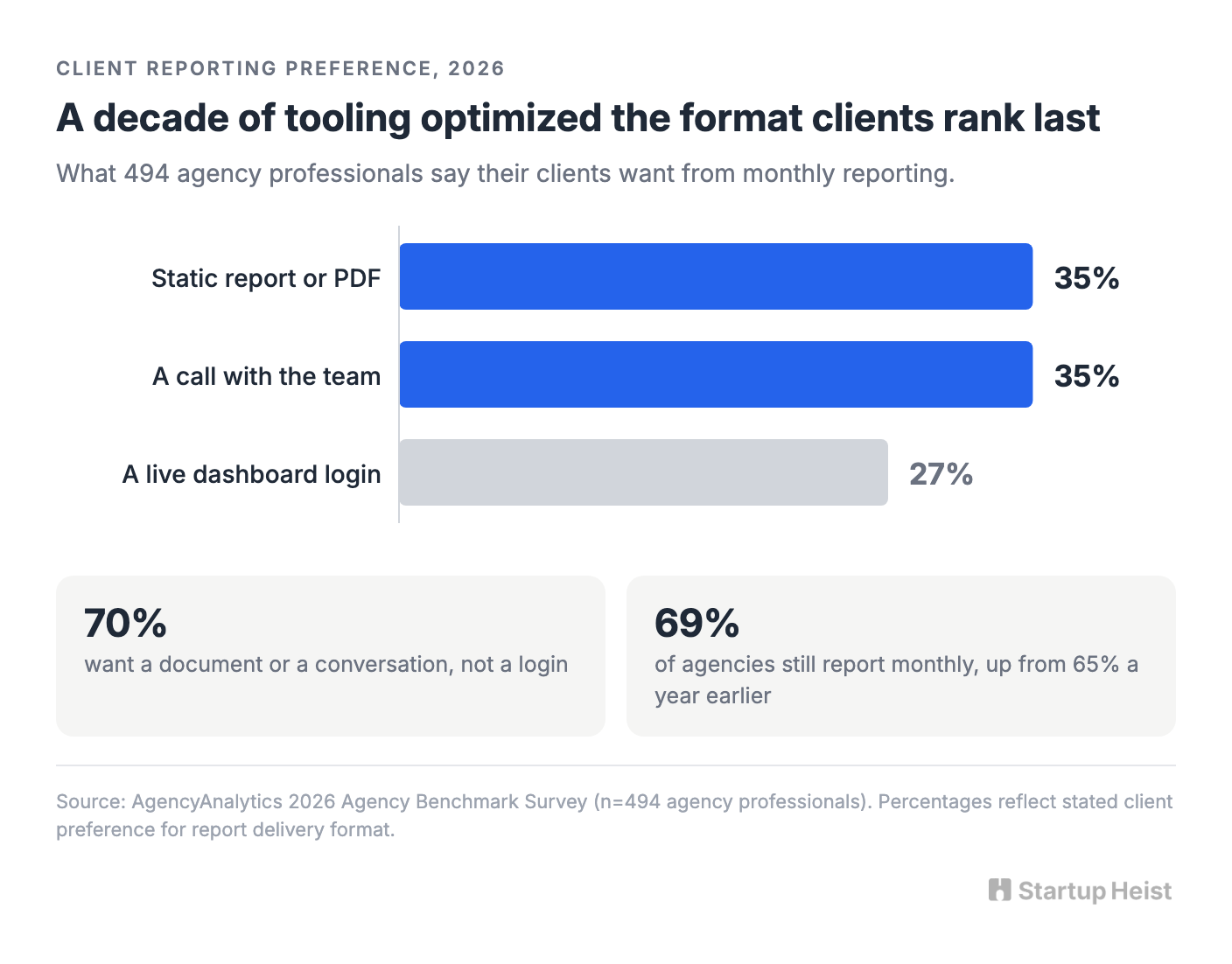
Despite all of it, the format clients prefer has barely moved. In AgencyAnalytics' 2026 benchmark survey of 494 agency professionals, 35% of clients want a static report and 35% want a call. Only 27% want the live dashboard. 69% of agencies still report monthly, up from 65% the year before. The industry spent a decade automating the artifact that clients rank last.
Three times in 2026, the platforms rewrote the story
The second reason the timing works has nothing to do with AI. Three times in the first half of 2026, the ad platforms changed what their own numbers mean.
On January 12, 2026, Meta permanently removed 7-day and 28-day view-through attribution windows from its Ads Insights API. For advertisers who leaned on longer windows, industry reporting put the drop anywhere from 15% to 40% of attributed conversions. Those conversions kept happening. They just stopped counting.
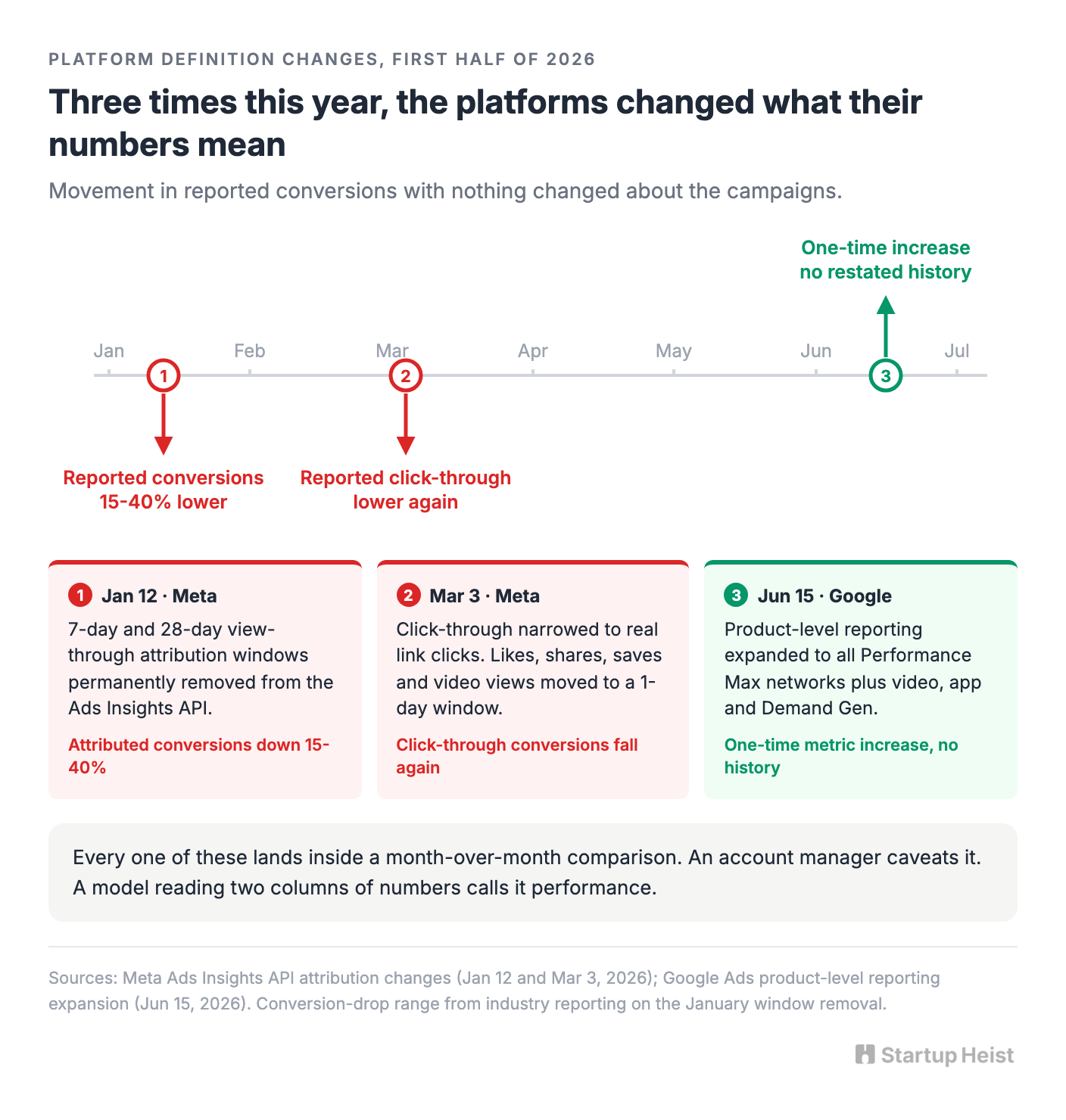
On March 3, 2026, Meta narrowed click-through attribution to actual link clicks and moved likes, shares, saves, and video views into a new engage-through category with a one-day window. Reported click-through conversions fell again across accounts where nothing about the campaign had changed.
On June 15, 2026, Google went the other direction. Product-level reporting expanded from Search-network Performance Max and Standard Shopping to cover all Performance Max networks plus video, app, and Demand Gen. Google warned that this would produce a one-time increase in impressions, clicks, and other metrics, with no expanded historical data before the launch date.
Two of those changes push reported numbers down, one pushes them up, and every one of them lands inside a month-over-month comparison. An account manager who lived through the year knows to caveat it. A language model reading two months of numbers will happily write "a surge in performance" about a metric definition change. The business lives in the gap between what the data says and what it means.
Speed was never the bottleneck
The obvious pitch is time savings, and the data doesn't support it. In the same 2026 survey, 46% of agencies finish a client report in under thirty minutes and 73% finish in under an hour. The dashboards did their job; assembly is largely solved. What remains is the part where someone puts their name on the interpretation.
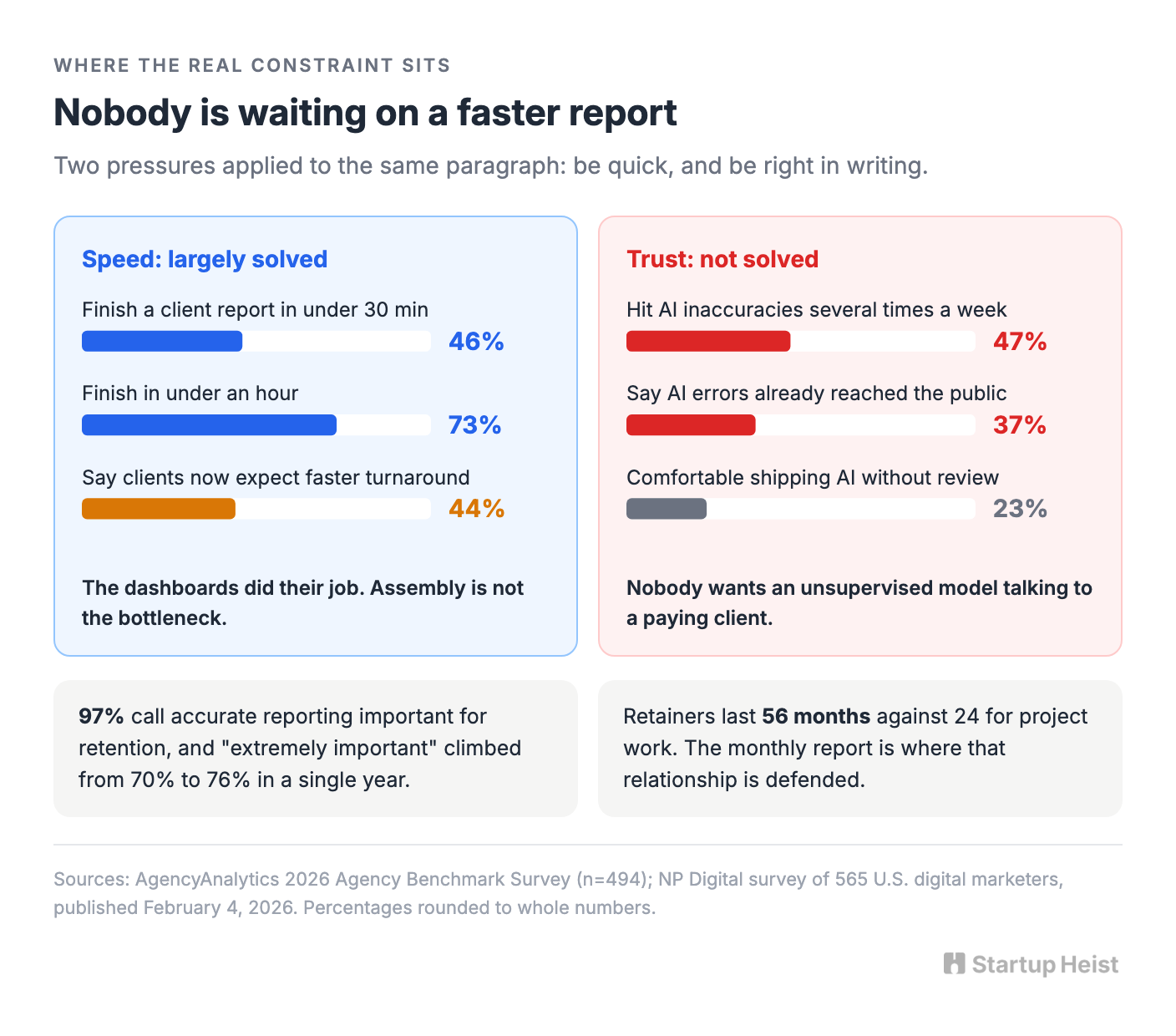
97% of agencies call accurate reporting important or extremely important for retention, and the share saying "extremely" climbed from 70% to 76% in a year. Meanwhile 44% say clients now expect faster turnaround than they did a year ago, and 55% of clients regularly ask whether the agency can connect marketing performance to revenue. That's pressure to be fast and pressure to be right, applied at the same time, to the same paragraph.
The risk of unsupervised generation is no longer theoretical. NP Digital surveyed 565 U.S. digital marketers in a study published February 4, 2026: 47.1% encounter AI inaccuracies several times a week, 36.5% say hallucinated or incorrect AI content has already reached the public, and only 23% are comfortable shipping AI output without human review. KPMG withdrew an entire report in June 2026 after an analysis found 40 of its 45 citations were fabricated.
The IAB's State of Data research found only 30% of agencies, brands, and publishers have fully integrated AI across the campaign lifecycle, with data quality, tool fragmentation, and transparency named among the largest barriers. Half of brands specifically worry about not knowing how their agency partners are using AI on their behalf.
Agencies want the automation, their clients are already suspicious of it, and nobody on either side wants an unsupervised model talking to a paying customer.
Retainer clients last an average of 56 months against 24 for project work, and retainer churn runs around 18% a year, with the best shops holding it near 8%. The monthly report is one of the few scheduled moments where that relationship is actively defended or quietly damaged. Getting it wrong once, in writing, in front of a client who's already asking harder questions, is a category of mistake no dashboard prevents.
The product: a narrative control layer
The core artifact is a structured monthly client update. It reads like this:
Unlock the Vault.
Join founders who spot opportunities ahead of the crowd. Actionable insights. Zero fluff.
“Intelligent, bold, minus the pretense.”
“Like discovering the cheat codes of the startup world.”
“SH is off-Broadway for founders — weird, sharp, and ahead of the curve.”


