


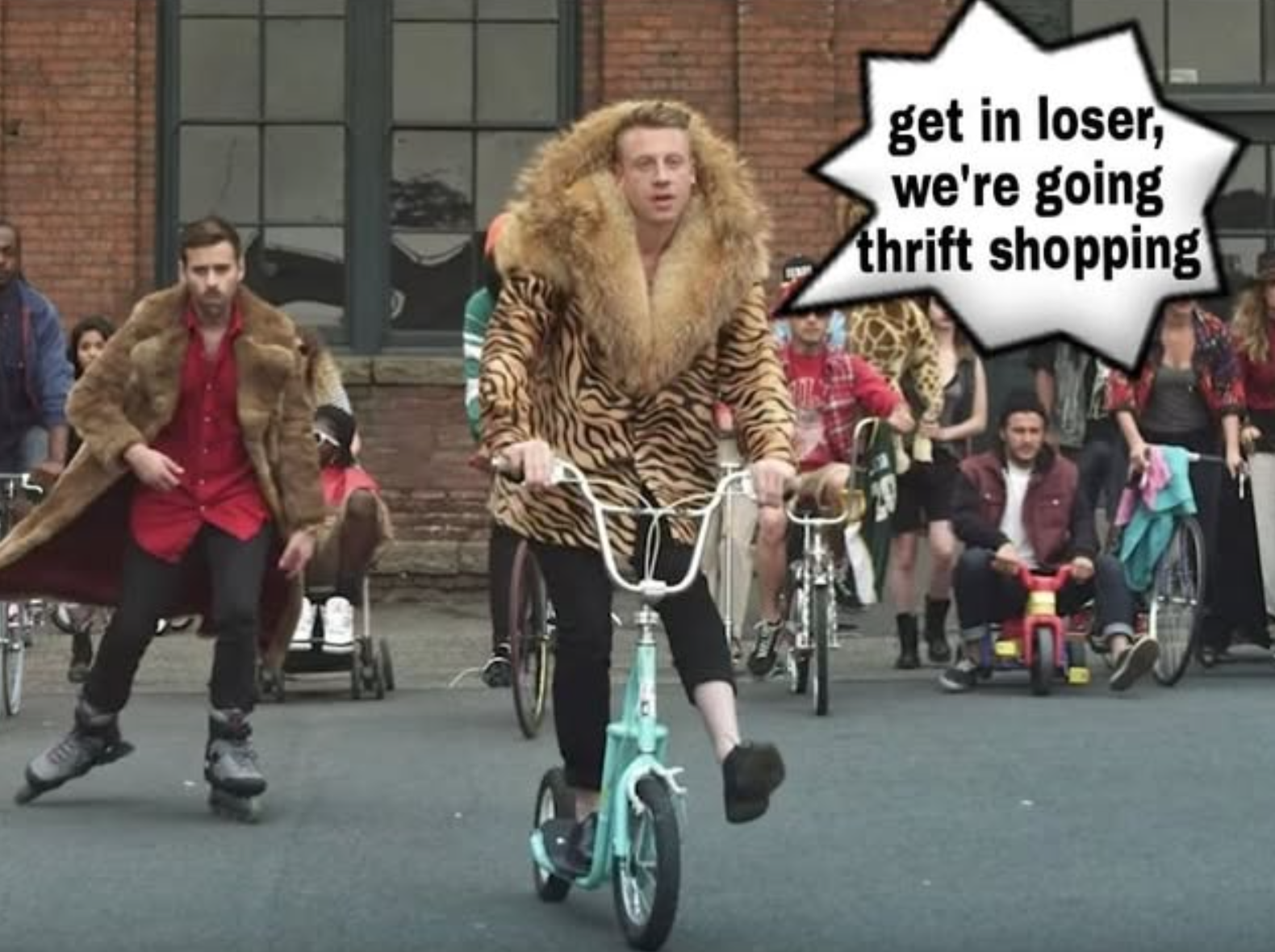
In January 2013, Macklemore's "Thrift Shop" hit number one on the Billboard Hot 100. It stayed there for six weeks, sold six million copies, and turned secondhand fashion into a cultural moment. Goodwill's marketing director told reporters they saw zero measurable revenue increase from the song. Thrifting got its anthem. The shopping experience didn't change at all.
Thirteen years later, the behavior caught up on its own. Sixty-four percent of Gen Z now searches for an item secondhand before buying new. Two out of five items in the average Gen Z closet are pre-owned, and 82% consider an item's resale value before purchasing anything at full price. The $40 billion U.S. resale market is no longer a subculture. It's the default first stop for an entire generation of shoppers.
The discovery layer never caught up. Depop, Poshmark, ThredUp, Mercari, eBay — each one operates as its own closed ecosystem with its own inventory and its own search. A crewneck that sits dead on Depop sells the same day on Poshmark for $52. The supply is scattered across the internet. No one has built the search engine that stitches it together.

Which is exactly why today's featured idea works: an AI resale stylist that scans every major secondhand platform on your behalf. You describe your style, set your sizes and budget, and the system surfaces outfits you'd actually wear from inventory scattered across dozens of marketplaces. At $19 per month, it's a lean SaaS play sitting on top of a market where demand has outrun discovery by over a decade. The audience is already shopping this way. The cross-platform intelligence layer is still unclaimed.
Read the full playbook here:

Resale is a $40B market with a discovery problem nobody has solved cross-platform. The opportunity is the intelligence layer that turns fragmented secondhand supply into outfit conviction.
From the Vault:

Local restaurants can't measure creator-driven foot traffic. Local food nano-influencers can't monetize real demand. A tracked QR affiliate platform sits at the intersection of both problems.

Captions just raised $75M and revealed where the real margin in AI video is heading — not generation, but assembly. The vertical production layer is wide open.


