


Give a restaurant a dashboard. Give a local food creator a unique QR code. Track redemptions. Pay a bounty for every new customer. Charge $49 a month. Simple enough... or is that the real heist?
Local restaurants need measurable customer acquisition. Local creators need a way to monetize real influence. The match is obvious. But the raw QR affiliate tool is too thin to matter on its own. It's a feature, and features get copied.
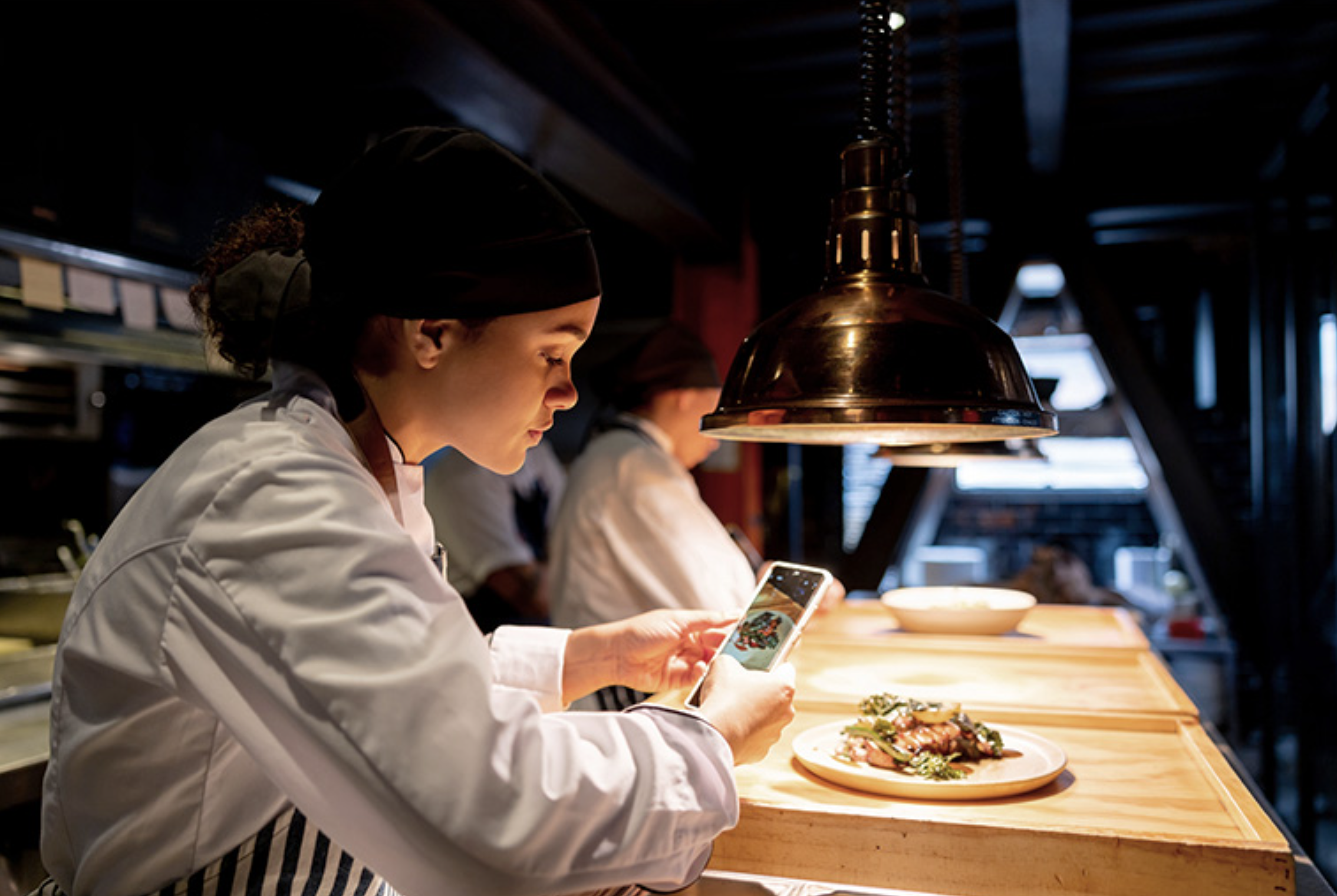
The stronger version is a local commerce network that turns creators, superfans, and regulars into a measurable revenue channel for neighborhood restaurants.
Here's the opportunity at a glance.
The money: 100 restaurants at $149/month = $14,900 MRR. Creator ad spend hit $37B in 2025 and restaurants still can't measure what works.
Inside:
• Four-module MVP scope and build order
• Bounty calculator for margin-safe offers
• Creator-first go-to-market playbook
• Network moat and compounding data thesis
Why the Timing Works
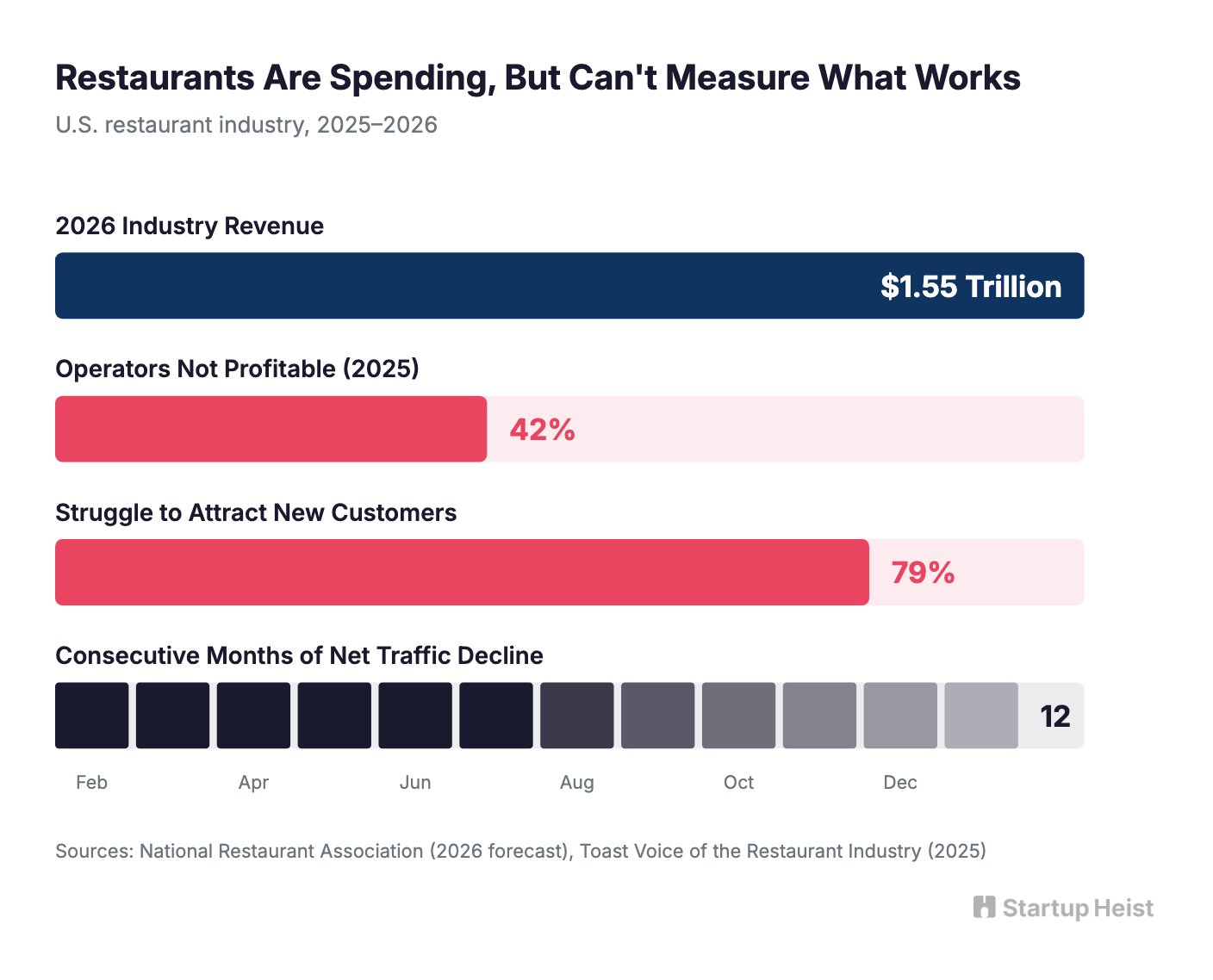
The U.S. restaurant industry will generate an estimated $1.55 trillion in 2026. That sounds healthy until you look underneath. Forty-two percent of operators weren't profitable in 2025. Seventy-nine percent said attracting new customers was a significant challenge, according to Toast's 2025 Voice of the Restaurant Industry survey. As of January 2026, restaurant operators had reported 12 consecutive months of net customer traffic declines. Operators still need demand. They're far less willing to pay for marketing they can't measure.
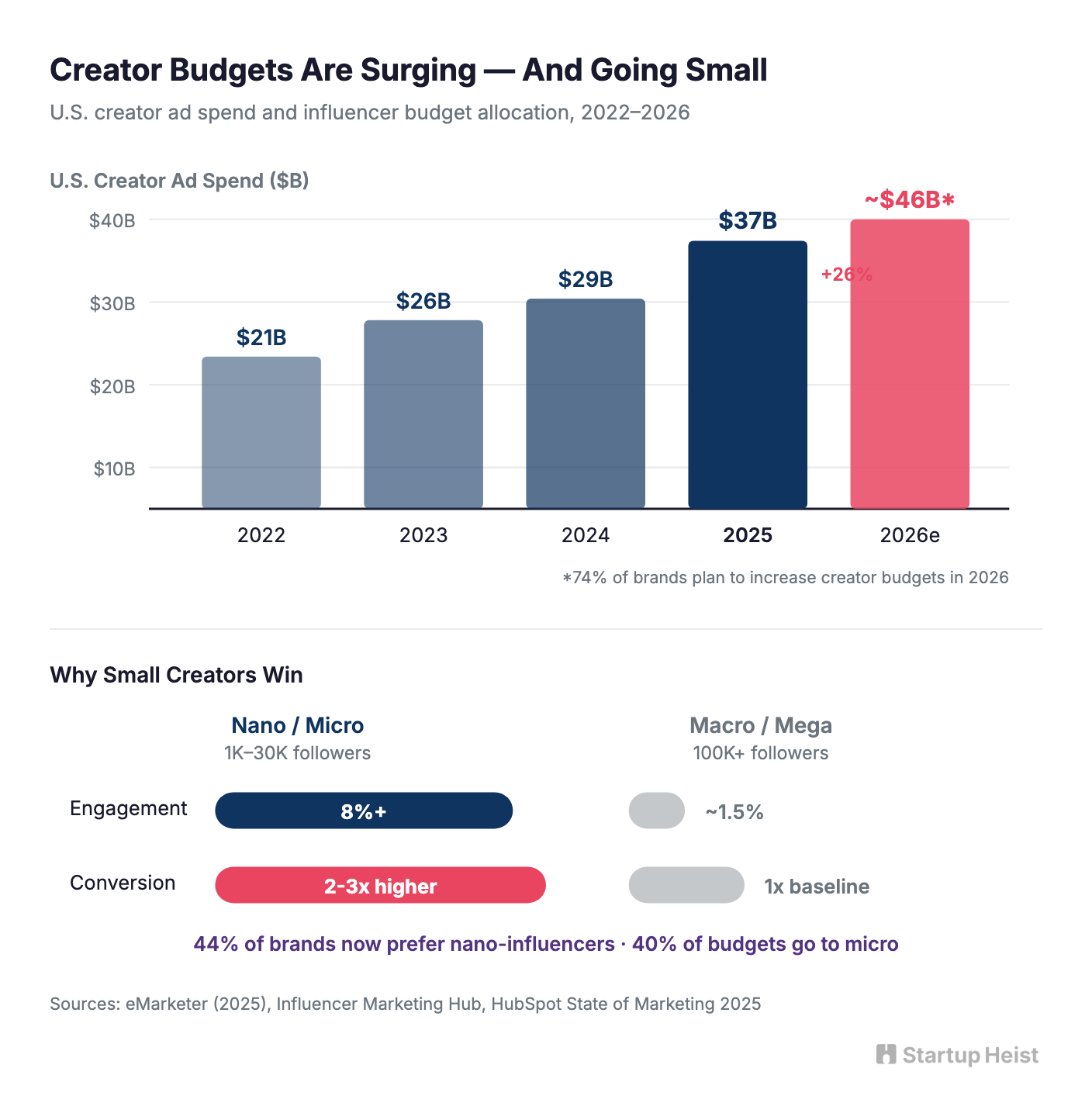
Creator marketing, meanwhile, has shifted from experiment to budget line item. U.S. creator ad spend reached $37 billion in 2025, up 26% year over year. Seventy-four percent of brands plan to move budget into creator programs in 2026. The money is migrating toward micro-reach: 40% of influencer budgets now go to micro-influencers, and 44% of brands specifically prefer nano-influencers (1,000 to 10,000 followers), who achieve engagement rates above 8% and conversion rates two to three times higher than macro campaigns. A 6,000-follower food reviewer in one neighborhood can drive more paying customers to a ramen shop than a 600,000-follower lifestyle creator.
The infrastructure layer is already in place. QR code restaurant marketing workflows are normalized. Square and Toast both support loyalty redemption through their APIs. Diners already scan codes to order, pay, and check in. The rails exist. Nobody has built the creator affiliate layer on top.
What's Broken and What to Build
Townee, FoodFluence, and POS-native loyalty programs from Toast and Square each cover a piece of the local restaurant marketing space, but none of them have built the full system.
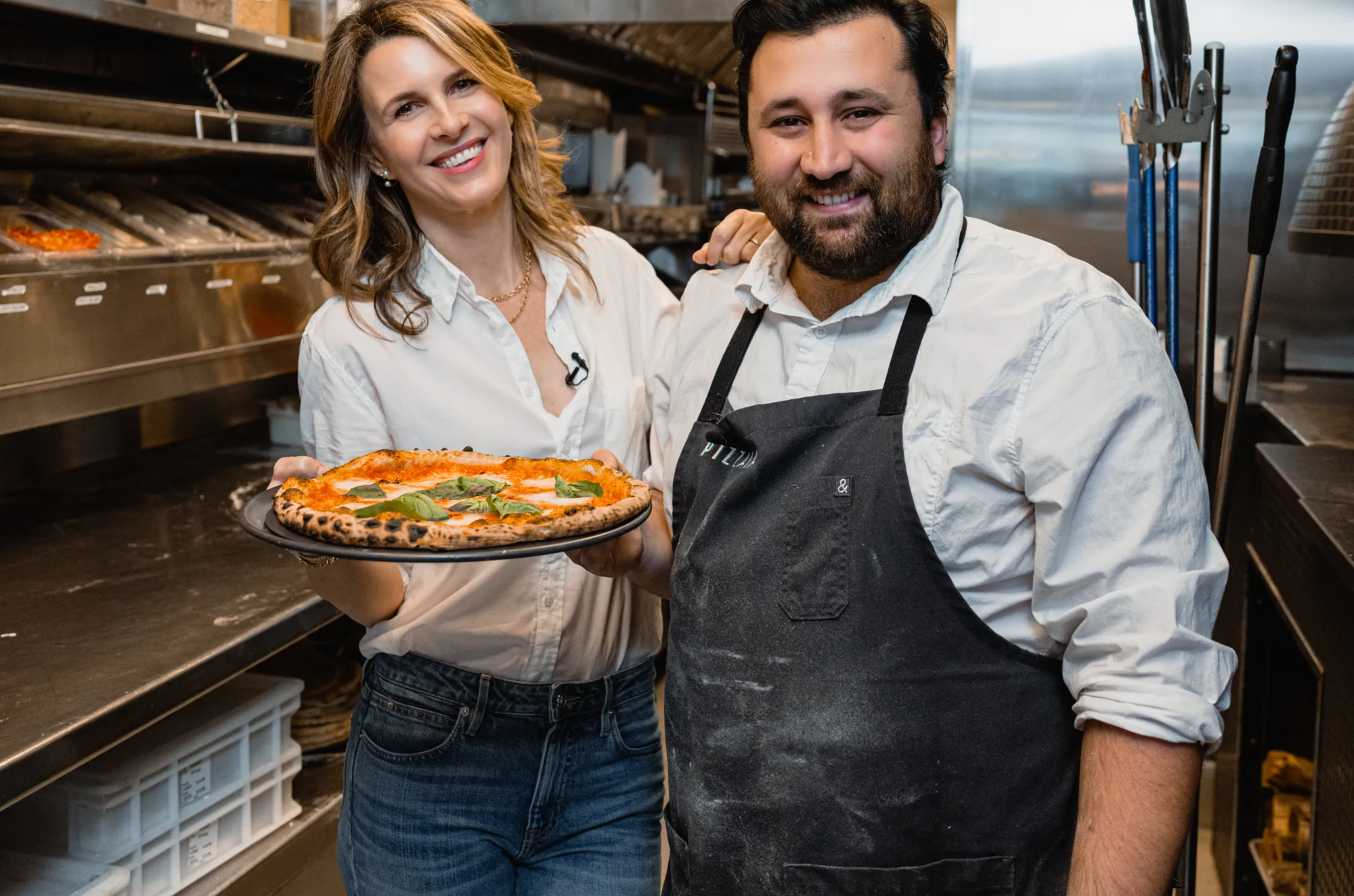
Townee tracks referrals through QR codes and location data. FoodFluence automates creator sourcing and outreach, with $2 million paid to creators across 20,000+ collaborations. Toast and Square offer loyalty programs locked to their respective hardware ecosystems. One is a referral tool, one is a matchmaking service, and the loyalty vendors are points engines. Nobody is building the operating layer that connects creators to restaurants with tracked performance, standardized offers, and network intelligence.
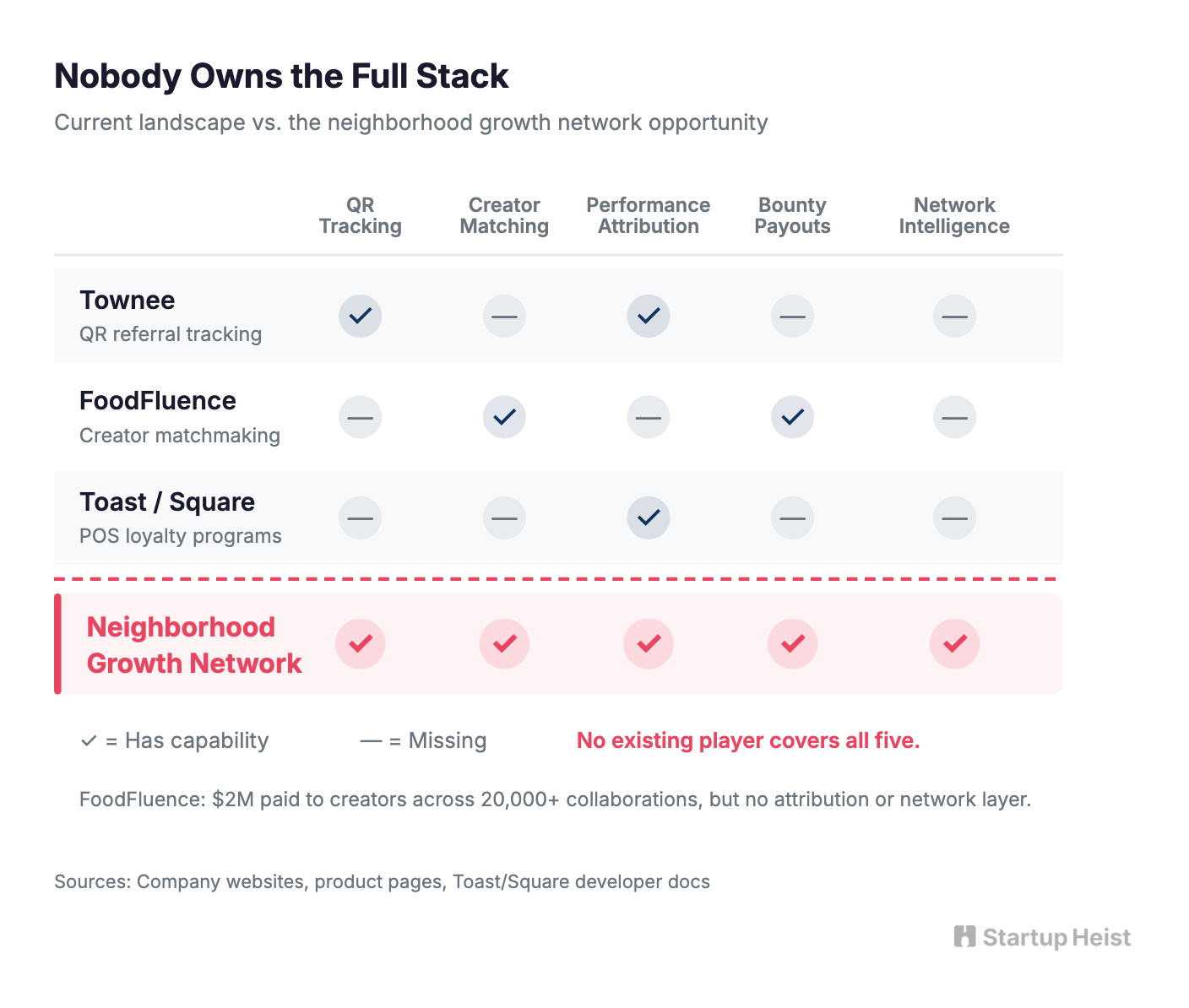
The real product is a neighborhood growth operating system. Restaurants acquire customers through local creators. Creators monetize demand generation. Both sides gradually become a network.
The creator may actually be the better wedge than the restaurant. Restaurants are saturated with sales pitches. They ignore marketing tools all day. Local food creators are hungry. They already know they can move people. They've seen restaurants fill up after a post. What they lack is legitimacy, measurement, and a standard offer. Give them a profile, a payout system, a trackable offer, and a clean deck they can take to businesses. The 19-year-old food reviewer stops begging for free meals and walks in with a measurable restaurant customer acquisition channel. Creators become a distributed sales force for the platform.
The moat is network density and proprietary performance data. Once you have enough restaurants and enough creators in a single city, you start learning what actually works. Which offers convert. Which creators drive repeat traffic versus one-time curiosity. Which neighborhoods respond to novelty versus value. That data is hard for a generic software vendor to recreate because it requires actual local merchant behavior at scale. Every campaign makes the playbook engine smarter. And the playbook engine is what restaurant owners are paying for.
The Playbook
MVP: Four Modules, Nothing Else
- Campaign creation. The restaurant launches an offer in minutes: what the offer is, the time window, redemption cap, first-time-only toggle, and the bounty or fixed fee for the creator. One screen. If the owner needs a tutorial, the product has already failed.
Unlock the Vault.
Join founders who spot opportunities ahead of the crowd. Actionable insights. Zero fluff.
“Intelligent, bold, minus the pretense.”
“Like discovering the cheat codes of the startup world.”
“SH is off-Broadway for founders — weird, sharp, and ahead of the curve.”


