


Build the underwriting layer for creator marketing before fake influence becomes a board-level budget problem
Start with pre-campaign audits for agencies in beauty (the highest-fraud vertical), charge $1,500–$3,500/month per agency seat, and expand into enterprise procurement workflows as the data compounds. The end state is the Moody's of creator marketing — a neutral trust layer that every campaign flows through before a dollar moves.
U.S. influencer marketing spend hit $10.5 billion in 2025, a year earlier than analysts projected. Global spend surged past the mid-tens of billions. Four out of five brands maintained or increased their influencer budgets, with 47% raising them by 11% or more. This is procurement-scale budget migration, and the infrastructure to protect it doesn't exist yet.
The clearest signal came from Unilever. In March 2025, incoming CEO Fernando Fernandez shifted the company's media budget from 30% to 50% social and committed to working with 20 times more creators. By December, Unilever was collaborating with close to 300,000 creators worldwide. Agencies reported surging RFPs. Micro-influencer fees jumped roughly 30% year over year. Fortune 500 brands started calling consultants asking how to replicate the playbook.
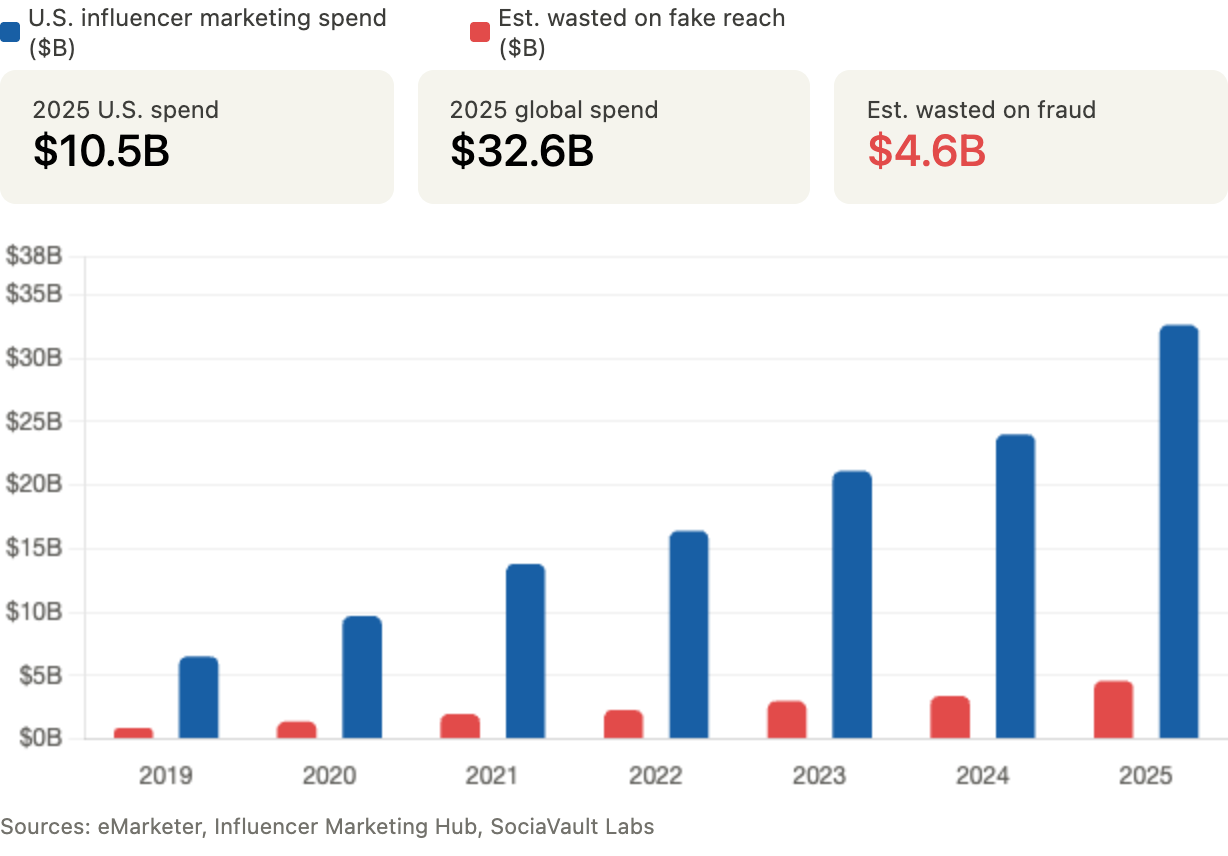
The problem: nearly 40% of influencer followers show signs of being fake. Apply that fraud rate to total industry spend and brands are burning roughly $4.6 billion a year on partnerships polluted by manufactured audiences. Nobody has reliable infrastructure to underwrite that risk — and the agencies and brands who need it will pay for it. Agency plans in the $1,500–$3,500/month range, enterprise audit contracts at $10,000–$30,000/year. A focused team selling pre-campaign underwriting into one high-spend vertical can build a real SaaS business on the gap between what brands are spending and what they can verify.
Once budgets cross from "test channel" to "material line item," the buying question changes. Nobody at Unilever is asking "which creators should we work with?" anymore. They're asking "how do we know this spend is reaching real humans?"
Nobody has a great answer yet.
The trust gap
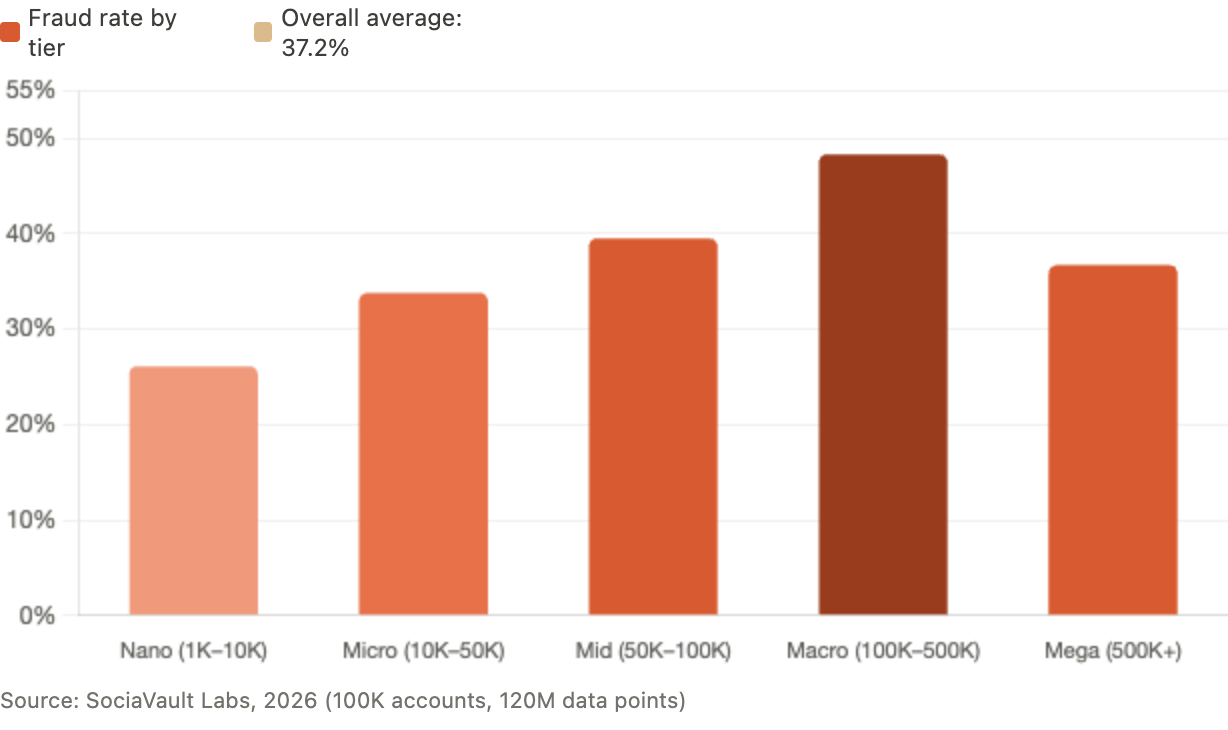
A 2026 study by SociaVault Labs covering 100,000 accounts and 120 million data points found that 37.2% of influencer followers show signs of being fake, purchased, or inauthentic. The macro tier (100K–500K followers) is the worst at 48.3%. Beauty leads all niches, with over half of beauty accounts showing signs of fake followers.
The old fraud playbook was crude: bought followers, engagement pods, suspicious spikes. The 2026 version is different. AI-generated personas are gaining real traction. The virtual influencer market hit $6.06 billion in 2024 and is projected to reach over $45 billion by 2030. AI video tools now create synthetic people that pass casual inspection, and some are landing brand deals without disclosing their artificial nature.

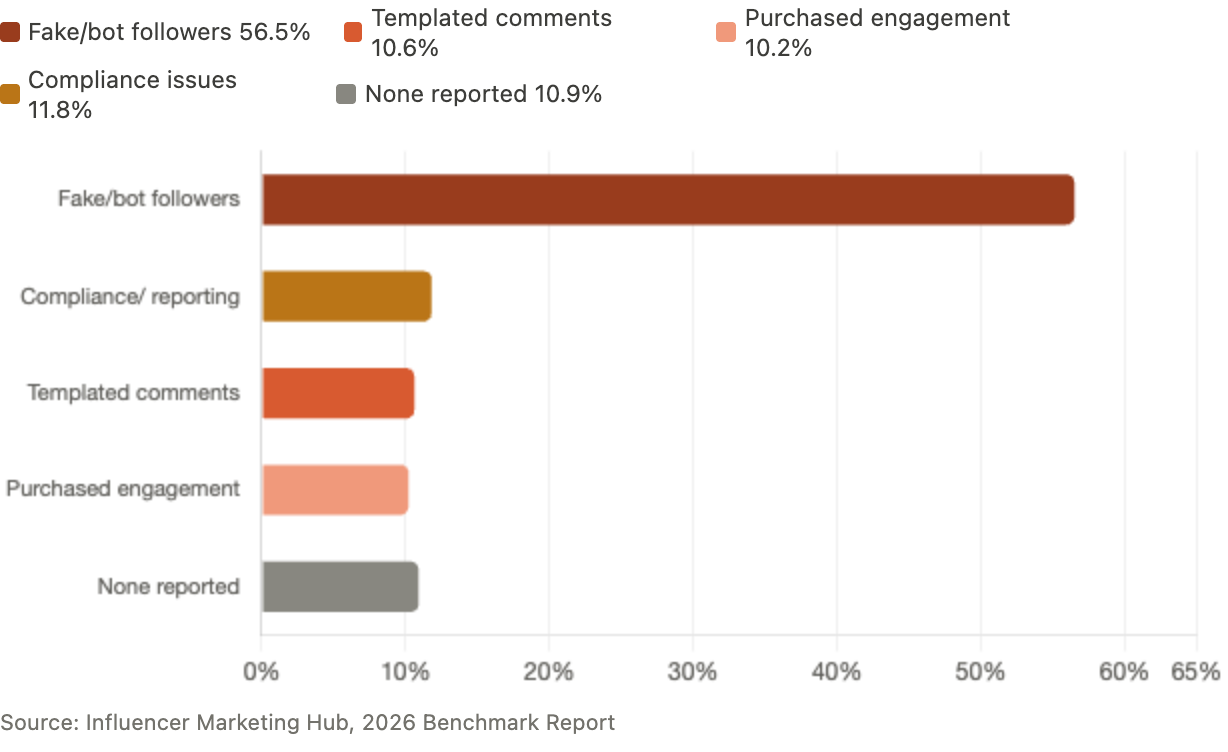
Synthetic engagement has gotten subtler too. The Influencer Marketing Hub's 2026 Benchmark Report found that fake or bot followers account for 56.5% of all reported fraud issues. The next tier matters more: inauthentic or templated comments (10.6%) and purchased engagement (10.2%) make up about 21% of reported issues combined. Even when follower counts pass a surface-level check, engagement itself can be engineered to look healthy.
CreatorIQ's 2025 State of Safety report found that 74% of enterprise organizations say brand safety has become more important in the past year. Most still rely on manual, incomplete methods like browser searches and Google Alerts to vet creators.
Money is flowing into creator marketing faster than anyone is building trust infrastructure to support it. That gap is where you build.
Why "fake influencer detector" is the wrong framing
If your instinct is to build a dashboard that flags suspicious follower counts, pause. That product already exists, and the people who built it have a head start.
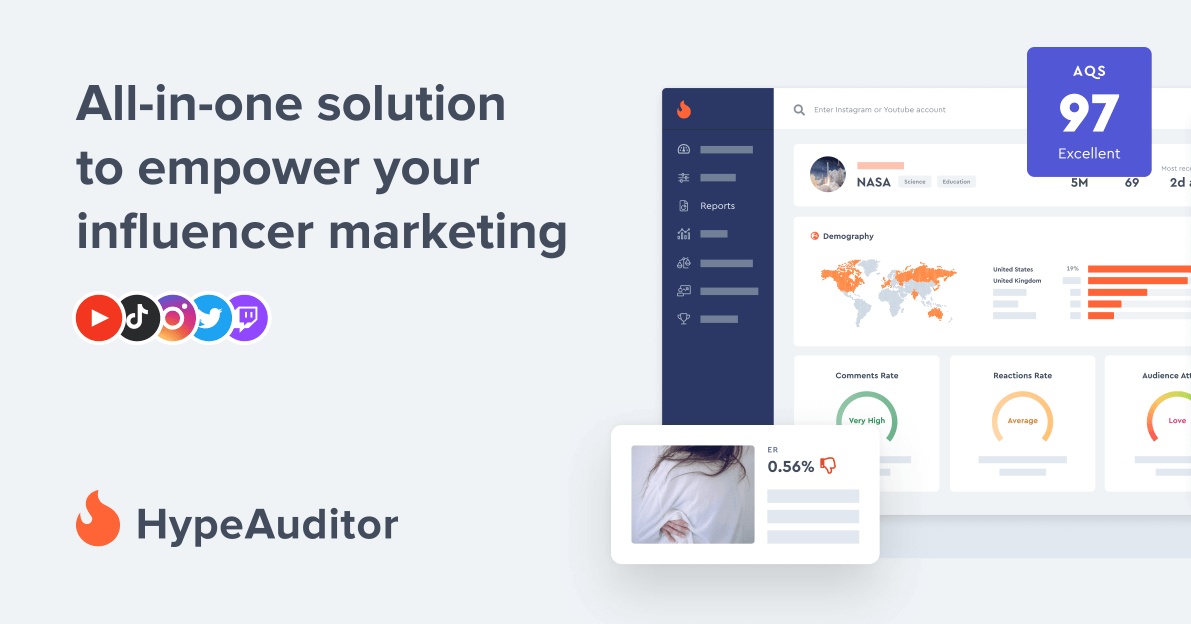
HypeAuditor markets fraud detection and audience quality scoring with sophisticated pattern analysis across comments, follower quality, and engagement. Modash exposes discovery and live data APIs for influencer vetting, positioning itself as an all-in-one creator workflow hub. In October 2025, CreatorIQ launched SafeIQ, a multimodal AI-powered brand safety product that analyzes text, images, video, and audio across languages, continuously learning from each brand's risk thresholds. CreatorIQ processes over 123 million social media posts daily. SafeIQ is available standalone, even for brands not on the CreatorIQ platform.
Real incumbents, real products, real traction. But they leave a meaningful gap.
These platforms are workflow software at their core. They want to be the operating system where campaigns get discovered, managed, measured, and paid. Their fraud detection is a feature inside a broader suite, and their core customer is the social or creator marketing team looking for faster workflows. They're optimized for marketing buyers, not procurement or compliance.
The gap is a neutral, independent trust layer that sits across agencies, creator platforms, procurement flows, and contracts. One that does three things well:
Travels across systems — works regardless of which campaign platform the brand uses. Shows its work — provides explainable, auditable risk assessments instead of black-box scores. Changes commercial decisions — ties directly to approval gates, pricing, and contract terms.
If your score can't alter an approval, a CPM, or a contractual clause, you're just making nicer charts.
The three-layer product
The strongest version of this business works as a system, not a single tool.
Layer 1: Creator Authenticity Score
Think of this as a credit score for audience quality. It combines behavioral signals into a standardized, legible number that a procurement team can actually use.
The inputs matter. SociaVault's research found that comment quality analysis achieved the highest accuracy at 87.3% for detecting fraud, followed by follower growth anomalies at 84.1% and engagement rate anomalies at 82.6%. When all three indicators are flagged, an account is fraudulent 93% of the time.
A strong authenticity score should layer in abnormal follower-growth patterns (sudden spikes followed by flatlines), engagement timing irregularities where bot activity clusters at specific hours, audience geography mismatches (a U.S.-focused beauty creator with 40% of followers from countries where they don't speak the language), comment quality and specificity, post-level engagement volatility between organic content and brand campaigns, content provenance signals for synthetic or AI-generated media, and cross-platform inconsistencies between reach, audience composition, and conversion quality.
Buyers need a shared, legible language for creator risk. Not "we feel okay about her audience." Not "the platform says green." A real score, with structured reasons, that a compliance officer or finance lead can reference in a meeting.
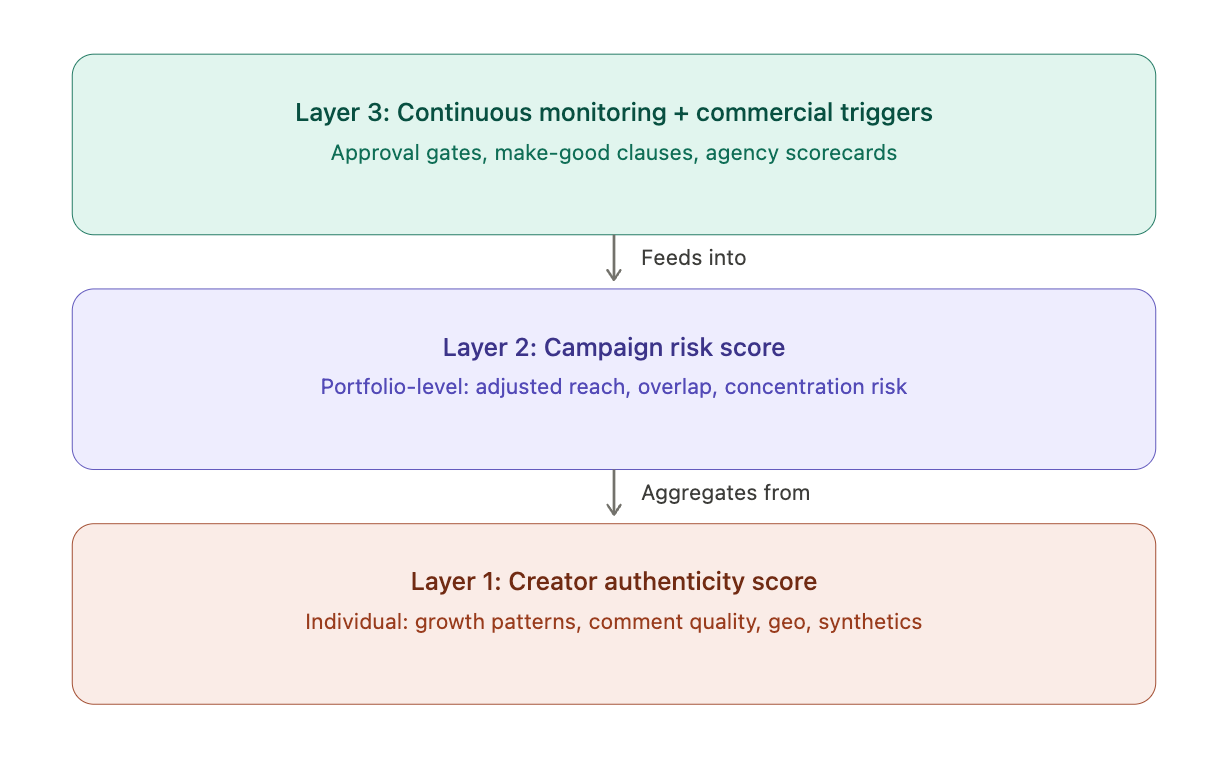
Layer 2: Campaign Risk Score
Brands don't buy creators one by one. They buy campaigns, rosters, and agency recommendations, often activating dozens or hundreds of creators simultaneously. Unilever went from a manageable stable to 300,000.
So you score the portfolio. Individual creator authenticity, concentration risks by platform, audience overlap between creators, over-reliance on a single tier. Then the outputs that actually matter: authenticity-adjusted reach (what percentage of this campaign's reported reach is likely hitting real humans with actual purchase intent), synthetic engagement exposure, and expected variance between reported performance and authentic performance.
This lets a buyer ask a much more useful question: "How much of this $500,000 creator campaign is likely to reach real humans with credible intent?"
That's procurement language. That gets budget owners listening.
Layer 3: Continuous Monitoring + Commercial Triggers
This is what makes the product sticky.
Don't stop at pre-campaign vetting. Monitor creators during and after the campaign for sudden suspicious growth, abnormal comment quality shifts, synthetic engagement bursts, content-suitability changes, and post-campaign authenticity deterioration.
Then tie the outputs to commercial action. Approval gates where a creator can't be contracted until the score clears a threshold. Automatic re-review triggers. Required manual signoff for high-spend creators. Discount recommendations when authenticity-adjusted reach is 60% of reported and the CPM should reflect that. Make-good clauses tied to verified audience quality. Agency scorecards tracking how clean the rosters are that they keep recommending. Fraud reserve recommendations on large campaign spends.
At that point you're selling decision support with commercial consequences. That's how you escape commodity analytics.
Sell to the people afraid of embarrassment
The obvious buyer is a brand's social media team. That's too shallow.
The better initial buyer is any party whose downside is reputational, financial, or relational. Agencies pitching legacy brands who can differentiate with an independent authenticity report in their pitch deck. Procurement teams approving creator rosters who need a defensible process beyond gut feeling. Legal and compliance teams, especially in regulated industries like finance, health, and supplements. Brand safety teams already flagging content suitability where audience authenticity is the missing half. Finance leaders who start asking whether reported performance is credible once creator spend becomes a material line item. Creator marketplaces and talent networks who need trust infrastructure to reduce friction for their own buyers.

These buyers behave differently from a social team. A risk-oriented buyer wants defensible process, logs, evidence, explainability, thresholds, and vendor neutrality. That's a much more durable product surface to sell into.
It also gives you a clean outbound angle: "We don't help you find creators. We help you avoid paying premium CPMs for manufactured credibility."
The wedge: how a small team should start
Don't try to score the entire creator economy across every platform, vertical, and geography at once. That's how you drown in data and sales complexity before you ever close a deal. Instead:

Unlock the Vault.
Join founders who spot opportunities ahead of the crowd. Actionable insights. Zero fluff.
“Intelligent, bold, minus the pretense.”
“Like discovering the cheat codes of the startup world.”
“SH is off-Broadway for founders — weird, sharp, and ahead of the curve.”


