


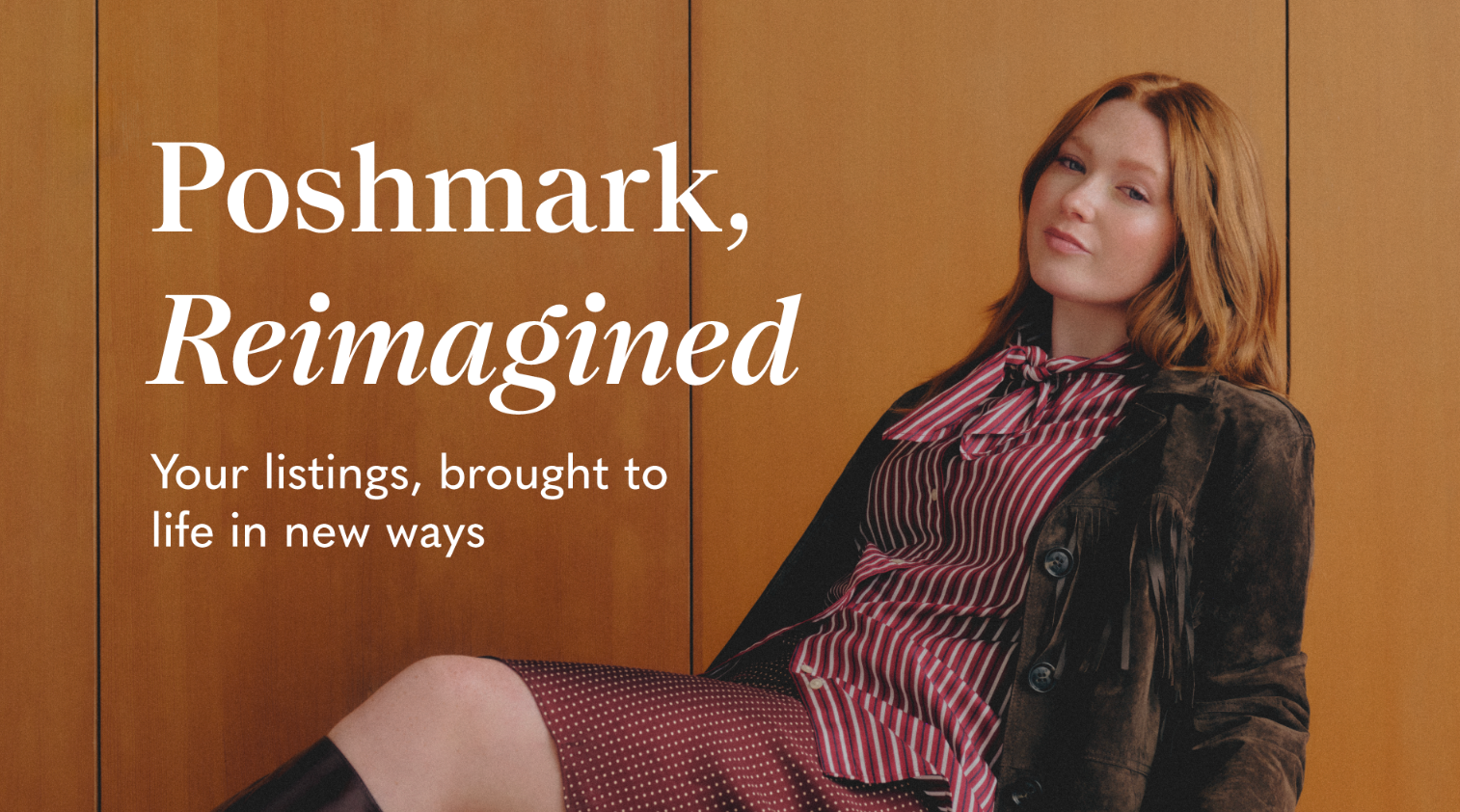
On March 25, 2026, Poshmark rolled out its first major redesign in 15 years. Discovery moved to the center. A new "For You" feed learns from engagement. Larger, portrait-style imagery replaced the old thumbnail grid. Guided browsing, personalization, and editorial inspiration replaced keyword search. Leadership described the redesign as "a future where discovery feels intentional, where taste leads trends, and where resale is firmly at the center of fashion's next era."
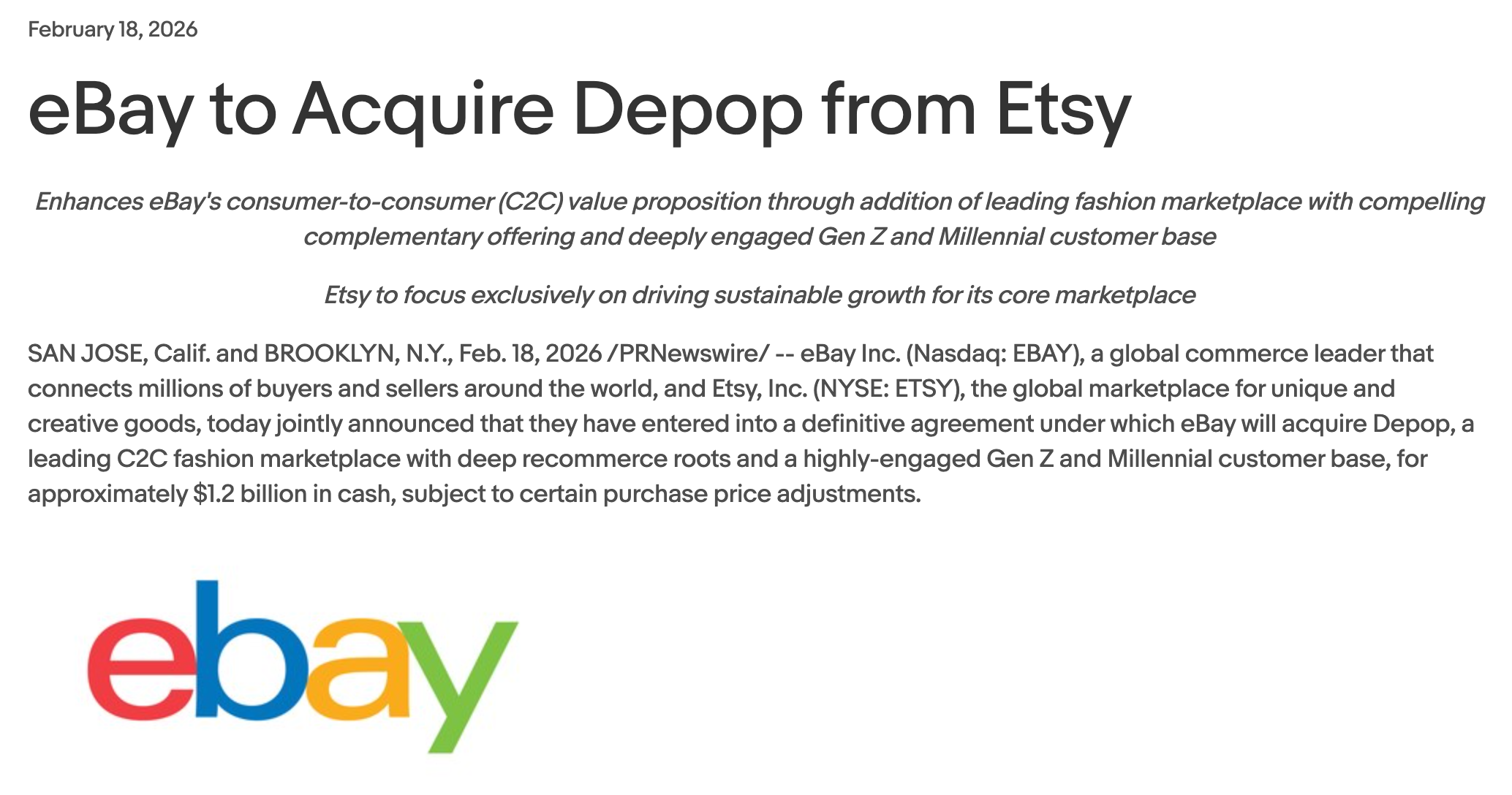
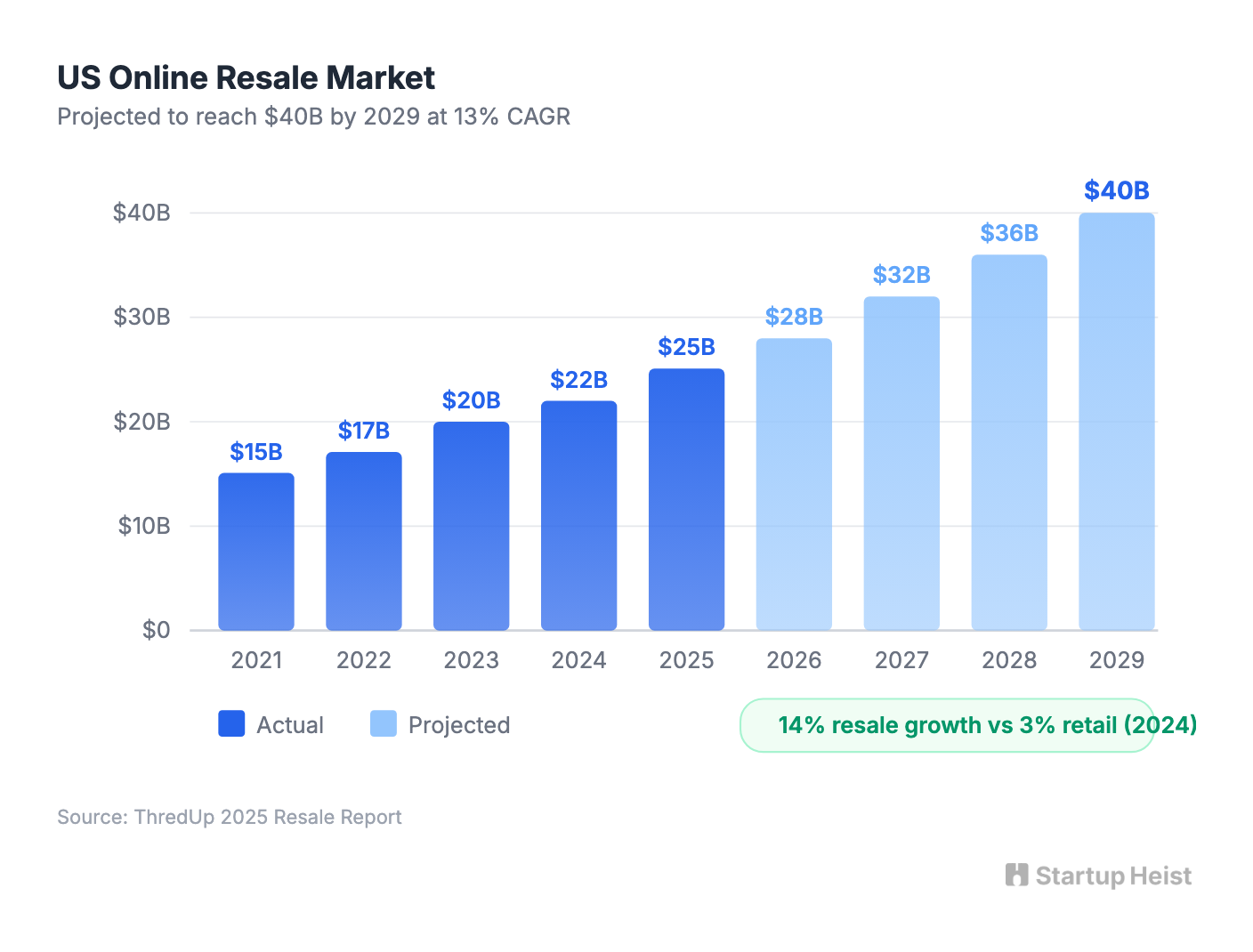
The momentum extends well beyond one platform. On February 18, 2026, eBay announced a $1.2 billion deal to acquire Depop, a marketplace with $1 billion in 2025 GMV, 60% year-over-year US growth, and seven million active buyers, nearly 90% under 34. ThredUp's 13th annual Resale Report projects global secondhand apparel will reach $367 billion by 2029 and US online resale will hit $40 billion, growing at 13% annually. The secondhand apparel market grew 14% in 2024, five times faster than retail clothing overall.
Every incumbent is scrambling to solve the same structural problem from inside its own walls. The cross-platform play is wide open.
Here is the briefing on what to build and why.
The money: 500 premium subscribers at $19/month plus affiliate commissions from eBay and Poshmark gets a solo founder past $10K MRR.
Inside:
• Cross-platform outfit assembly engine
• Taste-graph ontology that compounds
• Creator storefront monetization path
• Seller SaaS for themed drops and bundles
Search breaks when supply gets deep
Nobody wakes up wanting a "women's blazer, size 6, navy." They want three polished outfits for a hot-weather work trip. A designer-era handbag with the right silhouette at the right price. A furnished first apartment that doesn't look like a Facebook Marketplace fever dream.
Resale platforms are bad at this because the underlying data is thin, inconsistent, and seller-generated. One listing says "mid century." Another says "vintage chair." A third says nothing useful. The supply exists. The meaning is buried.
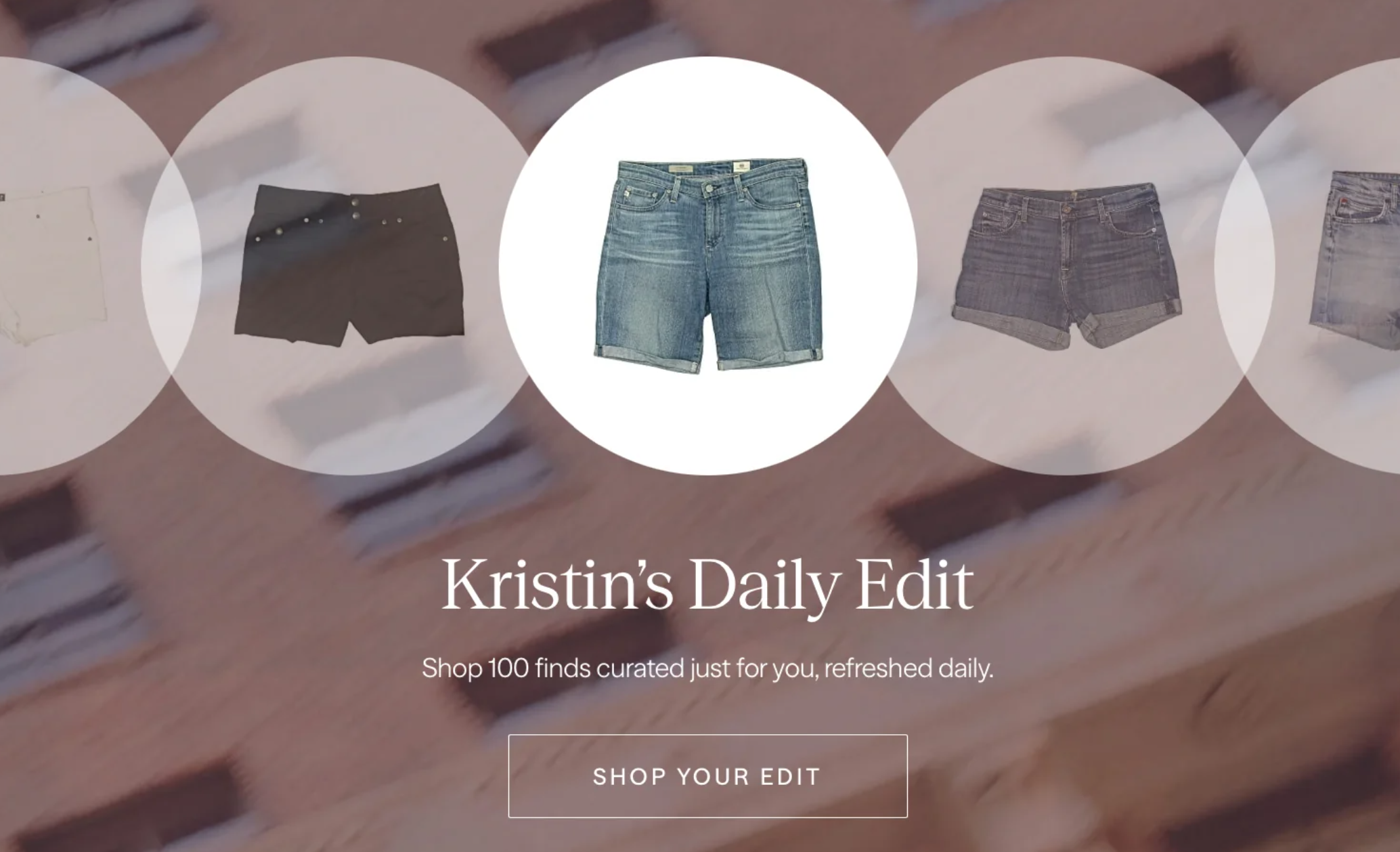
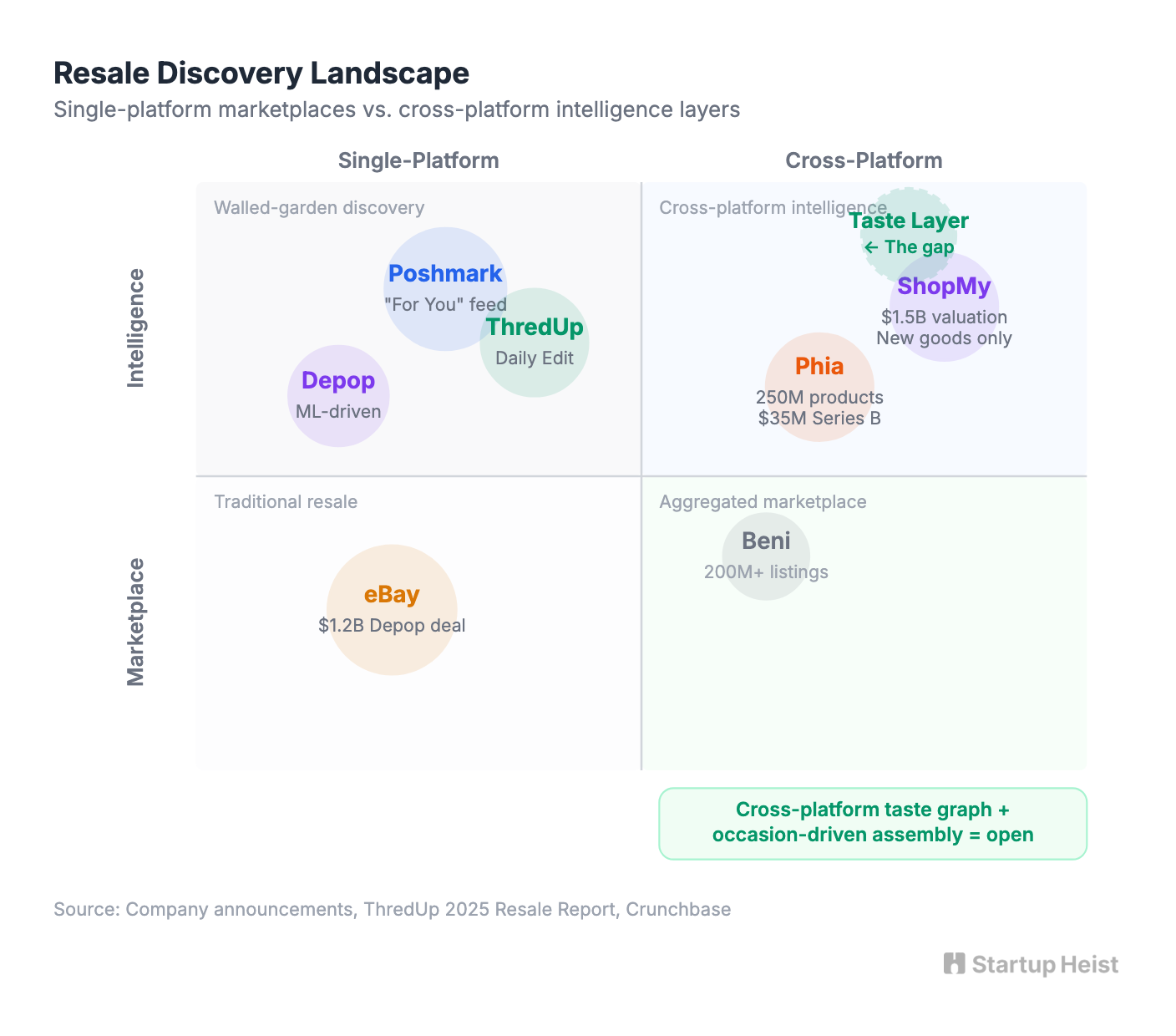
Every major marketplace knows it. ThredUp built "The Daily Edit," a personalized 100-item curation refreshed every 24 hours, and shoppers who use its image search are 85% more likely to buy. Depop runs a machine learning system that processes a buyer's last 300 views and narrows inventory to 600 tailored options, updated multiple times daily. Poshmark invested in its entire front-end experience. But each company is solving discovery within a single walled garden, and none has any incentive to route a buyer to a competitor's listing.
The opportunity: a cross-platform taste graph
The most valuable version of this business is not another marketplace. It is the intelligence layer that sits above messy, fragmented supply and turns chaos into conviction.
Every listing gets translated into a richer internal model: brand, style era, silhouette, material cues, quality signals, occasion fit, visual mood, price band, buyer tribe. Then the buyer searches in human language — "quiet luxury wedding guest dress, not black, under $250" or "off-duty creative director airport look" — and the system routes demand across Poshmark, eBay, Depop, Vestiaire Collective, and eventually local sources.

Pieces of this already exist. Phia, co-founded by Phoebe Gates and Sophia Kianni, raised a $35 million Series B in January 2026 led by Notable Capital with Khosla and Kleiner Perkins. The platform aggregates 250 million products from 40,000 platforms and positions itself as "Google Flights for fashion," with 11x revenue growth since launch and hundreds of thousands of monthly active users. Beni, an AI browser extension, aggregates over 200 million listings from 40+ resale sites and surfaces secondhand alternatives when users shop for new items. ShopMy, valued at $1.5 billion, proved that creator-driven curation commerce works at scale — nearly 200,000 creators driving over $1 billion in annual brand sales through taste-led storefronts.
Phia and Beni validate the cross-platform demand thesis. But both are price-comparison tools. Neither builds a taste graph, assembles occasion-driven outfits, or enables creator storefronts built on curated secondhand inventory. The integrated play — aggregation, taste intelligence, creator curation, and occasion-driven assembly — remains open.
The moats that compound
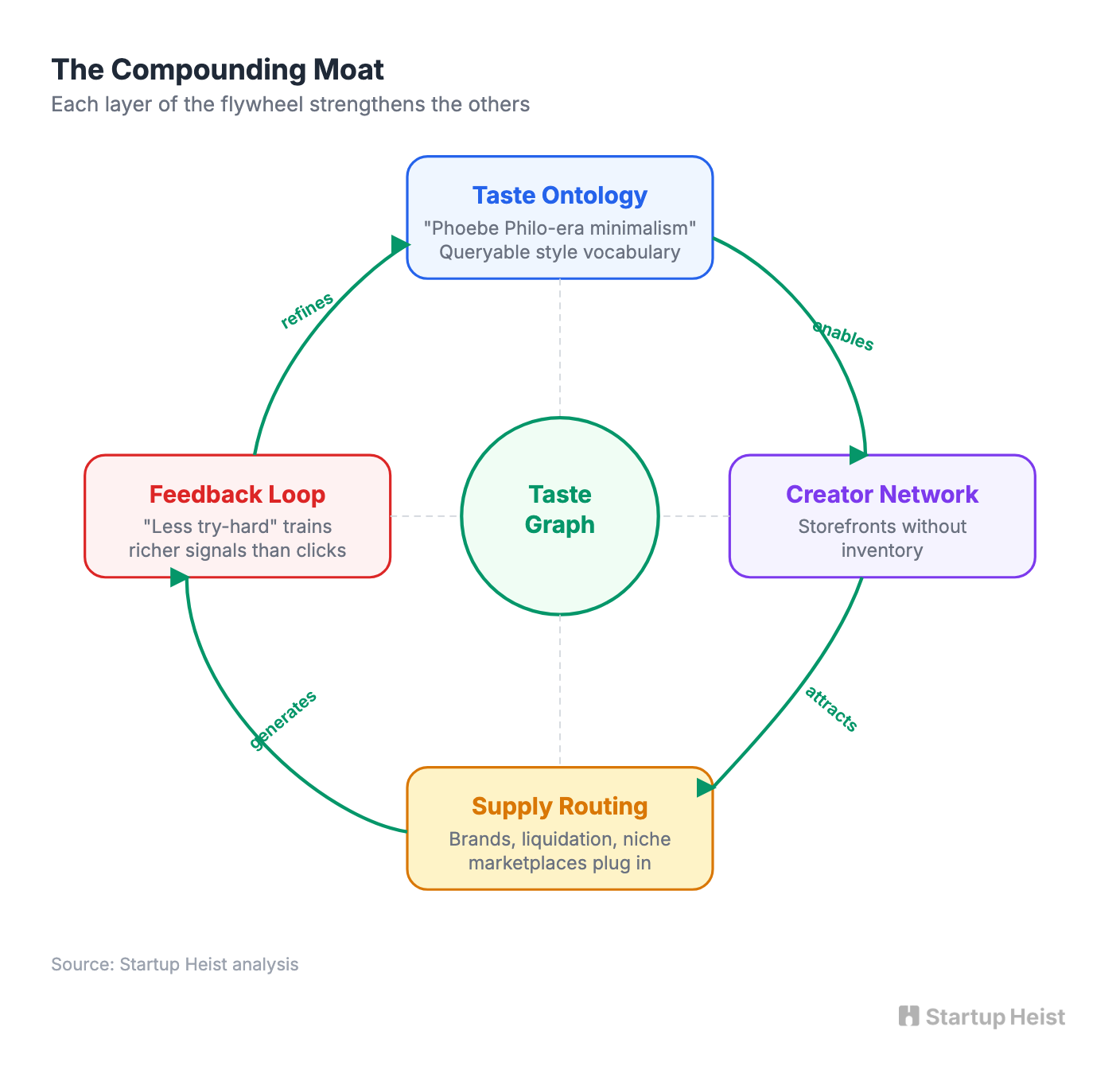
Ontology. You create an internal vocabulary for style that marketplaces do not have. "Phoebe Philo-era minimalism," "soft power dressing," "old Celine under new money budget." Turning these into a durable, queryable graph is specialized work that improves with every user interaction.
Feedback loop. Your product learns from intent signals richer than clicks. When a user says "less try-hard" or "warmer neutrals," that trains a more refined system than any behavioral recommendation engine.
Creator network. Once creators publish AI-assisted secondhand storefronts without holding inventory, you become the place where tastemakers monetize curation. ShopMy proved this for new goods. Secondhand is stickier because the supply is scarcer and harder to navigate.
Supply routing. If brands, liquidation channels, or niche marketplaces eventually plug in for curated discovery or creator-driven drops, you become the demand-routing layer across nontraditional supply. That is where a product becomes infrastructure.
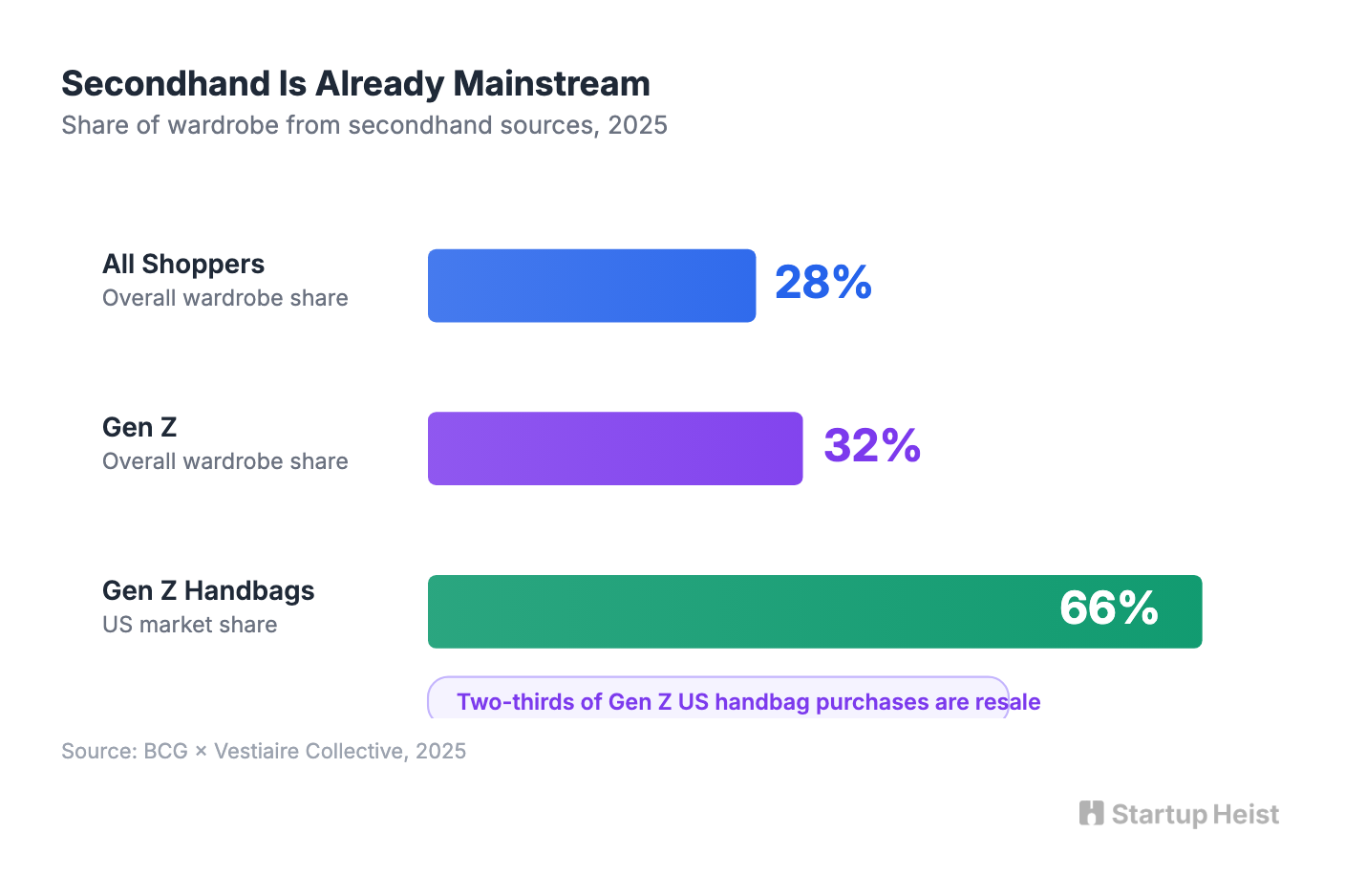
BCG's 2025 report with Vestiaire Collective found that secondhand already accounts for 28% of surveyed shoppers' wardrobes, rising to 32% for Gen Z. For Gen Z handbags in the US, the figure reaches 66%. These buyers are sophisticated. They shop across platforms. They know what they want aesthetically, even when they cannot express it in marketplace search syntax.
The wedge: AI resale stylist for occasion-based fashion
Start in fashion. Furniture is visually seductive, but the data is worse, local logistics are messy, and affiliate economics are shakier. Fashion has stronger inventory density, better consumer frequency, clearer creator behavior, and easier repeat usage.
The specific product promise: In five minutes, get three fully assembled secondhand outfit options for a real use case.
Inputs
- Occasion
- Budget, sizes, and brand preferences
- Aesthetic cues and vibe
- Geography if relevant
Output
- Three outfit boards with item-by-item links
- Rationale for each look
- Substitutions if an item sells
- Optional bundle summary for sharing or saving
Platform sources
Unlock the Vault.
Join founders who spot opportunities ahead of the crowd. Actionable insights. Zero fluff.
“Intelligent, bold, minus the pretense.”
“Like discovering the cheat codes of the startup world.”
“SH is off-Broadway for founders — weird, sharp, and ahead of the curve.”


