


Financial models project owner income past $156,000 in Year 2, with top operators exceeding $700,000 EBITDA by Year 4 — on startup capital around $38,000 and operational breakeven at 9 months.
This is one of the most overlooked small business ideas, the ultimate Boring Business Renaissance × AI Agent Overlays. Tech founders won't do the work. Operators who will do the work don't systematize it. You sit in the gap with a DTC-grade brand, subscription billing, and routing discipline. Then you expand into multiple unsexy verticals per address and later license, franchise-lite, or roll up.
You're building a local GrossOps machine — a recurring revenue business powered by AI-assisted operations, route density, and the one moat nobody can copy from a laptop: owning Thursday morning in every neighborhood.
Why This Is Real (And Why Now)
Pet waste removal alone is a $2.1 billion market as of 2024, projected to hit $3.8 billion by 2033 at roughly 7.5% CAGR. That's a narrow slice of home services — one most people laugh at — growing faster than GDP. Documented operators have cleared near $1M/year as franchisees. The broader U.S. home services market exceeds $600 billion in annual spending and has stayed above that level since 2022, with the Harvard Joint Center for Housing Studies projecting $608 billion in homeowner maintenance and upgrade spending through 2025.

The franchise pipeline keeps expanding. The IFA's 2026 Economic Outlook projects 845,000 franchise establishments generating over $920 billion in output, with commercial and residential services among the fastest-growing segments at 3.2% year-over-year. Your endgame buyer or licensee is often a franchise-minded operator looking for a proven playbook, so that pipeline matters.
AI adoption among home service pros is real but shallow. Housecall Pro's 2025 survey of 400+ contractors found over 70% have tried AI tools, with roughly 40% actively using them — mostly for isolated admin tasks like scheduling, comms, and paperwork. AI adopters reclaim 4+ hours per week. Over 80% say the tools met or exceeded expectations. The tools are familiar. But almost nobody has built a complete machine that ties discovery, booking, routing, billing, retention, and review acquisition into a single automated loop. That end-to-end operating system doesn't exist yet — and building it is more of an AI-powered service business play than a software product play.
The Unit Economics: Why "Gross + Recurring + Route" Works
The model you want has four properties: recurrence (weekly/bi-weekly/monthly visits), low equipment capex (a vehicle, bags, basic tools), fast job time (10–20 minutes on-site per stop), and routing density — the real profit lever.
Real-world pet waste removal pricing clusters around $15–$40 per weekly visit, with upsells for multiple pets, deodorizing, and seasonal deep cleans. One tech can hit 6–10 stops per hour when routes are dense. Even at modest ARPU, the business becomes an operations game. Reduce windshield time, reduce churn, automate billing, keep review velocity high.
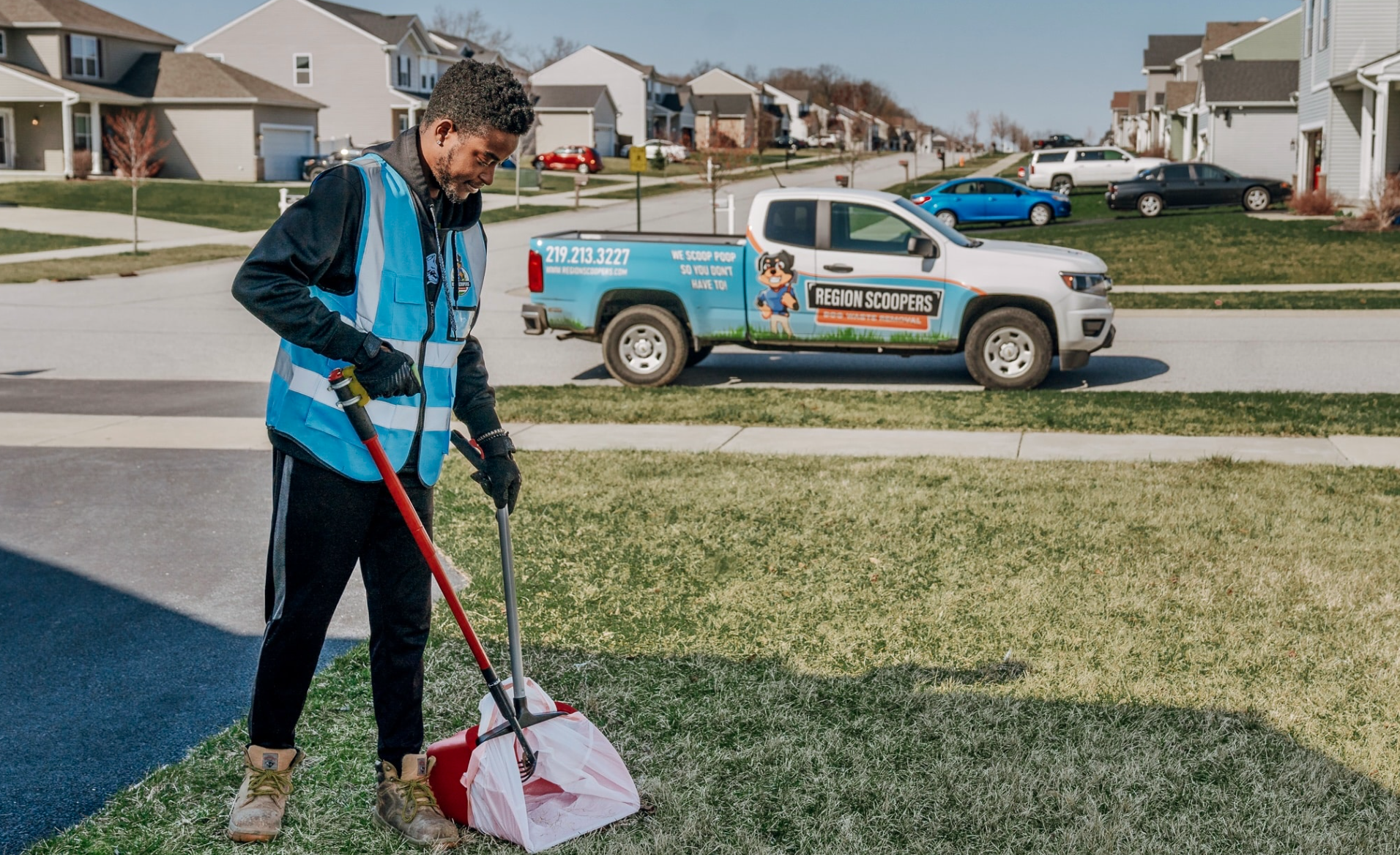
Startup capital is minimal: roughly $38,000 covering a first service vehicle and website/booking system, with operational breakeven modeled at 9 months and full payback at about 26 months.
The metric that matters most isn't revenue per customer — it's revenue per address. Track it from day one. Every service you add to the same address expands LTV without adding customer acquisition cost. That's the whole formula: subscription revenue, density, dunning, reviews, and address-level LTV.
The Competitive Reality
Jobber and similar field-service platforms already offer online booking, automated reminders, mapping/routing, scheduling, and invoicing workflows. If your pitch is "we scoop poop, and we have software," you're describing table stakes.
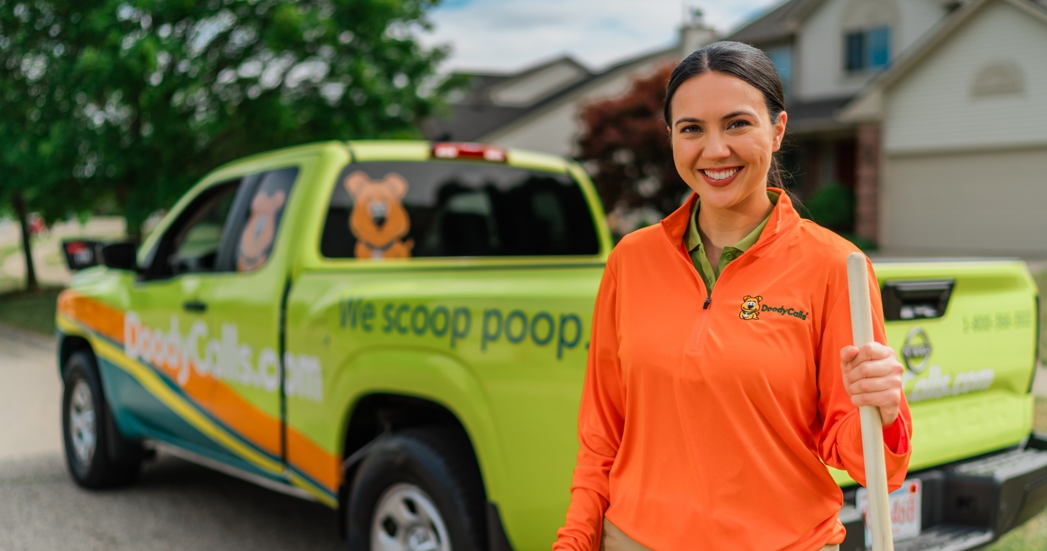
Franchises already market proprietary tech. DoodyCalls has operated for over two decades with its own scheduling platform and CRM-driven model. Pet Butler offers a multi-service franchise built around pet waste removal, dog walking, pet sitting, and commercial contracts — all subscription-based.
The software angle alone won't protect you. Your defensibility has to show up where customers actually feel it: more reviews, faster responsiveness, visibly more professional communication and proof of work. The moat is the operating system and bundle logic layered on top of off-the-shelf tools — not a better version of Jobber.
The Real Play: Build a Local GrossOps Portfolio, Then Choose Your Scaling Weapon
The Wedge
Unlock the Vault.
Join founders who spot opportunities ahead of the crowd. Actionable insights. Zero fluff.
“Intelligent, bold, minus the pretense.”
“Like discovering the cheat codes of the startup world.”
“SH is off-Broadway for founders — weird, sharp, and ahead of the curve.”


