


Think precision agriculture meets vertical software: structured sampling, partner labs, a recommendation engine that sharpens with every harvest cycle, and a commerce layer on top.
A small team can reach $400K+ ARR in Year 1 with fewer than 50 customers, then scale past $1M by layering benchmarking and input sales. This is a soil intelligence startup idea for founders who want to own the decision layer between dirt and dollars.
Your soil is not one thing. Nutrient levels, texture, organic matter, pH, and microbial activity vary across every field, every greenhouse room, every vineyard block. Precision agriculture has operated on this premise since GPS-guided tractors became standard equipment: variable-rate fertilizer application, grid-based soil sampling, yield monitoring. The global soil testing equipment market hit roughly $5.5 billion in 2024 and is projected to reach $11–13 billion by 2032 depending on the source, growing at nearly 10% annually. The precision viticulture market alone is expected to grow from $1.6 billion in 2024 to over $4.5 billion by 2034.
All that spending on testing infrastructure points in one direction: zone-based soil management beats average-based soil management, and growers who act on better data get better economic outcomes.
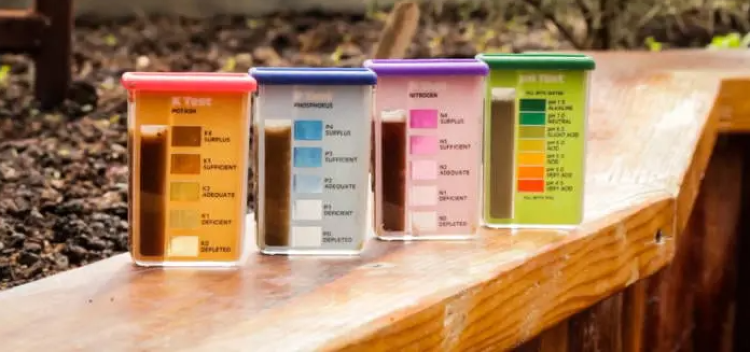
The tempting version of this startup is consumer-facing: personalized soil kits, custom nutrient blends, beautiful packaging. But that path leads to a low-moat manufacturing and logistics problem disguised as a software company. Fertilizer brands can copy the format overnight. No data advantage, no network effect, no switching cost.
The better company is a soil operating system for high-value growers — vineyards, cannabis cultivators, specialty-crop greenhouses — where a small improvement in consistency or disease prevention is worth thousands of dollars per acre. The product is software-enabled diagnostics and prescriptions. The moat is an outcomes graph that gets smarter with every test, every recommendation, and every harvest.
Worth noting: those equipment-market billions describe spending on instruments and lab infrastructure, not your addressable software revenue. Your actual TAM is the slice of premium growers willing to pay for agronomic software, diagnostics workflow, and decision support. The equipment growth validates demand for soil data — your job is to capture the intelligence layer on top of it.
The Right Starting Market
The right customers are people growing crops where a small quality shift changes the economics of their operation. Start with one of three groups.
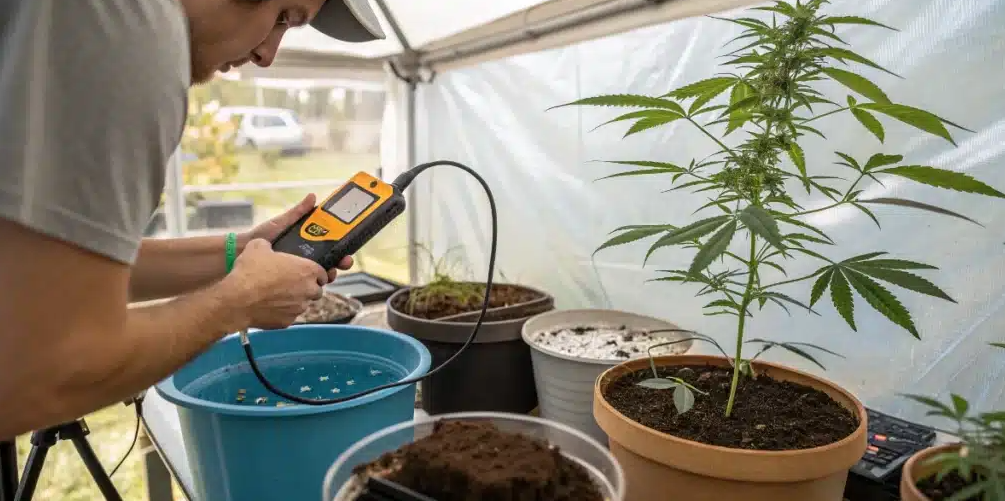
Legal cannabis cultivators with indoor or greenhouse operations. The U.S. cannabis market was estimated at $38.5 billion in 2024 and is expected to grow at roughly 11.5% annually through 2030. The cultivation side is fragmented, high-value, quality-sensitive, and already filled with growers who think in terms of terpene profiles, consistency, living soil, and environmental control. New York state reported more than $1.5 billion in adult-use cannabis sales in 2025 — large enough to support premium cultivation software and fragmented enough that category leaders are still being formed.
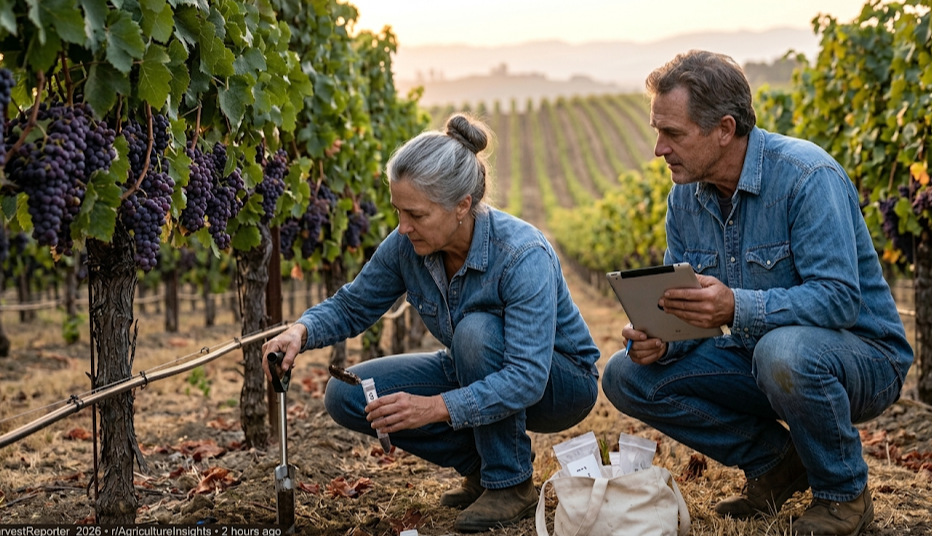
Boutique vineyards and wineries where terroir, consistency, and quality premiums matter. Premium wine producers are already investing aggressively in precision technologies. Consumers consistently pay double for bottles with documented regenerative practices, driving wineries to install dense sensor networks that log canopy microclimate and phenolic profiles in real time. Michigan State and Oregon State both stress that vineyard nutrition and soil status vary with site conditions, and that soil and tissue testing together are central to managing vine health, fruit quality, and yield.
Controlled-environment growers producing high-value specialty crops. Indoor farms, mushroom operations, high-value herb producers. Anyone growing something expensive in a managed environment where inputs are trackable and outcomes are measurable. Of the three wedges, CEA growers likely offer the fastest feedback loops — interventions and results are easier to observe when you control the entire environment.
All three share the same attractive characteristics: high crop value per square foot, real downside from errors, and a culture that already accepts testing, optimization, and premium inputs.
The Real Moat: An Outcomes Graph
Most soil labs can tell a grower what's in the sample. Far fewer can say: growers with this microbial profile, this pH range, this mineral balance, and this management pattern tend to get higher Brix, lower disease pressure, better terpene consistency, fewer nutrient lockout events, or stronger crop uniformity.
That distinction is the category-defining move. Every test improves the recommendation engine. Recommendations create commerce opportunities. Commerce events generate performance data. Performance data sharpens benchmarks and predictions. Once you connect zone-level soil data to real-world outcomes, you stop being a lab reseller and become decision infrastructure. The moat compounds every quarter.
The biggest risk is the inverse: becoming a services-heavy lab middleman before you have enough repeated data to create differentiated benchmarks. Build the feedback loop from Day 1 by tracking what happened after every recommendation.
Competitive Landscape: The Signal, Not the Threat
Several companies validate pieces of this market, which is encouraging.
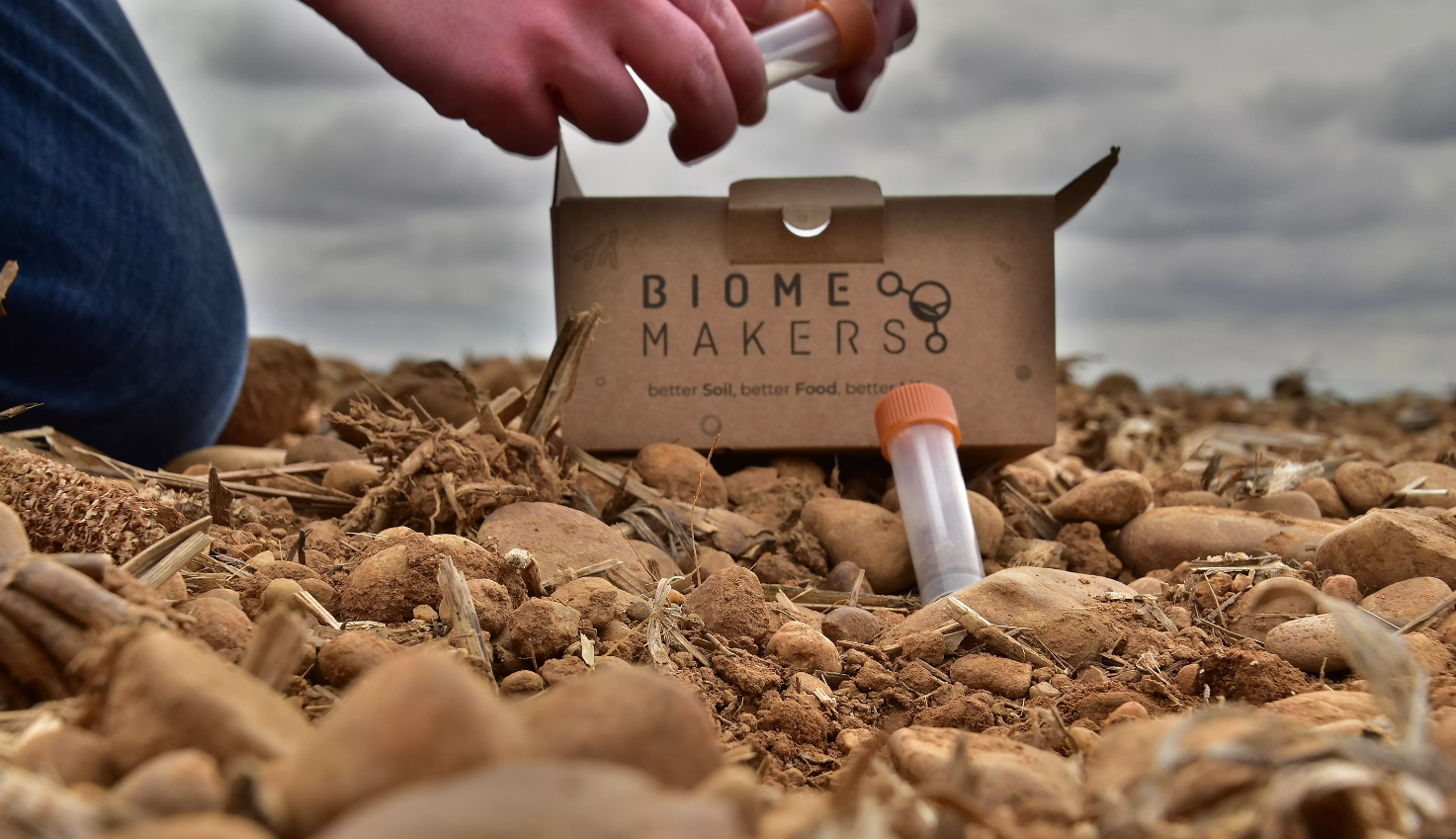
Biome Makers is the most visible player. Founded in 2015, the company raised $15 million in Series B funding in 2021 led by Prosus Ventures. Its BeCrop platform analyzes soil microbiome DNA and uses machine learning to assess how microbes interact with crops and ecosystems — not just which ones are present. The company claims the world's largest soil database (55 million microorganisms catalogued) and has impacted over 2.2 million acres across six continents. Fast Company ranked it No. 4 in Agriculture on its Most Innovative Companies list in 2024. Biome Makers is already leaning into recommendation systems and product-performance confidence, which signals that the commerce layer is where value capture will expand.
Trace Genomics positions soil biology as actionable agronomy, focusing on pathogen detection and disease risk assessment.
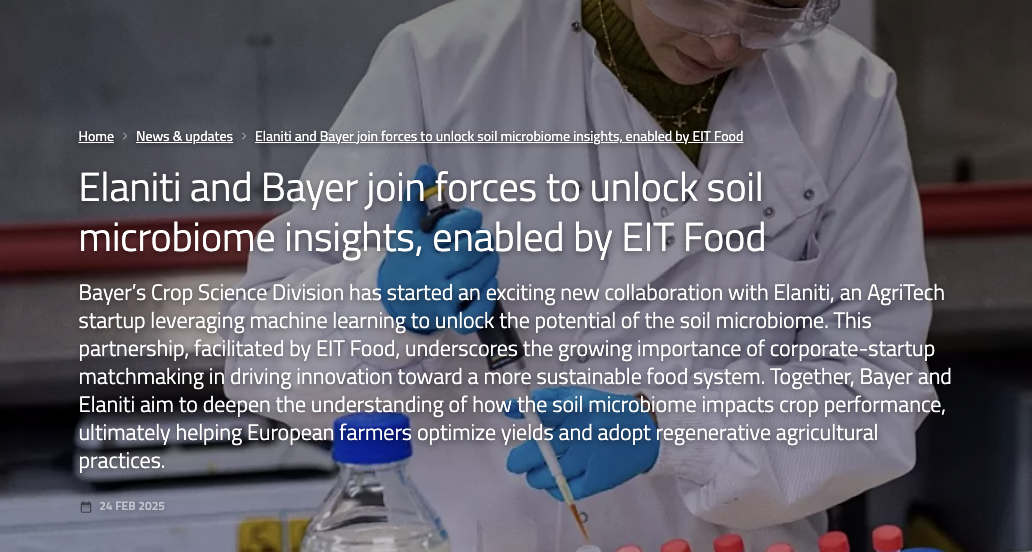
Elaniti is earlier-stage but revealing. The UK startup raised €1.5 million total by early 2025 and is building predictive models that forecast crop outcomes using soil biological, physical, and nutrient characteristics. Elaniti partnered with Bayer in 2025 to validate its approach — a strong signal that major agribusiness sees this category maturing.
The market signal is clear: growers will pay for biological soil intelligence when it becomes operationally useful. The whitespace is vertical specificity. Biome Makers serves broad-acre agriculture across six continents. None of these companies own the cannabis cultivator, the boutique winery, or the CEA specialty grower. That vertical focus — where you speak the language of terpene profiles and phenolic maps instead of commodity soybean yields — is where a new entrant wins.
What the Product Actually Looks Like
The MVP should look like a software-enabled service, not a hard-tech science project. 5 phases:
Unlock the Vault.
Join founders who spot opportunities ahead of the crowd. Actionable insights. Zero fluff.
“Intelligent, bold, minus the pretense.”
“Like discovering the cheat codes of the startup world.”
“SH is off-Broadway for founders — weird, sharp, and ahead of the curve.”


