


Build the Smart-Glasses Bouncer, Not the Smart-Glasses Detector
The camera moved onto the face
A few years ago, keeping cameras out of a room was a solved problem. You put a sign on the door, told people to put their phones away, and in serious environments you collected the phones at the desk. Every one of those procedures assumes the camera is a rectangle someone can be asked to surrender.
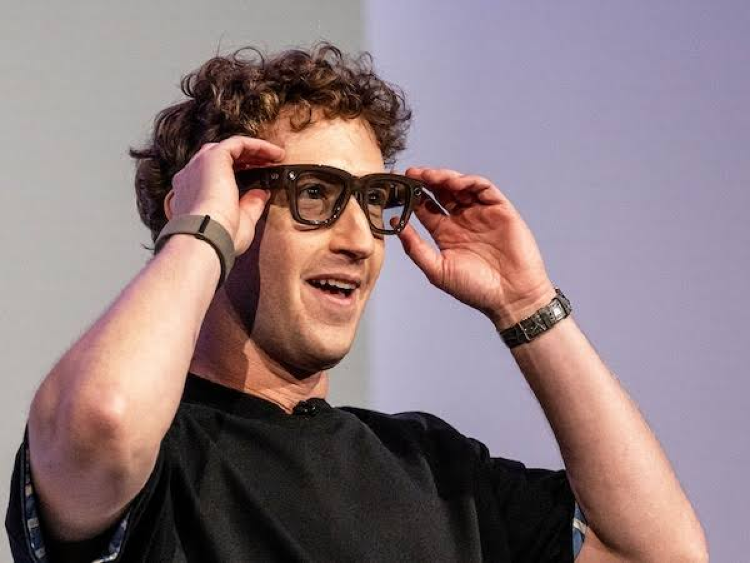
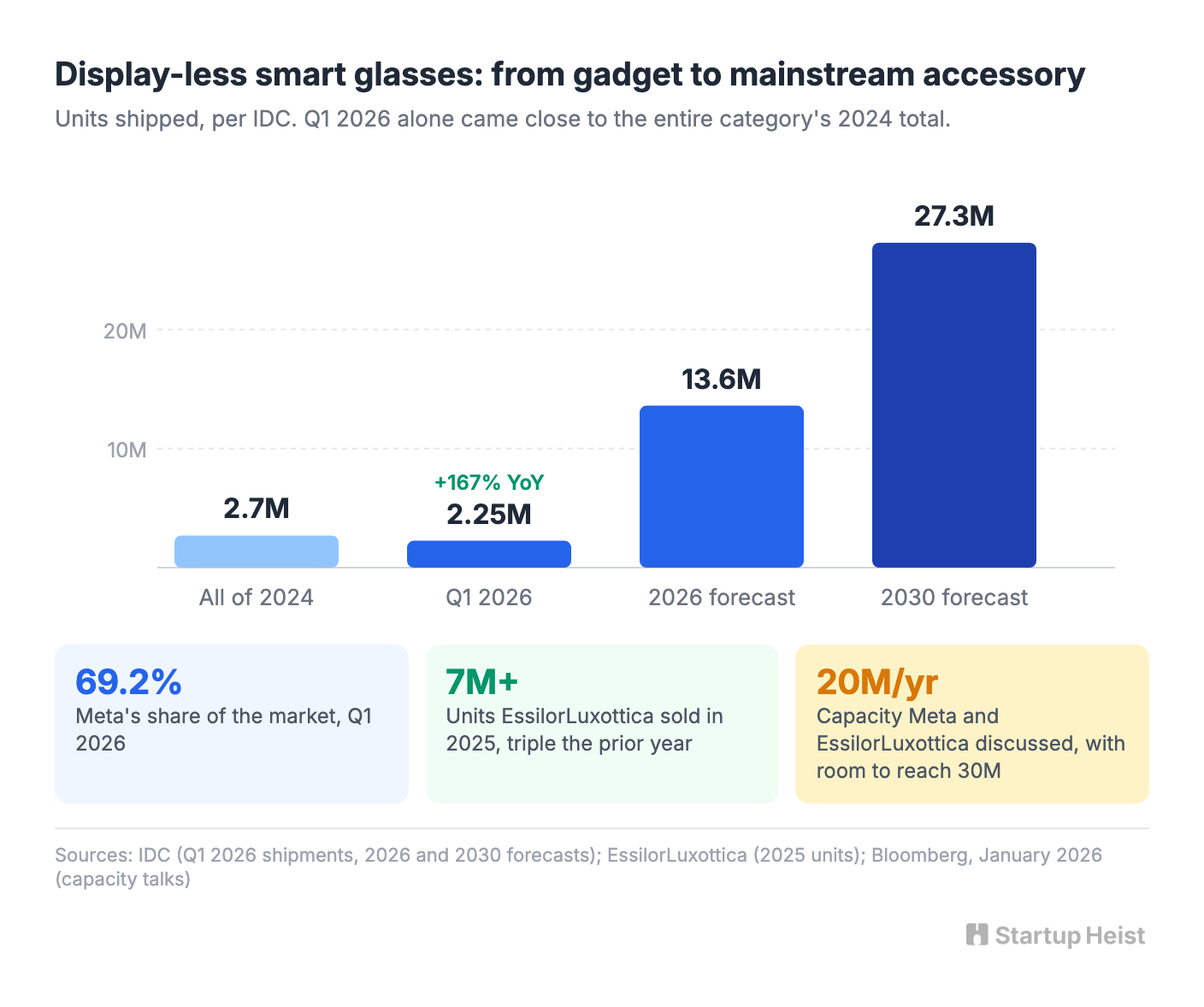
That assumption is expiring. Ray-Ban Meta glasses look like ordinary eyewear to a receptionist, a stage manager, or the person working the door at a club. They carry a camera and microphones, they're socially invisible, and they're selling at a pace that makes them a mainstream accessory rather than a gadget. IDC counted 2.25 million display-less smart glasses shipped in the first quarter of 2026, up 167% year over year, close to the 2.7 million the entire category shipped in all of 2024. IDC's forecast is 13.6 million units for 2026 and 27.3 million by 2030. Meta held 69.2% of the market in Q1. EssilorLuxottica, which builds the Ray-Ban and Oakley versions, reported selling more than 7 million units in 2025 alone, triple the prior year, and Bloomberg reported in January 2026 that the two companies were discussing capacity of 20 million units a year, with room to reach 30 million if demand holds.
Thousands of organizations already operate under some version of "no recording, no photography, no cameras in this area." Almost none of them have an operating procedure for the moment the camera looks like a pair of glasses. That gap is where the business sits: an operating layer that lets a controlled-entry venue enforce a no-recording policy it already has, now that camera-capable eyewear is walking through the door. The radio sensor is one component of that layer, and the least defensible one.
Here's the short version:
The money: 100 venues at $129 a month is $12,900 MRR; 1,000 sites clears $1.2M ARR. Yondr's phone pouches took $5.2M from one school district in a single year.
Inside:
• The five-piece device-policy kit
• Six-week path to a paid pilot
• Three pricing tiers, $49 to $129 a month
• Cold email template for no-recording venues
Four apps, a nightclub, and a bill on the governor's desk
The demand signal arrived in three layers over six months. The first was consumer apps. On February 25, 2026, a developer named Yves Jeanrenaud released Nearby Glasses, an Android app that scans Bluetooth for identifiers tied to Meta and Snap eyewear. He called it "a desperate act of resistance." Glasses Radar followed on Android. Then in August 2026 a Polish developer, Pawel Szydlowski, shipped Zuckoff for iPhone; by September 10 it had about 5,000 users, and its Pro tier costs $9.99 a year. AntiZuck, a $2.99 one-time purchase for iPhone, works the same way. Four independent developers reached the same smart-glasses detection technique using commodity hardware, and thousands of people installed the result. As a consumer business that's small. As a market signal it's large, because people now care enough about camera glasses to run a scanner in their pocket.
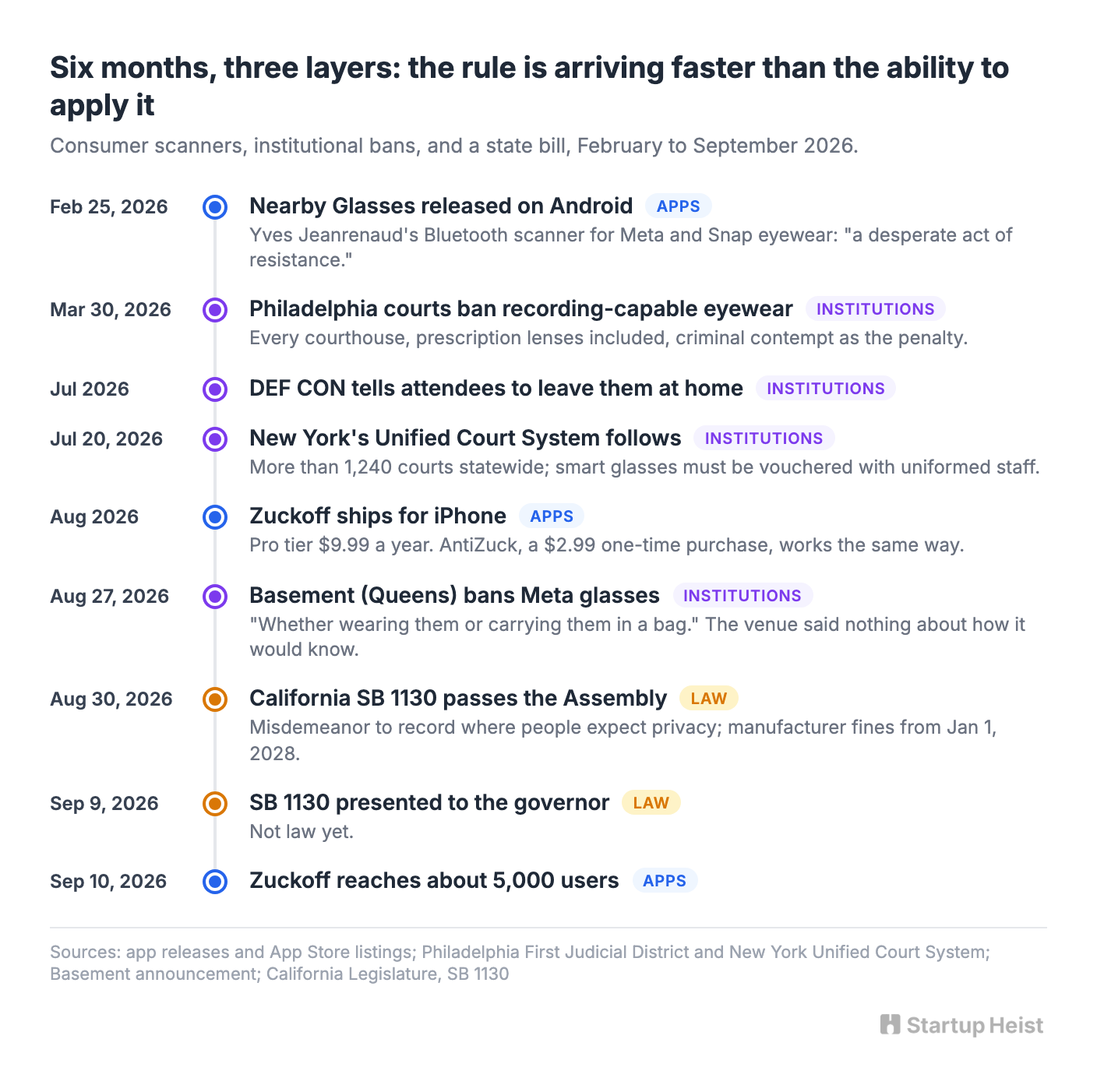
The second layer was institutions writing rules. Philadelphia's First Judicial District banned recording-capable eyewear from every courthouse effective March 30, 2026, prescription lenses included, with criminal contempt as the penalty; a court spokesperson gave the reason plainly, saying the glasses are "difficult to detect in courtrooms." New York's Unified Court System followed on July 20, 2026, covering more than 1,240 courts statewide; visitors carrying smart glasses must voucher them with uniformed staff before entering. Royal Caribbean prohibits recording glasses in its casinos, spas, restrooms, and youth areas. DEF CON told attendees in July 2026 to leave them at home. On August 27, 2026, Basement, the techno club under Knockdown Center in Queens, announced a Meta glasses ban: anyone bringing them inside, "whether wearing them or carrying them in a bag," would be asked to leave and could be banned permanently. The venue said nothing about how it would know.
The third layer is law. California's SB 1130 passed the Assembly on August 30, 2026 and was presented to the governor on September 9. It would make it a misdemeanor to use a wearable recording device to capture people in areas of a business where they have a reasonable expectation of privacy, prohibit disabling a device's recording indicator, and from January 1, 2028, fine manufacturers who sell wearables without a prominent indicator. It isn't law yet. But every layer points the same direction: the rule is arriving faster than the ability to apply it. Gizmodo's February 2026 headline captured the enforcement problem in four words: "Good luck banning smart glasses."
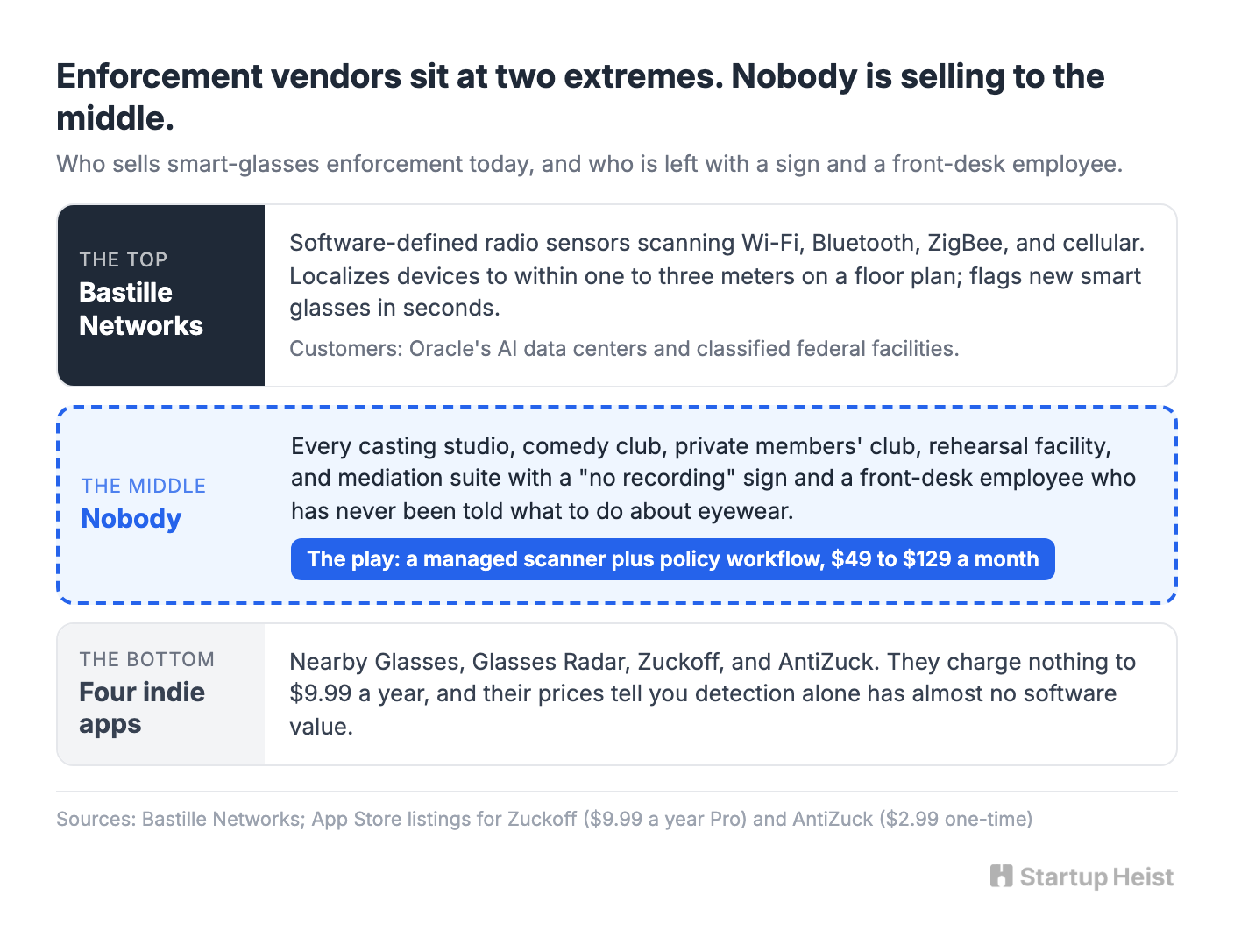
The vendors selling enforcement today sit at two extremes. At the top, Bastille Networks deploys software-defined radio sensors that scan Wi-Fi, Bluetooth, ZigBee, and cellular, localize devices to within one to three meters on a floor plan, and flag new smart glasses in seconds. Its customers are Oracle's AI data centers and classified federal facilities. At the bottom, four indie apps charge nothing to $9.99 a year. In between sits every casting studio, comedy club, private members' club, rehearsal facility, and mediation suite with a "no recording" sign and a front-desk employee who has never been told what to do about eyewear. Nobody is selling to that middle.
Why "detector" is the wrong word for the business
Before you build anything, understand what Bluetooth can and can't tell you, because the answer defines the product. The open-source Banrays project, which fingerprints Meta Ray-Bans over Bluetooth Low Energy advertisements, found the glasses easy to spot while powering on, pairing, or leaving their case, and much harder to see during normal connected use. Modern devices randomize their Bluetooth addresses, so simple MAC or manufacturer-prefix matching doesn't scale. Zuckoff's own App Store description says the same thing: glasses "advertise loudest while powering on, pairing, or leaving the case," and once paired to their owner's phone "they can go quiet, so silence here does not mean nobody is recording. A detection does not mean anyone is recording either."
The false-negative problem is permanent. Firmware changes, advertising goes silent, glasses sit powered off in a bag, and next year's model may broadcast something entirely different. Walls and bodies distort signal strength, so a pair of glasses in the coffee shop next door can read stronger than one in your lobby. Meta is also weakening the "we catch secret recorders" pitch every quarter: since late August 2026 its glasses stop the camera when the capture LED is covered, and the company tells users to switch the devices off in sensitive spaces. A business built on the word "detector" makes a promise the radio can't keep and the manufacturer is actively undercutting.
So the durable pitch is quieter. Cameras are becoming wearable and visually ambiguous. Your venue already has a recording policy. We give staff a repeatable way to apply it. The system never says "Recording detected." It says something closer to "Supported camera-capable eyewear may be nearby. Apply your venue policy if appropriate." It tracks no identities, and it claims neither that anyone is recording nor that the room is camera-free. That sounds less impressive than a detector, and it's far more sellable, because it's a promise a venue can repeat to its own lawyers.
The product: a device-policy kit in five pieces
Unlock the Vault.
Join founders who spot opportunities ahead of the crowd. Actionable insights. Zero fluff.
“Intelligent, bold, minus the pretense.”
“Like discovering the cheat codes of the startup world.”
“SH is off-Broadway for founders — weird, sharp, and ahead of the curve.”


