


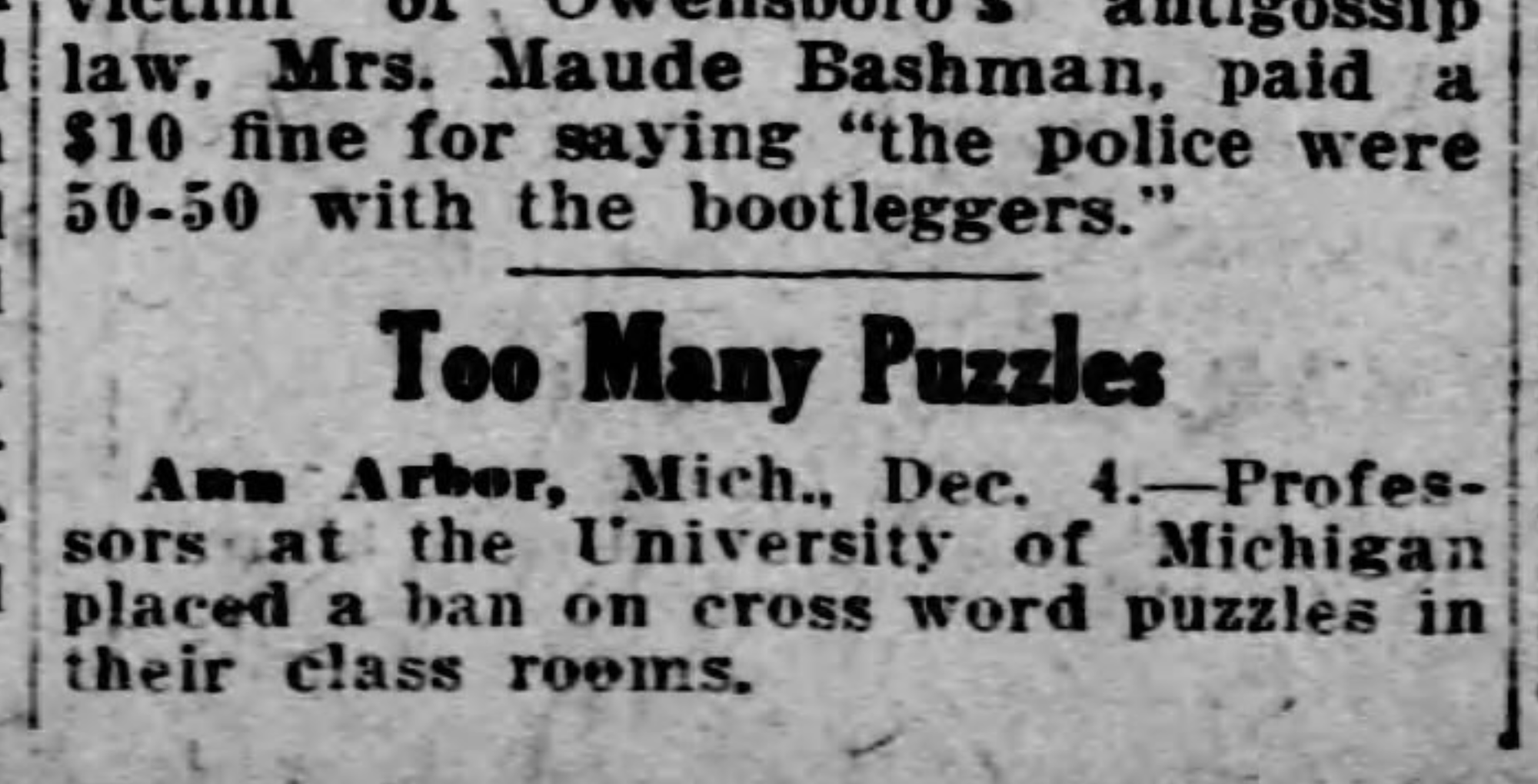
In 1924, a U.S. district attorney showed up two hours late to a speaking engagement. His excuse: a crossword puzzle he started on the train. That year, the crossword craze was showing up everywhere — on trains, in offices, even in church pews with hymnals for camouflage. A Chicago woman filed for divorce over her husband's crossword obsession. Libraries started blotting puzzles out of their newspapers. The New York Times called the whole thing "a familiar form of madness."
Eighteen years later, the same New York Times hired Margaret Farrar as its first crossword editor. Her pitch, months after Pearl Harbor: "You can't think of your troubles while solving a crossword." She ran the section for 26 years.
Fast forward to 2021. A guy named Josh Wardle builds a word game for his girlfriend during lockdown. She hand-picks 2,500 words from a list of 12,000. He posts it publicly. Ninety players in November. Two million by January. NYT buys it for seven figures.
We keep doing this. Someone builds a simple daily puzzle, we get hooked, and then somebody paywalls it.
Last August, the Times moved the Mini Crossword behind a paywall. Within hours, a developer reverse-engineered the client-side JavaScript and published a bypass URL. Another built a free alternative from scratch. Ten million people play NYT Games every day — 11 billion total plays last year. The appetite for the ritual is obvious. Whether anyone wants to pay the Times specifically? Questionable.
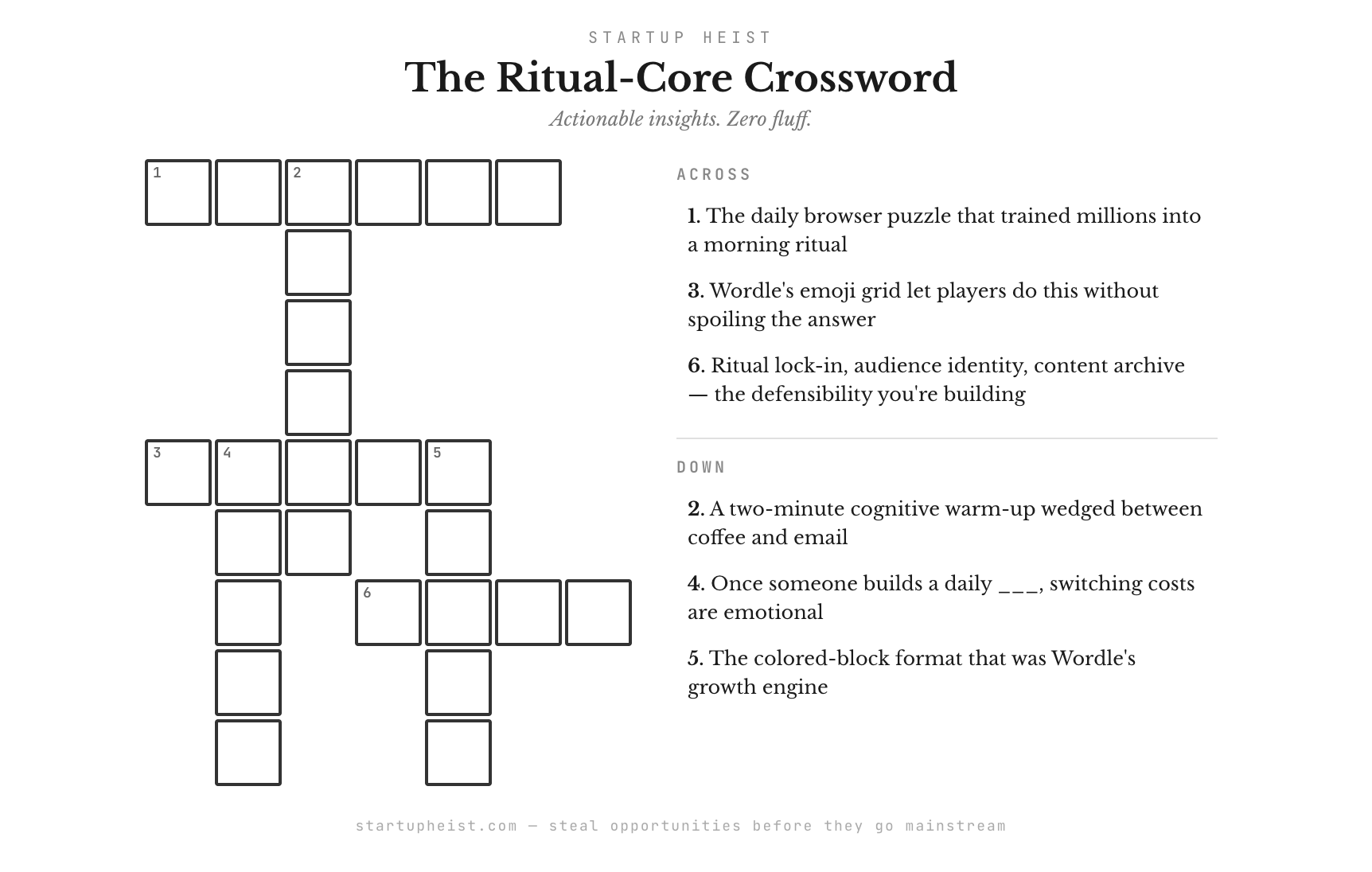
The idea we're featuring today lives right in that gap. A curated daily micro-game suite built for a specific professional audience — engineers, data people, product managers — the kind of readers who make B2B sponsors pay premium rates. Three puzzles, under five minutes, every morning. Free tier gets one scarce weekly sponsor slot. Paid tier runs $3-6/month for archives and streaks. At just 5,000 daily players, that's roughly $42K/year with clean margins. Distribution is a 7:15am email that IS the product.
Read the full playbook here:

NYT Games drives 11 billion plays a year, then moved the Mini Crossword behind a paywall. The backlash revealed a gap: a clean, ad-light daily puzzle experience built for a specific professional audience.
From the Vault:

The DOJ’s Title II rule puts 90,000 local governments on deadline to fix their PDFs — and 94% of public documents are already noncompliant. No one built the triage layer.

Sober-curious consumers are spending real money on sleep supplements, adaptogenic beverages, and non-alcoholic drinks. Nobody has combined all three into one ritualized evening product.


