


The Rage Room Without the Rent
A 7x16 enclosed cargo trailer sells new for around $7,000. A rage-room storefront in a strip mall costs about that much every month, for five years, before a single customer walks through the door. The whole opportunity sits in that gap.
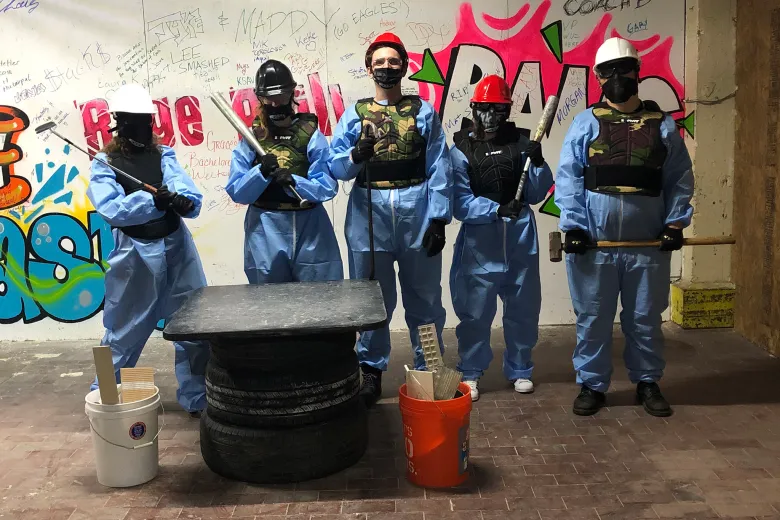
The obvious version of this business is to open another smash room, sign a lease, build out the space, and wait for foot traffic. The better version is a mobile smash-and-splatter event company: a contained experience that shows up in a corporate parking lot at 2 p.m., runs for two hours, and is gone by five. Trained staff, protective gear, pre-approved breakables, cleanup, insurance certificates, and a quieter splatter-paint option for anyone who doesn't want to swing a hammer.
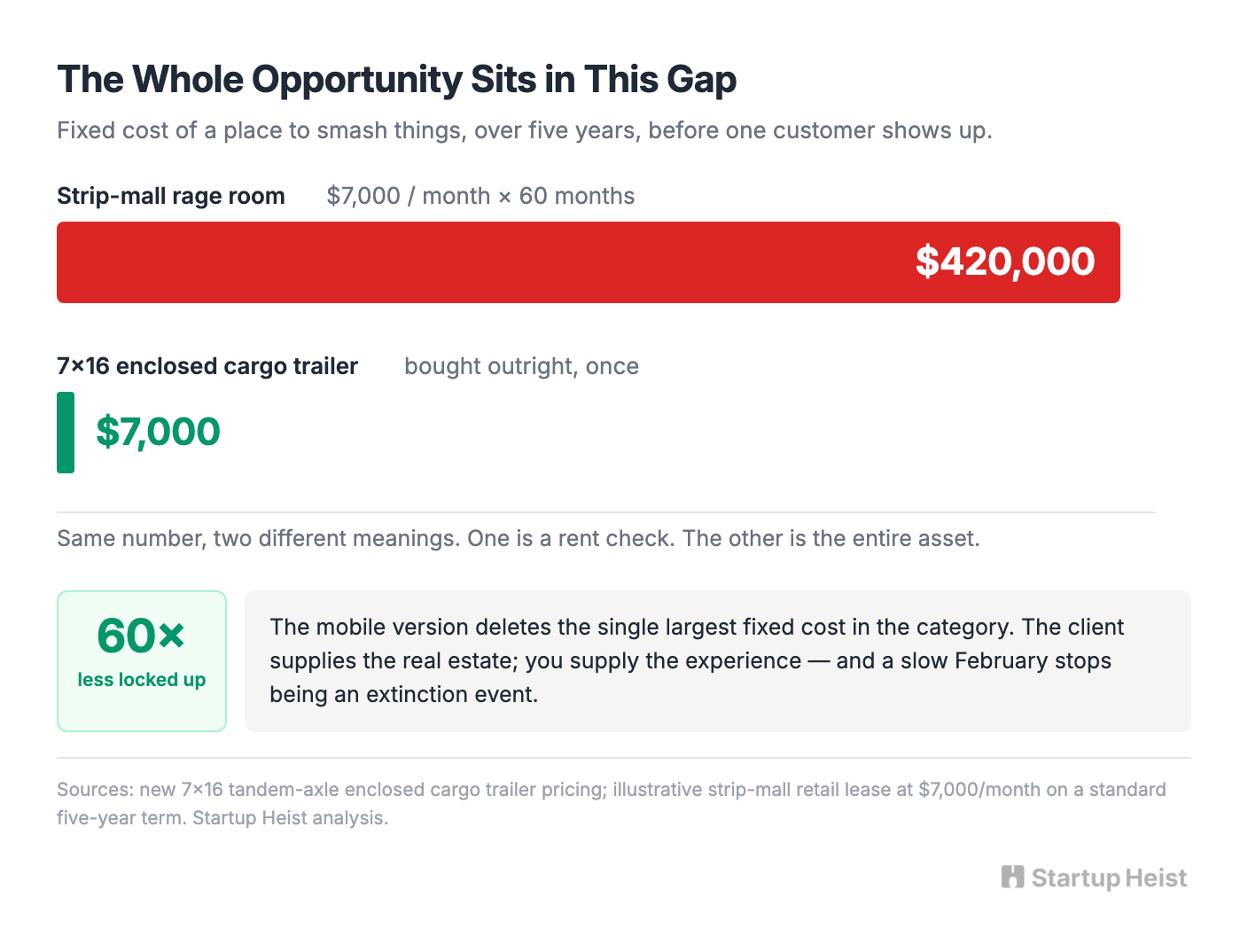
What you're actually selling to a stressed-out event planner is one sentence: we bring the memorable part of the offsite to you, and you don't have to worry about anything. That sentence is what turns a gimmick into a business.
Here's the opportunity:
The money: Twelve corporate events a month at $1,350 average is $16,200 in revenue and about $8,200 in contribution. Detroit operators already sell two-hour mobile sessions at $600.
Inside:
• Three-phase build plan, $12K to $30K
• Package pricing from $795 to $2,750+
• Unit economics on a $1,350 event
• The outreach email that books planners
Why This Works Now
Corporate social spending has a shape problem. Drinks were the default for decades, the pandemic replaced them with virtual trivia, and employers now need reasons for people to be in the same room that aren't another formal dinner. The money is moving toward activities you do rather than rooms you sit in.
Business Insider reported in August 2026 that corporate planners are increasingly pairing the social part with an activity: custom hat making, line dancing, company barbecues. The events platform BoomPop framed it as the evolution of the happy hour rather than its death, with worker stress and layoff anxiety pushing demand toward physical release. Barry's, the fitness chain, told the publication its corporate bookings jumped 55% between 2024 and 2025. Smash-and-throw venues are riding the same wave. The Ragery in Manhattan reported corporate bookings more than doubling between January 2025 and January 2026, and at Bury the Hatchet, the national ax-throwing chain, corporate events now make up the majority of the business.
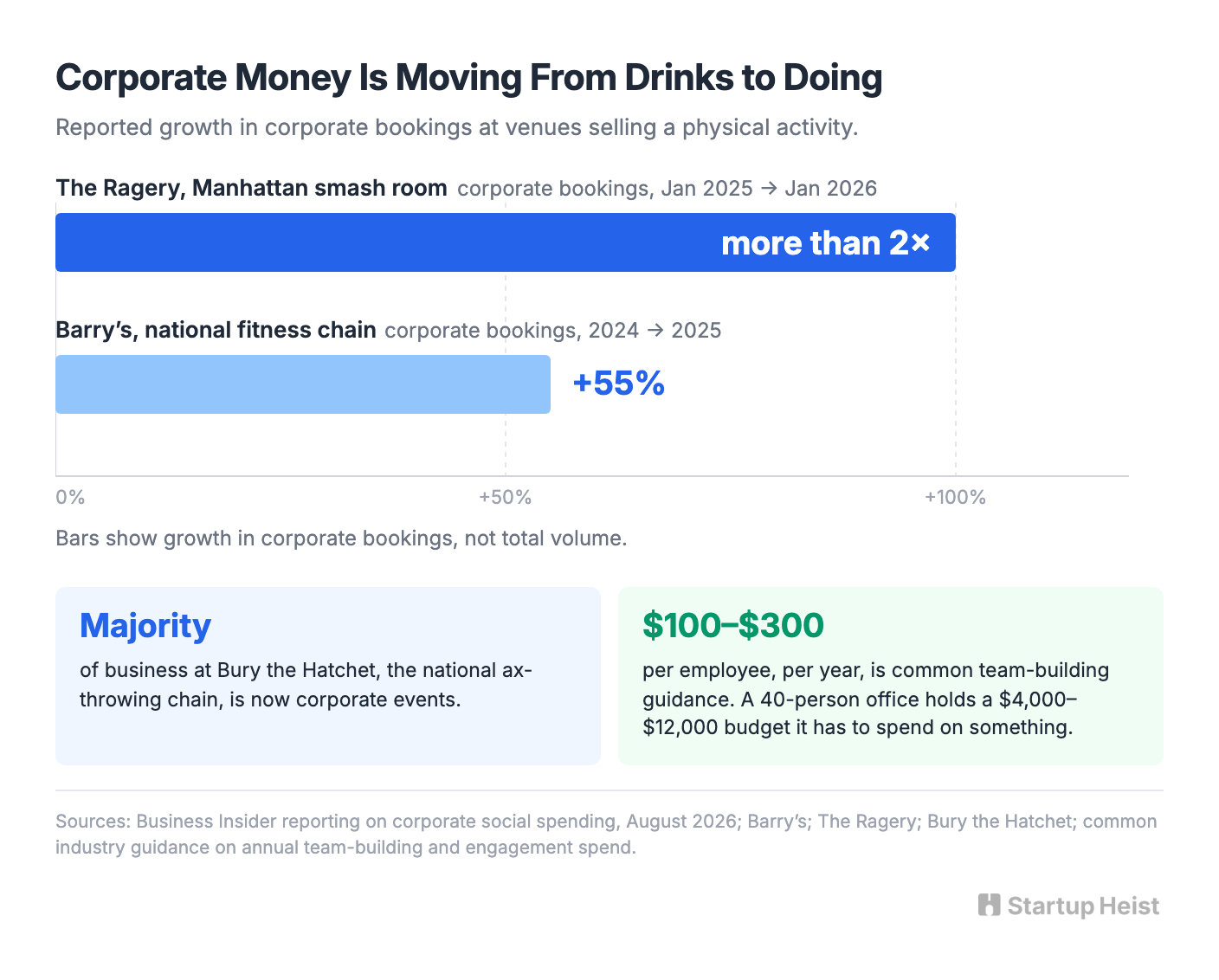
None of that means HR secretly wants to destroy a printer. It means companies will pay for structured physical experiences that give employees something to do together, and the corporate team-building budget already exists. Common industry guidance puts annual team-building and engagement spend at $100 to $300 per employee, higher in competitive hiring markets. A 40-person office is sitting on a four- to twelve-thousand-dollar activity budget it has to spend on something.
The mobile format wins because it removes the part planners hate. Moving thirty employees across town at 2 p.m. creates a logistics problem, a liability problem, and a productivity problem all at once. Walking them into their own parking lot creates none of it.
The model already runs. Wreck It Rage Roomz in Winchester, Virginia sends out an enclosed mobile rage-room trailer at $275 per hour with a two-hour minimum and a $125 travel fee, plus a mobile splatter-paint setup at $300 per hour on the same terms. Odyssey Mobile Adventures runs a 16-foot reinforced trailer across Maryland, DC, Northern Virginia, and four other states, aimed at corporate events, college programming, festivals, and military morale days. Neon Entertainment markets a mobile rage room that moves up to 40 participants per hour on a standard four-hour event window.
The category already exists. What almost no city has is an operator running it like a professional service business.
The Paperwork Is the Product
It's tempting to obsess over the smashing: what bats, where to find old printers, how thick the plywood needs to be. Those decisions matter, and they have almost nothing to do with why anyone books you.
Your buyer is an office manager, a People Ops lead, an executive assistant, a university programming director, or an HR coordinator, and every one of them is judged on whether the thing they booked created a problem for them personally, on a Monday, in front of their boss. Before they care about the experience, they need to know whether thirty people can participate, how much space you need, what happens if it rains, whether you're insured, who sweeps up the shards, whether someone can take part without smashing anything, and whether you're rolling old hard drives full of customer data onto their campus. The operator who answers all of that in the first email beats the one whose website says WE BRING THE RAGE, CALL FOR PRICING.
Anyone can buy a trailer. Almost nobody can get a Fortune 1000 risk department or a university to let employees swing a sledgehammer on company property. Your defensible asset is the operating system around the trailer.
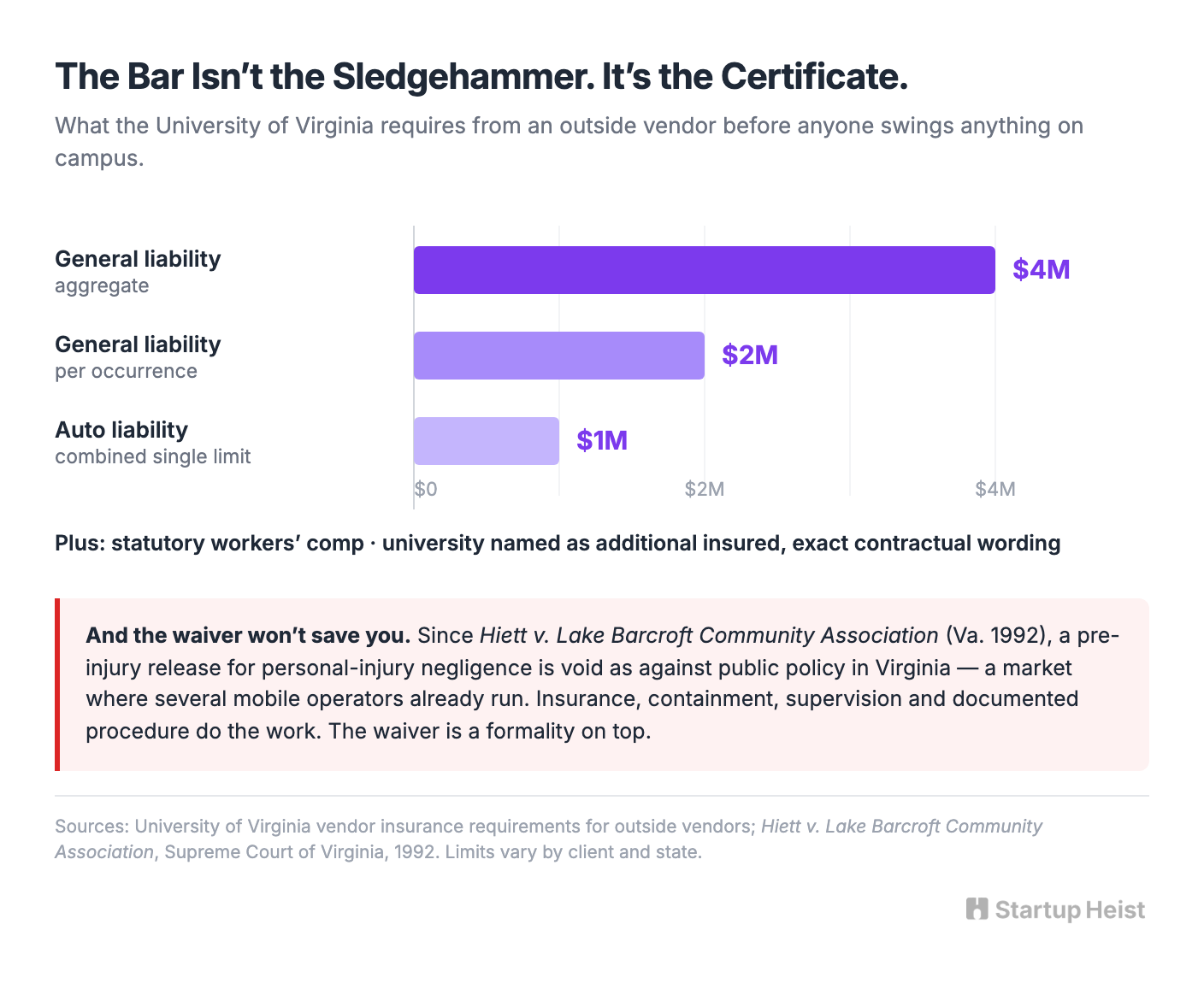
Universities make the bar visible because they publish it. The University of Virginia requires outside vendors to carry $2 million in commercial general liability per occurrence, $4 million aggregate, $1 million in combined-limit auto liability, and statutory workers' comp, with the university named as an additional insured using exact contractual language. Limits vary by client and state, and the standard doesn't move much. Your sales collateral has to look like something a risk manager can approve without picking up the phone.
The second mistake is more expensive and more common. A signed waiver isn't a safety system, and in some states it isn't even a legal shield. Since the Virginia Supreme Court's 1992 decision in Hiett v. Lake Barcroft Community Association, a pre-injury release of liability for personal-injury negligence is void as against public policy there, and several of the operators above run in exactly that market. If your entire risk plan is a clipboard at the check-in table, in Virginia you don't have a plan. Insurance, containment, supervision, and documented procedure do the actual work, and the waiver sits on top of them as a formality.
In practice that becomes one standardized procurement packet: certificate of insurance, safety procedures, participant requirements, trailer dimensions and site requirements, weather policy, accessibility alternative, waiver process, cancellation terms, prohibited-items list, and recycling plan. One PDF, sent before anyone asks for it.
The odd part is that the paperwork becomes the brand. "Fully insured, fully contained, fully staffed, zero cleanup for you" outsells "come smash some stuff" with every buyer who controls a budget.
Don't Build It on Free E-Waste
Old electronics look like perfect free inventory. Companies throw them out, everyone hates printers, and the Office Space joke writes itself. They're also full of exactly what you don't want a customer pulverizing enthusiastically.
Unlock the Vault.
Join founders who spot opportunities ahead of the crowd. Actionable insights. Zero fluff.
“Intelligent, bold, minus the pretense.”
“Like discovering the cheat codes of the startup world.”
“SH is off-Broadway for founders — weird, sharp, and ahead of the curve.”


