


The Hojicha Backdoor
Build the café supply brand that sells the drink matcha made possible, without matcha's supply problem.
Matcha is no longer a trend. It's plumbing.
Independent coffee shops treat it the way they treat oat milk: a non-coffee anchor for the afternoon crowd, the iced-drink crowd, the people who want something photogenic at 3 p.m. Pull it from the menu and a real chunk of the shop's identity goes with it. The matcha shortage isn't a tea story. It's a menu-continuity crisis with bills attached.
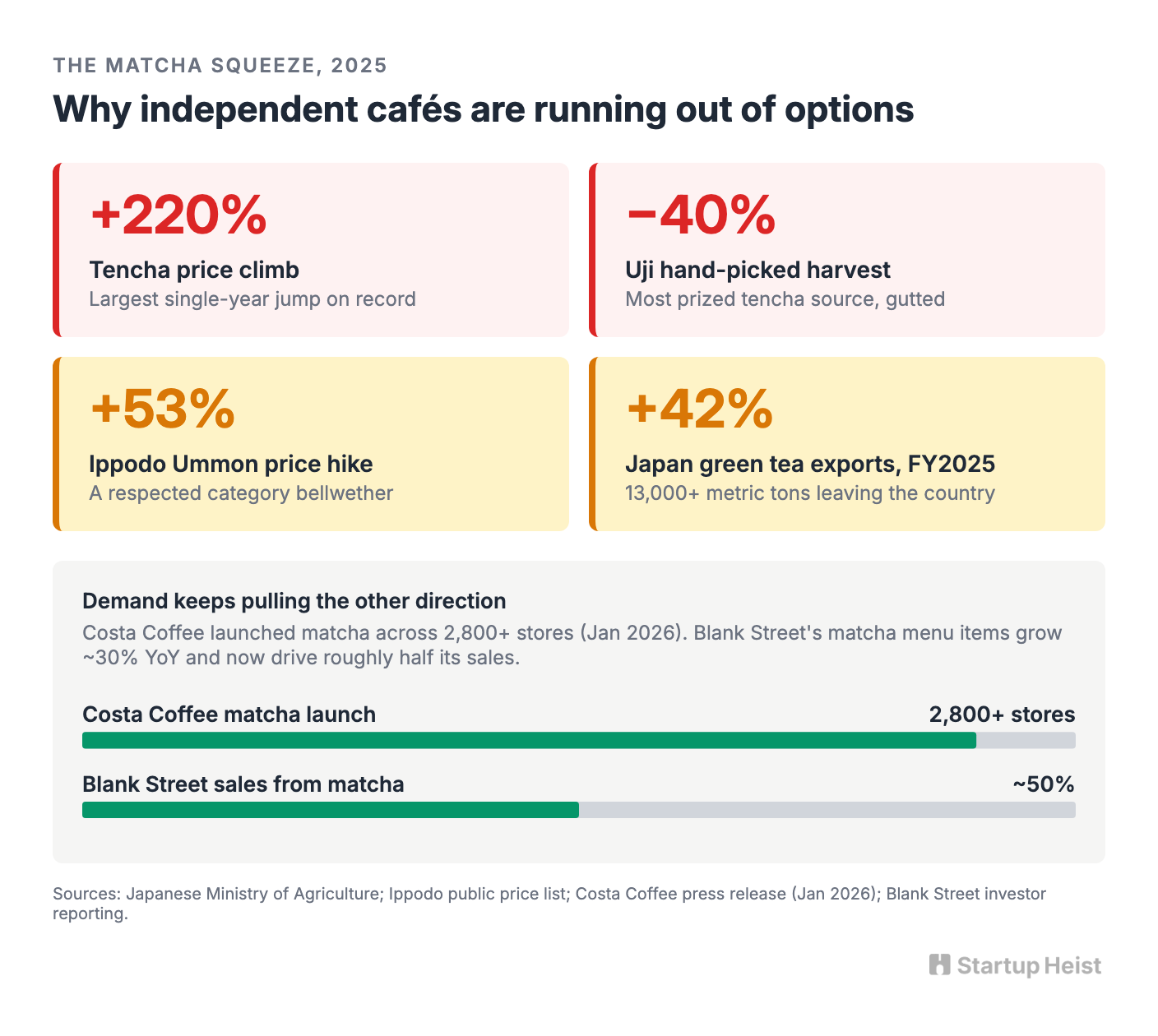
The numbers are extreme. Tencha, the shaded leaf used to make matcha, climbed roughly 220% in 2025, one of the largest single-year price jumps on record. Uji's hand-picked tencha harvest fell about 40%. Ippodo, one of the most respected names in the category, raised the price of its top-tier Ummon matcha by 53%. Japan's green tea exports surged 42% in fiscal 2025 to over 13,000 metric tons, a clean signal that export pull is stripping the domestic shelf. And demand isn't slowing. On January 8, 2026, Costa Coffee launched its first nationwide matcha latte range across more than 2,800 UK and Ireland stores. Blank Street, the venture-backed café chain now reportedly raising at a valuation near $1 billion, sees matcha menu items grow over 30% year over year and pulls roughly half its sales from viral matcha drinks. None of that demand leaves when supply tightens. It becomes someone else's problem, usually the independent café.
Here's the opportunity worth stealing.
The money: 100 café accounts at 15 bottles a month and $16 wholesale is roughly $24K MRR. 300 accounts pushes past $70K MRR before any DTC or expansion.
Inside:
• 3-SKU product line built around the bar
• Pricing ladder backed out from a $7 latte
• 90-day MVP, sourcing to first reorders
• Café outreach playbook and email scripts
• Five real risks and how to neutralize them
So where's the opening? Another matcha brand won't work; the category is crowded and allocation-hostage. The play is the next adjacent latte cafés can actually source, prepare quickly, price profitably, and explain to customers without sounding desperate. That latte is hojicha. Forget the Japanese tea novelty framing. Forget the Whole Foods wellness powder framing. Forget the "matcha's cousin on a pastel pouch" framing. The real business is a hojicha wholesale concentrate brand built for independent coffee shops. DTC can prove demand and create credibility. The scalable revenue engine is B2B: shelf-stable hojicha latte concentrate sold to cafés that need a menu-stable, low-caffeine, Japanese tea latte SKU while matcha becomes expensive, rationed, and operationally annoying. This isn't a billion-dollar brand on day one. It's a focused, timely, wholesale-first product business that could plausibly grow into a $300K–$1.5M operation if executed well, with optional upside if the category breaks wider.
You aren't selling roasted green tea. You're selling menu continuity.
Why the opportunity exists
Independent cafés have a problem chains do not. Chains can absorb price increases, sign bigger contracts, reformulate quietly, shrink drink sizes, or use lower-grade blends without telling customers. Independents can't. When their matcha supplier runs dry, raises prices, or limits allocation, owners get four bad choices: raise the matcha price again, swap in a worse powder and risk complaints, pull matcha entirely, or burn staff hours testing new suppliers in a thin-margin business. Phe Coffee in Seattle reportedly took bad reviews when it ran out of matcha. Peninsula cafés in California have spent the last six months scraping together direct relationships with Shizuoka farms just to keep the menu live.
The shortage hurts because matcha isn't just an ingredient. It's the non-coffee anchor: the drink that brings in the younger customer, the afternoon customer, the iced-but-not-espresso customer, and the customer who wants something photogenic. Pulling it from the menu doesn't feel like cutting a seasonal syrup. It feels like changing the shop.
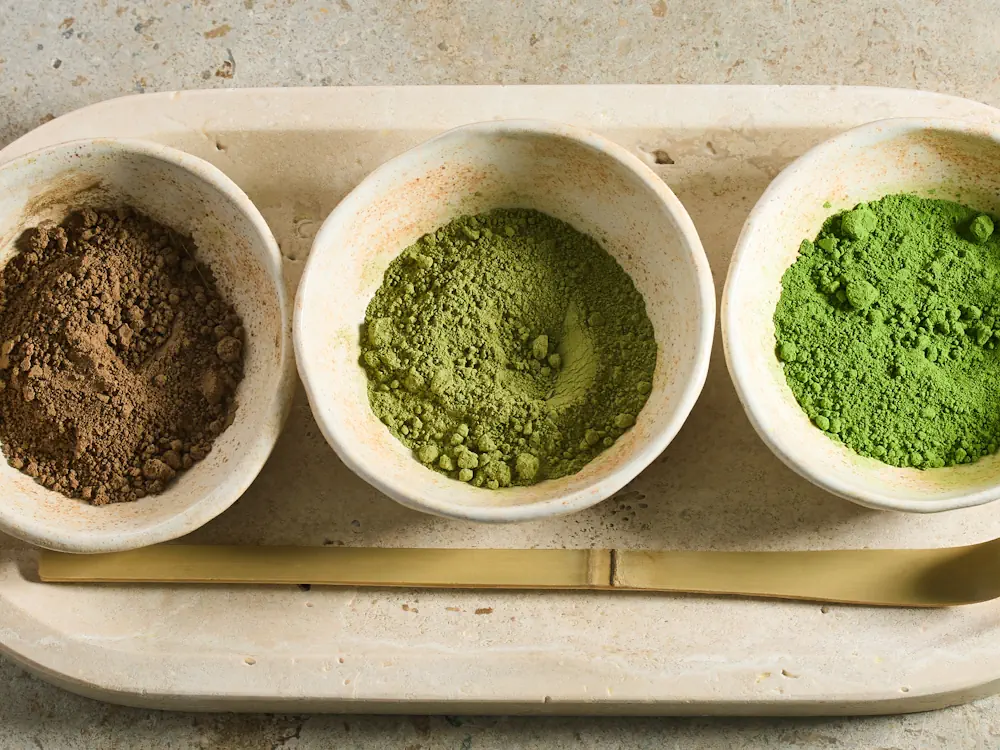
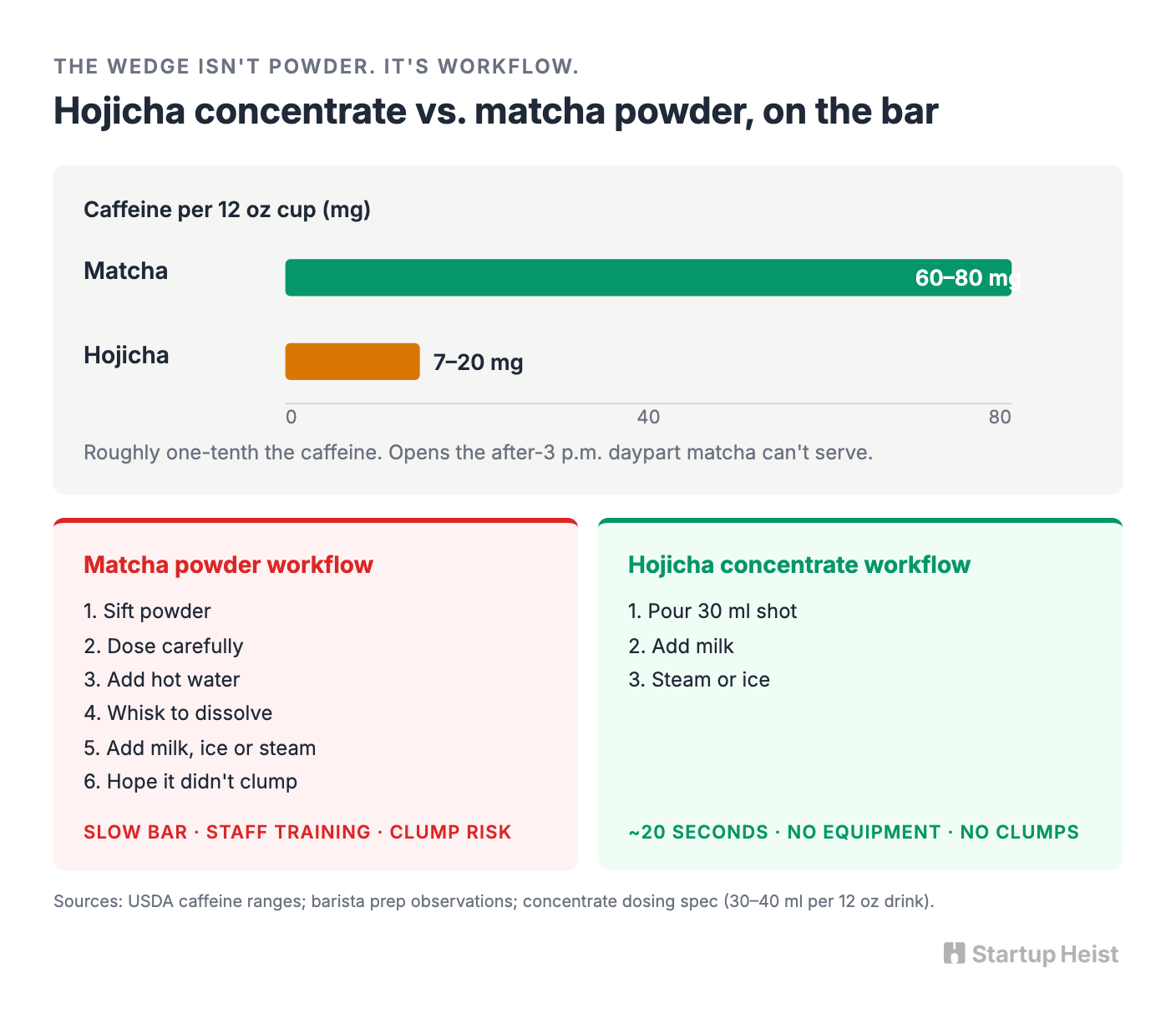
Hojicha fits the gap because it covers many of the same boxes while sidestepping the bottleneck. It's Japanese. It works hot or iced. It serves cleanly as a latte. It has a warm brown color that photographs distinctly. Its roasted, nutty flavor pairs naturally with oat milk, vanilla, maple, honey, brown sugar, and cold foam. And it carries roughly one-tenth the caffeine of matcha, about 7–20 mg per cup against matcha's 60–80 mg. That low-caffeine angle expands the daypart. Matcha is an energy drink in a nice outfit. Hojicha can sit on the menu as the evening latte, the after-3 p.m. latte, the roasted tea drink for the customer who wants ritual without being awake at midnight. It gives cafés a better story than "we ran out of matcha." It lets them say: "We added something new."
The wedge isn't powder. It's workflow.
Most people looking at this opportunity will sell hojicha powder. That's fine for DTC. It's the wrong B2B wedge.
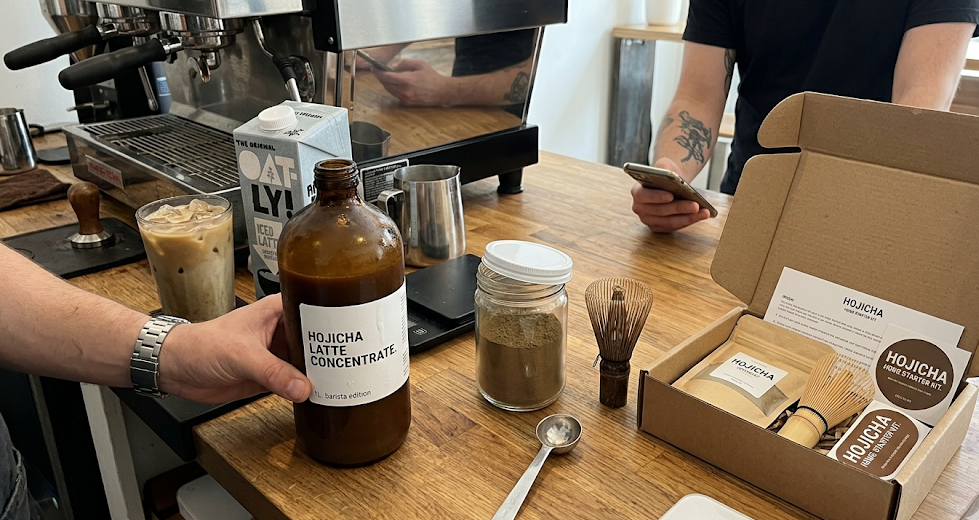
Cafés don't merely buy ingredients. They buy throughput. A drink that tastes good but slows the bar is a problem. Matcha typically requires sifting, whisking, careful dosing, and staff training. It clumps. It looks bad if prepared poorly. In a busy café, every extra motion costs money. The stronger product is a ready-to-pour hojicha latte concentrate: a 1-liter bottle the barista doses like cold brew or chai concentrate. Pour, add milk, ice or steam, finish. No whisking. No clumps. No powder dust. No "who knows how to make this today" problem.
The pitch becomes simple: "Add a Japanese roasted tea latte to your menu in one week. No new equipment. No whisking. No matcha allocation risk. A cost-per-drink you can actually model." The competitive set leaves this lane wide open. Hojicha Co. and Hojicha Powder both sell wholesale powder with low minimums. Faire lists a fragmented set of bulk hojicha powders. Jade Leaf has a barista-edition hojicha powder. None of them ship what cafés actually need: a barista-grade liquid concentrate, dosed in seconds, priced like a working ingredient instead of a specialty pouch. The category is still organized around powder, retail tea, and general wholesale discovery rather than an operator-first concentrate brand. So that's the heist: don't compete as another tea. Compete as the easiest new latte SKU a café can add during a matcha crisis.
The product line
The brand should ship three SKUs. Only one is the hero:
Unlock the Vault.
Join founders who spot opportunities ahead of the crowd. Actionable insights. Zero fluff.
“Intelligent, bold, minus the pretense.”
“Like discovering the cheat codes of the startup world.”
“SH is off-Broadway for founders — weird, sharp, and ahead of the curve.”


