


The Internet Is Already Inventing Your Next Product
The old consumer product playbook required money and patience. Hire a research firm. Run focus groups. Test a concept. Build a prototype. Pay for ads. Wait for the market to agree.
That playbook is starting to look backward.
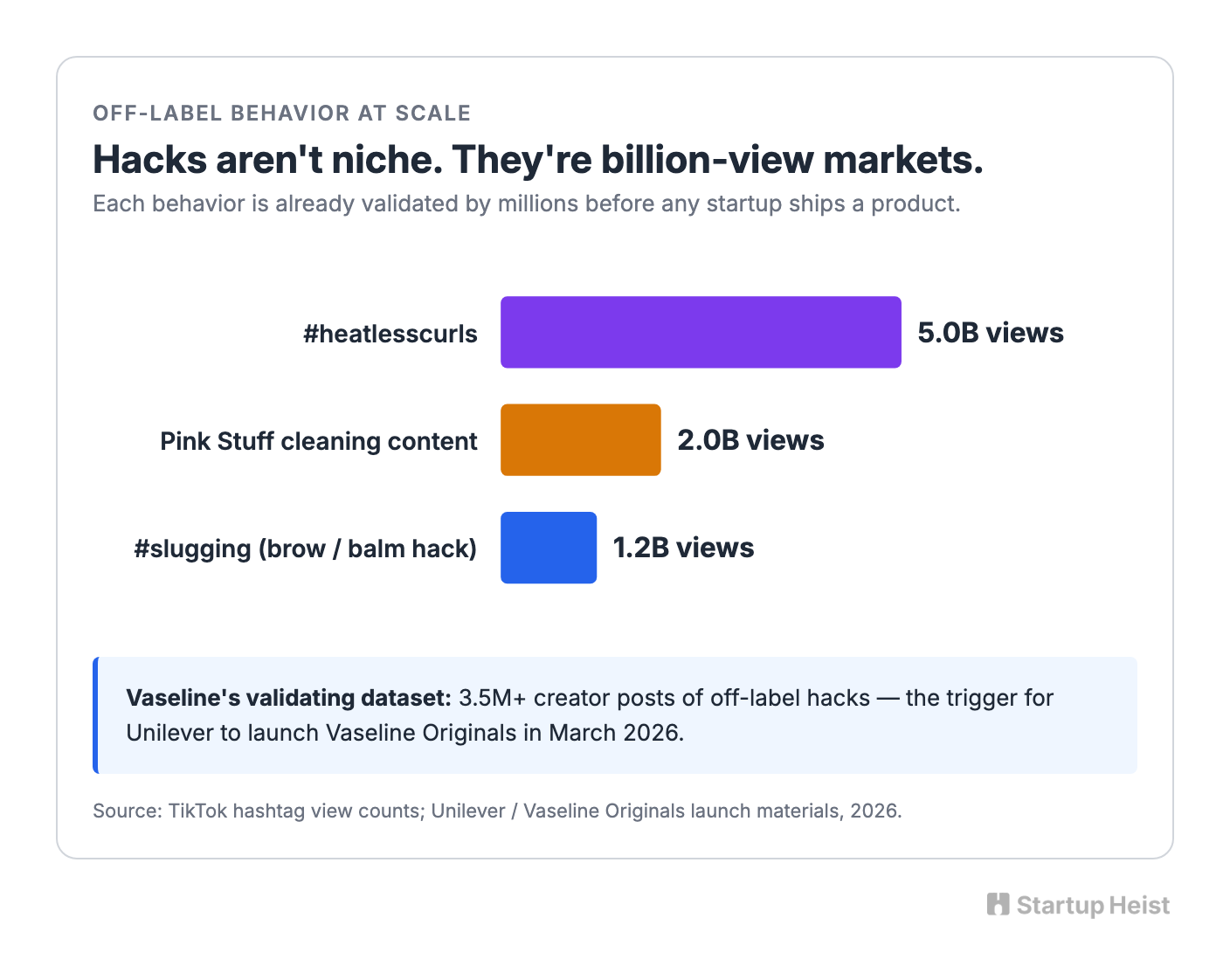
The new one is sitting in public. TikTok users are turning drugstore staples into beauty tools. CleanTok creators are using cheap household products in ways the original manufacturer never advertised. Reddit threads are full of "I know this sounds weird, but…" workarounds. YouTube Shorts are packed with accidental demos of consumer demand. Most brands treat this as free content. The smarter move is to treat it as free R&D.
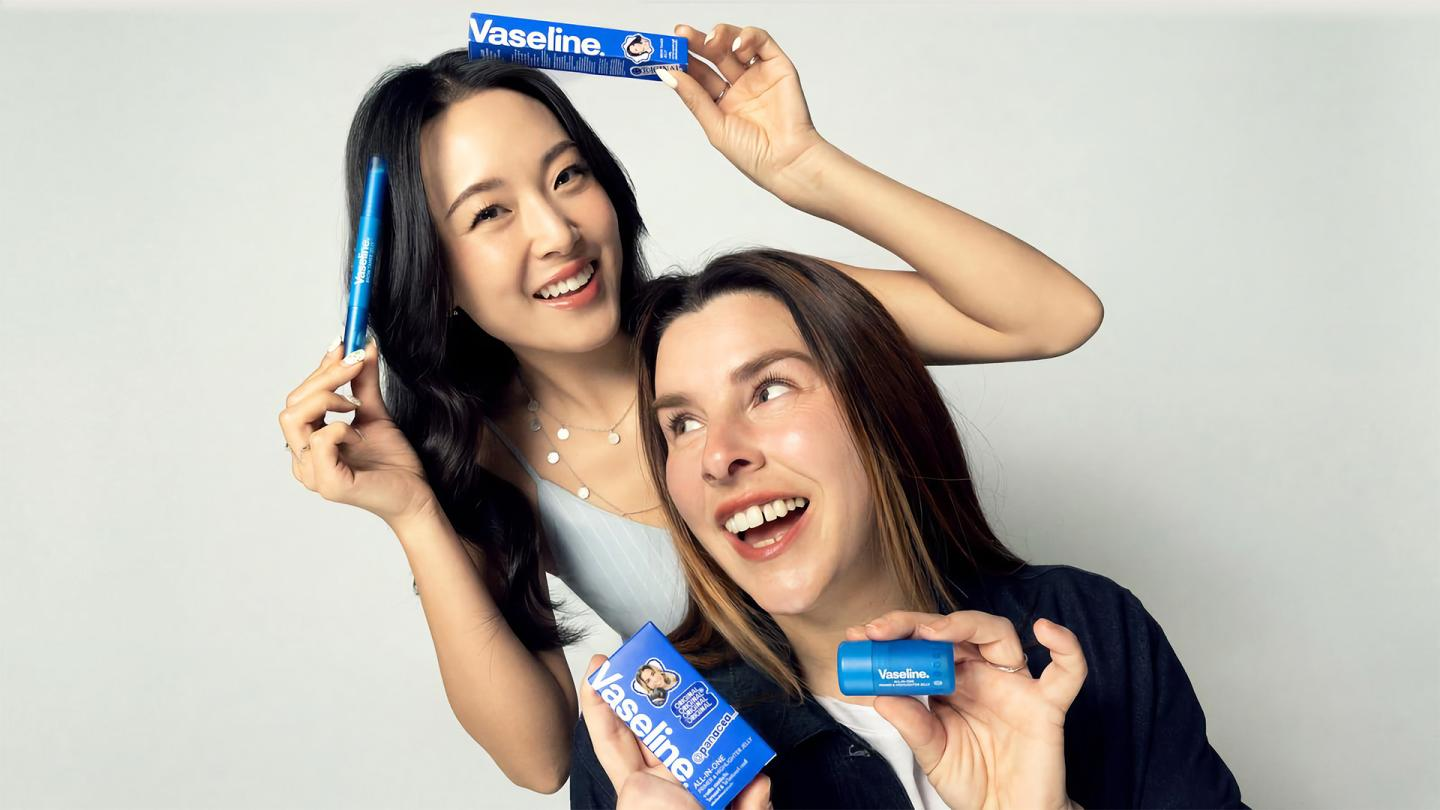
Vaseline just made the case study impossible to ignore. On March 30, 2026, Unilever's Vaseline launched "Vaseline Originals," a product line built directly from viral creator hacks, with the original creators credited as "Vaseline OGs." The first two products, a brow tamer and an all-in-one primer-and-highlighter jelly, dropped via TikTok Live and sold out in minutes. Both trace back to specific creators: Jen Chae, who shared a Vaseline brow tamer hack in 2008, and Lauren Luke, who popularized using Vaseline as a primer years ago. The campaign cites more than 3.5 million Vaseline hack-related posts as the validating dataset.
Copying Vaseline would be too slow, too corporate, and too obvious. The opening is something else: building a TikTok-first beauty micro-brand that systematically mines viral off-label product hacks in one high-velocity category, then ships purpose-built, private-label versions before the incumbents finish their quarterly innovation meeting.
The model is simple. Find the hack. Score the demand. Partner with the creator. Make the product. Launch where the behavior already lives.
Here's the shape of the opportunity:
The money: A lean solo founder running 3–6 SKUs a year can land in the $10K–$50K MRR range. Pink Stuff rode TikTok virality to roughly $125M in annual sales on a $5 paste.
Inside:
• 100-point hack scoring framework
• Tiered creator strategy and outreach templates
• TikTok Shop economics worked example
• 30-day launch sprint and 5-pillar moat
This isn't a billion-dollar platform on day one. It's a sharp micro-brand opportunity with a credible path to $10K–$50K per month if the operator has taste, speed, creator instincts, and supply-chain discipline. Done across multiple SKUs, it becomes a hack-to-product studio. But the first version has to be brutally focused: one category, one audience, one product type, one repeatable loop.
Customers already prototype products
Consumers have always repurposed products. Petroleum jelly becomes brow gel. Baking soda becomes deodorizer. Micellar water becomes sneaker cleaner. Hair rollers become heatless styling systems.
The behavior isn't new. What changed is visibility, and the path to purchase. TikTok turned every off-label use into a product demo. Reddit turned every workaround into a searchable archive. TikTok Shop turned the moment of discovery into the point of purchase, closing a gap that used to leak transactions to Amazon, Walmart, or Shopify.
That changes the value of a hack. A founder saying "people need this" is weak evidence. A creator saying "I already use this every morning" is stronger. Thousands of users repeating the hack is stronger still. Comments asking "where do I buy this?" are the closest thing to a purchase order before the product exists. Large brands see hacks as campaign fuel. A solo founder can see them as SKU fuel.
Why TikTok-first matters, and where it ends
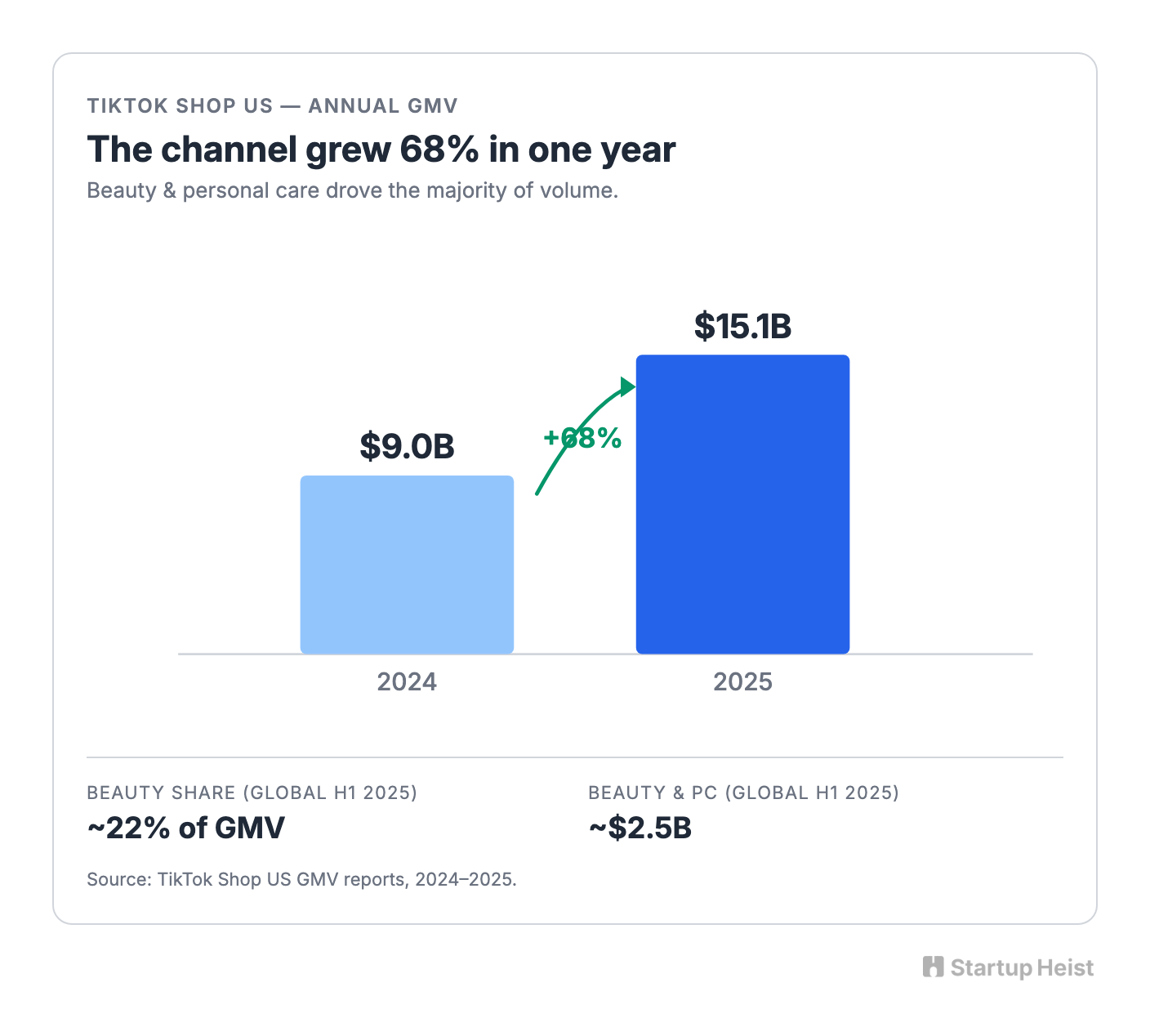
Beauty and personal care are TikTok Shop's most valuable lane. TikTok Shop's U.S. business reached roughly $15.1 billion in GMV in 2025, up 68% from $9 billion the year before, with beauty driving the majority of volume. Globally, beauty and personal care generated nearly $2.5 billion in H1 2025, around 22% of all TikTok Shop transaction value.
That doesn't mean every beauty product wins. It means the channel already understands the buying behavior. The best TikTok products don't need a long sales page. They need a five-second "oh, I get it." Beauty delivers it on autopilot: before/after, texture, application, shine, vanity-table transformation. CleanTok delivers the same dopamine in a different aesthetic.
The catch is regulation. Under MoCRA, the 2022 cosmetics modernization law, manufacturers must register facilities, list products, and substantiate safety. Small businesses with average U.S. cosmetic sales under $1 million over the previous three years are exempt from product listing, but the exemption is void if the product touches the eye's mucous membrane, is injectable, is intended for internal use, or alters appearance for more than 24 hours without customary removal. For a solo founder using a private-label manufacturer, facility registration typically sits with the contract manufacturer; the brand owner's obligation is product listing as the "responsible person." The takeaway isn't "avoid beauty." It's "be smart about what you launch first." The smartest first SKU isn't a new serum. It's a better applicator. A cleaner spatula. A purpose-built tool that captures beauty demand without walking into the hardest part of beauty.
The loop is the product
A single hack-based SKU is a gamble. A repeatable hack-mining loop is a business.
The founder should build a weekly pipeline around five questions: What are people already doing? What are they using as a workaround? What's frustrating about the workaround? Does the behavior show repeat use, or only novelty? Can a better version be made cheaply and demonstrated visually?
That last question is the filter. Most viral hacks are trash. They spike, amuse people, and disappear. The job isn't to chase virality. It's to separate durable behavior from novelty.
A good hack has clear signals: people use it repeatedly, not once. The comments include "I do this too" and "I wish someone made this." The workaround is messy, ugly, unsafe, inconvenient, or inconsistent. The result is visible on camera. The product can be made without major R&D. The creator has an audience that trusts them. The buyer can understand the SKU in one sentence. The price fits impulse territory, ideally $14–$39.
Call it behavior arbitrage. It only works if the operator has a system for capturing it.
The actual startup: a hack-to-product beauty lab
The cleanest version of this company is a TikTok-native beauty micro-brand with a simple public promise:
Unlock the Vault.
Join founders who spot opportunities ahead of the crowd. Actionable insights. Zero fluff.
“Intelligent, bold, minus the pretense.”
“Like discovering the cheat codes of the startup world.”
“SH is off-Broadway for founders — weird, sharp, and ahead of the curve.”


