


Build the physical-drop infrastructure independent artists can't get from Spotify
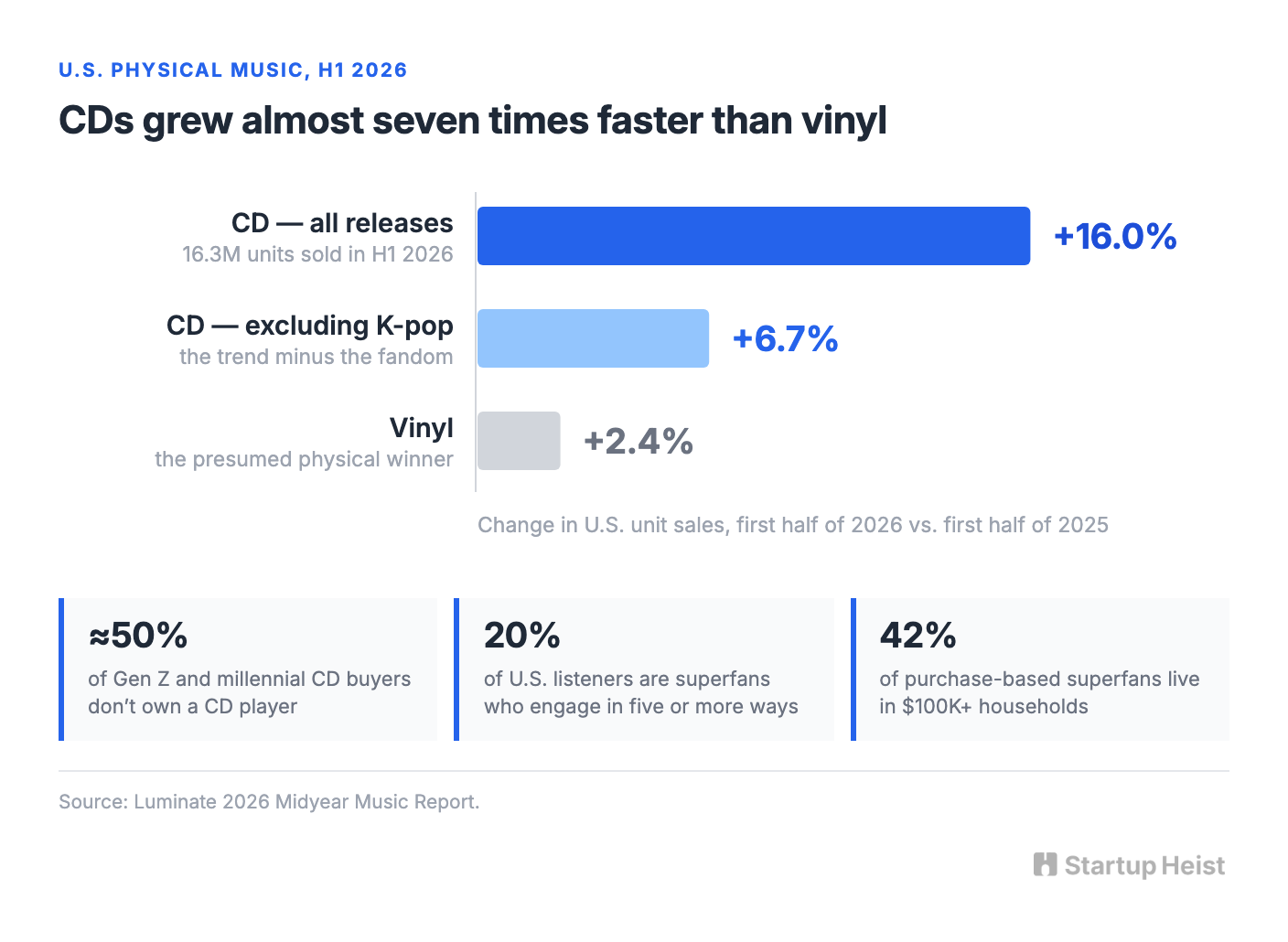
The compact disc didn't come back because millions of people suddenly missed jewel cases. It came back because streaming solved access so completely that ownership became interesting again. U.S. CD sales rose 16% in the first half of 2026 to 16.3 million units, per Luminate's midyear report. That's almost seven times vinyl's 2.4% growth, and the first time in a decade CDs have outgrown records. K-pop collectibles drove a large share, but the trend survives the subtraction: non-K-pop CD sales still grew 6.7%.
The buyer behavior underneath is the real story. Roughly half of Gen Z and millennial CD buyers don't own a CD player. They're buying albums as affordable collectibles, aesthetic objects, and visible proof they support an artist. Target and Walmart now account for nearly 30% of U.S. physical music sales, powered by alternate covers, photo cards, and fans who buy multiple editions of the same record. BTS moved roughly 567,000 copies of one album across multiple CD versions in the first half of 2026. The listening still happens on Spotify either way; what fans are paying for is the object.
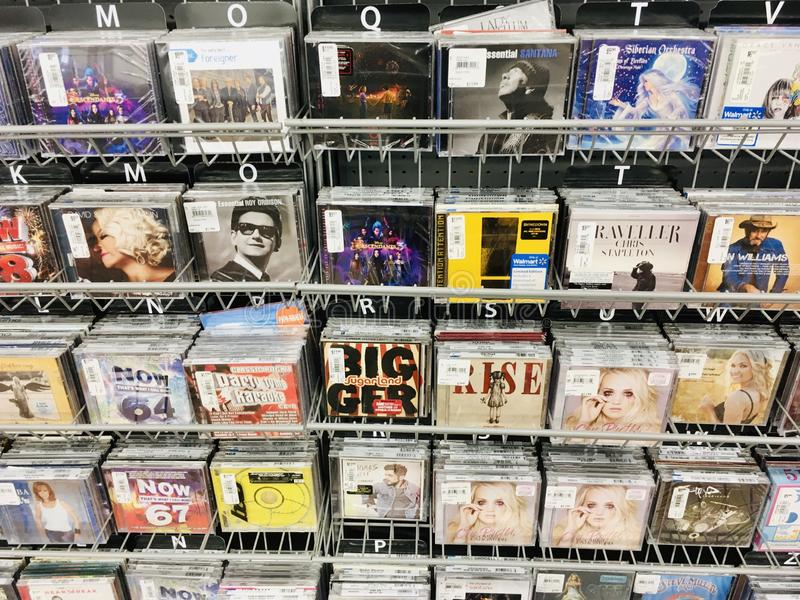
That creates a compact opportunity: a short-run physical-drop service for independent artists that bundles CD manufacturing, collectible packaging, storefront tools, and fulfillment. An artist uploads the album master and artwork. The platform turns the release into a numbered 100-copy edition, adds packaging like an obi strip or alternate cover, builds the product page, manufactures the discs, and ships orders to fans. Think Printful for music releases, designed around scarcity instead of commodity print-on-demand.
Here's the opportunity at a glance:
The money: Contribution runs $300 to $500 per drop; 25 launches a month is $7,500 to $12,500 in monthly gross profit for a solo operator.
Inside:
• Concierge MVP: nine capabilities, no Shopify app
• Project pricing: $199 setup to a label plan
• Outreach template for the first 30 artists
• Four moats built on exception handling
Nobody is building the next Spotify here. The realistic ceiling is a profitable, service-enabled software business that converts small, passionate audiences into physical merchandise revenue. The heist has less to do with CDs coming back than with what they now cost: cheap enough to turn almost any digital release into a collectible drop.
Why CDs and not vinyl
Vinyl is the obvious physical format. It photographs well, feels premium, and gives a release instant legitimacy. It's also a terrible starting product for most independent musicians. Pressing vinyl demands real upfront capital, long production schedules, larger unit commitments, and an audience able to absorb a $25-40 product. The fear of unsold inventory is so common that pre-order platforms like Diggers Factory built their business on letting fans finance records before they're manufactured.
CDs remove most of that risk. Disc Makers runs short-run CD duplication starting at 100 units, with minimal-packaging orders shipping in as little as one day and most projects out within four. At the utilitarian end, Kunaki lists a full-color CD in a wrapped jacket at $1.50 per unit and a jewel-case edition with printed inserts and cellophane wrapping at $2, with a minimum order of one and a manufacturing turnaround Kunaki puts at 24 hours.
Those numbers change the creator-merch equation. An independent artist doesn't need 50,000 fans to make a physical release viable. They need 50 to 200 people willing to pay $15 to $25 for a numbered object connected to music they already stream. That's a far more common audience profile, and the demand side is measurable: Luminate classifies 20% of U.S. music listeners as superfans who engage with artists in five or more ways. Gen Z and millennials make up 63% of engagement-based superfans, and purchase-based superfans skew wealthy, with 42% reporting household income above $100,000 against 26% of all listeners. The average listener will never buy a disc, and doesn't need to. The business is helping creators monetize the top few percent of their audience, and nobody has packaged that motion for them yet.
The gap in the market
Plenty of companies already touch this market, and they cluster into four categories. Manufacturers like Disc Makers and Solid Merch help artists who already know their specifications order production runs. Fulfillment utilities like Kunakify connect Kunaki's dirt-cheap manufacturing to Shopify from $4.99 per month. Marketplaces and on-demand platforms like elasticStage and Diggers Factory make artists sell through someone else's storefront. Commerce platforms handle the selling but leave production and release operations to the artist.
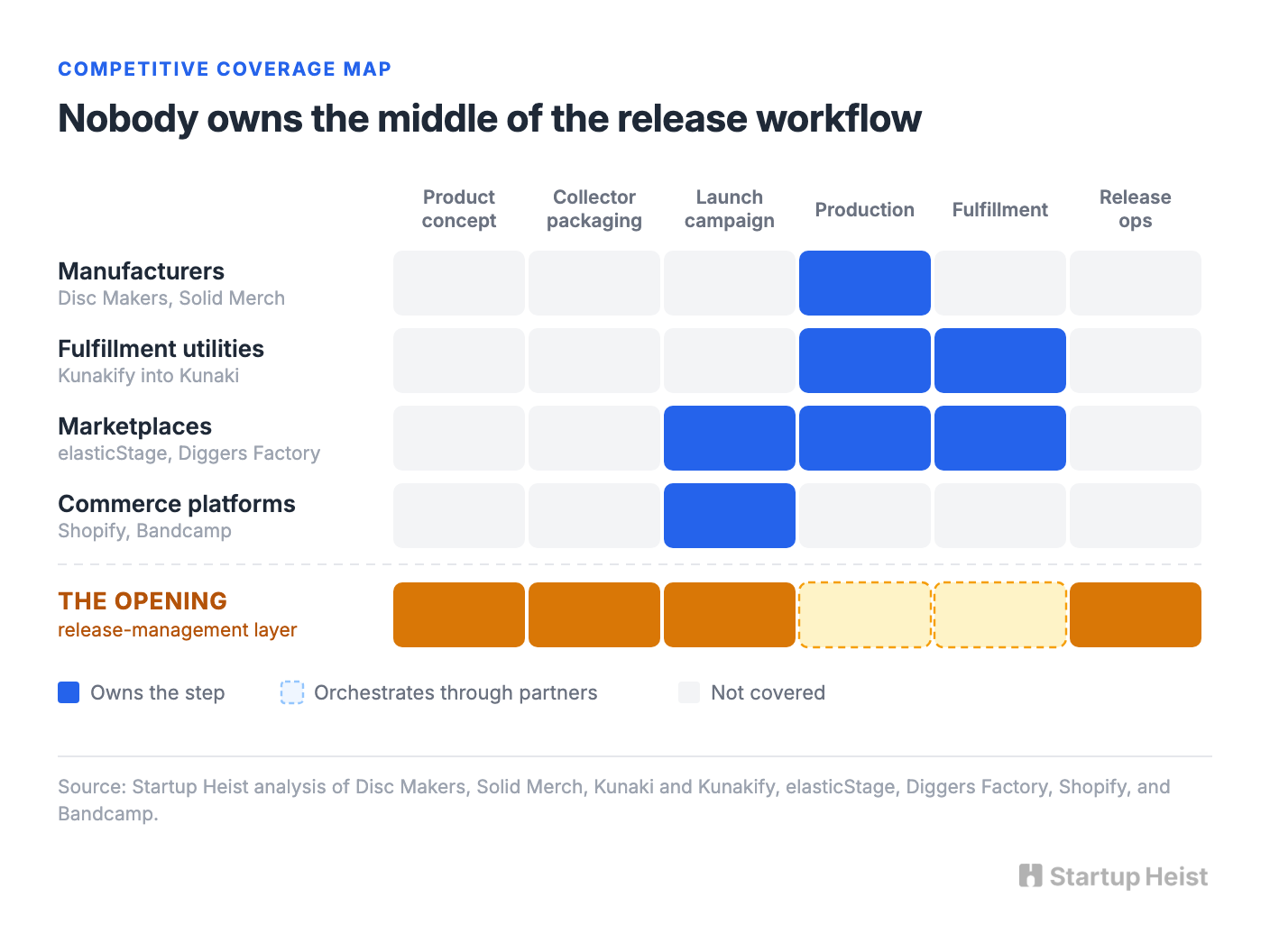
None of these categories is empty, but none of them overlaps with the others, and the opening sits in the seams between them. Build the merchandising and release-management layer: the system that helps an artist decide what to create, packages it as a compelling limited edition, launches the campaign through the artist's existing channels, and handles every operational step after the sale.
An artist using the platform should feel like they're launching a collector edition, never like they're ordering 100 duplicated CDs. Everything about the product should sell the drop.
What the artist is actually buying
The core customer is an independent musician with roughly 10,000 to 100,000 monthly listeners, an active email list or social following, and evidence that at least a few hundred people care deeply about the project. This artist has enough demand to sell merchandise but not enough certainty to risk several thousand dollars on vinyl.
The platform turns a finished digital release into four things.
Unlock the Vault.
Join founders who spot opportunities ahead of the crowd. Actionable insights. Zero fluff.
“Intelligent, bold, minus the pretense.”
“Like discovering the cheat codes of the startup world.”
“SH is off-Broadway for founders — weird, sharp, and ahead of the curve.”


