


The $99 Video Gap: Build the Bounty Board for Ecommerce UGC
The clean version of this idea isn't "Upwork for influencers." That sounds big. It also sounds like a graveyard.
A narrower version works better. A category-specific UGC marketplace where small ecommerce brands post standardized bounties for short-form product videos, escrow the payout, receive usable assets in days, and move on.
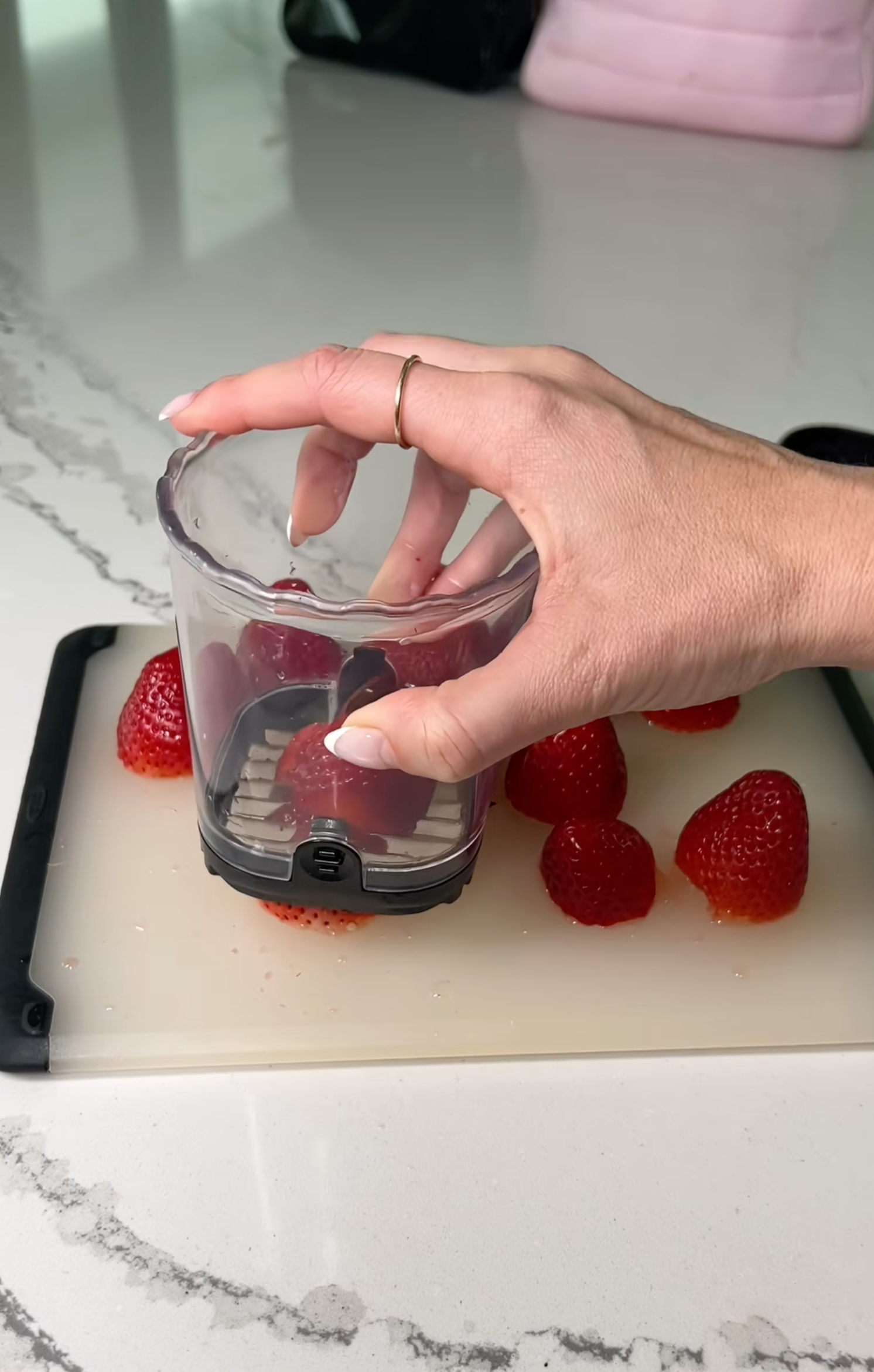
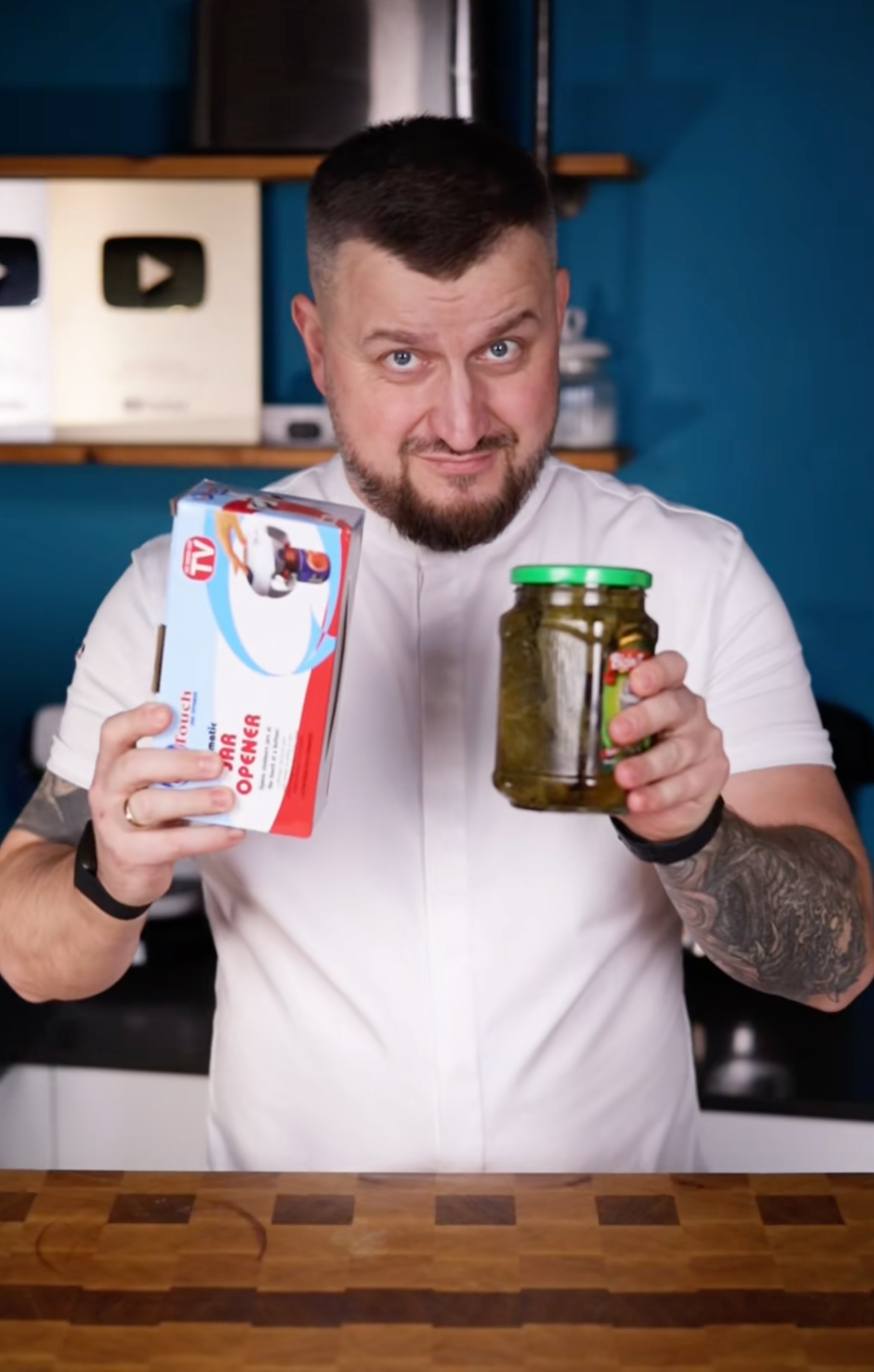
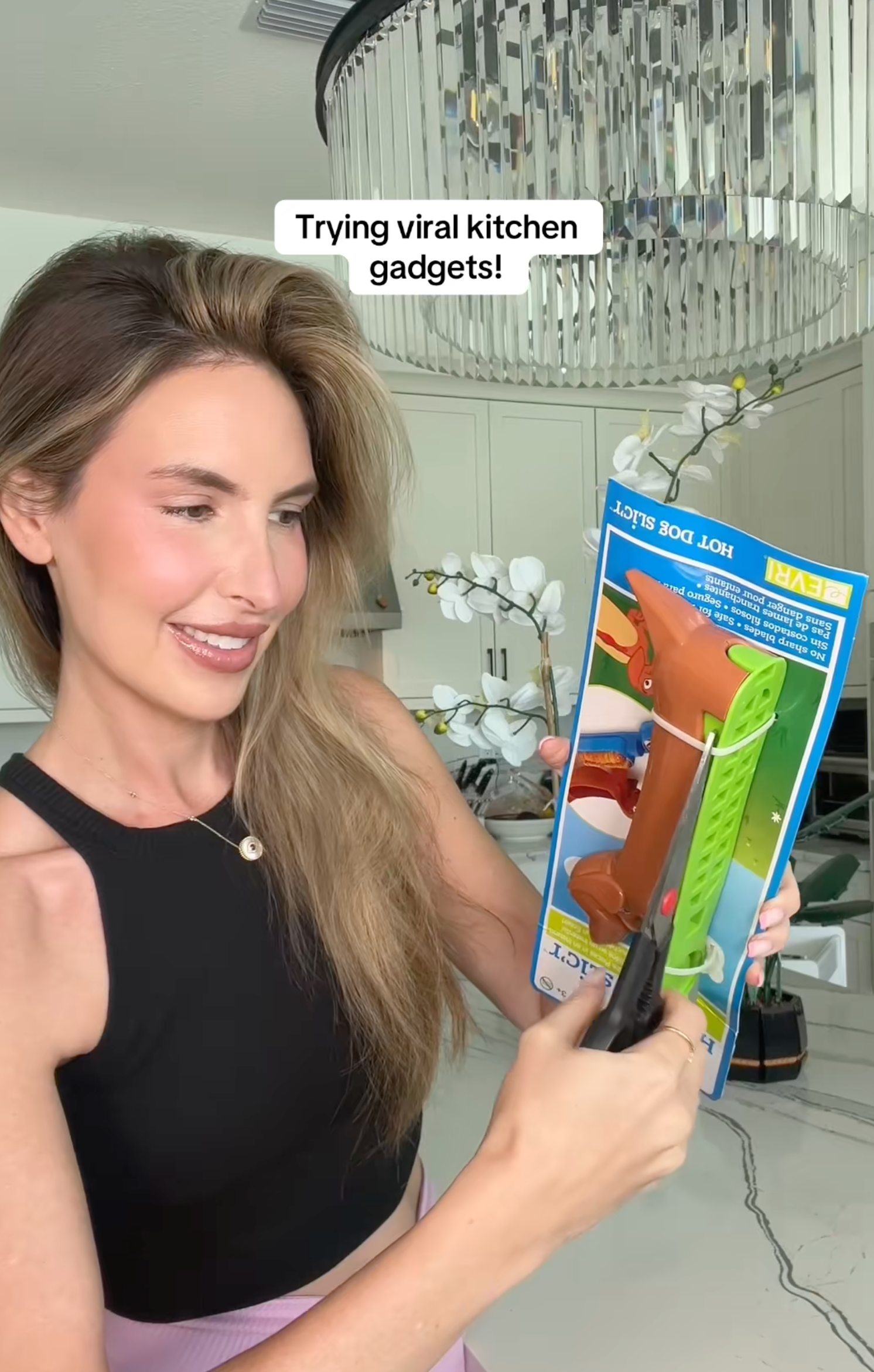
A Shopify kitchen gadget brand doesn't want a creator relationship management platform. It wants 12 videos showing the product opening a jar, chopping garlic, or solving one tiny domestic annoyance. A pet brand wants five vertical clips from believable dog owners before next week's TikTok Shop push. A beauty tool brand wants creators who know how to film hooks, texture shots, before-and-after sequences, and disclosure-safe sponsored content.
Here's the opportunity:
The money: 10 brand customers a month at $1,500 AOV and 25% gross take pulls roughly $3,750/month, scaling to $25K MRR at 50 monthly orders.
Inside:
• MVP scope and brief recipe library
• FTC influencer disclosure rails baked in
• Bundle pricing with paid usage add-ons
• 90-day GTM with cold outreach scripts
That's the wedge. Brands don't need access to creators. They need short-form product videos to move through a clean operating workflow.
Why This Exists Now
The center of gravity has shifted. Audience access is no longer the unit of value. Content supply is.
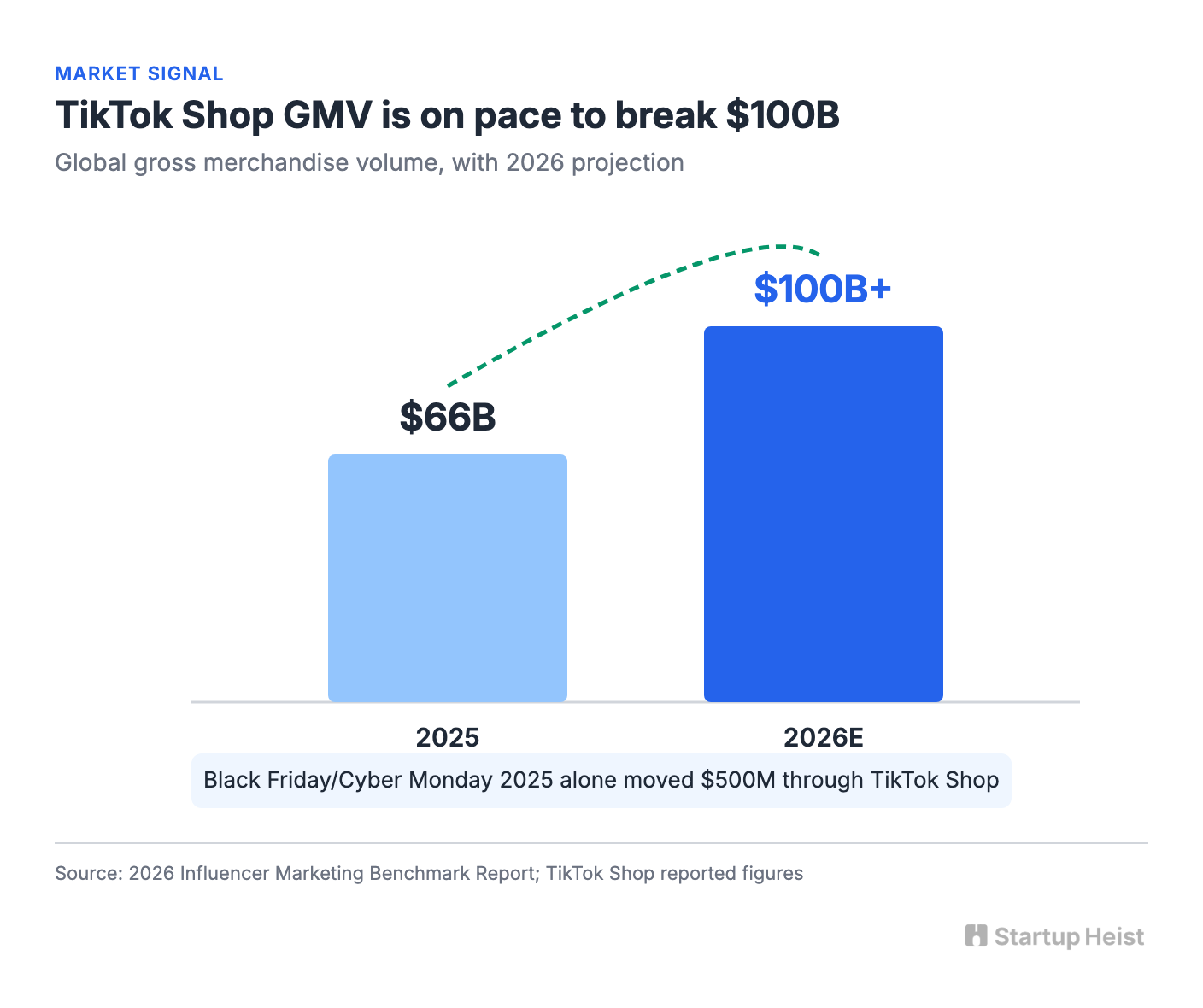
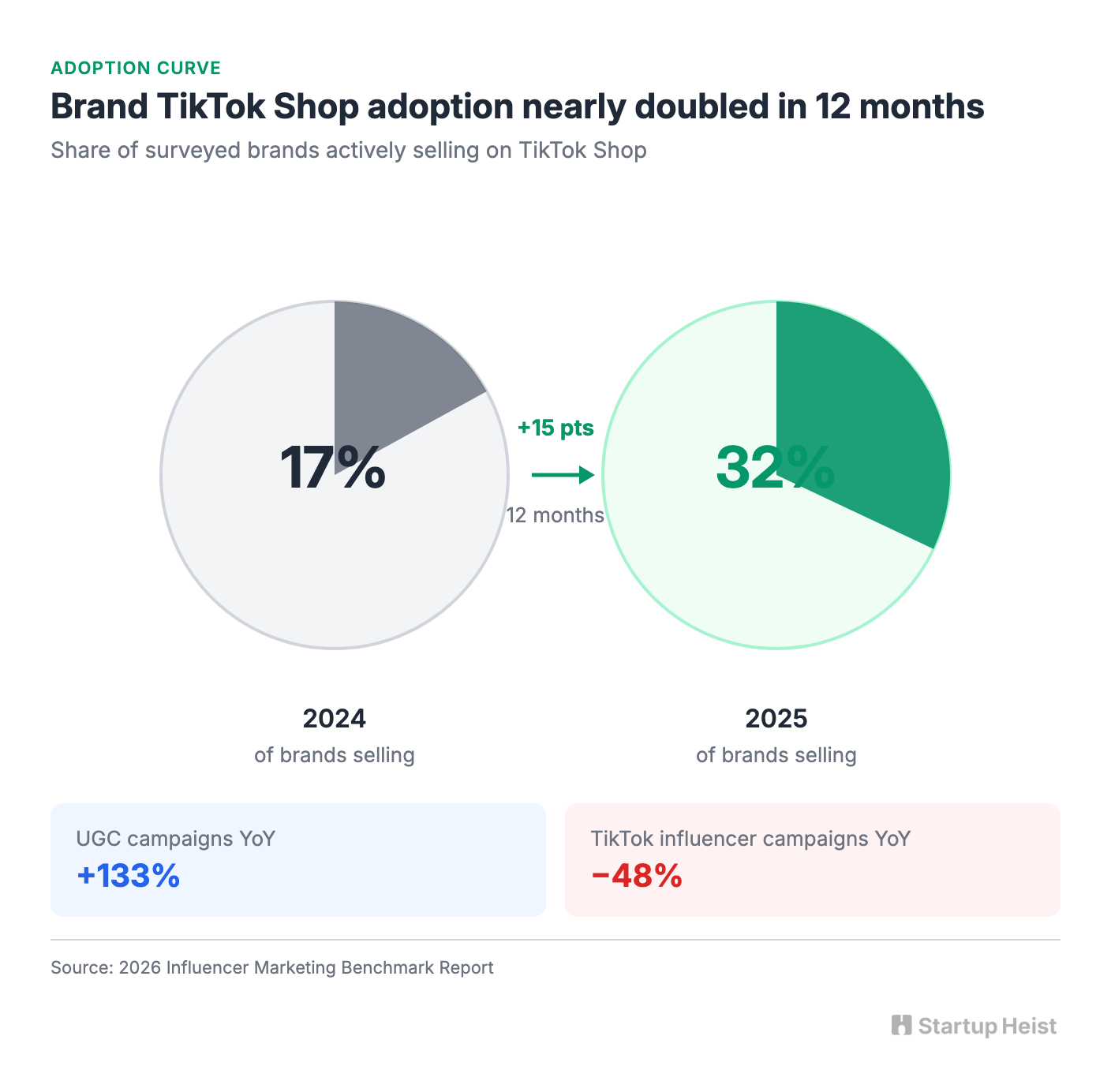
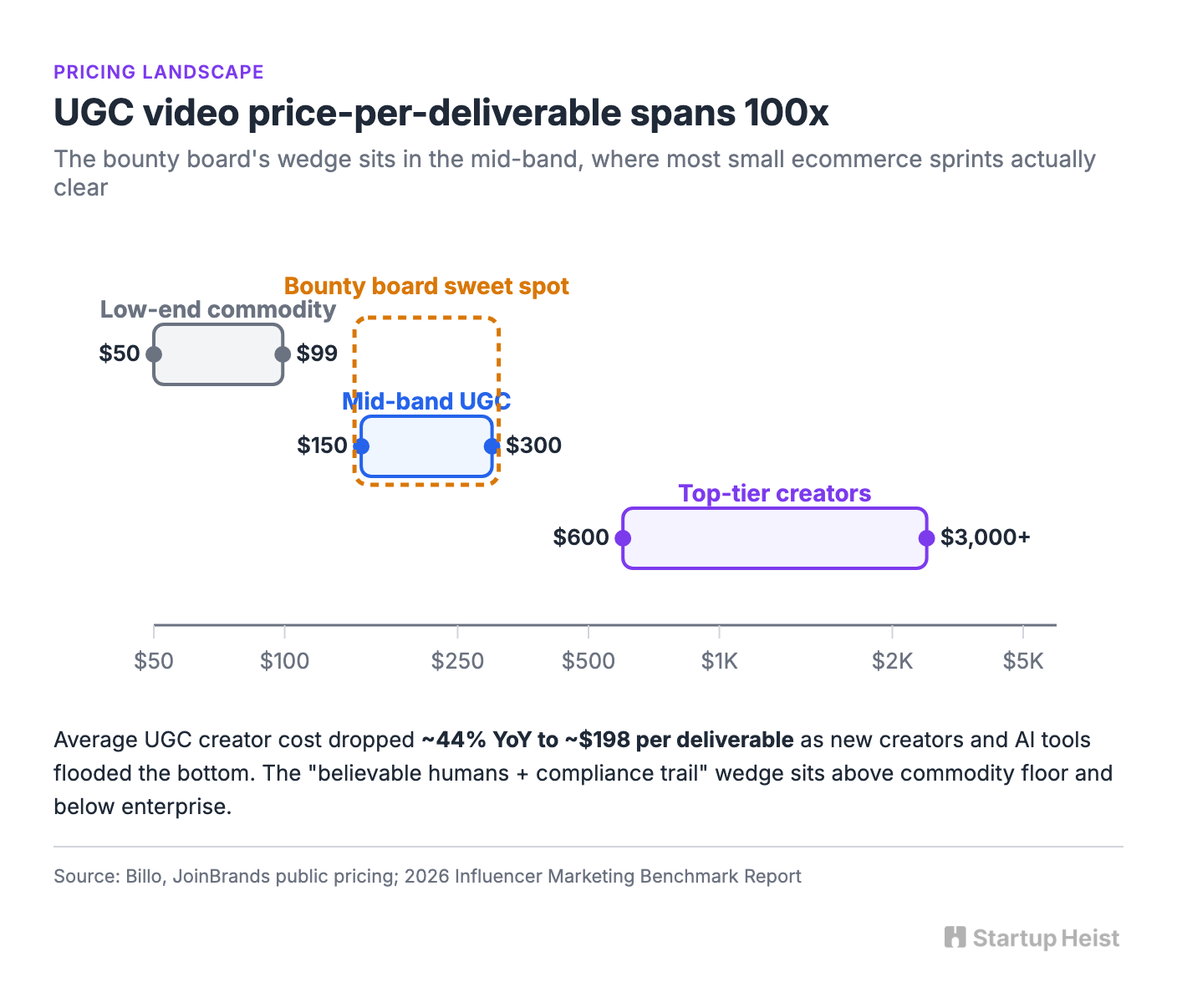
The 2026 Influencer Marketing Benchmark Report shows roughly 80% of brands now spend under $500 per UGC piece, with TikTok Shop pulling 66% of social commerce dollars among adopters. Brand adoption of TikTok Shop nearly doubled in twelve months, from 17% to 32% of survey respondents. TikTok Shop hit roughly $66 billion in global GMV in 2025 and is on pace for $100 billion-plus in 2026, with in-app conversion rates running consistently above the 2 to 4% typical of traditional ecommerce. Black Friday/Cyber Monday weekend 2025 alone moved $500 million through TikTok Shop. The highest-performing brands now ship 20 to 50 new ad variations per month, and the most aggressive are testing into the hundreds weekly. UGC campaigns grew 133% across major platforms while TikTok-specific influencer campaigns dropped 48%. Creative output is the bottleneck, not ad spend.
The middle of the market hasn't caught up. Enterprise platforms like CreatorIQ, GRIN, and Aspire are built for brands running large-scale influencer programs with dedicated marketing staff. They're useful at scale and overkill for a founder who wants 10 decent vertical videos by Friday. At the other end, Billo alternative options like Billo itself (orders start around $99 per video) and JoinBrands (250,000+ creators across five countries) solve the ordering surface but rarely solve the deeper workflow problem inside one specific category. Did the creator have an actual dog. Did they understand the supplement claim restrictions. Did they grant paid ad usage rights. Was the FTC influencer disclosure included. A niche micro-influencer marketplace fits between those poles, as a narrow operating layer for one ecommerce category where speed and repeatability beat raw creator count.
The Core Insight: Brands Want Creative Throughput
Small ecommerce founders aren't asking for an influencer marketing platform. They're saying our ads are fatiguing, the product page looks dead, we need real people using the product, can someone make five hooks for this one problem before the launch.
A traditional influencer platform sells access, discovery, and campaign management. A creator bounty marketplace sells throughput. The customer wants usable creative assets from credible humans, on a deadline.
The product surface follows from that. The platform shouldn't start with a giant creator search interface. It should start with productized briefs: get 10 kitchen gadget demos in 7 days, get 8 pet owner reaction videos, get 12 beauty tool hook tests, get 5 TikTok Shop-style product explainers. The marketplace handles the messy middle behind those promises: creator matching, product shipping, brief acceptance, deadline tracking, disclosure language, rights agreement, asset submission, revision rules, escrow, payout. It's boring software, and it's exactly the operational layer small brands pay for so they don't have to manage 20 creators in DMs.
The Best Initial Wedge
Pick one category where four things are true: the product can be demonstrated visually, brands need repeat creative, creators can produce content at home, and compliance risk is manageable. By those filters, four categories sort to the front, and one comes out cleanest.
Kitchen gadgets is the cleanest wedge. Products are visual. Demos are obvious. Creators don't need specialized credentials. Content formats are repeatable: unboxing, problem and solution, before-and-after prep, recipe integration, "things I didn't know I needed," comparison, cleaning demo, gift angle. A garlic press, portable blender, countertop compost bin, ice maker, rice cooker accessory, or coffee grinder all lend themselves to standardized briefs. Pet products is emotionally strong and highly visual but harder to vet (pets don't follow scripts), so the platform leans into looser deliverables and raw footage bundles. Beauty tools has stronger commercial pull but higher standards: lighting matters, before-and-after claims need guardrails, creators expect more pay. Amazon seller video packs is the least sexy and possibly the most monetizable. Sellers want assets for listings, ads, external traffic, and product proof, and they don't care about the creator's following at all.
If you're launching this, start with kitchen gadgets or pet products. Skip supplements, finance, health, weight loss, and anything aimed at children. Claims risk and regulatory exposure make those dangerous for a small marketplace. The durable business gets built on the floor.
The Product: A Bounty Board, Not a Creator Directory
The product feels less like LinkedIn and more like a structured job board with escrow.
The brand posts a bounty:

Unlock the Vault.
Join founders who spot opportunities ahead of the crowd. Actionable insights. Zero fluff.
“Intelligent, bold, minus the pretense.”
“Like discovering the cheat codes of the startup world.”
“SH is off-Broadway for founders — weird, sharp, and ahead of the curve.”


