


The Backup Pantry OS
This one has a ceiling, and the ceiling is the point. A solo builder can turn it into a durable mobile business with a credible path to several hundred thousand dollars a year, and past $1 million in annual recurring revenue if the distribution play lands.
The problem starts the moment someone buys a case of canned food, a stack of water containers, or an $800 emergency-food kit, and it sounds like this: where did we put everything, when does it get rotated, and are we actually prepared?
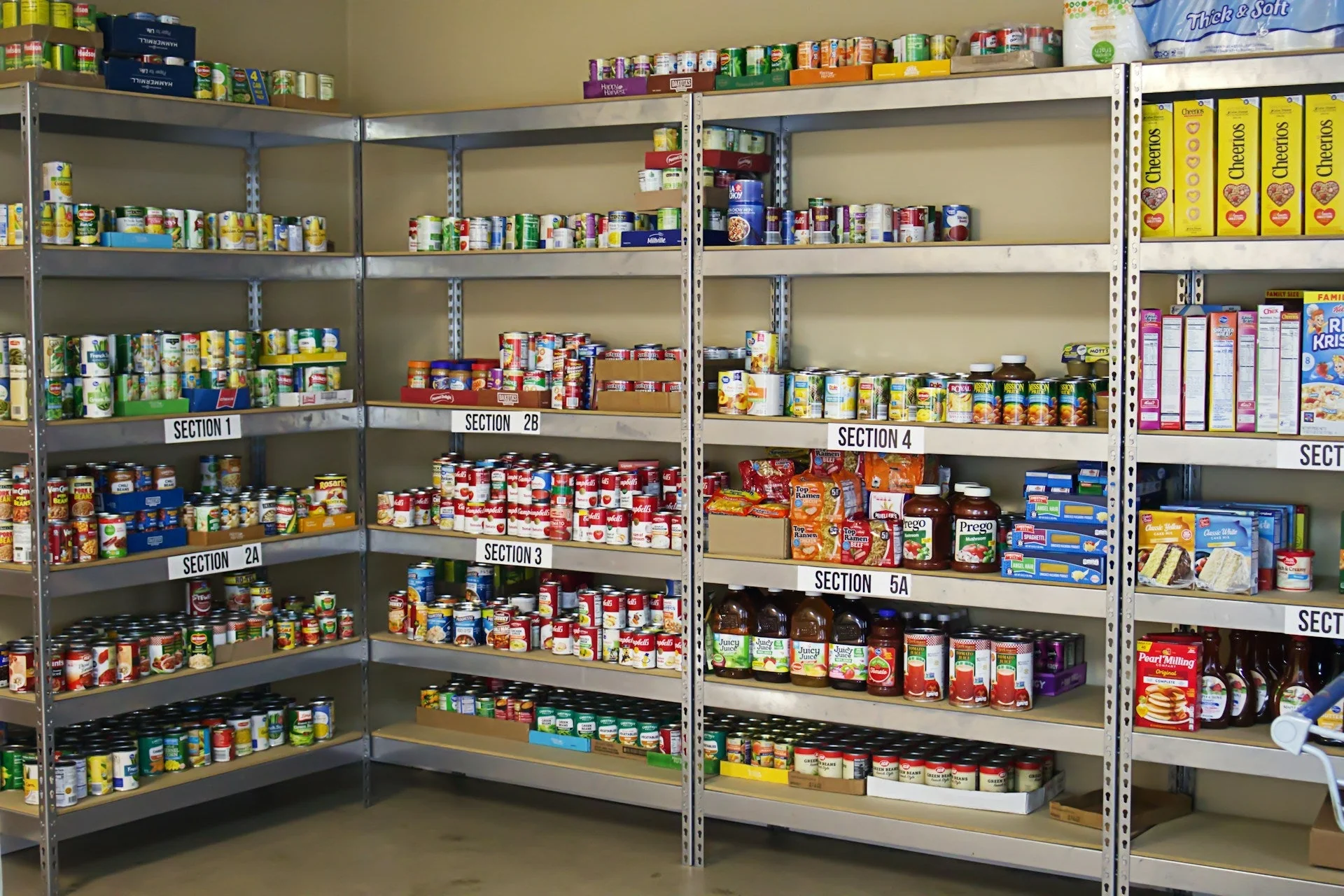
The opportunity is a mobile inventory and rotation app for the backup pantry: the food, water, batteries, medicine, and emergency supplies that ordinary households keep outside the everyday kitchen routine. The positioning that makes it work is the operating system for household readiness, aimed at normal families rather than hardcore survivalists, and that positioning choice is most of the heist.
Here's the opportunity:
The money: 10,000 households at $29.99 a year is roughly $25K MRR; 2,000 gets a solo builder to $60K ARR, before vendor and affiliate revenue.
Inside:
• Six-to-ten-week MVP with a do-not-build list
• Vendor QR import play for near-free acquisition
• Three-tier pricing in an underpriced category
• Four slow moats plus a 90-day launch plan
The Signal
In 2026, The Food Institute spotlighted a consumer movement that trend researchers at the marketing agency Quench named "Apocalyptic Provisions." The behavior under the dramatic label is mundane: consumers buying more durable, shelf-stable products because those purchases deliver security and peace of mind. This is emergency preparedness without the prepper identity. Think of the Florida family stocking hurricane supplies, the California homeowner thinking about wildfires, the parent who built a two-week pantry during the pandemic shortages and never stopped, the Costco shopper who buys batteries by the case.
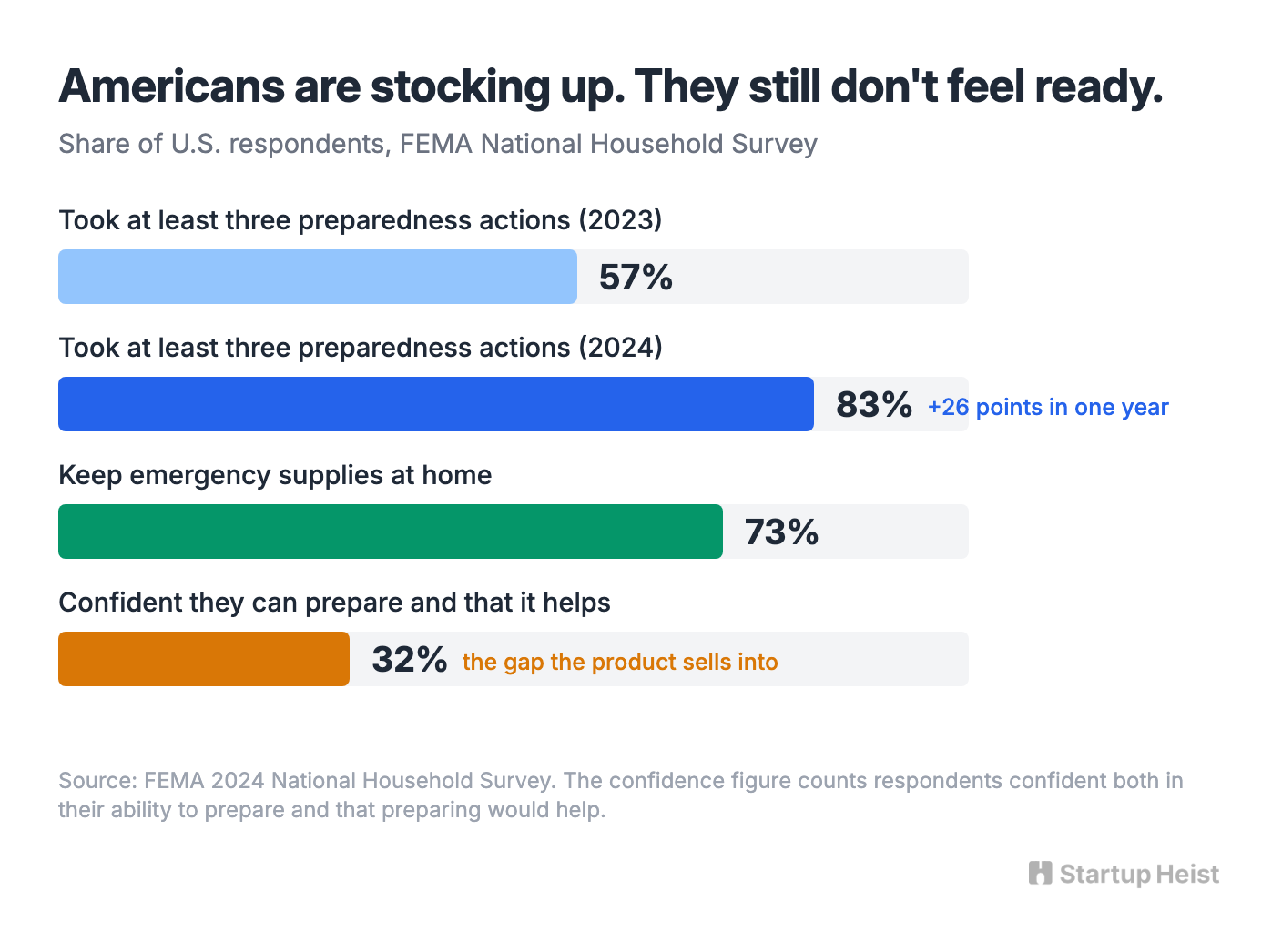
The government made this behavior mainstream long ago. Ready.gov tells every household to keep an emergency kit with several days of food and water, and FEMA's preparedness materials instruct people to check batteries, rotate supplies, and maintain stores for household members and pets. The behavior is spreading: in FEMA's 2024 National Household Survey, 83% of Americans reported taking at least three preparedness actions that year, a jump from 57% in 2023, and 73% of homeowners said they keep emergency supplies. The same survey found only 32% feel confident both in their ability to prepare and that preparing would actually help: people are stocking up without feeling ready.
The purchases backing that behavior are no longer small. My Patriot Supply sells a four-week food kit for $277.95 and a three-month supply that lists at $797.95. ReadyWise's emergency line runs from about $550 for a one-month package to roughly $3,500 for a one-year, 24-bucket supply, with a shelf life advertised at up to 25 years. Market researchers put the emergency and survival food category near $15 billion globally in 2024, and while those estimates vary too much to treat as gospel, they confirm the point that matters: durable food is a large commercial category rather than a survivalist subculture.
None of that is a software market. But once a household spends $300, $800, or $3,500 on supplies designed to sit untouched for a decade, a $30-a-year tool that protects the investment stops being a hard sell. The question is what that tool actually has to do.
The Purchase Creates an Operations Problem
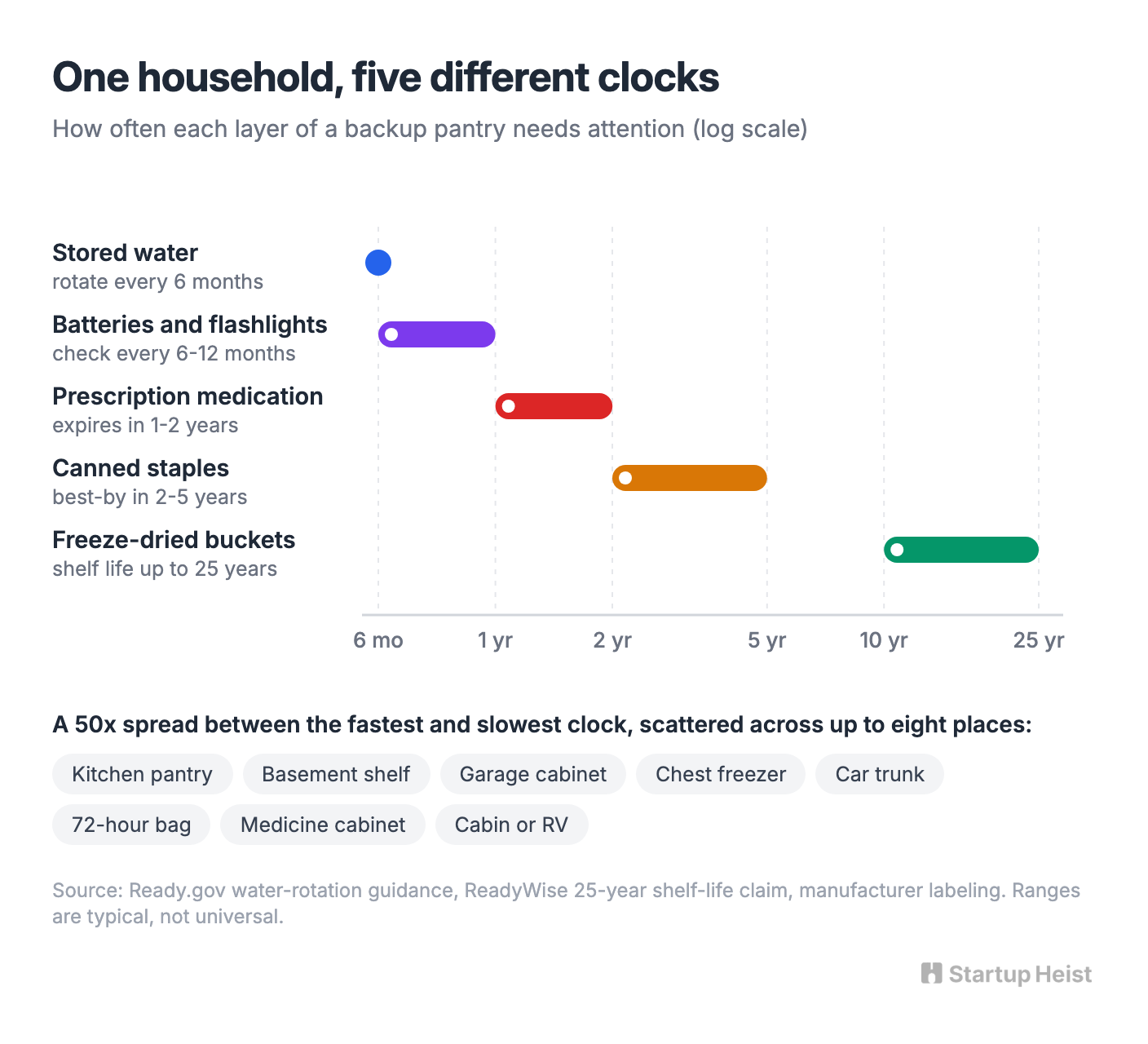
Buying supplies is the satisfying part. The tedium starts afterward, because a typical prepared household spreads its reserves across the kitchen pantry, a basement shelf, a garage cabinet, a chest freezer, the trunk of a car, a 72-hour evacuation bag, a medicine cabinet, and maybe a cabin or RV. The supplies follow different rules, too. A freeze-dried bucket claims 25 years, Ready.gov's own guidance says stored water should be rotated every six months, and batteries quietly leak. Prescription medication has strict expiration and refill constraints. A first-aid kit can be "fully stocked" while holding expired antiseptic and a dead flashlight.
Ordinary pantry apps model none of this well, because they're designed around tonight's dinner: scan groceries, track the refrigerator, build a shopping list, suggest recipes. Emergency readiness is a different workflow. The user needs four answers: What do we have? Where is it? When should it be inspected, used, or replaced? And how many people, for how many days, does it cover?
The fourth question is where the product lives. "12 cans of soup" is a line in a list; "your household has seven days of food but only two days of water" is a decision, and nobody in the current app landscape delivers that decision cleanly.
A Crowded Shelf With No Owner
The market isn't empty, and that's good news. A cluster of pantry and food-storage apps already offers some combination of barcode scanning, expiration tracking, storage locations, and shopping lists, and their collective weakness maps the opening. KitchenPal, the most established mainstream comparison, holds a 4.5-star App Store rating across roughly 550 reviews, but it's fundamentally a kitchen-management suite; emergency storage is an afterthought next to meal planning and recipes. Smantry markets itself to both households and preppers, yet its positioning still orbits food waste and its U.S. App Store footprint is tiny: three ratings. An Android app called Stockpile has crossed 5,000 downloads with multiple stockpiles and household-needs calculations, which proves demand without proving a category leader. A newer iOS app, also called Stockpile, goes furthest, with days-of-food and water calculations, first-expired-first-out rotation, and full offline operation, but it launched in mid-2026 and hasn't accumulated enough ratings to display an average.
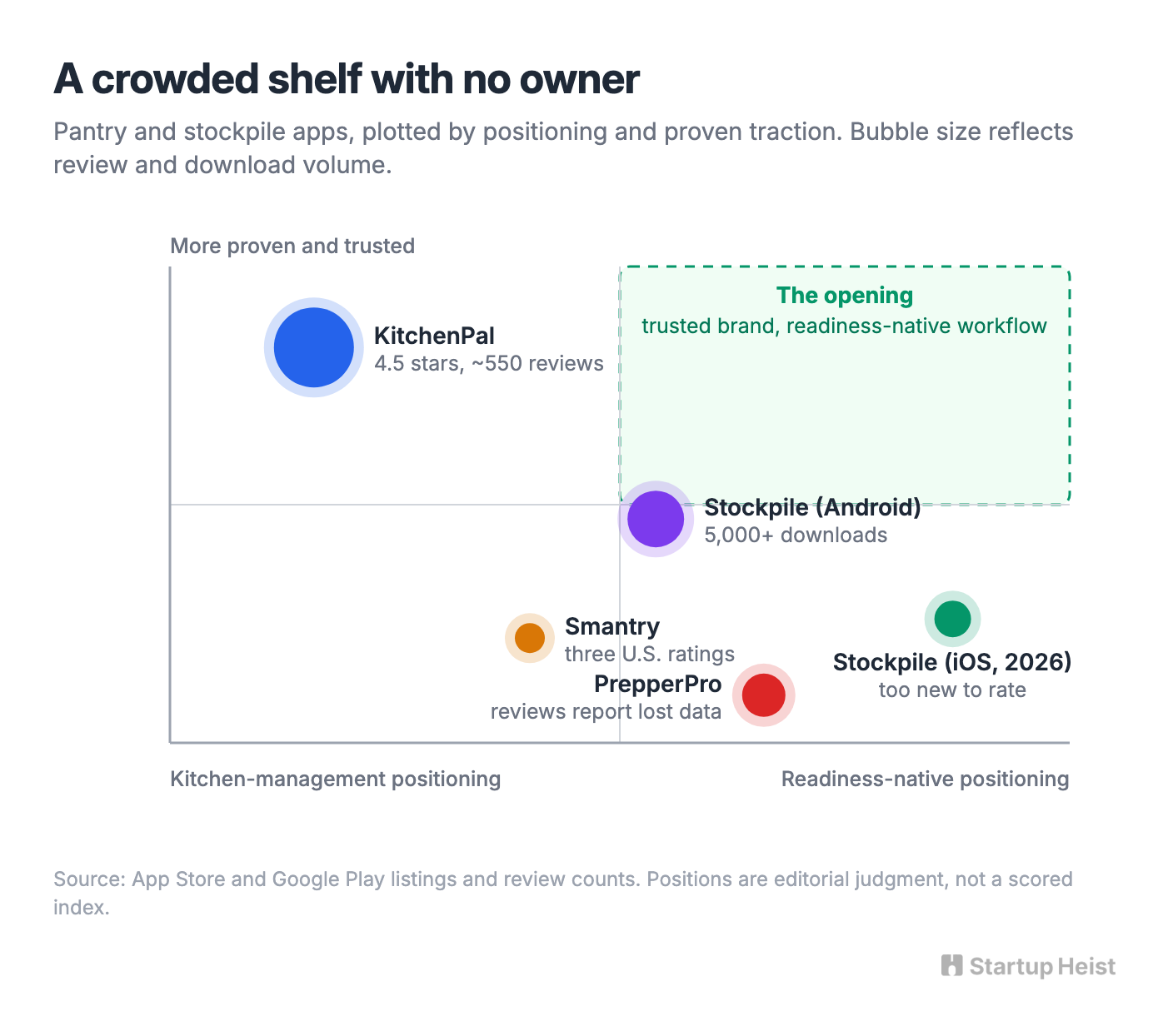
Then there's PrepperPro, which demonstrates how to lose this market: its reviews report inventories failing to save or being wiped entirely, and its version history is a trail of fixes for lost data. For a product that asks users to spend hours on initial entry, deleting their work is a terminal offense. Plenty of builders have tried; nobody owns the category. The feature set sits scattered across kitchen apps, hobbyist tools, and young utilities, and no trusted brand serves ordinary households with a polished, low-anxiety readiness workflow.
The Product: Track the Reserve, Not Every Grocery
The fastest way to ruin this opportunity is to demand a perfect digital twin of the kitchen. Nobody wants to scan every yogurt cup and deduct every granola bar. The product tracks the reserve layer only: supplies intentionally kept for later or for emergencies. Call it Reserve, ReadyShelf, HomeReady, something calm with no skulls, bunkers, or military typography. The promise is "know what your household has, where it's stored, and when it needs attention," never "survive the collapse."
Three design decisions carry the product.
Unlock the Vault.
Join founders who spot opportunities ahead of the crowd. Actionable insights. Zero fluff.
“Intelligent, bold, minus the pretense.”
“Like discovering the cheat codes of the startup world.”
“SH is off-Broadway for founders — weird, sharp, and ahead of the curve.”


