


In 1992, an EPA official named John Hoffman took an evening walk through government offices and noticed something nobody had bothered to count: every computer monitor in the building was glowing into an empty room.
No one was breaking a law. The waste was just invisible, which meant it was also infinite.
Hoffman didn't write a regulation. He designed a sticker.
Energy Star launched that year as a voluntary label for computers and monitors. A small blue logo that said this one wastes less. Manufacturers opted in because the sticker sold units. Consumers chose it because the score made the invisible comparable. By 2000, 40% of American households recognized the label. Today it covers 75+ product categories and has saved U.S. consumers over $500 billion.
Hoffman grasped something most regulators miss: you don't change behavior by banning the bad option. You change it by making the better option visible.
The same problem is sitting in 90 million American laundry rooms right now — and nobody owns the answer.
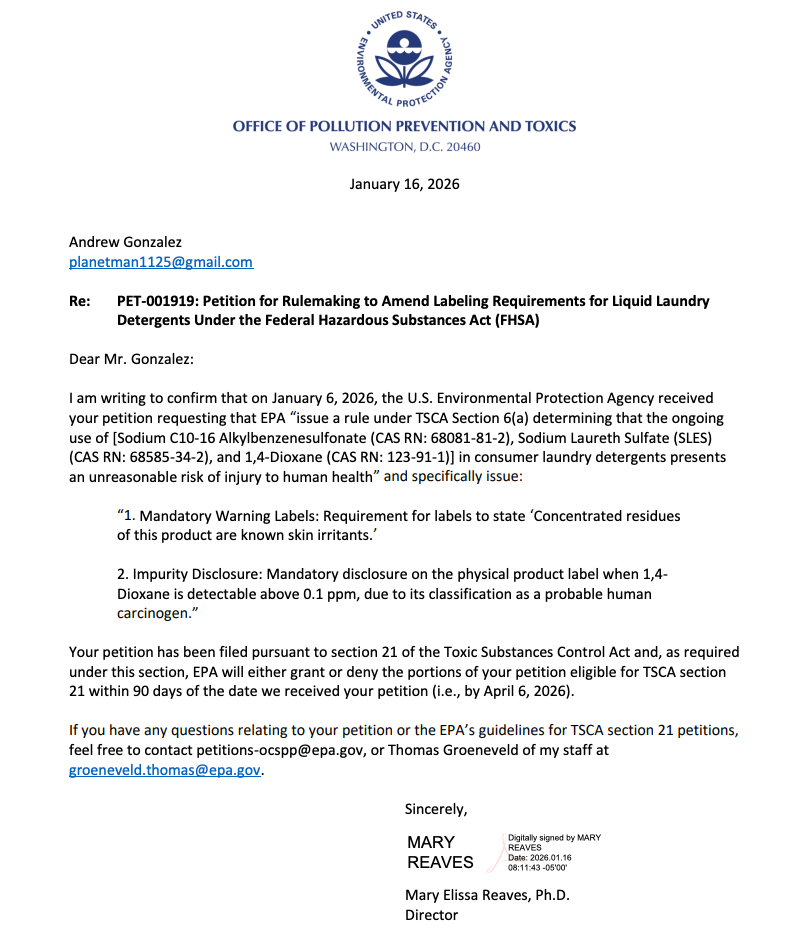
On January 6, 2026, an EPA petition argued that modern HE washing machines don't fully rinse detergent chemicals from clothing, leaving residue against skin all day with zero disclosure. The $25 billion U.S. laundry care market has no label for that. Yuka, the scan-and-score app with 73 million users, deliberately skipped household cleaning. EWG rates what's in the bottle. Nobody rates what's left on the fabric.
The play: build "RinseScore" — a residue scoring tool a solo founder can ship in six weeks. Consumer subscriptions, affiliate revenue, and a B2B certification model ($5K–$20K per SKU per year) that turns a scoring app into industry infrastructure. No venture capital required.
Read the full playbook here:
A TSCA petition just forced EPA to evaluate chemical residue left on clothes by HE washers. No consumer scoring tool covers laundry residue — a micro SaaS startup idea hiding inside a regulatory gap worth building now.
From the Vault:

A uBlock filter list went viral for nuking YouTube Shorts. The real micro SaaS opportunity is portable Focus Profiles — a shareable attention infrastructure layer with a creator-powered marketplace.

Google Stitch and vibe coding tools just made UI free. The real startup idea is the vertical conversion layer underneath — deployment, payments, booking automation, and benchmarked funnel data for high-LTV service businesses.


