


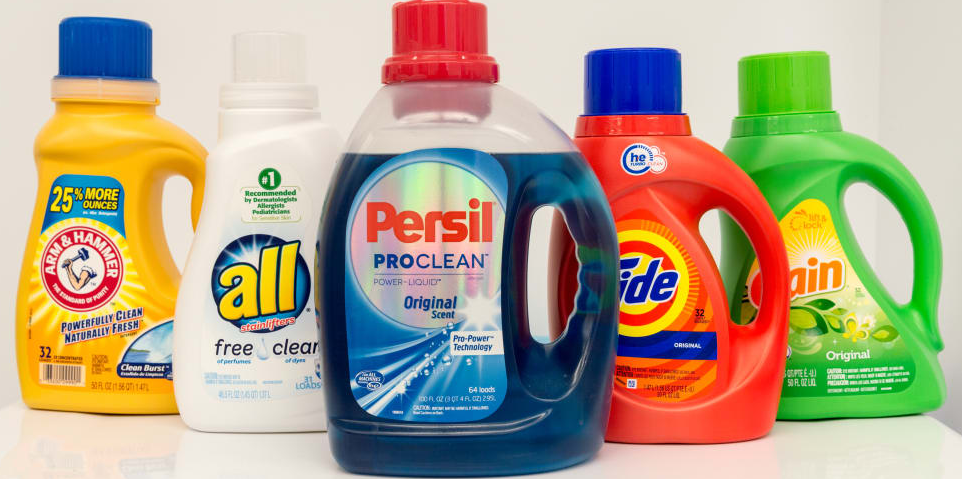
A solo builder can ship the MVP in six weeks, hit $5K–$8K/month in consumer subscriptions, and stack affiliate and B2B certification revenue ($5K–$20K per SKU per year) on top.
Build the scoring system, and you become the referee.
On January 6, 2026, EPA received a TSCA Section 21 petition declaring that certain chemicals in consumer liquid laundry detergents — sodium alkylbenzenesulfonate, sodium laureth sulfate (SLES), and 1,4-dioxane — present an unreasonable risk to human health. The framing is specific: chronic dermal exposure through residue remaining on clothing, amplified by the rinse limitations of High Efficiency (HE) washing machines. The petitioner argues HE washers fail to rinse these chemicals from fabrics, creating continuous skin contact unaddressed by current labeling. It requests mandatory warning labels and 1,4-dioxane disclosure above 0.1 ppm.
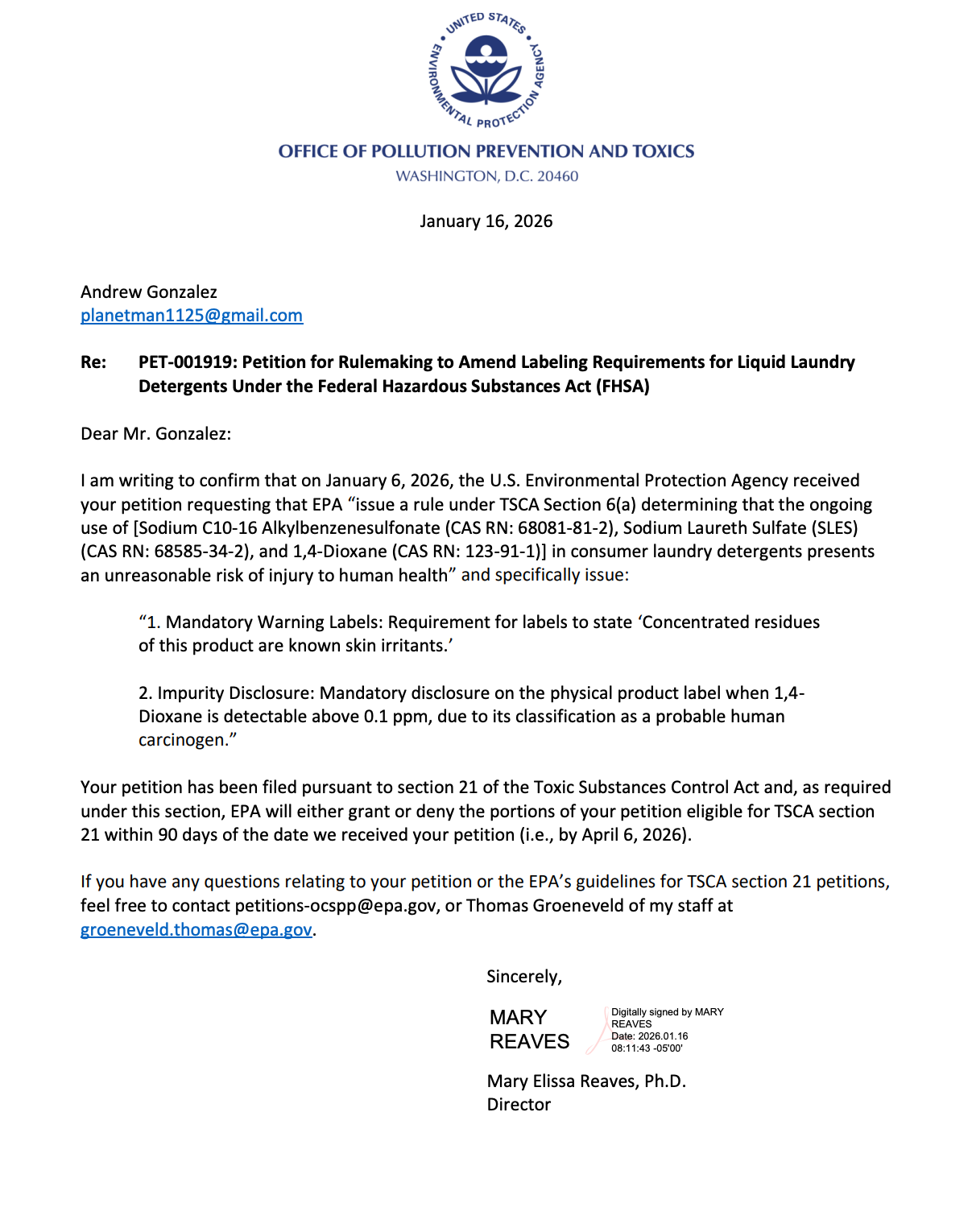
Under TSCA Section 21, EPA has 90 days to grant or deny. Denials must be explained publicly, and the petitioner can sue. This thread doesn't go quiet regardless of the outcome.
The petition may or may not succeed. The market signal is what matters. A new consumer concern — what's left on your clothes after the wash cycle finishes — is forming. Nobody owns the answer yet. That's a startup opportunity hiding in plain sight: a consumer health product idea built on regulatory momentum, a niche SaaS scoring tool for an industry with zero transparency infrastructure, and a certification business that scales into B2B without needing venture capital to get there.
Why This Opportunity Exists Right Now
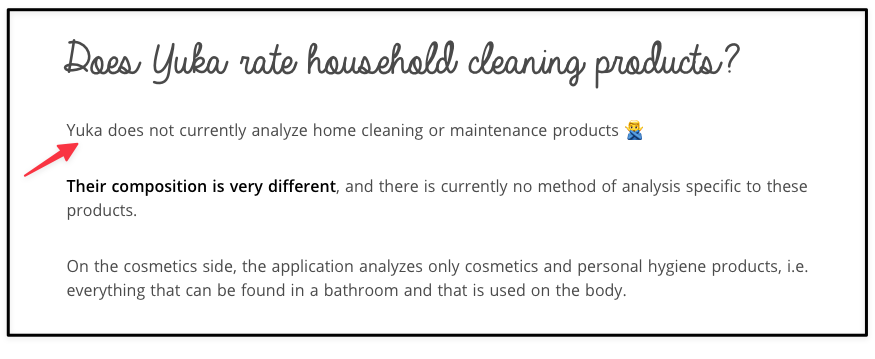
The "clean label" movement hasn't reached household cleaning. Yuka, with over 55 million users, explicitly does not rate household cleaning products. EWG's Healthy Living database covers cleaning products on ingredient hazard and transparency, but anchors on what's in the bottle, not what's left on the fabric. Clearya operates similarly. There's a vacuum at the intersection of household cleaning and residue-based risk, and this petition aimed a spotlight directly at it.
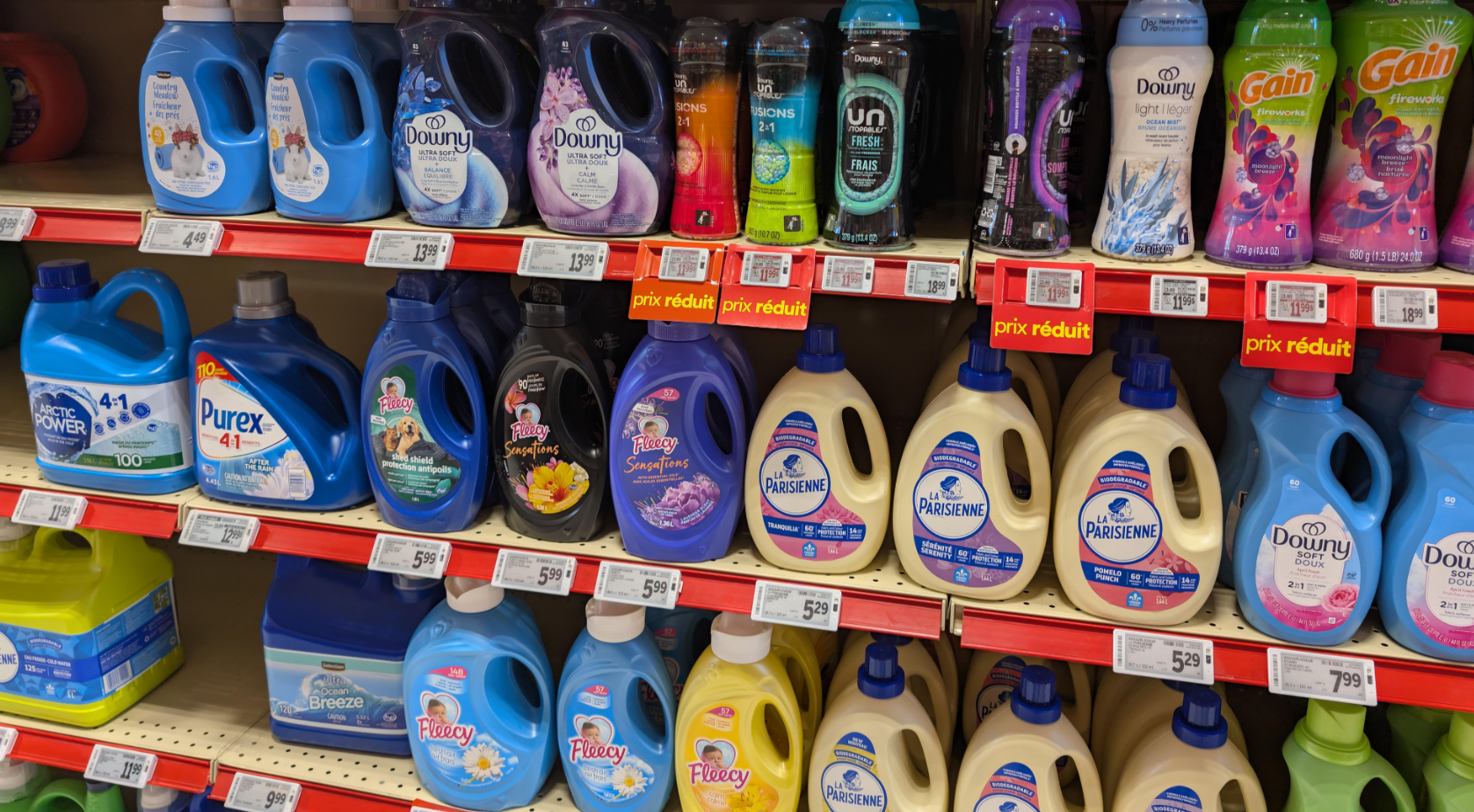
HE washers changed the physics, and nobody adjusted the conversation. Over 90% of U.S. households own a washing machine, and the majority of new units sold are HE models using significantly less water per cycle. Detergent formats are shifting toward concentrated liquids, pods, and sheets — a sub-market growing at roughly 7% CAGR through 2029. Less water plus more concentrated chemistry means residue behavior is fundamentally different than it was a decade ago. Academic work in dermatological research suggests detergent rinse residues can produce biological effects even at high dilution. That's not proof of harm. But it's more than enough to justify a measurement-and-translation business.
The regulatory drip-feed is already underway at the state level. New York finalized regulations restricting 1,4-dioxane in household cleansing products at 1 ppm, with all manufacturer waivers expiring by end of 2025. Worth noting: 1,4-dioxane isn't an added ingredient. It's a manufacturing byproduct of ethoxylation, the same process used to create SLES in detergents. The regulatory narrative is shifting from "what manufacturers put in" to "what ends up in the product through manufacturing" — and by extension, what ends up on your skin.
Every EPA response, state action, and brand reformulation generates news hooks. You don't need the petition to succeed. You need the conversation to continue. The TSCA Section 21 timeline guarantees it will.
The Play: "RinseScore" — Yuka for Laundry Residue
The entire "clean detergent" category has been marketed around fewer scary ingredients, less fragrance, greener packaging. Nobody is marketing around measured rinse-out performance under modern HE wash conditions.
You're building the market's default answer to a question consumers will increasingly ask: How much of this detergent stays on my clothes after a normal HE wash?
Own that question, and you monetize on both sides: consumers pay for the scanner, recommendations, and premium tracking. Brands and retailers pay for testing, certification, data, and compliance-ready labeling guidance.
What You Actually Build
Unlock the Vault.
Join founders who spot opportunities ahead of the crowd. Actionable insights. Zero fluff.
“Intelligent, bold, minus the pretense.”
“Like discovering the cheat codes of the startup world.”
“SH is off-Broadway for founders — weird, sharp, and ahead of the curve.”


