


Chat-Native Ad Copy Is About to Become Its Own Software Category
Forget "AI writes ads now." That market is already crowded, cheap, and impossible to defend. The real opening is narrower: thousands of existing advertisers are about to test a new paid channel inside AI assistants, and almost none of them know how to write for it.
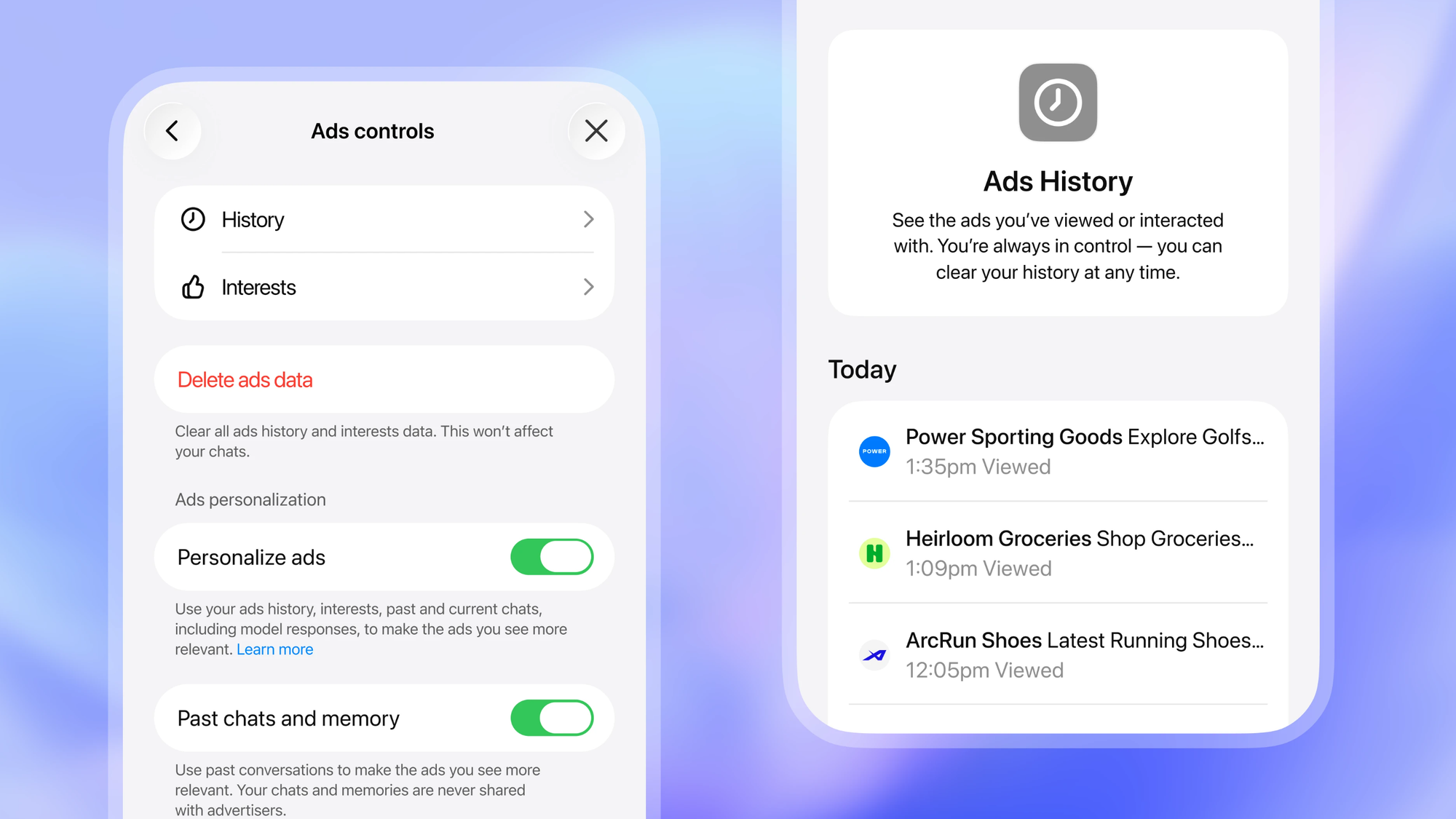
The ad copy playbook that works on Google Search and Meta feeds does not translate to conversational AI placements. A new format needs new tooling, and the window to build it is open right now.
The money: 50 agency seats at $499/month plus onboarding fees puts a solo founder past $25K MRR within the first year.
Inside:
• Why existing ad tools miss this channel
• The first-party language clustering engine
• Agency-first GTM and lead magnet
• Three-layer moat against platform absorption
The Channel Is Real
OpenAI's ChatGPT ad pilot launched on February 9, 2026, crossed $100 million in annualized revenue within six weeks, and enrolled over 600 advertisers across the U.S., Canada, Australia, and New Zealand. Nearly 80 percent of participating SMBs want to continue. Self-serve tools roll out in April 2026, dropping the current $200,000 minimum and opening the channel to a much broader base of buyers. Early data shows CPMs around $60, roughly three times Meta's average, with click-through rates near 0.9 percent. The quality signal matters more than the volume signal: Criteo, the first ad tech partner with approximately 17,000 connected advertisers, reports that users arriving through LLM placements convert at 1.5 times the rate of other referral channels.
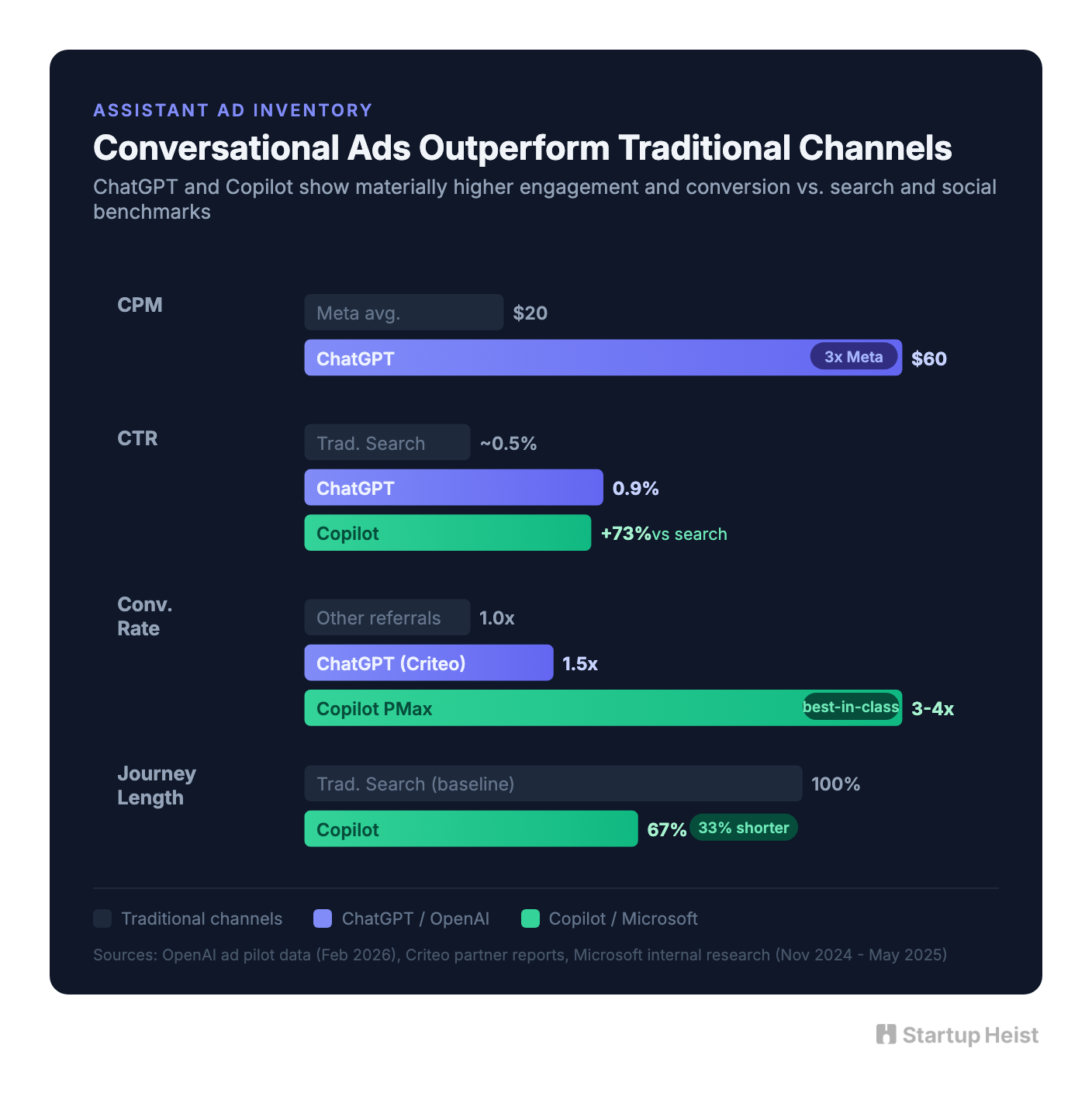
Microsoft has been building a longer track record. Internal research covering November 2024 through May 2025 shows Copilot ads generating 73 percent higher click-through rates and 16 percent higher conversion rates than traditional search, with customer journeys running 33 percent shorter. Performance Max campaigns in the Copilot ecosystem report three-to-four-times higher conversion rates. Two of the largest technology companies on earth are now publishing data showing that conversational ad inventory behaves differently from the search and social inventory advertisers already know.
Buyers will test this channel because the promise is credible and the platforms are opening up. Best practices do not exist yet. That gap between spend and competence is where the product lives.
Why Existing Ad Copy Tools Miss This Channel
Most SMB ad tools are built for feeds, banners, and classic search inventory. Their job is to produce more variants, faster. Conversational AI ad inventory sits in a different context: the user is already mid-question, often in natural language, often with more nuance than a keyword query. A search ad survives on compressed keyword logic. A social ad survives on interruption. A conversational ad has to feel like a useful extension of the user's inquiry. Tone, claims, and relevance all matter more in an environment where trust is unusually fragile.
OpenAI's ad policy framework codifies this difference. Ads are contextually targeted by conversation topic and intent, not user profiles. They are excluded from health, mental health, and political conversations. Advertisers receive only aggregate performance data. Brand safety is enforced through dual filters: sensitive contexts where ads could undermine user trust, and brand-unsafe contexts unsuitable for advertiser adjacency. This is a genuinely different compliance surface than Google or Meta, and most SMBs have no interest in reading policy documents. They want a product that quietly prevents mistakes.
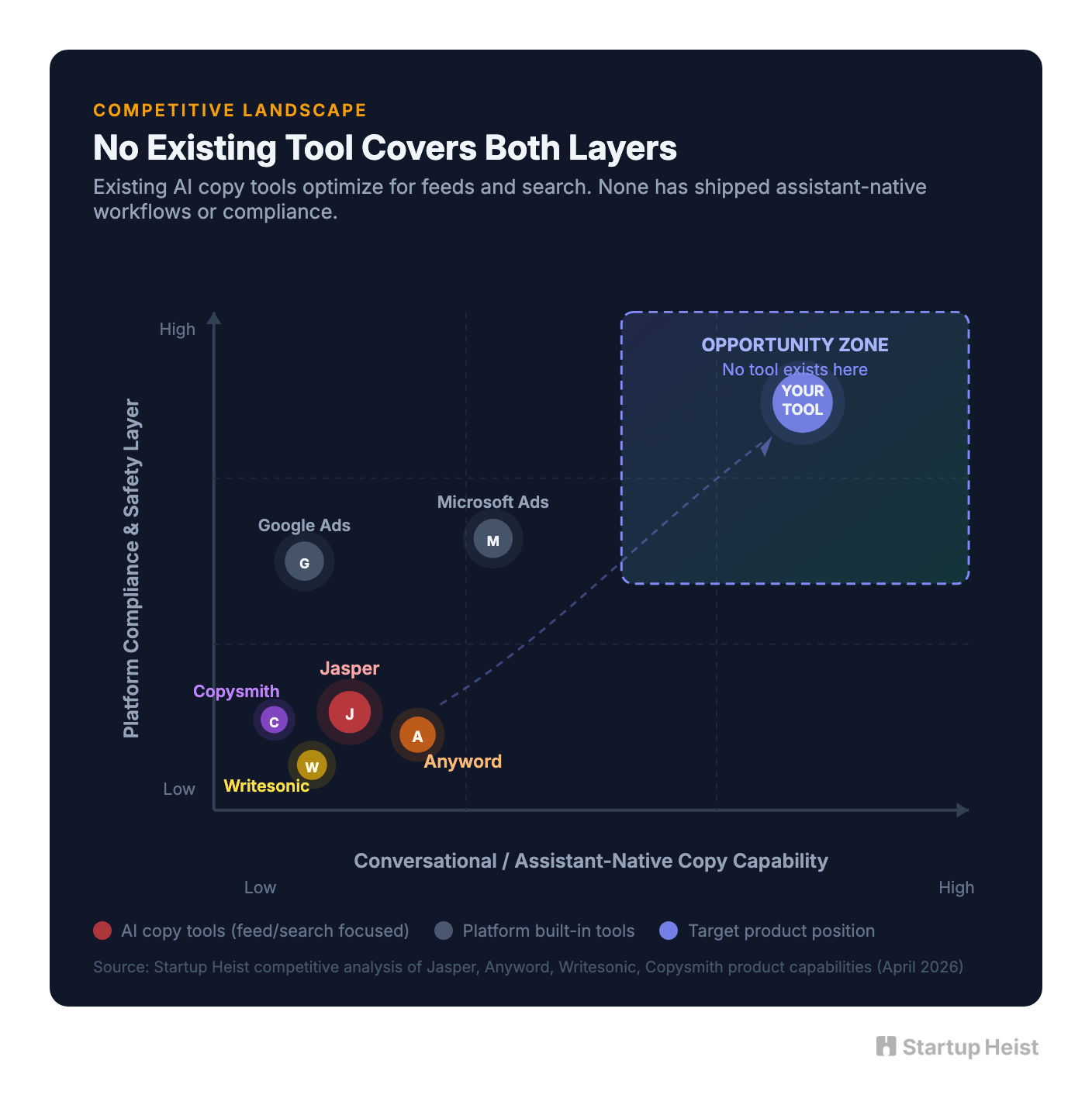
No existing competitor — Jasper, Anyword, Writesonic, Copysmith — has shipped a dedicated conversational or assistant-native ad copy workflow. The gap has two layers, language and compliance, and no tool on the market owns both.
The Play
Unlock the Vault.
Join founders who spot opportunities ahead of the crowd. Actionable insights. Zero fluff.
“Intelligent, bold, minus the pretense.”
“Like discovering the cheat codes of the startup world.”
“SH is off-Broadway for founders — weird, sharp, and ahead of the curve.”


