


A niche Indonesian wake-up-call sound becomes office-brainrot content in Italy. A Brazilian funk sample explodes across gaming clips in Germany. Latin tracks dominate global TikTok song charts while American social managers scramble to figure out what happened.
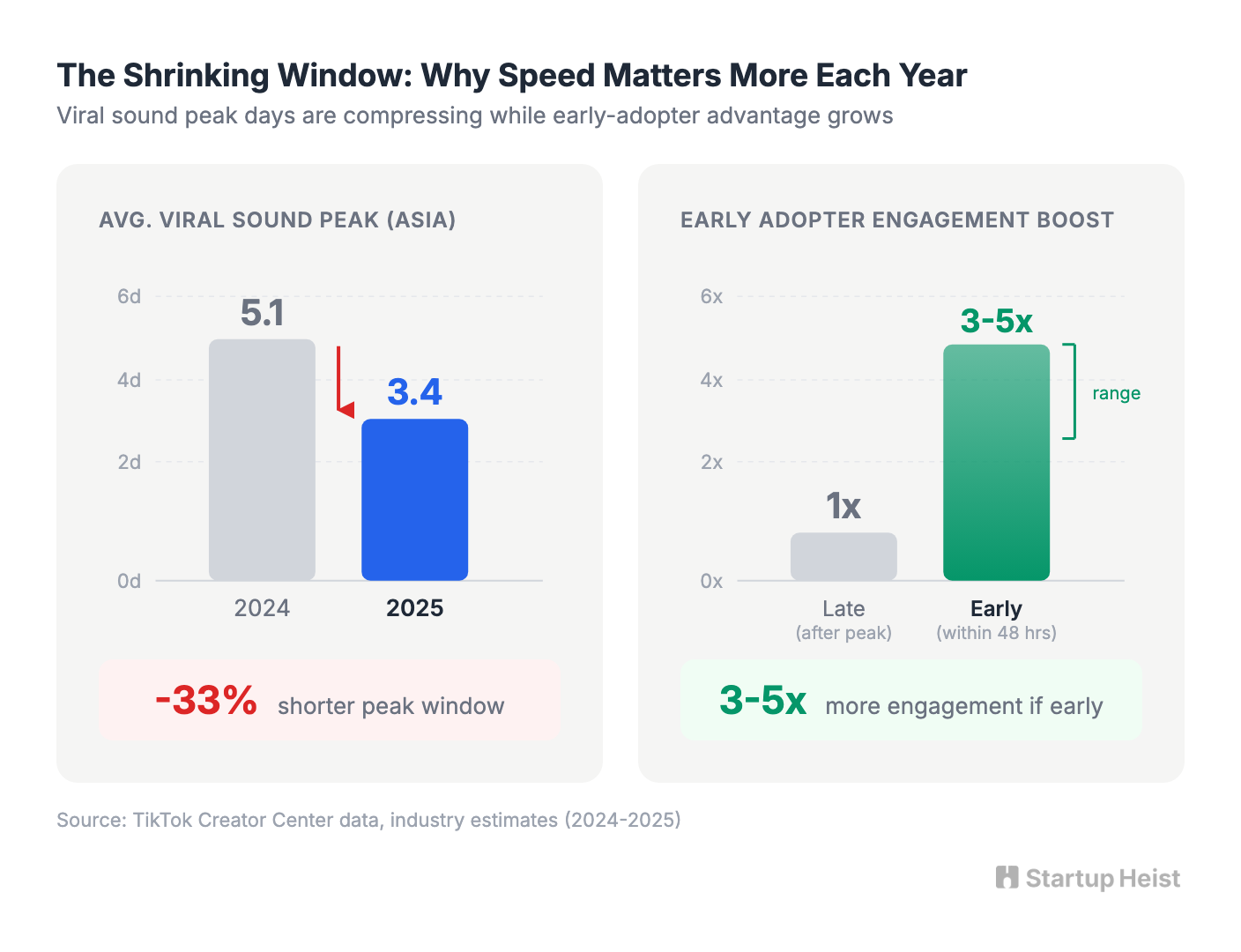
Cross-border audio behavior is now TikTok's default operating rhythm. Industry estimates suggest roughly 87% of "glocal" hits in 2025 originated in a single market and crossed into at least three more within ten days. Trend lifespans are compressing: in Asia, the average viral sound peaked within an estimated 3.4 days in 2025, down from around 5.1 days the year before. Creators who adopt a rising sound within 24 to 48 hours of trend emergence see engagement rates three to five times higher than late arrivals.
The speed creates a genuine arbitrage window. A US creator, social media manager, or boutique agency can win simply by spotting a viral TikTok sound three to seven days before competitors. Forget the next big social analytics suite. The play is simpler: become the cheapest unfair advantage in a social manager's workflow. That is Meme Radar.
The money: 150 agency and brand subscribers at $35/month blended gets you to $63K ARR as a solo founder.
Inside:
• Cross-border heat score formula
• MVP stack and three source markets
• Pricing tiers from free to agency
• Go-to-market for boutique agencies
Why This Window Exists
TikTok sounds trend first inside their country of origin. The algorithm evaluates initial velocity through local interaction signals (likes, rewatches, shares) in the first 24 hours, then maps engagement to geolocation clusters. Only when a sound outperforms local benchmarks does it enter regional or global testing pools. Language detection and music rights restrictions further gate expansion. A sound does not cross borders automatically. TikTok waits for proof of regional relevance. If no local creator in a new market touches the audio, the algorithm keeps it contained.
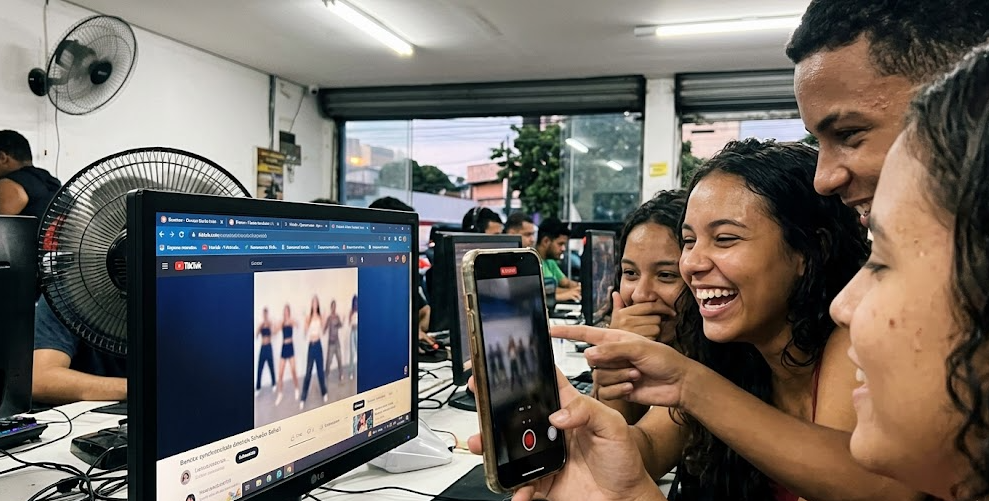
The cross-border signal is detectable before it goes mainstream. When a sound starts appearing in repost clusters or remix formats in a new market, the algorithm is about to amplify it. TikTok's Creative Center already provides region-filtered trending sound data openly, and the raw data for signal detection is publicly legible. What no existing tool does is connect the dots across markets, score sounds for crossover likelihood, and deliver an opinionated daily feed.
Most social teams are late in the same predictable way. They notice a sound only after it has saturated their own feed. By then, the algorithmic boost for fresh adoption is gone. Social managers do not buy "analytics." They buy reduced embarrassment, faster ideation, and the chance to tell a client, "We were on that before everyone else."
The Pattern in Action
The "Tung Tung Tung Sahur" trajectory illustrates the exact arbitrage this product exploits. On February 28, 2025, an Indonesian TikToker uploaded a video featuring an AI-generated wooden creature set to a robotic voice mimicking the bedug drum, the traditional Indonesian instrument sounded during Ramadan. For the first week, the meme was contained almost entirely within Indonesian TikTok. By early March, non-Indonesian users began remixing the character into local humor formats. By mid-April, it had been absorbed into the "Italian brainrot" universe, a surrealist meme genre that started as its own Italian phenomenon in January 2025, and spawned commercial products across multiple continents, including Dunkin' Donuts themed doughnuts in Peru and a hit Roblox game.
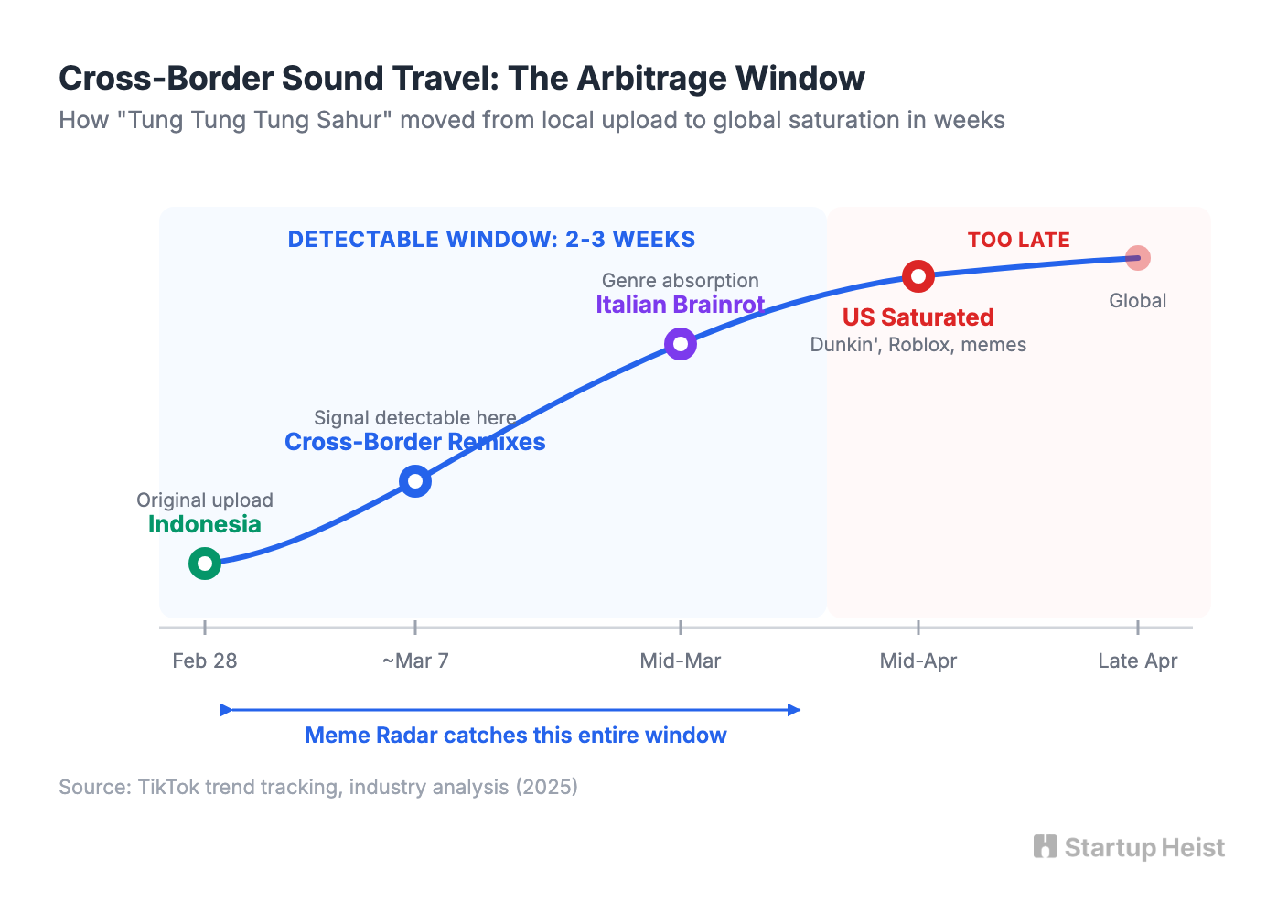
The window between "detectable in Indonesia" and "saturated in the US" was roughly two to three weeks. A social manager with a cross-border TikTok trend alert feed covering Indonesia would have had that entire window to plan content before competitors noticed the sound existed.
Who Actually Pays and What They Replace
The best first buyer is not the solo creator. It is the small agency or in-house social lead managing several accounts who already lives in a world where being a week early can change performance and justify retainers.
Boutique agencies are the strongest wedge. An agency handling five to twenty brand accounts needs trend coverage but cannot justify an enterprise analytics stack for every client. In-house social managers at youth-oriented brands (fashion, snacks, gaming, beauty, consumer apps) care about trend timing and are allergic to bloated software. High-output creators will subscribe, but churn runs higher; they work better as top-of-funnel than as the revenue base.
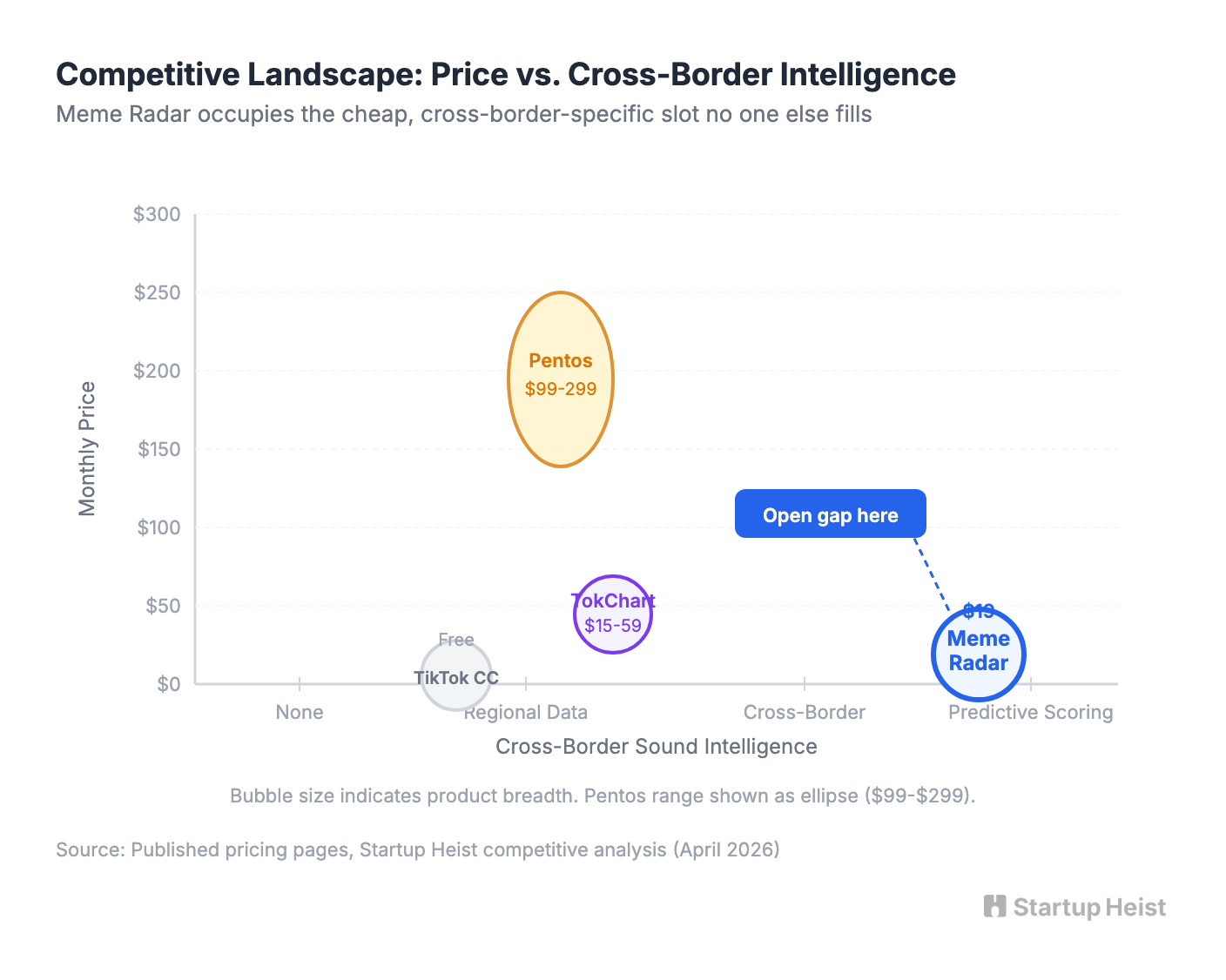
Existing social media trend tools occupy adjacent space but leave this specific job open. Pentos ($99 to $299/month) offers broad TikTok analytics with sound tracking. TokChart ($15 to $59/month) focuses on trending music with geographic breakdowns by country, but does not score sounds for crossover likelihood or provide editorial interpretation of what travels next. TikTok's Creative Center provides free regional data with interest graphs. None are built around cross-border lead-time scoring or US-likelihood prediction. Meme Radar slides in as the narrow, cheap, opinionated scout: specific markets, specific asset class (sounds), specific job (catch likely US crossovers early), specific output (alerts, not dashboards).
The gap comes down to editorial opinion about what crosses next. The estimated $10 to $20 billion social media analytics market is enormous, but Meme Radar targets the underserved bottom layer: cheap, forward-looking signal tools for agencies and in-house social teams who cannot afford enterprise pricing.
What the Product Is
Meme Radar begins as an alert product, not a full analytics platform. Every day, it pulls rising sound data from a handful of non-US markets, compares against US penetration, and scores by growth velocity, creator cluster spread, format portability, and cross-market drift. Then it delivers a simple output:
Unlock the Vault.
Join founders who spot opportunities ahead of the crowd. Actionable insights. Zero fluff.
“Intelligent, bold, minus the pretense.”
“Like discovering the cheat codes of the startup world.”
“SH is off-Broadway for founders — weird, sharp, and ahead of the curve.”


