


Every link-in-bio tool on the market competes on the same axis: clean design, fast setup, seamless utility. Linktree, Bento, Lnk.Bio, Bio.site all converge on polished, visually restrained templates that work for consultants, agencies, and ecommerce brands.
A growing cohort of internet-native creators wants the opposite of minimalism. Glitter text. Noisy backgrounds. Fake popularity counters. Top 8 grids. The unmistakable feeling of a 2005 bedroom exploding onto a screen. This isn't a niche joke. It's a real aesthetic preference backed by real spending, and it's accelerating through 2026.
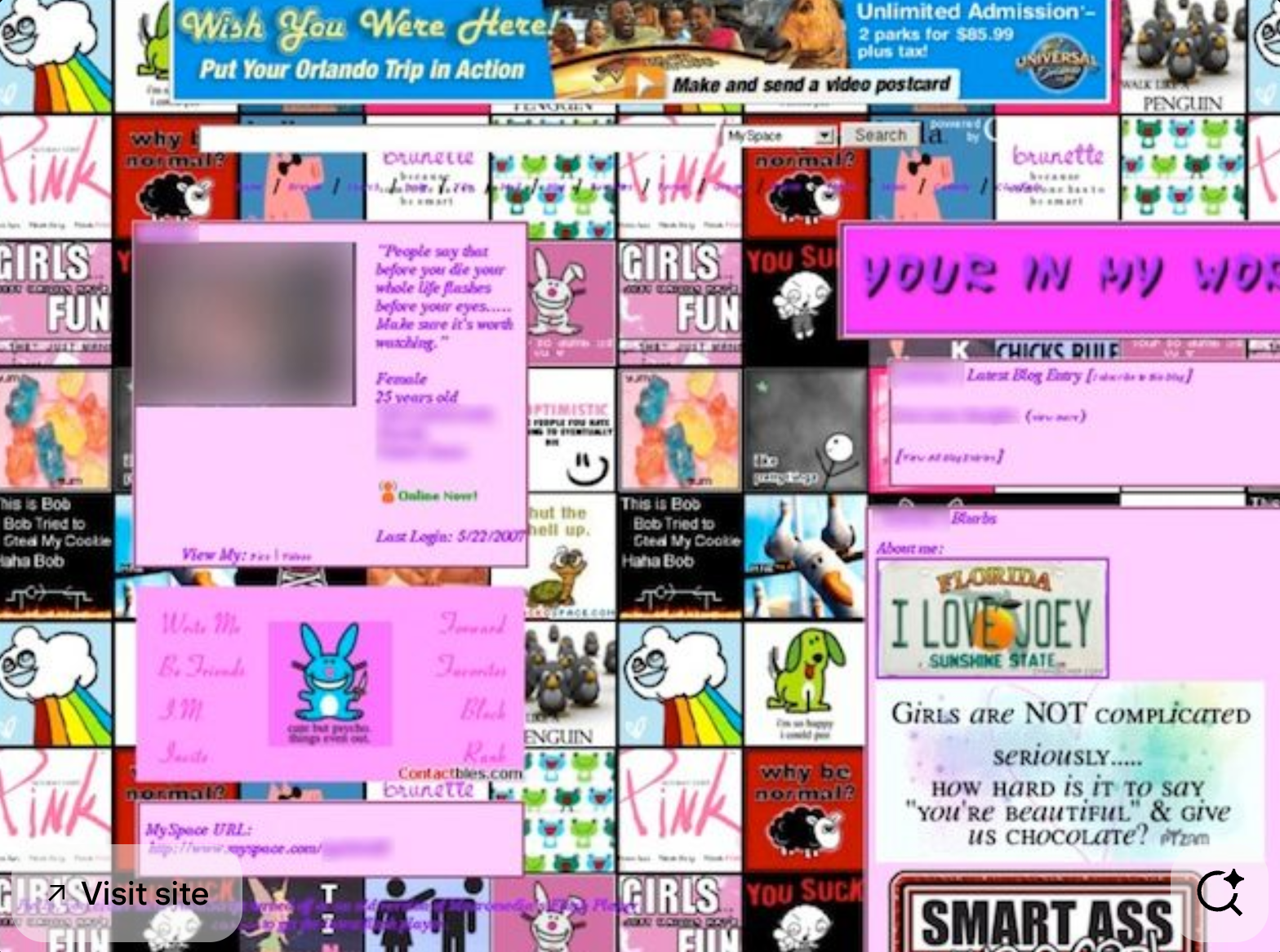
The opportunity: a tiny, opinionated retro link-in-bio product that gives creators instant MySpace-style bio pages without touching code. A constrained nostalgia engine, and a link-in-bio alternative that no one has built yet.
The money: 3,000 creators at $5/month is $15,000 MRR. The niche has zero purpose-built competitors.
Inside:
• Signature widgets that drive viral sharing
• Full MVP scope and tech stack breakdown
• Three-layer monetization with theme drops
• Taste-led acquisition with outreach scripts
A saturated category with an obvious wedge
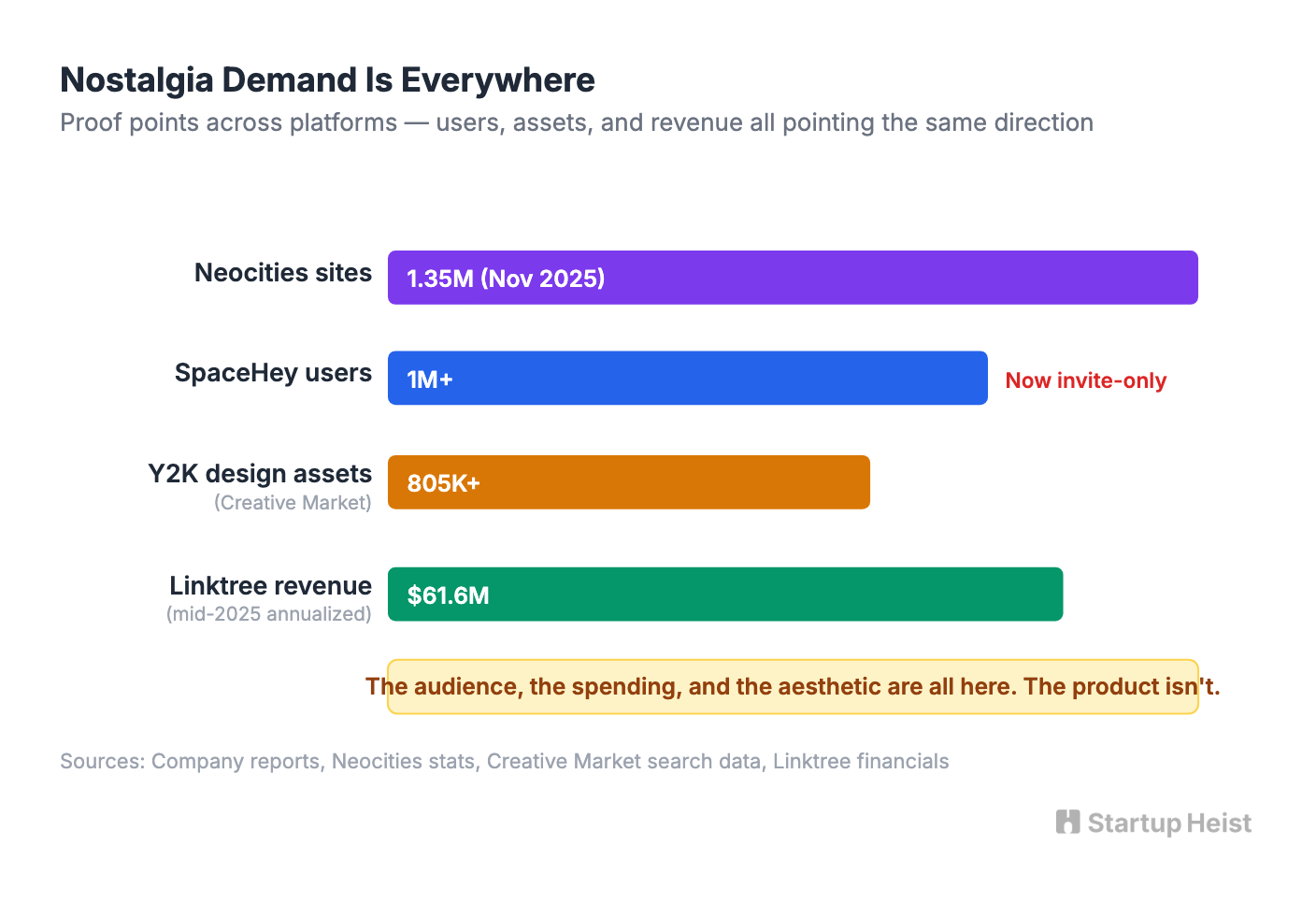
Link-in-bio is one of the most contested micro-categories in creator software. Linktree claims over 70 million users, holds roughly 80% market share, and hit $61.6 million in annual revenue by mid-2025. Behind it, dozens of competitors fight for the remaining 20%, all promising incrementally better analytics, integrations, and commerce features.
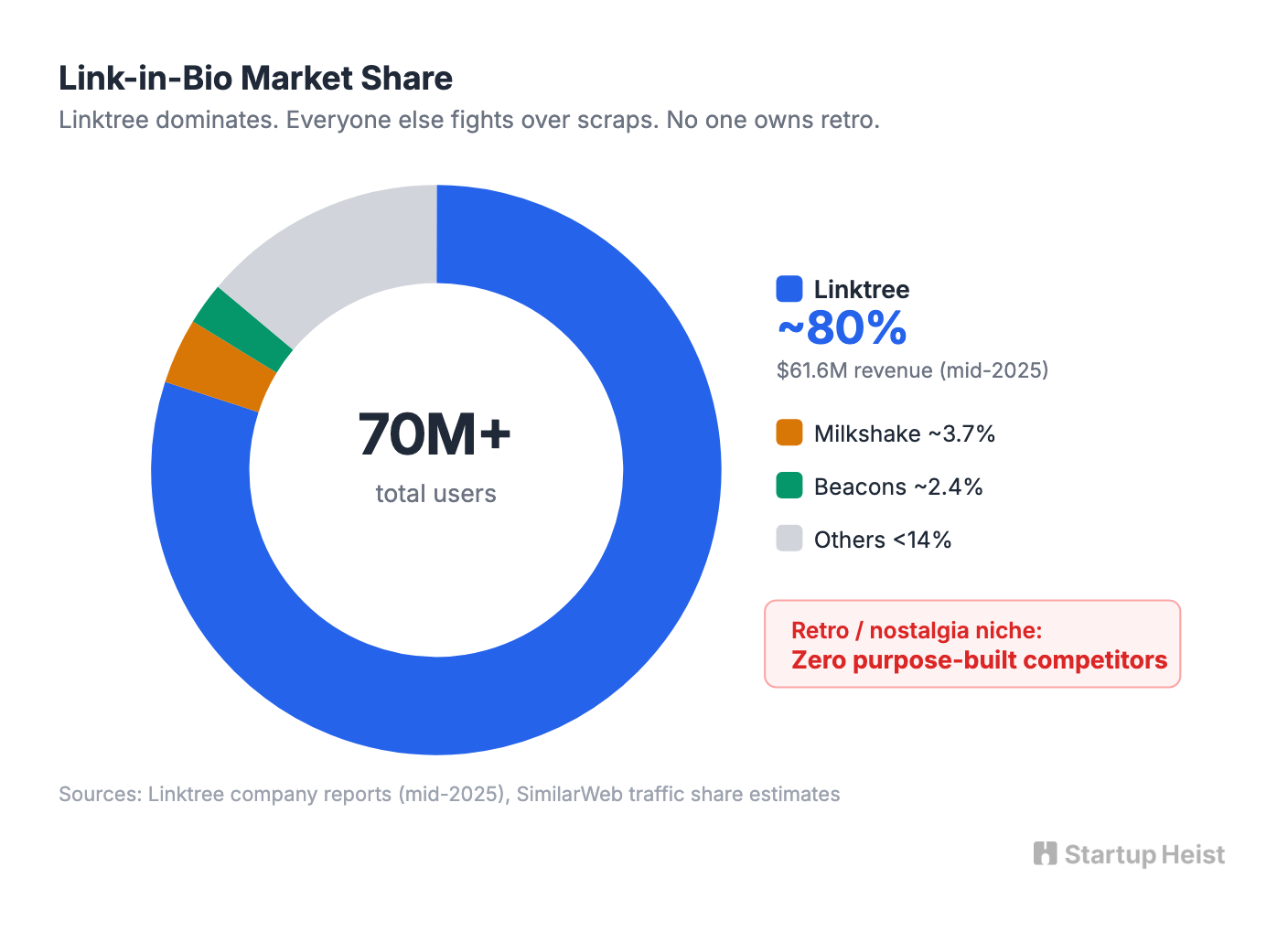
Competing on those dimensions is a dead end. The feature set is commoditized, free tiers are generous, and switching costs approach zero. No purpose-built retro link-in-bio tool exists anywhere in the market. The smarter move is to exit the feature war entirely and compete on identity.
The nostalgia signal is structural
SpaceHey, a MySpace clone built by a German teenager, has grown past one million users. People customize profiles with raw HTML because no simpler nostalgia creator tool exists. In March 2026, SpaceHey switched to invite-only registration and became inaccessible in the UK and Brazil under new moderation laws. Anyone who wants a Y2K link-in-bio aesthetic without a SpaceHey invite now has no good option.
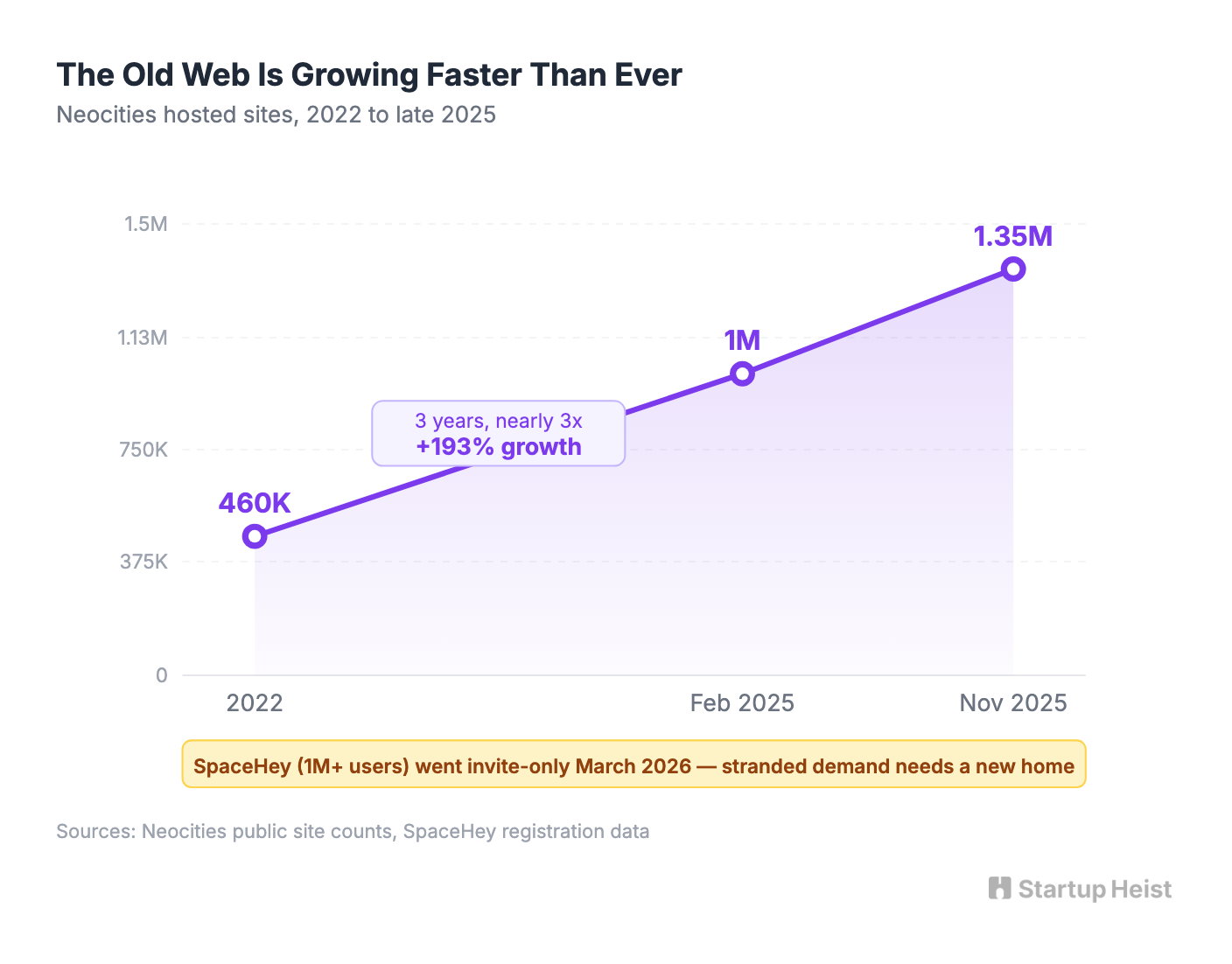
The demand signal extends well beyond one platform. Neocities, the GeoCities successor, crossed one million hosted sites in February 2025 and surpassed 1.35 million by November of that year, growing faster than any previous period in its history. Creative Market lists over 805,000 Y2K-tagged design assets for sale. Etsy and Gumroad host steady commerce in retro bio-page templates and nostalgic sticker packs. Epidemic Sound's March 2026 trend report flagged "older-brother core," a mid-2000s nostalgia wave built around Xbox dashboards, Linkin Park, and early-web visuals, as a breakout aesthetic.
Linktree now offers a MySpace-themed template. When the market leader starts adding retro skins, it confirms the demand. It also reveals the gap: a single template dropped into a library of hundreds isn't the same as a product built around the aesthetic.
The page becomes the product
A standard bio page is invisible. It aggregates links, routes traffic, and disappears. Nobody screenshots a Linktree.
A chaotic retro MySpace bio page gets screenshotted, shared, and copied. It becomes part of the creator's brand, a small performance that earns attention with every visit. Minimalist link pages say "here are my links." A retro page says "this is my corner of the internet."
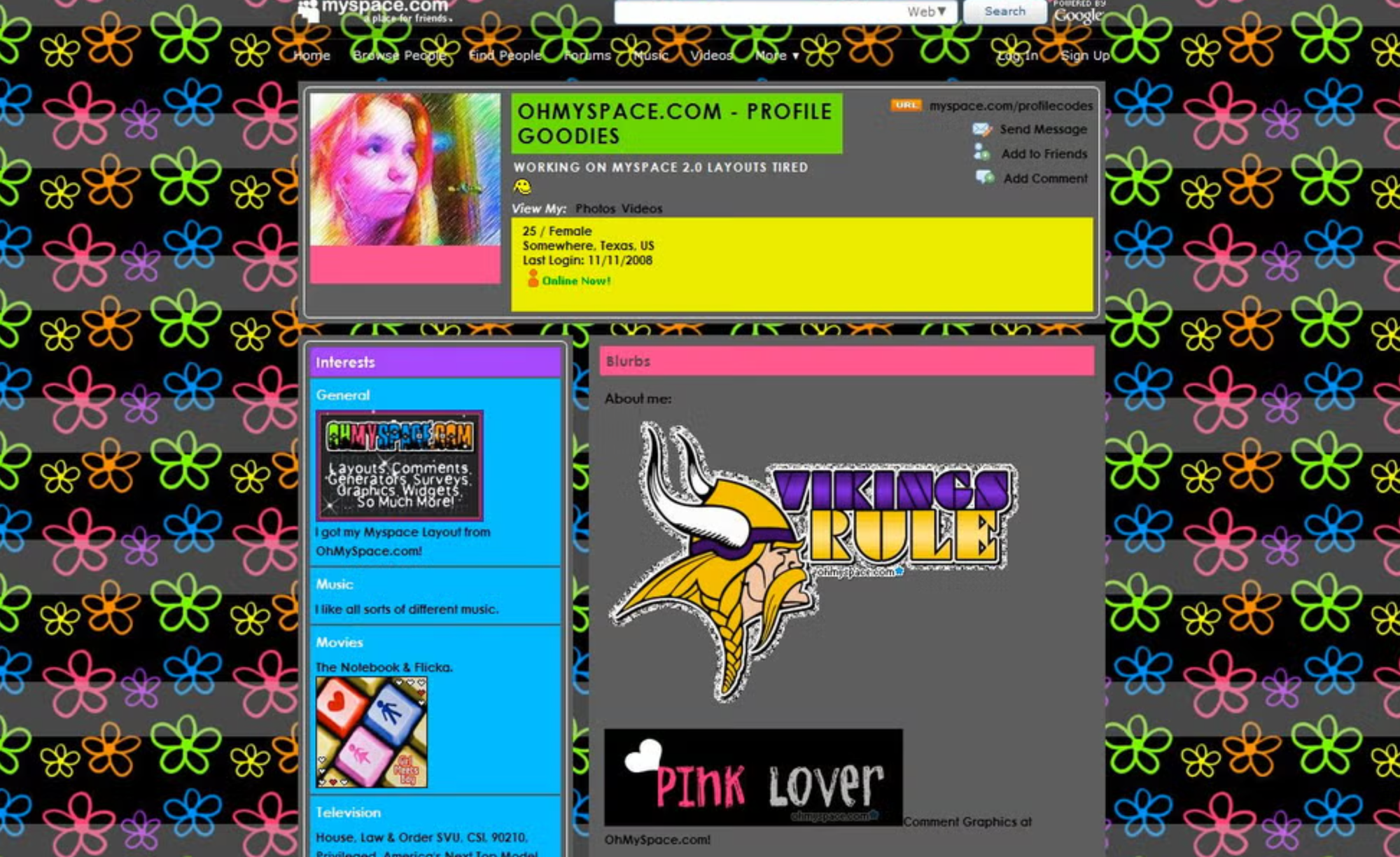
When every customer's page is inherently shareable, the product markets itself through visible output. That visible output is the early moat. Anyone can add a retro theme. Very few companies can build an opinionated nostalgia creator tool that actually feels right, and taste is the harder moat to copy.
The right product shape
Think "nostalgia link-in-bio studio," not "website builder for nostalgic pages." That framing constrains scope and clarifies value. The job: give creators a portable, hosted, customizable retro profile page optimized for social traffic. Sign up, pick a skin, drop in links, upload an avatar, toggle widgets, publish. In five minutes, a TikTok or Instagram bio points to something that looks like a lost MySpace profile.
Signature widgets
Templates get creators in the door. Widgets create the emotional payoff.
Here's six main ones from the past:
Unlock the Vault.
Join founders who spot opportunities ahead of the crowd. Actionable insights. Zero fluff.
“Intelligent, bold, minus the pretense.”
“Like discovering the cheat codes of the startup world.”
“SH is off-Broadway for founders — weird, sharp, and ahead of the curve.”


