


CodeWisp raised from Y Combinator's Winter 2026 batch with a simple pitch: anyone can build and publish web games from plain-English prompts. Its founder, Elvin Fu, built mobile games played by millions before launching a platform that generates playable browser experiences in minutes with no code required.
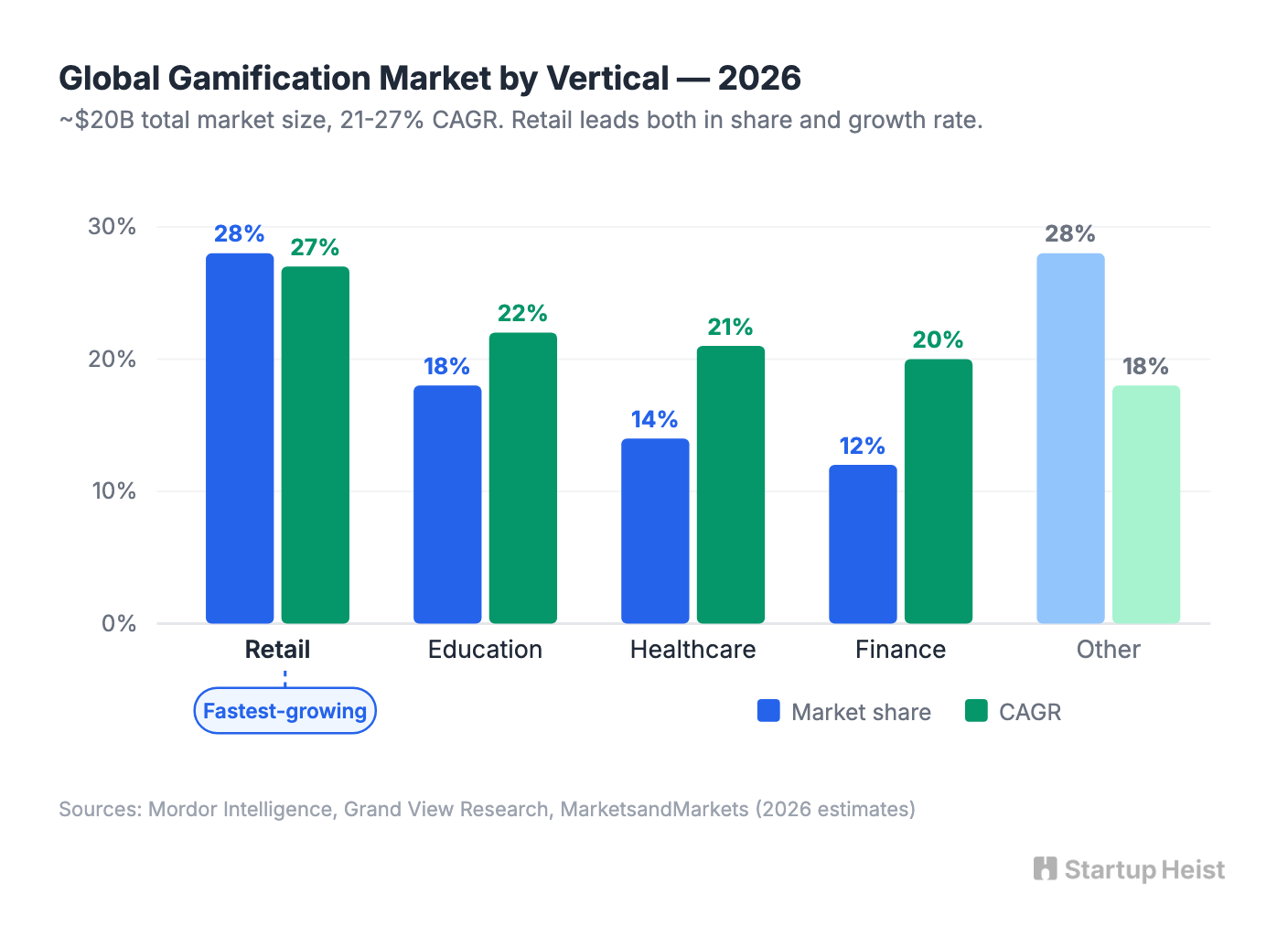
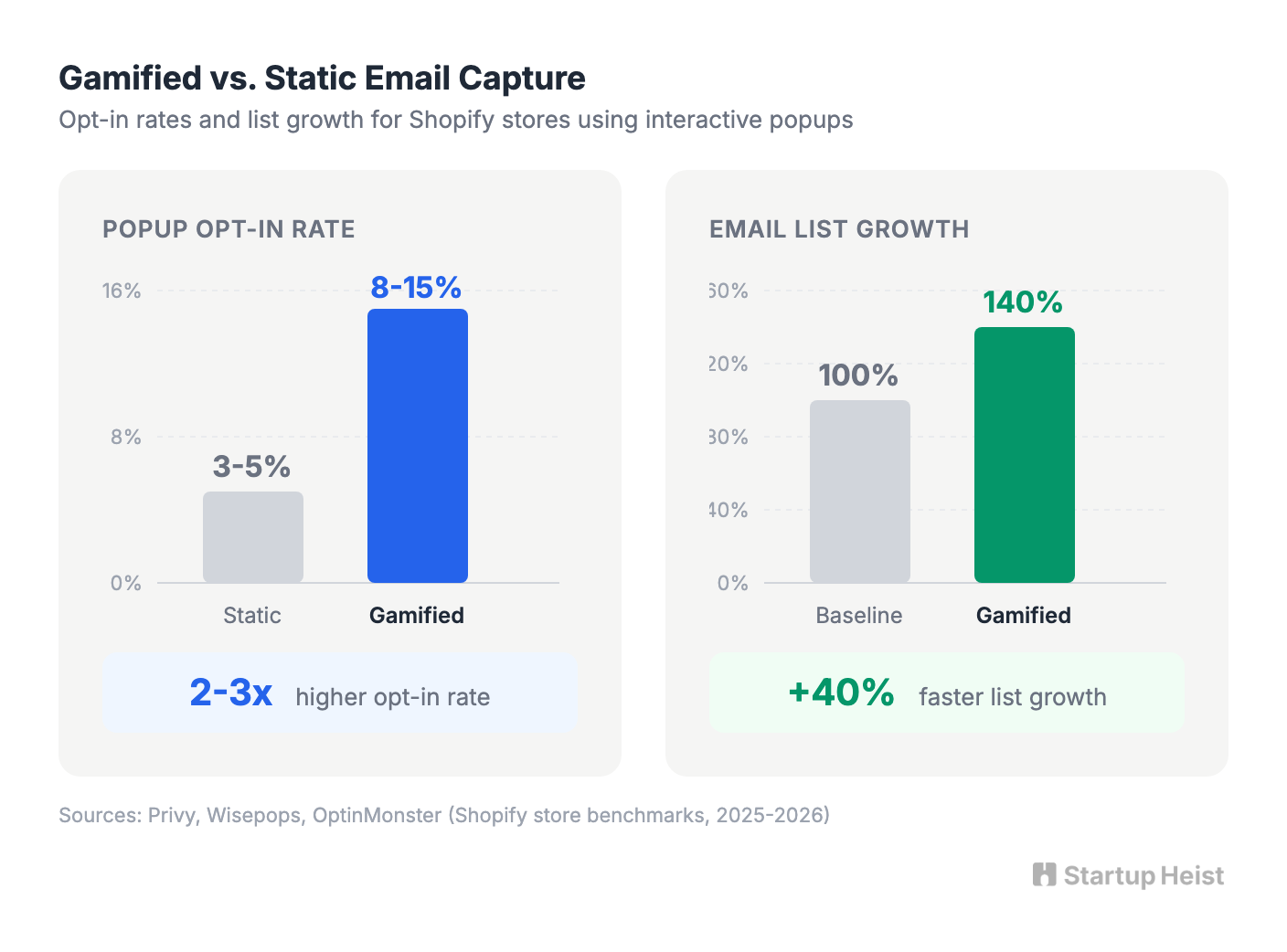
The interesting part isn't the AI game generation itself. Interactive content just crossed from "special project" into "cheap enough to productize." The global gamification market reached approximately $20 billion in 2026, growing at 21-27% annually. Retail captures the largest vertical share at roughly 28% and is the fastest-growing segment by compound growth rate. The self-serve tools already on Shopify prove the demand is real: gamified popups achieve 8-15% opt-in rates versus 3-5% for static forms, and stores with gamified email capture see 40% higher list growth.
The money: 6-10 projects a month at $2,500-12,000 each. A solo operator can clear $20-40K MRR within 12 months.
Inside:
• Three campaign products ready to sell
• Pricing from pilot to retainer
• Cold outreach template for DTC brands
• Studio-to-software transition path
The opportunity is a lean studio that turns branded interactive experiences into a measurable ecommerce growth channel for mid-sized Shopify brands.
The wedge
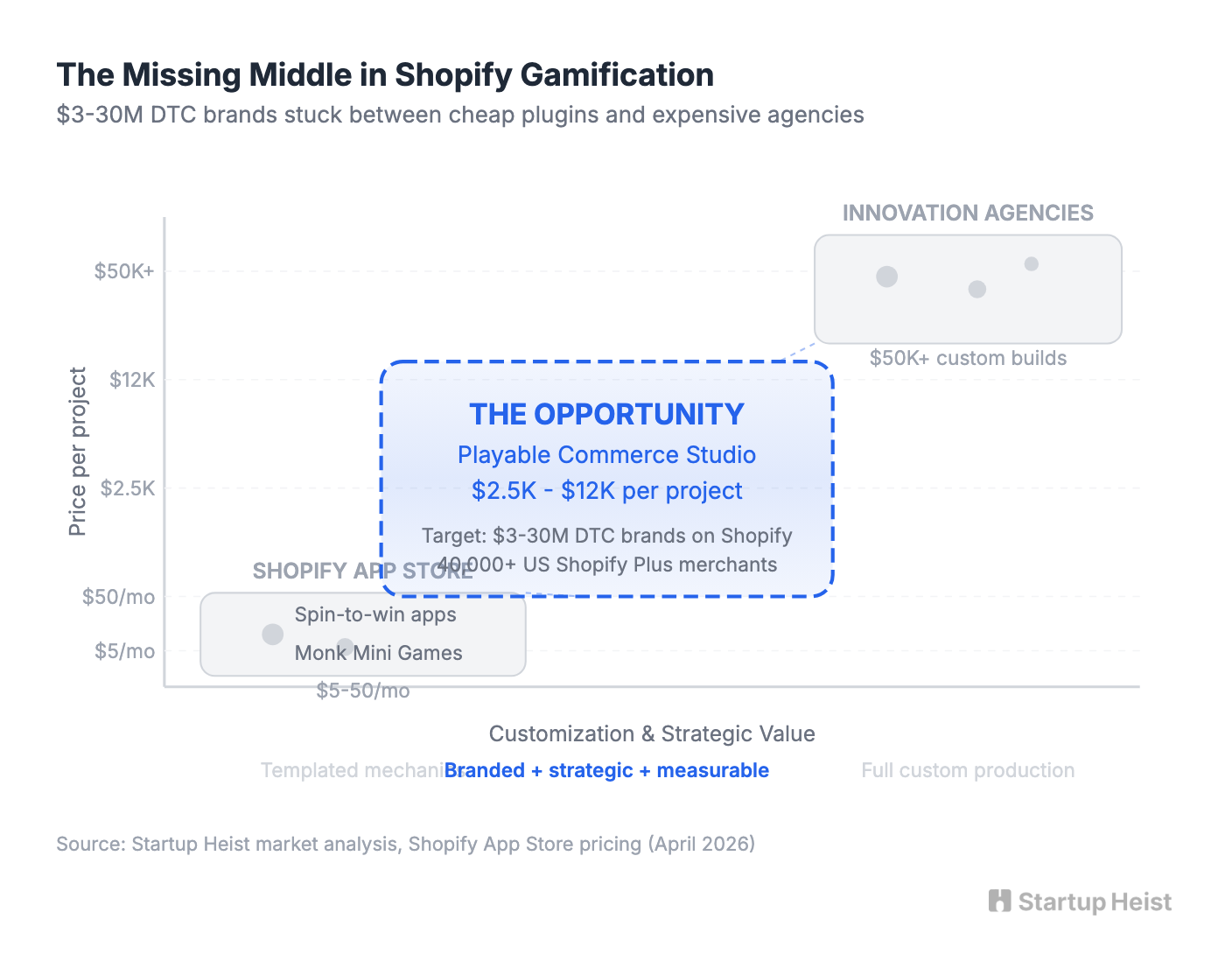
The Shopify ecosystem already has gamification at both extremes. Monk Mini Games and spin-to-win apps sit in the App Store at $5 to $50 per month, covering basic mechanics for price-sensitive merchants. At the top end, enterprise brands hire innovation agencies for $50,000-plus custom activations.
Between them: a $3 million to $30 million DTC brand that wants something more distinctive than a templated popup but doesn't have an in-house interactive team and won't pay an agency tax for a product quiz or a promo challenge. AI-powered game creation tools just made it economically viable to serve them.
Two mistakes will kill you before you start. First, competing with the app layer, where you'll get benchmarked against software that costs less than a lunch. Second, overbuilding the "AI game studio" narrative. Merchants don't care what tools you used. They care whether the campaign grows email capture, lifts conversion, or increases average order value. AI is your production leverage, not your sales pitch.
Why now
AI-native creation tools compressed production cost. CodeWisp and similar platforms let a tiny team ship branded interactive experiences that would have required far more design and development labor a year ago. The gaming industry is projected to reach $300 billion globally by 2029, and the tooling layer that enables non-developers to build interactive content is brand new.
Ecommerce operators are already culturally primed. Shopify frames quizzes, competitions, and win-a-discount mechanics as standard parts of the modern playbook. Klaviyo has a thriving ecosystem of quiz integrations that pipe customer responses directly into segmented email and SMS flows. The concept doesn't need explaining.
And the self-serve tools leave obvious room above. Merchants can buy a cheap spin wheel. They can't cheaply buy a concept tied to a launch calendar, brand voice, product logic, lifecycle flows, and post-campaign analytics. The gap is strategy, creative, implementation, and accountability. Accountability is where the margin lives, because it's the one thing a $29/month plugin will never provide.
The positioning
Don't frame this as "interactive marketing." Position it as playable commerce for specific commercial moments: product launches, seasonal drops, email capture pushes, bundle and upsell flows, product discovery for high-SKU stores, and loyalty campaigns.

A skincare brand doesn't need a "game." It needs a skin-type quiz that routes shoppers into the right regimen and generates first-party data. A fashion brand needs a style challenge that turns browsing into product discovery and email capture ahead of a drop. A supplement brand wants a limited-time challenge mechanic tied to subscription upsells.
The value is in the behavior you induce, not the interactive wrapper around it.
Who to sell to
Skip sub-$1 million brands. They want custom-feeling work on app-store budgets and often lack the traffic for a convincing ROI story.
The buyer is the mid-market DTC brand doing $3 million to $30 million annually, typically on Shopify, with a founder-led growth team, meaningful marketing spend (mid-market DTC brands typically invest 10-25% of revenue), no internal interactive capability, and enough traffic that a creative test generates signal fast.
These brands already buy creative experiments in uglier forms: landing pages, paid-social variants, giveaway mechanics, quiz tools, influencer tie-ins. You aren't inventing demand. You're repackaging it in a higher-engagement format.
Shopify Plus has more than 40,000 US-based merchants. Even a small percentage in the $3-30 million range gives you a deep prospecting pool.
The core offer
Start with three tightly defined products:
Unlock the Vault.
Join founders who spot opportunities ahead of the crowd. Actionable insights. Zero fluff.
“Intelligent, bold, minus the pretense.”
“Like discovering the cheat codes of the startup world.”
“SH is off-Broadway for founders — weird, sharp, and ahead of the curve.”


