


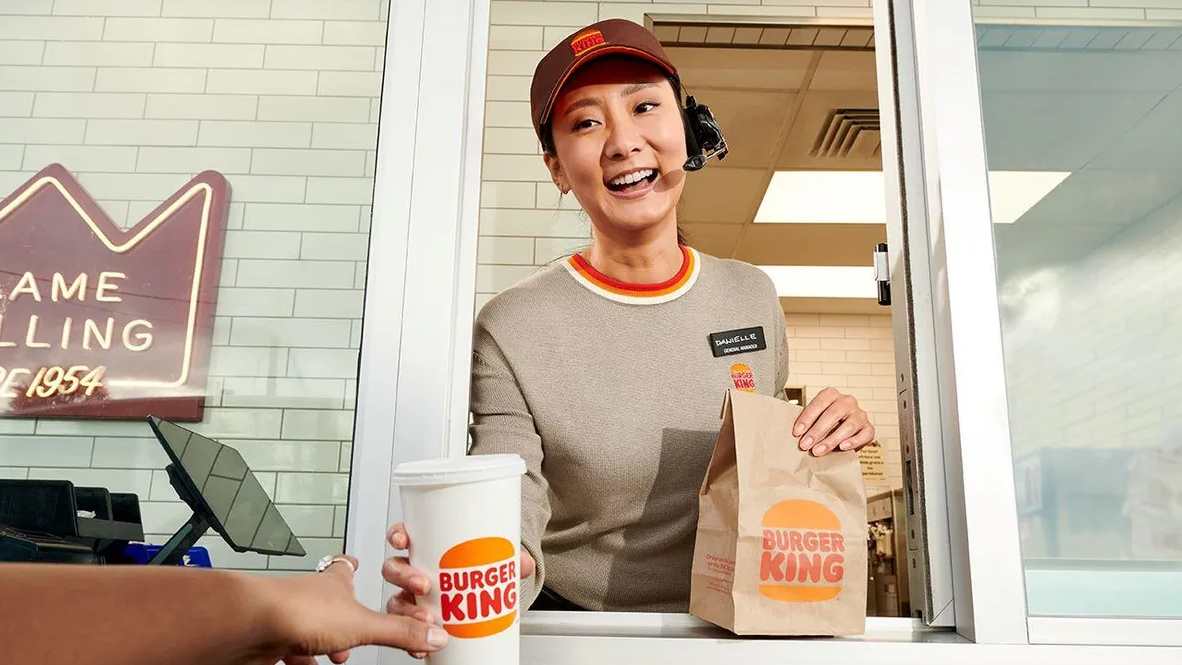
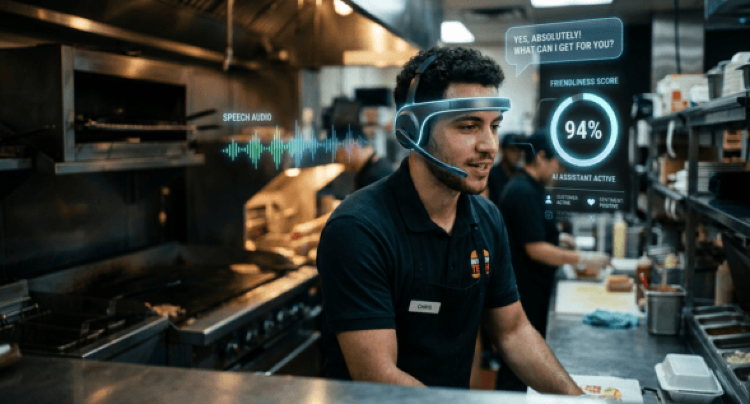
Burger King just put an AI assistant called "Patty" inside employee headsets at roughly 500 U.S. restaurants. Patty answers prep questions, flags inventory issues, removes sold-out items from digital menus within 15 minutes chain-wide, and monitors hospitality cues across drive-thru conversations. The broader BK Assistant platform is slated to reach all 7,000 North American locations by the end of 2026.
That's a massive QSR chain signaling — with real deployment dollars — that the frontline interface is moving from screens and binders to real-time voice guidance. Restaurants are the first loud proof point. Once that pattern gets accepted, the same architecture slides into dental front desks, med spas, hotels, senior care, field service, and clinics. Anywhere a worker is moving, talking, and making small judgment calls all day.
The startup idea here isn't another chatbot or voice AI wrapper. You're building a vertical AI shift coach for a specific niche — and the unit economics land fast.
A med spa that bumps consult-to-book conversion by 10% on $2,000 average tickets moves the needle immediately.
Twenty locations paying $750/month puts you at $15,000 MRR. Fifty gets you to $37,500. At 100 locations you're past $75K MRR with strong gross margins, because per-call infrastructure costs stay low. This is a B2B SaaS business that can reach meaningful revenue before needing outside capital.
Why This Is a Real Category
Enterprise buyers are already spending on AI tools for frontline workflow automation. Axonify serves Walmart, Kroger, and Marriott, with over four million frontline workers across 160 countries on its platform. Its AI assistant answers questions in the flow of work and ties those answers to readiness and consistent execution. The market understands the pitch: fewer hesitations, fewer mistakes, faster ramp time.
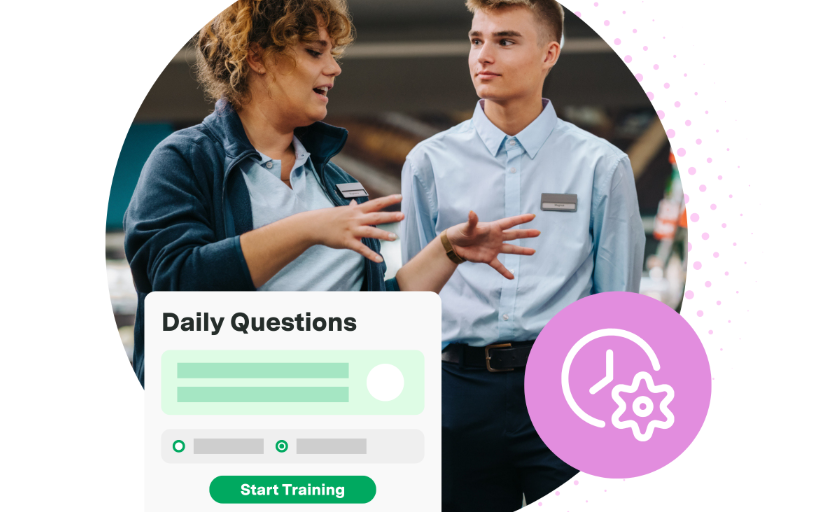
Real-time coaching is proven in adjacent categories. Balto, with $52 million in total funding and over 200 million guided calls, built its business on live call guidance delivered while the conversation is still happening. Their customers report up to 26% higher conversion rates and 75% faster agent ramp time. Contact centers adopted this because post-call training shows up too late. Frontline physical work is now catching up.
The infrastructure layer is maturing fast. Deepgram raised $130 million in January 2026 at a $1.3 billion valuation, with strategic backing from Twilio, ServiceNow, SAP, and Citi Ventures, and immediately acquired OfOne, a voice AI platform purpose-built for restaurant drive-thrus. Munich-based VoiceLine closed a €10 million Series A for voice-first frontline AI, reporting 10x year-over-year growth. Capital is flowing into both the application layer and the speech infrastructure simultaneously. That usually means a category is about to get crowded horizontally — which is exactly when vertical entrants move fastest.
The labor base supports it too. Home health and personal care aides are the largest U.S. occupation at 4.0 million workers, followed by retail salespersons and fast food workers at 3.8 million each. These are the roles where turnover is highest, workers are mobile, and desktop software is the wrong form factor. The voice AI agents market sits at roughly $2.4 billion today and is projected to reach $47.5 billion by 2034 — a rising tide for specialized micro SaaS tools built around voice-in-the-workflow.
The Core Insight: The Product Is Behavior Standardization
If you build "ask a question and get an answer," you're building a disposable feature. If you build "make every new hire behave more like your best employee during the shift," you're building something budget-worthy.
Burger King isn't using Patty merely to answer "how do I make this item?" The system is tied into service quality metrics, order accuracy, menu state, and daily operations. When equipment goes down, Patty requests maintenance, shuts the machine down, and removes the affected item from digital menus chain-wide. It functions as an operational layer, not a search bar.
Most frontline businesses don't suffer from lack of information. They suffer from inconsistent execution. The script is in a binder. The SOP exists somewhere. The manager explained it once. The problem is that at 2:17 p.m., during a tense cancellation call or a messy intake interaction, the worker doesn't retrieve the right behavior fast enough. A shift coach solves retrieval, timing, confidence, and compliance in one product. That's why it can command real SaaS pricing — and why the buyer is the operations or revenue owner, not L&D.
Where the Best Wedge Is (and Isn't)
Don't start with generic restaurants. Don't start with "frontline workers" as a category. And definitely don't start by selling hardware.
Restaurants validate the trend, but they're a bad first wedge for a small team. The chains will build internally or demand deep POS and kitchen integration before you finish onboarding. Burger King already owns its stack end-to-end. McDonald's, Wendy's, and Taco Bell have all tested similar approaches. Margins are thinner, deployments are harder, and replacement risk is high.
The better wedge is a fragmented, high-value, script-heavy vertical where one improved conversation is worth real money. Dental front desks. Med spas. Hearing clinics. Cosmetic practices. Senior care intake. Boutique hospitality. These businesses rely on non-elite labor for customer-facing work, their workflows are repetitive enough to codify, service quality is wildly inconsistent across locations, and each saved booking or avoided mistake is economically meaningful. This is where small-team SaaS ideas for healthcare services and B2B tools for practice management find real traction.
The Best Version of This Business
The category-defining version isn't "Patty for X." It's three layers working together.
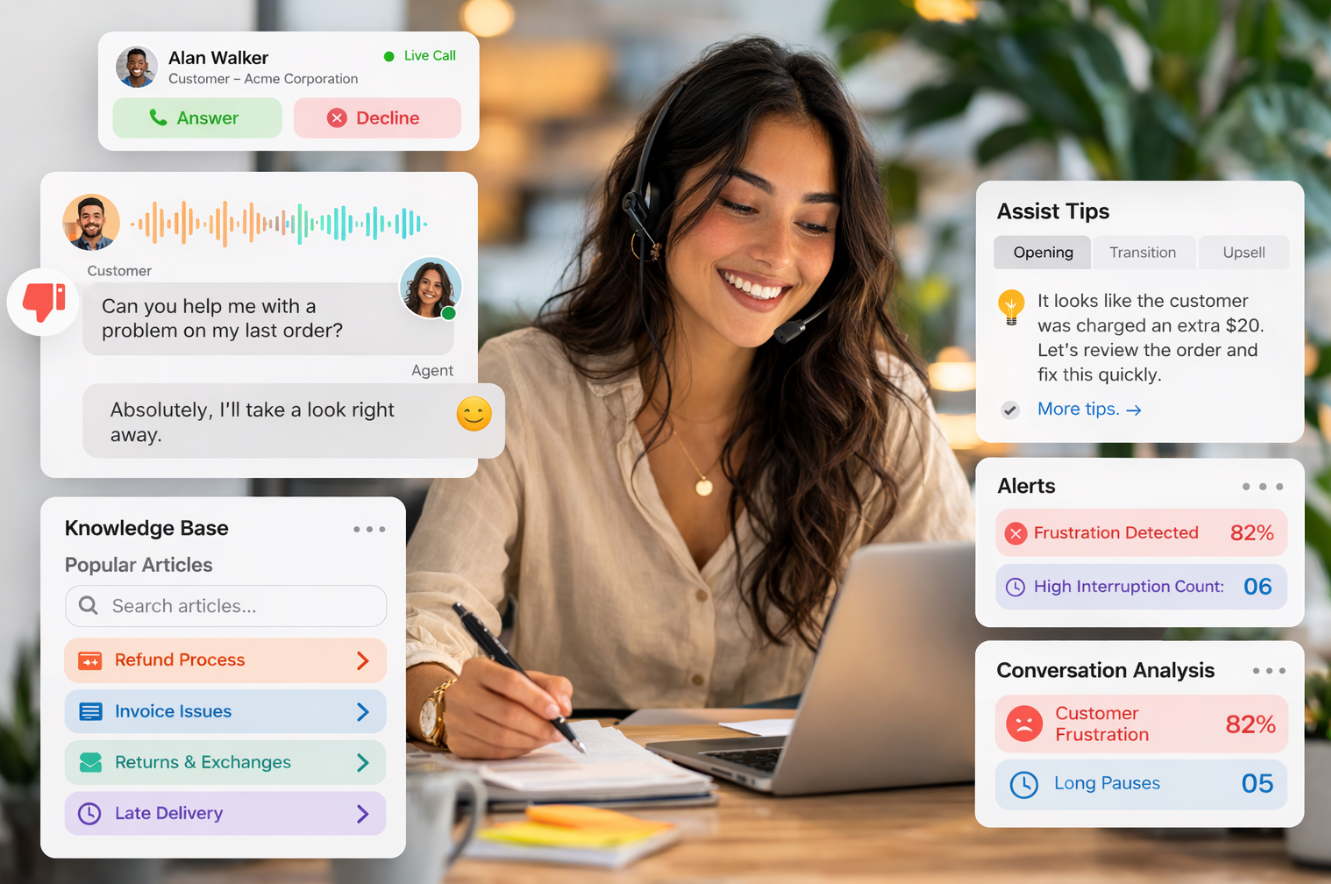
Layer one: the whisper layer. A mobile or browser-based voice assistant that listens, responds, and prompts in real time. This runs through existing Bluetooth headsets, phone calls, softphones, or workstation audio. No proprietary hardware. You need call-level or headset-level integration with the conversations that matter. Burger King and VoiceLine have both proven that voice-first assistants can embed into real headset and call workflows at scale — your job is to do it for a narrower, higher-value niche.
Unlock the Vault.
Join founders who spot opportunities ahead of the crowd. Actionable insights. Zero fluff.
“Intelligent, bold, minus the pretense.”
“Like discovering the cheat codes of the startup world.”
“SH is off-Broadway for founders — weird, sharp, and ahead of the curve.”


