


Think AI-powered writing tools meets identity infrastructure — built for founders, consultants, and sales teams who need outbound that doesn't read like a template.
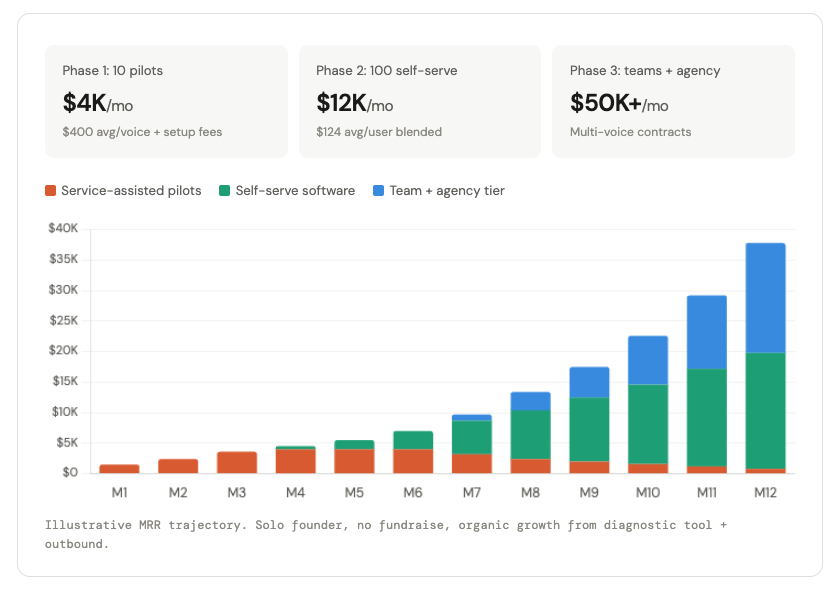
Service-assisted pilots at $300–$500/month per voice get you to revenue in weeks. Self-serve tiers at $99–$149/month scale from there.
Companies already pay $5,000–$15,000/month for human ghostwriters. You're building the software layer that replaces — or augments — that spend.
Every AI writing tool on the market can produce clean, competent copy. That's the problem. The output is indistinguishable. Same cadence, same hedging, same bloodless professionalism. The market has noticed.
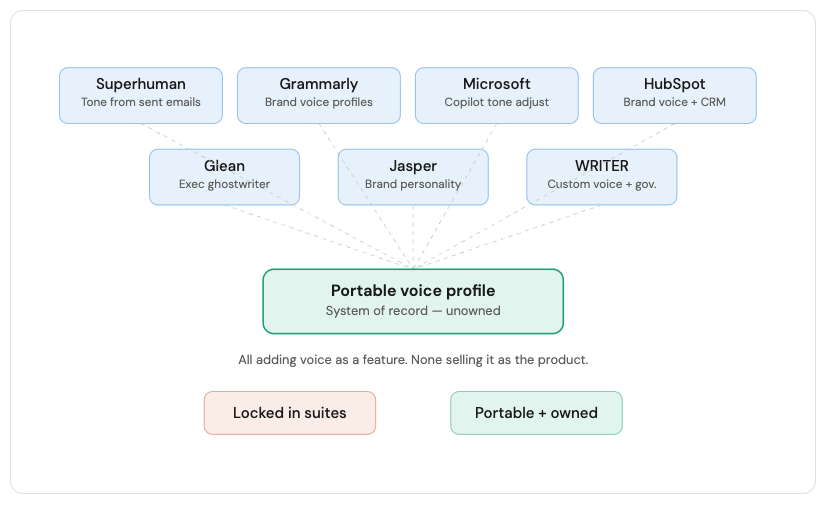
Superhuman now learns your tone from past emails and drafts messages that match it. Microsoft lets Copilot adjust Outlook drafts to "sound like you." Glean built a Ghostwriter agent that drafts in the voice of a specific teammate or executive. HubSpot's Content Agent generates marketing assets using your brand voice and CRM data. Grammarly sells brand voice profiles to over 50,000 organizations. Jasper and WRITER sell their own versions of personality and brand profiles.
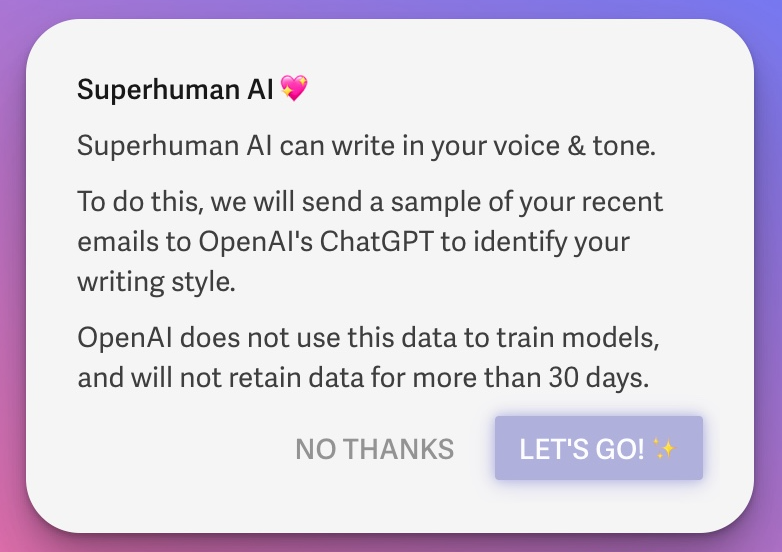
Multiple serious platforms (independently) converged on the same need. Generic text is cheap. Recognizable voice is where the margin lives. And nobody owns the dedicated identity layer underneath all of it.
The opportunity goes beyond a LinkedIn writing tool or another AI content generator. The real play is voice infrastructure: a system that captures how a person writes, stores it as a reusable asset, and deploys it anywhere money or trust depends on sounding human. Enterprise sales tools like Regie.ai already charge $35,000/year for AI-assisted outbound. Companies pay $5,000–$15,000/month for human ghostwriters.
A focused B2B SaaS idea built around voice fidelity can undercut those numbers while offering something more persistent and portable. A basic "paste 3 posts and get a style guide" feature is easy to copy. The prompt wrapper isn't the business. The business is the persistent, improving, workflow-embedded voice profile that sits closer to your daily communications than the model does. The moat is the feedback loop around it.
The Landscape
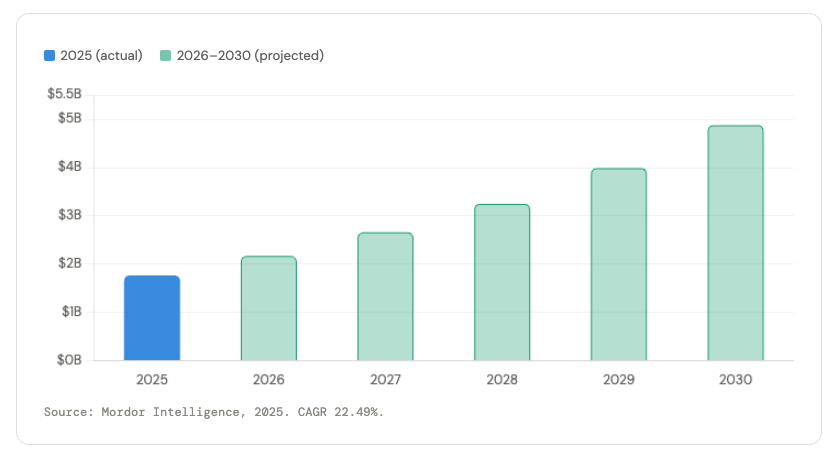
The AI writing assistant market hit roughly $1.8 billion in 2025 and is projected to reach nearly $4.9 billion by 2030, growing at over 22% annually. Independent reports vary on point estimates, but the trajectory is consistent across sources. Real dollars chasing a category that barely existed three years ago.
The spending concentrates in the wrong places — at least for a startup. The horizontal platforms (Microsoft, Google, HubSpot) are adding voice as a feature inside broader suites. Specialist tools (Grammarly, Superhuman) treat it as a differentiator inside existing products. Nobody has built a standalone company around the core primitive: a portable voice profile that travels with you across tools. Today, voice is locked inside each suite's proprietary settings or model fine-tuning rather than something a user can own and move between products.
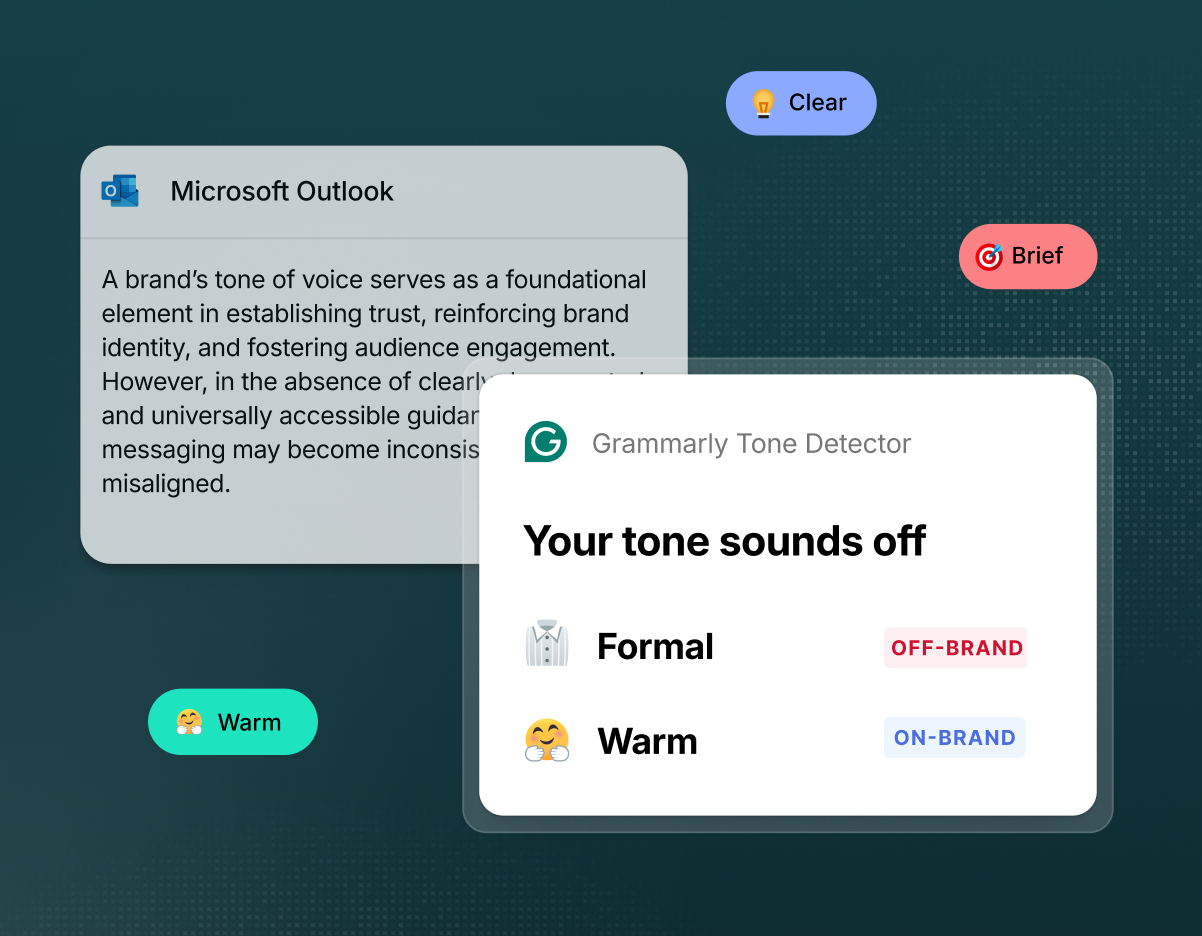
AI writing already went through its first cycle. Speed was enough early on. Then everybody got the same polite, over-smoothed copy. The bar has moved. The winning tool isn't the one that writes fastest — it's the one that writes without erasing the human signal. When your CEO's weekly update reads like it was generated in 30 seconds, that's a trust problem. When your outbound sounds like every other AI-generated sequence hitting the prospect's inbox, that's a revenue problem.
The big suites are optimizing for breadth. That leaves real room for a focused startup to own a narrow, painful workflow where "sounds like me" is mission-critical — and to go deeper than any horizontal platform ever will.
Where Most Builders Will Go Wrong
The obvious version of this idea targets creators, social media posts, and generic marketing copy. It demos well. It's easy to explain. And it's exactly where the idea gets weak.
The strongest version targets trust transfer: places where a person's specific phrasing affects revenue, credibility, or internal alignment. Founder-led outbound. Executive ghostwriting. Client-facing advisory communications. High-consideration sales where the prospect can tell the difference between a human follow-up and a template.
Sales tools like Regie.ai (starting at $35,000/year), Apollo, and Lavender already compete on personalization and human-sounding outreach. They prove the commercial importance of the problem. They're optimizing around pipeline generation, research, and message performance — not around a portable identity layer the user owns across tools.
The play: own the identity layer, then wedge it into a revenue-critical workflow.
The Best First Market
If you're a solo builder or small team — especially if you're vibe coding your way to an MVP — start with founder-led B2B outbound and follow-up.

The buyer is easy to understand. A founder, consultant, boutique agency owner, or small sales team already knows bad AI copy is costly. It reduces replies. It makes them look lazy. They feel the pain every day.
The ROI is legible. If your product helps them produce outbound that feels personal without writing every email from scratch, the value connects directly to meetings booked, reply rates, and founder time saved.
The integrations are narrow enough to build. Gmail, Outlook, LinkedIn. Maybe HubSpot or Apollo later. That's manageable for a two-person team.
Incumbents are adjacent but not aligned. Apollo, Regie, and Lavender are selling sales productivity. Superhuman is selling email management (priced at $30–$40/month). You'd be selling voice fidelity plus workflow performance — a smaller, sharper promise. None of them offer a portable voice profile the user controls across tools.
Executive ghostwriting is the second-best wedge. The budgets are higher (companies routinely pay $5,000–$15,000/month for human ghostwriters), the pain is real, and the buyer cares deeply about authenticity. Glean and ChangeEngine are already marketing AI-powered executive ghostwriting features. But the sales complexity is steeper. Exec ghostwriting works better as a second act than a first one.
Luxury real estate, wealth management, and recruiting are seductive but messier. The use cases are real, but these markets are fragmented, slower to adopt tooling, and often require more hands-on onboarding. Good niches eventually. Less ideal as the initial wedge.
What You're Actually Building
The MVP is a voice profile engine with one opinionated workflow attached. Here's how to build it:

Unlock the Vault.
Join founders who spot opportunities ahead of the crowd. Actionable insights. Zero fluff.
“Intelligent, bold, minus the pretense.”
“Like discovering the cheat codes of the startup world.”
“SH is off-Broadway for founders — weird, sharp, and ahead of the curve.”


