


SecondCheck: The Resale Layer for Online Shopping
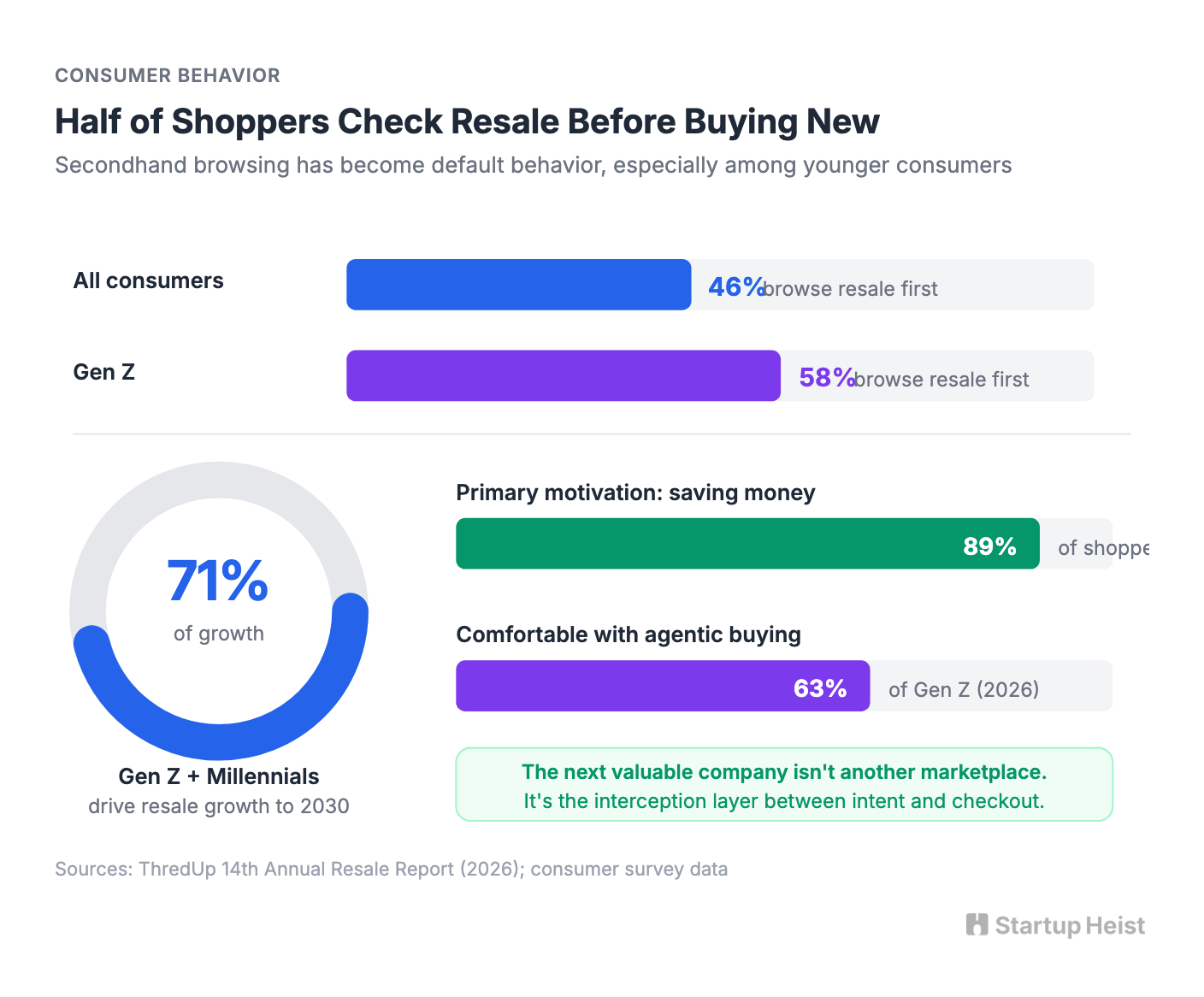
Forty-six percent of U.S. consumers now browse resale before buying new. Among Gen Z, that number hits 58 percent. Comparison shopping has absorbed secondhand as a default behavior, and the economics back it up. ThredUp's 14th Annual Resale Report, released on April 2, 2026, projects the global secondhand market will reach $393 billion by 2030, growing at roughly 2x the rate of overall apparel retail. In the U.S. alone, resale is on track to hit $78.8 billion by 2030, outpacing broader retail growth by approximately 4x. Seventy-one percent of that growth between now and 2030 will come from Gen Z and Millennials. Online resale grew 23 percent in 2024 (per ThredUp's 13th Annual Report), its strongest annual rate since 2021, and the 14th report confirms the trajectory is accelerating.
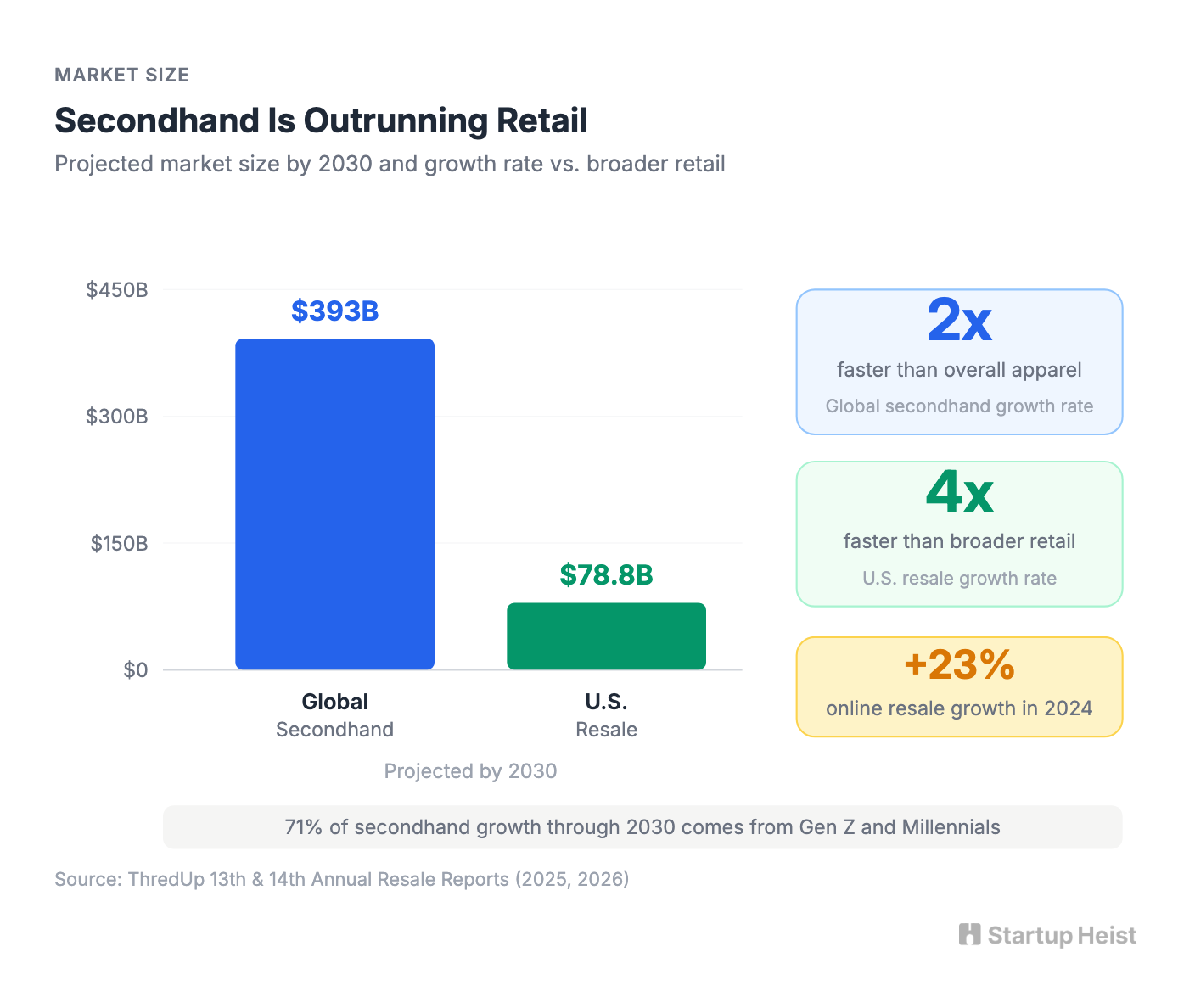
When half the market instinctively checks resale before paying full price, the next valuable company isn't another resale marketplace. It's the interception layer between shopping intent and checkout.
The money: 5,000 premium subscribers at $8/month = $40K MRR, plus referral revenue from resale marketplace traffic.
Inside:
• Full MVP scope and 6-week build timeline
• Three-tier match confidence model
• Creator-native go-to-market playbook
• Five compounding moats worth building
Why the Field Is Open
PayPal proved the value of owning the savings moment when it acquired Honey for $4 billion in January 2020. Honey had 17 million monthly active users and one promise: automatically find savings at checkout. Then the model imploded. In December 2024, an investigation revealed Honey had been systematically hijacking affiliate links, overwriting creators' referral cookies with PayPal's own. Honey lost 3 million users within two weeks. By the end of 2025, it had shed approximately 8 million total. In January 2026, both Rakuten Advertising and Impact.com terminated Honey from their affiliate networks within five days of each other. Google updated Chrome Web Store policies in March 2025 to require affiliate disclosure before installation.
A browser-based savings layer can generate enormous value if it earns trust. Post-Honey, trust is the entire competitive moat, and the field is wide open.
Who's Building and Where the Gaps Are
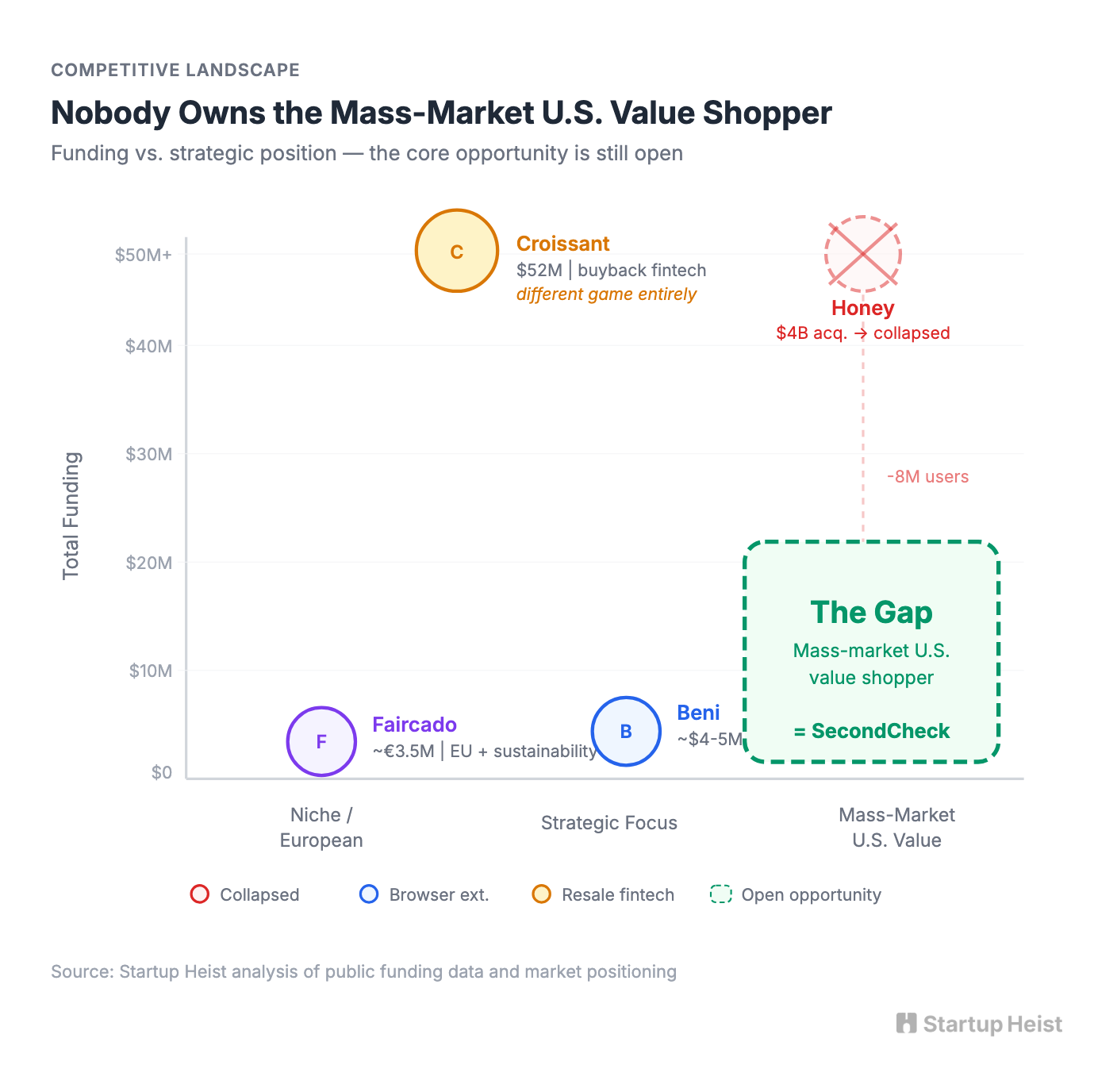
Three companies are already building toward a resale shopping layer, but none own the core opportunity. Beni, founded in 2021, built a Chrome extension that checks 40-plus resale sites and raised approximately $4-5 million in seed funding, but its user base appears modest and the product hasn't broken out. Faircado, based in Berlin, is broader: 50 confirmed marketplace partners, approximately €3.5 million raised. Its strength is catalog breadth, but its focus tilts European and sustainability-first. Croissant is the most capitalized at $52 million total funding after a $28 million raise in February 2026, but it plays a fundamentally different game. Instead of finding secondhand alternatives, Croissant shows guaranteed resale values on new purchases and partners with retailers like Nordstrom, Revolve, and Reformation on buyback economics.
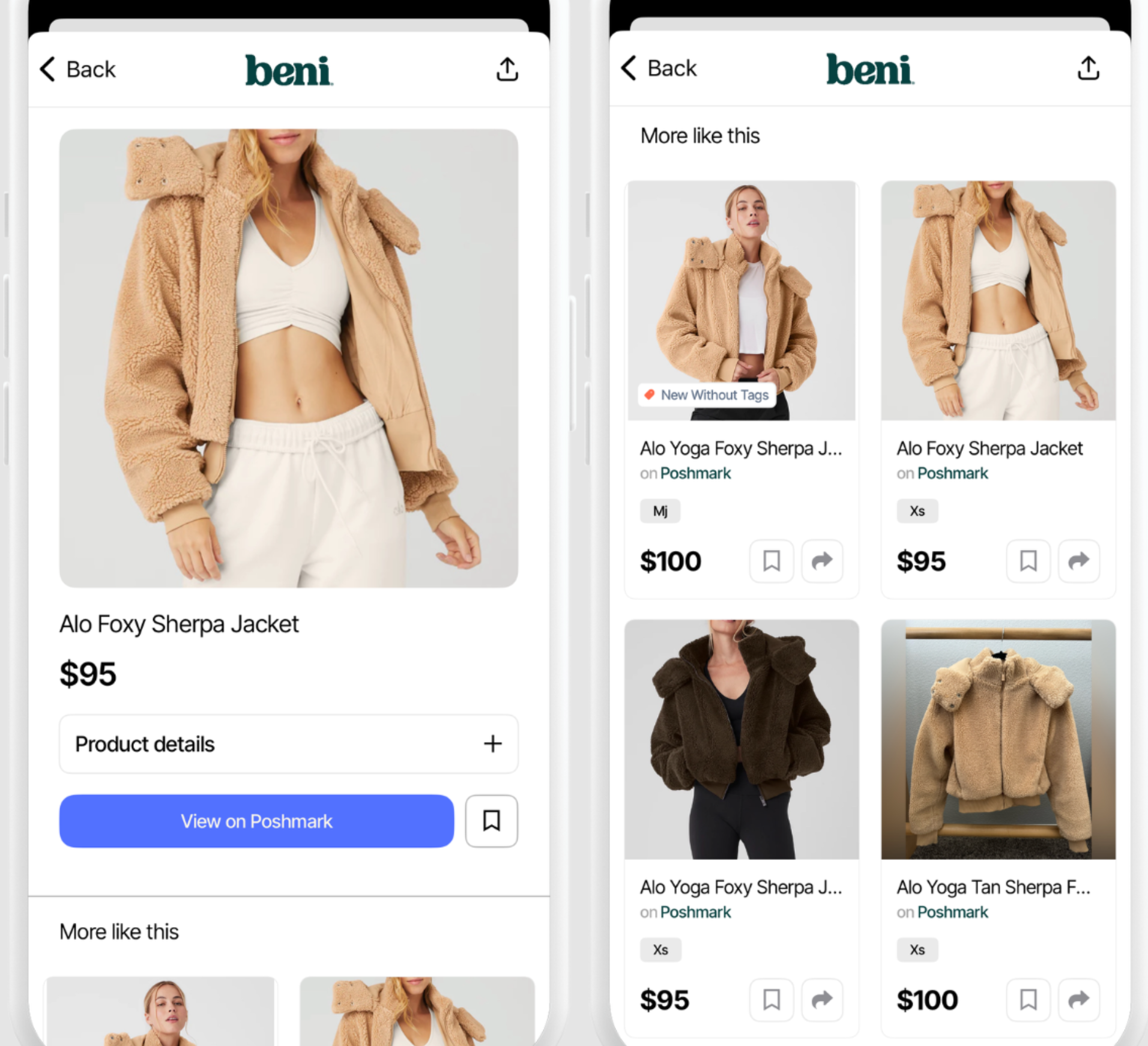
Beni is closest to the direct opportunity but still subscale. Faircado is broad and European. Croissant is resale fintech, not comparison shopping. Nobody owns the mass-market American value shopper: the person buying from Nordstrom, Madewell, or Zara who'd happily check a resale alternative if someone removed the friction.
The Wedge
Build a secondhand shopping tool focused on mainstream U.S. women's apparel. Mid-market to aspirational brands where SKU volume is high, resale liquidity is strong, and buyers compare value instinctively. Nordstrom. Madewell. J.Crew. Aritzia. Reformation. Zara. Anthropologie. Free People. Lululemon. Nike.
Unlock the Vault.
Join founders who spot opportunities ahead of the crowd. Actionable insights. Zero fluff.
“Intelligent, bold, minus the pretense.”
“Like discovering the cheat codes of the startup world.”
“SH is off-Broadway for founders — weird, sharp, and ahead of the curve.”


