


On January 26, 2026, New York City's Department of Buildings changed who gets to touch an apartment renovation permit. Under a DOB NOW filing update, condo and co-op boards became required stakeholders on unit alteration applications. A designated board representative must now log in with an NYC.ID account, review the filing, and attest that the board has authorized the work. Both the owner and the board rep must complete their attestations before the DOB will process the permit.
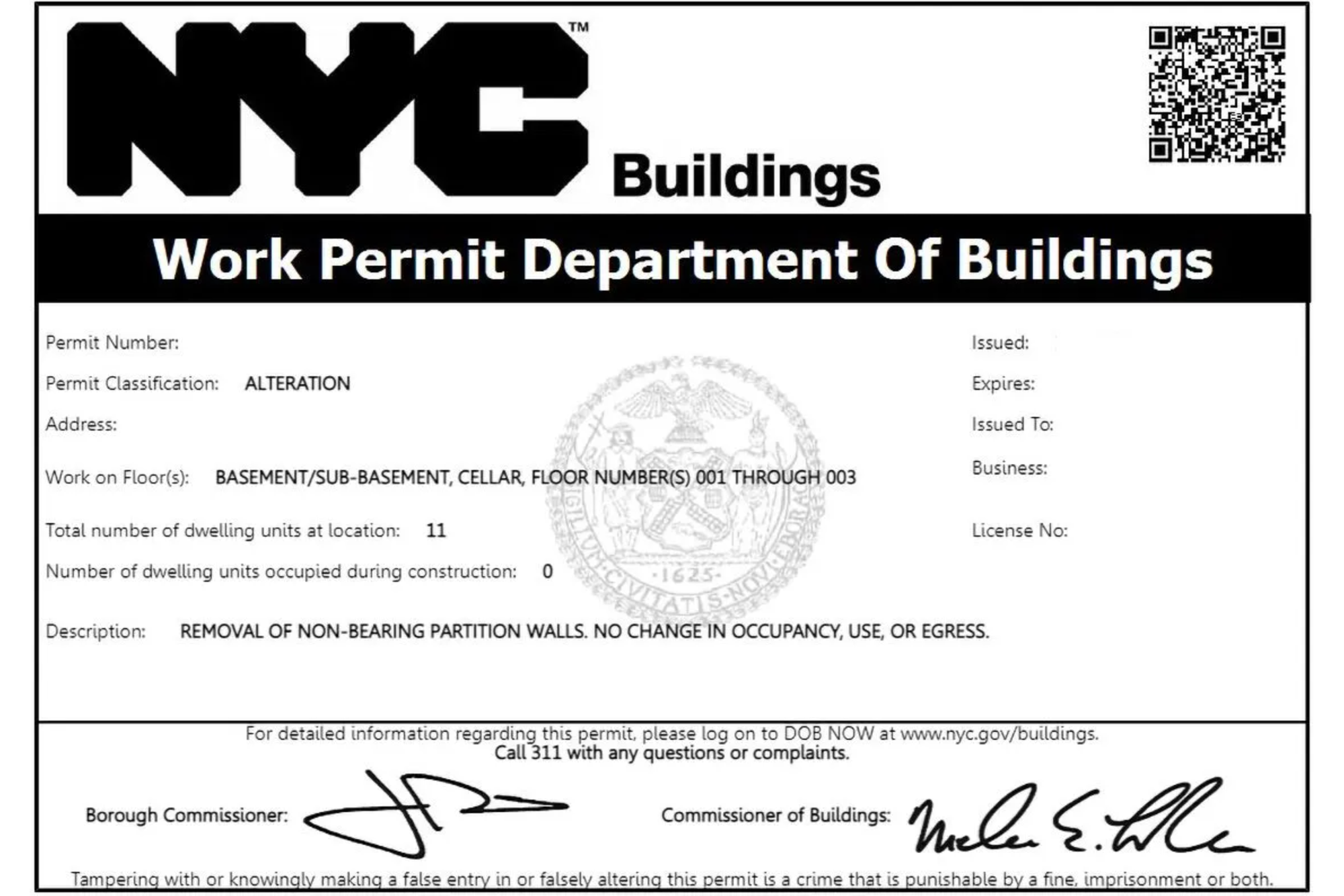
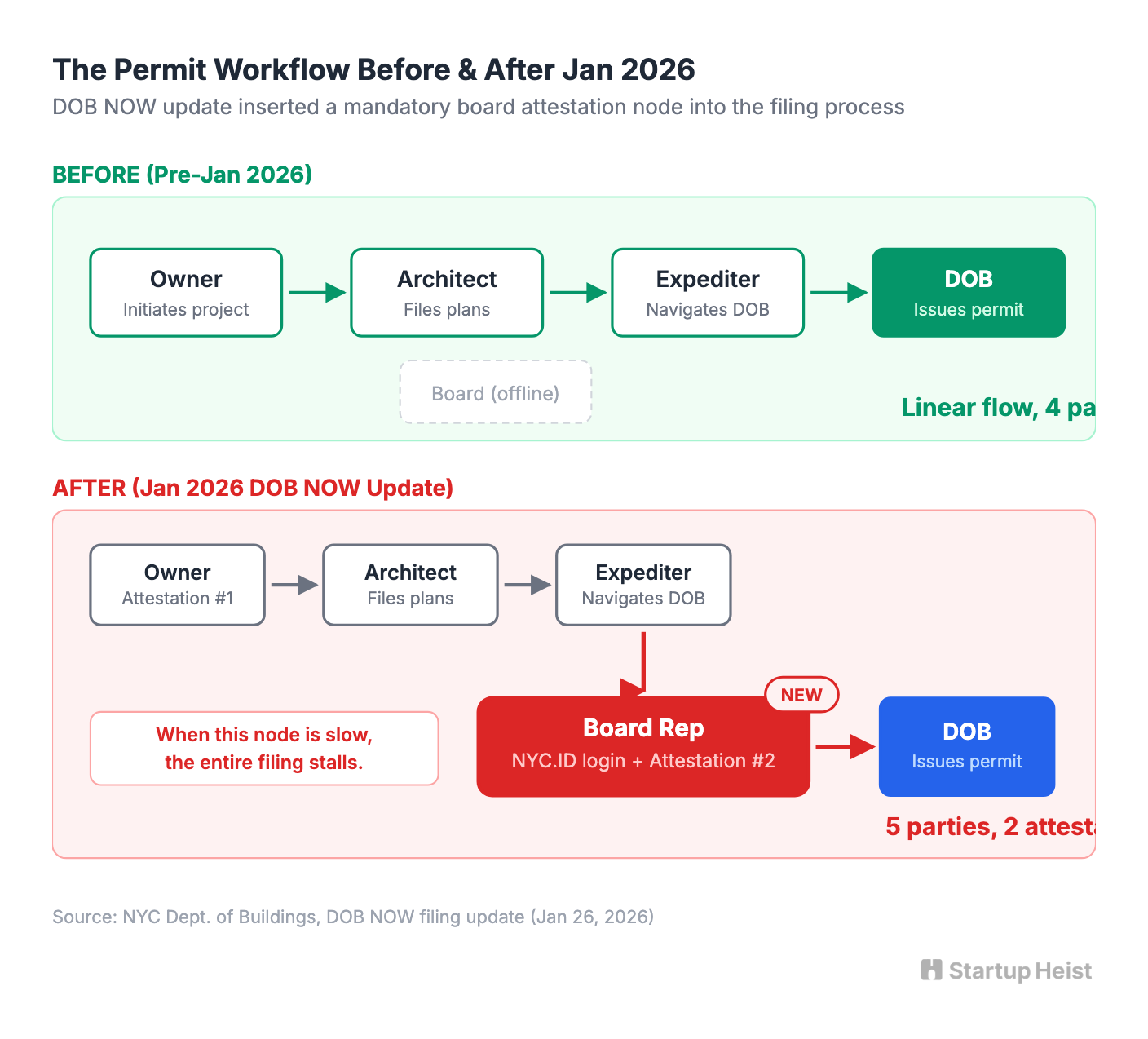
That single administrative insertion broke the existing workflow. Permits used to move between four parties: apartment owner, architect, expediter, and city. The board sat off to the side, approving alteration agreements, collecting insurance certificates, setting work-hour rules, but never inside the city's digital filing system. Now it's inside. When that node is slow, confused, or missing, the entire filing stalls. A mandatory step landed in an already painful process, and no one has built the software layer around it.
The opportunity is a vertical SaaS play built on a regulatory trigger creating real operational pain.
The money: 20 management firms at $10K/year average = $200K ARR. Implementation fees add $50-100K in year one.
Inside:
• Six-module MVP scope and build order
• Pricing tiers for portfolio complexity
• Four sales channels with outreach template
• Compounding moat from building policy data
A 770,000-Unit Market with No Dedicated Software
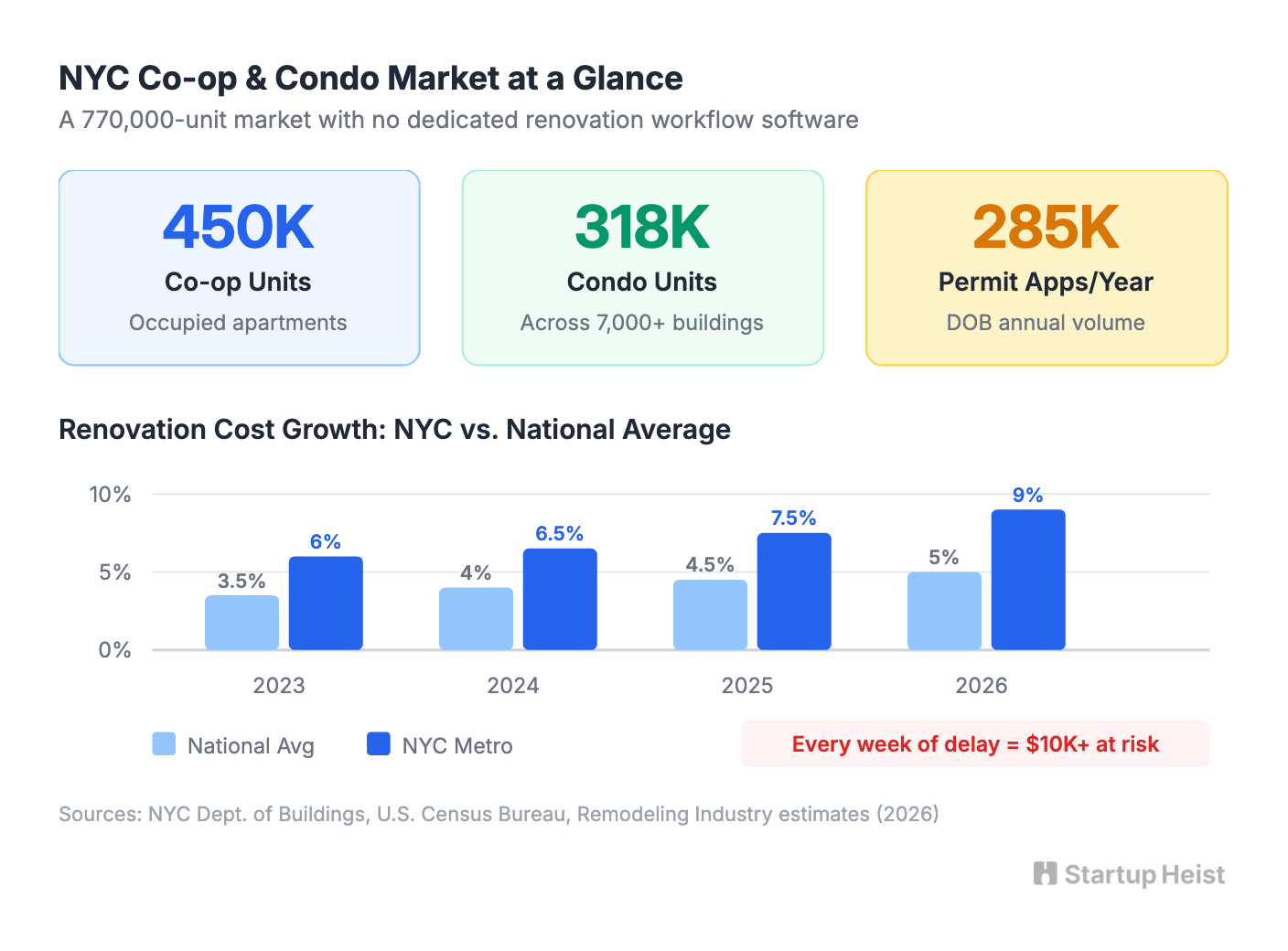
New York's co-op and condo market isn't a niche corner of American real estate. The city's housing stock includes roughly 450,000 occupied cooperative apartments and another 318,000 condominium units across more than 7,000 buildings. The DOB processes over 285,000 permit applications annually, with alteration filings making up a significant share. Renovation approvals in this market were already a hybrid of building politics and technical compliance: alteration agreements, insurance verification, contractor approvals, board reviews, all managed through email, spreadsheets, and shared drives.
The DOB's workflow change made the board an explicit in-platform actor for each qualifying alteration. Law firms like Fox Rothschild published client alerts in February 2026 advising boards to designate authorized representatives, create NYC.ID accounts, and establish internal tracking procedures. At nearly the same time, the NYC and NYS Bar Associations approved a new standardized condominium alteration agreement form, making the paperwork more structured right as the operational dependency became more explicit. When lawyers start telling an entire industry to build new administrative protocols, the gap is usually software.
Meanwhile, renovation costs in New York continue climbing 6-9% in 2026. An owner spending $500,000 or more on a gut renovation has serious money at stake for every week a permit sits in administrative limbo. The financial pressure to clear bottlenecks is real and growing.

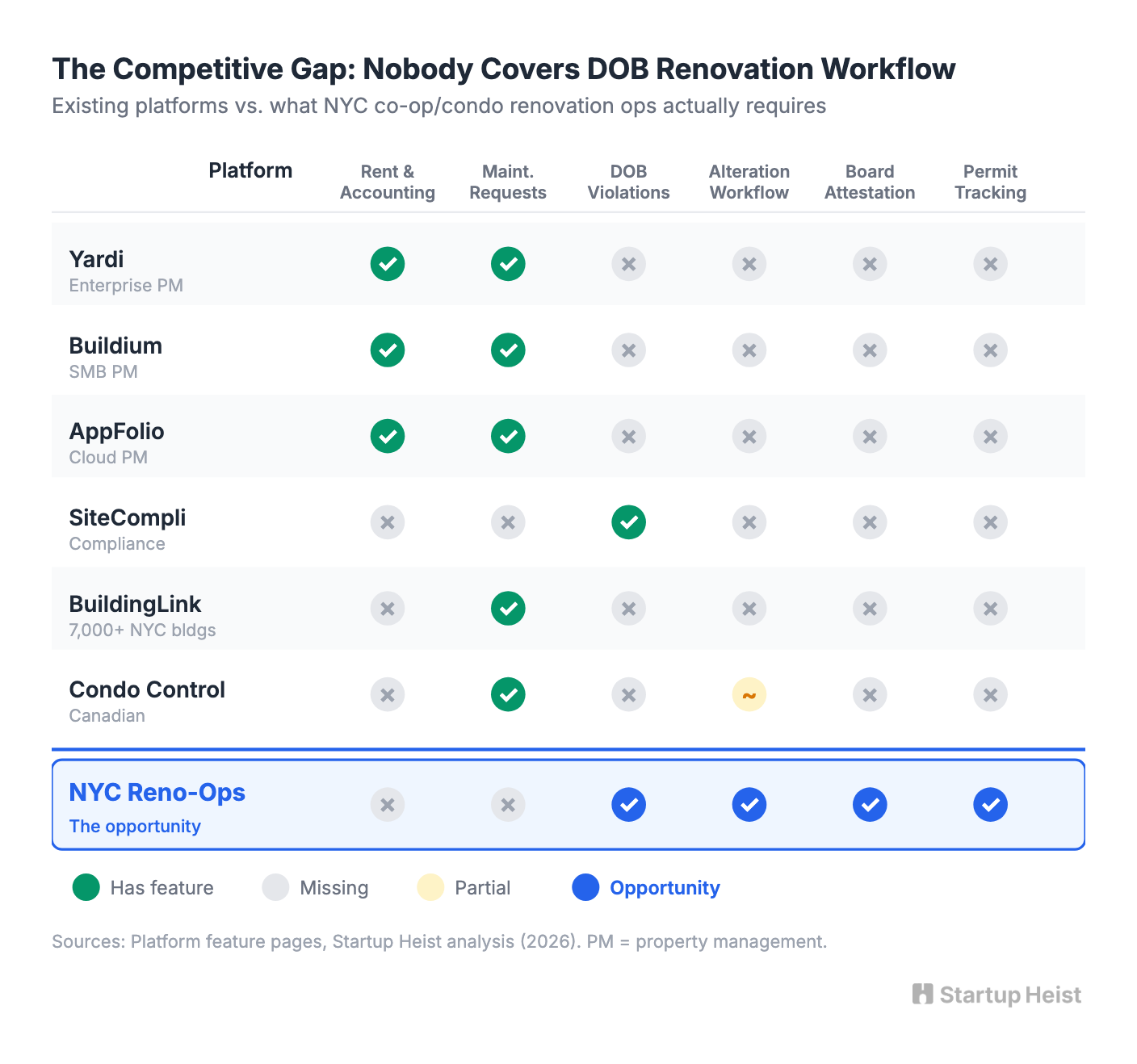
Existing property management platforms don't touch this problem. Yardi, Buildium, and AppFolio manage rent collection, maintenance requests, and accounting. They store documents and handle tasks. They aren't built around DOB job numbers, board attestation routing, alteration package completeness, building-specific renovation rules, or resident-facing permit status. SiteCompli (now part of Inhabit) monitors DOB violations and HPD alerts reactively, but doesn't orchestrate proactive alteration workflows. Condo Control, a Canadian platform, has some architectural review features but no NYC DOB integration. BuildingLink serves 7,000+ communities in New York but offers no DOB NOW workflow or alteration permit tracking. The abstraction in all these tools is too broad for what's needed: every owner renovation in this building should move through one standardized pipeline, with one source of truth, and no invisible dependencies.
The Buyer
The actual buyer is the small to midsize NYC property management company handling 10 to 100 buildings. These firms sit in a painful middle zone: too operationally busy for spreadsheets, too small for heavyweight enterprise platforms. They also navigate the specific social dynamics of co-ops and condos: volunteer board members who may not understand DOB NOW, demanding owners who want constant status updates, outside architects and expediters with their own timelines, and risk-sensitive building counsel who want every step documented.
Every renovation creates a cascade of coordination: collect the alteration agreement, verify insurance, confirm contractor approval, route the board review, track the DOB filing, manage the attestation, monitor for objections, field status inquiries from the owner, the architect, and the board president. A product that makes this predictable has real budget gravity.
The Playbook
What the Product Should Be
The v1 should be opinionated and focused. A workflow system for renovation ops, not a broad portal or a generic board-management tool.
Six core modules:

Unlock the Vault.
Join founders who spot opportunities ahead of the crowd. Actionable insights. Zero fluff.
“Intelligent, bold, minus the pretense.”
“Like discovering the cheat codes of the startup world.”
“SH is off-Broadway for founders — weird, sharp, and ahead of the curve.”


