


Every compliance team in America has the same dirty secret: they already get regulatory alerts. Dozens of them. From law firms. From trade groups. From $80,000/year enterprise platforms. And they still can't answer the four questions that actually matter when a rule changes:
- What exactly changed?
- Who does it apply to?
- What must we do, and by when?
- Where's the proof we did it?
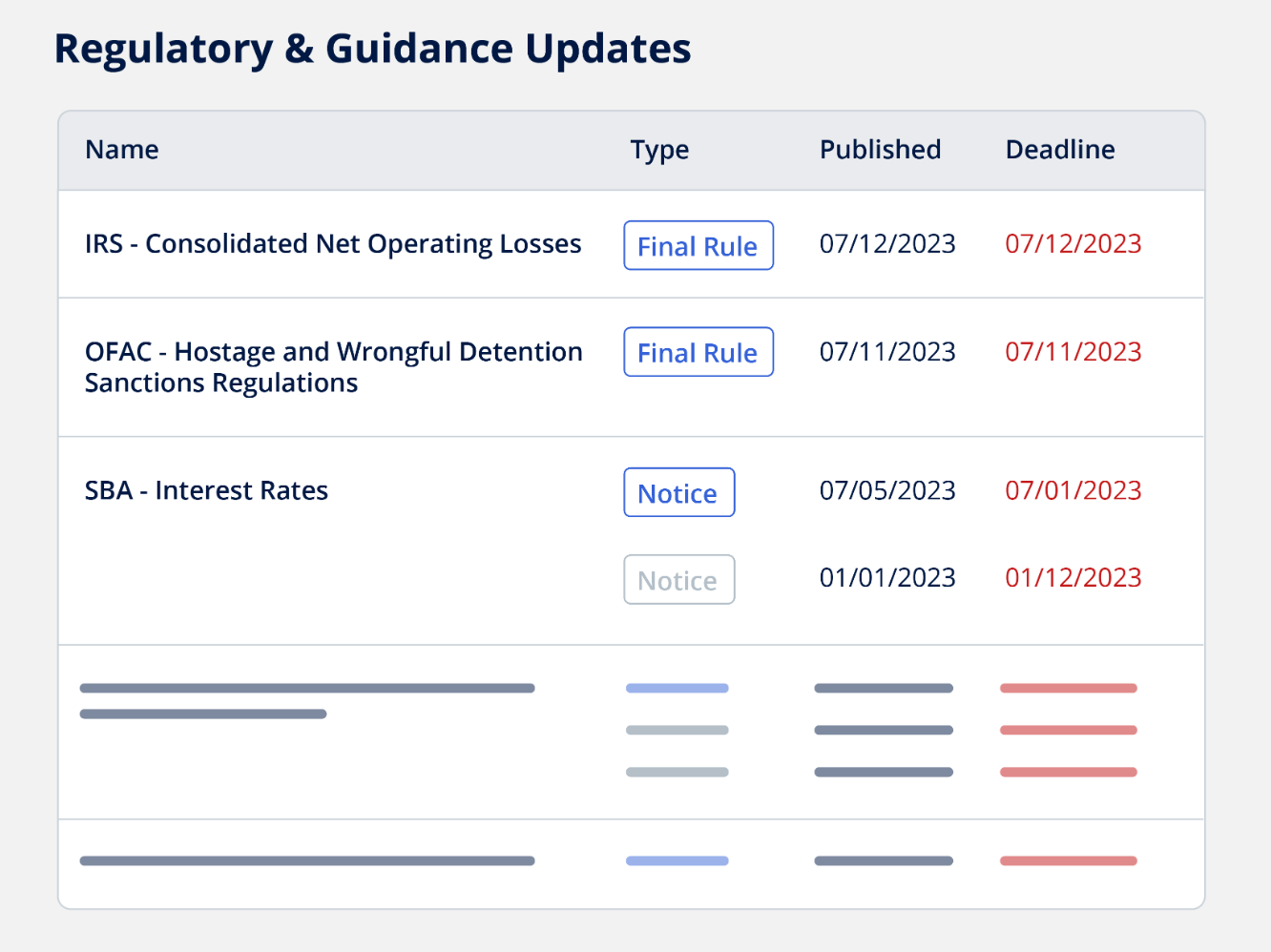
Alerts tell you something happened. They don't tell you what to do about it. That gap between "aware" and "implemented" is where compliance teams drown — and where a very specific micro-SaaS business sits waiting.
The customers: mid-market fintech lenders and community banks already paying six figures in compliance fines and still tracking regulatory changes in shared spreadsheets.
The open-source primitive that makes the whole thing work already exists. Nobody has built the workflow layer on top of it yet. If you've been hunting for B2B SaaS ideas in RegTech — or a compliance automation tool you can vibe-code into existence on a small team — this is the one worth studying.
The Primitive
FRTracker is a free, open-access tool that connects the Federal Register (where new rules get published) to the Code of Federal Regulations (where the actual law lives). It links rulemakings to the exact CFR sections they modify, computes diffs between proposed and final versions, and extracts "obligations" — the specific must/must not/may language — into structured outputs.
Its philosophy: "Deterministic extraction. No AI/ML. Reproducible results. Primary sources."
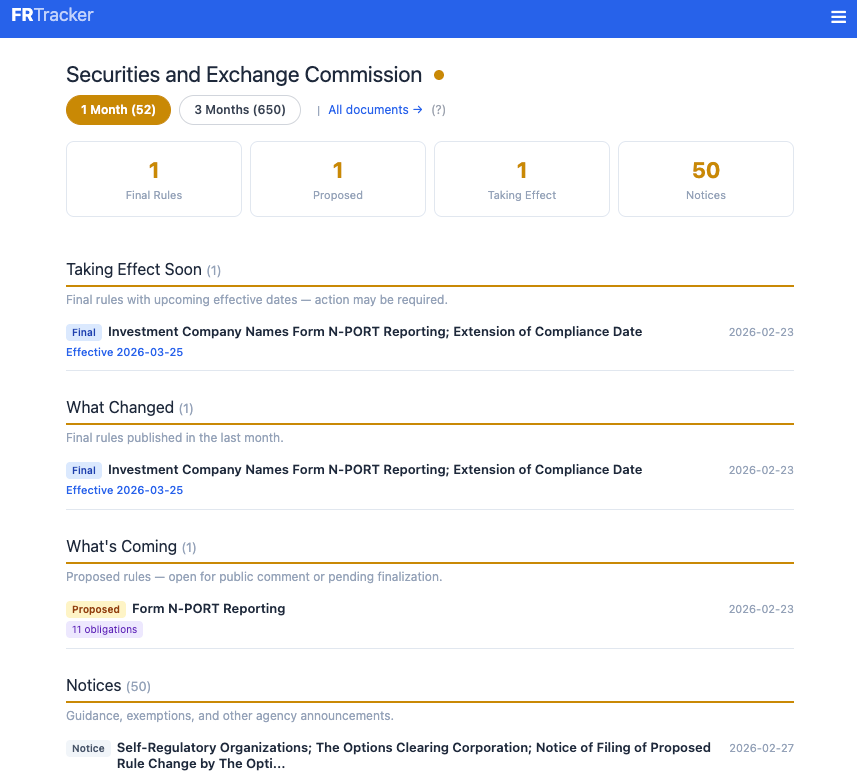
Every compliance vendor in the market is slapping "AI-powered" on their homepage. FRTracker goes the opposite direction. Its obligation extraction is rule-based and traceable back to primary text. Compliance teams don't trust black boxes. They trust audit trails. For compliance buyers, traceability is the selling point — not the limitation.
The tool itself is not the business. FRTracker is the primitive: the clean, deterministic spine you build a workflow product on top of.
The Market
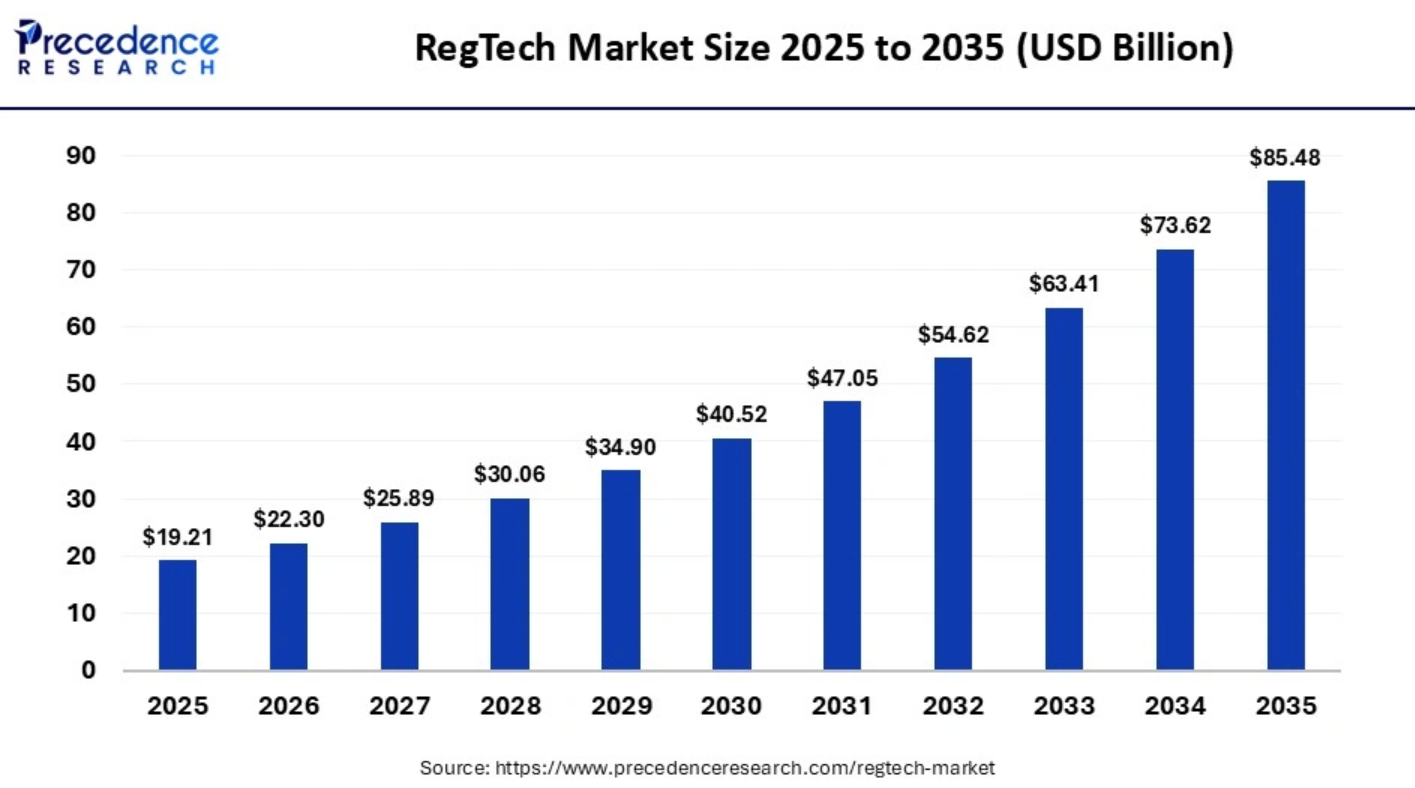
The RegTech market sits around $19–21 billion in 2025, and virtually every analyst projects it north of $44–55 billion by 2030 at mid-teens to low-twenties CAGR. Forget the exact figures. The trajectory is steep, sustained, and driven by structural forces that aren't slowing down.
Regulatory complexity is compounding. The Federal Register publishes thousands of rules per year. U.S. regulators issued roughly $4.3–4.6 billion in financial penalties during 2024, with North American enforcement accounting for around 95% of worldwide financial enforcement actions. Banks in the U.S. and Canada spend an estimated $61 billion annually on compliance — and financial institutions worldwide spend over $200 billion on financial crime and AML compliance alone. C-suite executives at major banks now report spending 42% of their time on compliance matters, up from 24% in 2016.
Here's what makes this a small-team opportunity rather than an enterprise slug-fest: compliance costs are regressive. A decade of CSBS survey data on community banks shows the smallest institutions spend 11–15.5% of payroll on compliance, versus 6–10% at the largest. Consulting costs are even more lopsided — 50–64% for the smallest banks versus 19–30% for the largest.
The smallest players are getting crushed by the same rules designed for JPMorgan. Same obligations. A fraction of the resources. And almost no tooling built for their reality.
The Competitive Landscape
The enterprise tier is well-served and consolidating fast.
CUBE completed its acquisition of Thomson Reuters Regulatory Intelligence at the end of 2024, expanding to roughly 1,000 enterprise customers and 600 employees. They serve about 40% of Tier 1 financial institutions globally. AscentAI rebranded in early 2025 with a Regulatory Lifecycle Management Platform offering automated obligation extraction, horizon scanning, and change management for large financial institutions. Compliance.ai sells obligations mapping plus workflow. Regology sells AI-powered regulatory change management with a "Smart Law Library" across banking, crypto, gaming, and tech.

Serious products with serious budgets. Enterprise sales cycles. But you're not competing with them. You're serving the organizations they'll never touch: the mid-market fintech lender with eight people in compliance, the community bank with $400 million in assets and one overwhelmed CCO, the credit union still tracking regulatory changes in a shared spreadsheet.
Some of these mid-market teams already use generic GRC or ticketing tools — Jira, Asana, Vanta, Drata — hacked together with spreadsheets. You don't replace those systems. You become the "new rule → checklist + evidence" engine that feeds them. That positioning matters. It shrinks your competitive surface to the one thing you do better than anything they've duct-taped together.
The Wedge: Sell the Delta, Not the Library
Every incumbent sells a library — a comprehensive database of rules across jurisdictions. That's their moat: breadth. But for a 4-person compliance team at a fintech, breadth is overwhelming and mostly irrelevant. They need to know what changed, whether it applies to them, and what to do about it.
The wedge product goes three layers deep:
Layer 1: Delta-First Regulatory Feed

Unlock the Vault.
Join founders who spot opportunities ahead of the crowd. Actionable insights. Zero fluff.
“Intelligent, bold, minus the pretense.”
“Like discovering the cheat codes of the startup world.”
“SH is off-Broadway for founders — weird, sharp, and ahead of the curve.”


