


The Cold Chain Has a Security Problem. The Repair Contractor Has the Customer.
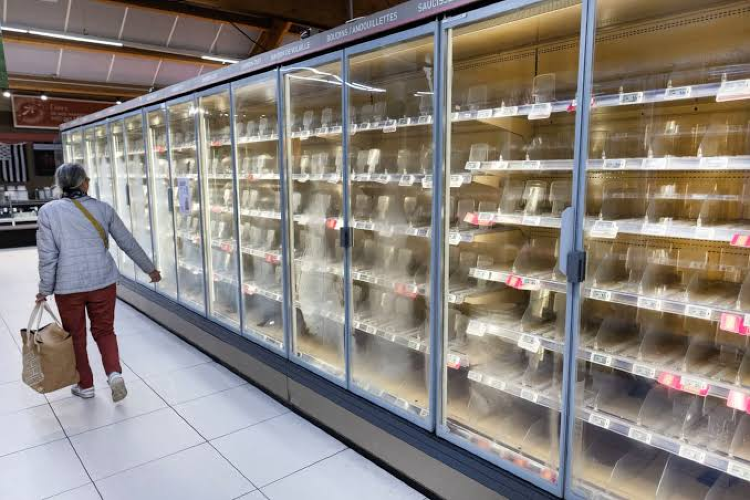
On the night of October 11, 2026, someone turned French supermarket refrigerators into ovens.
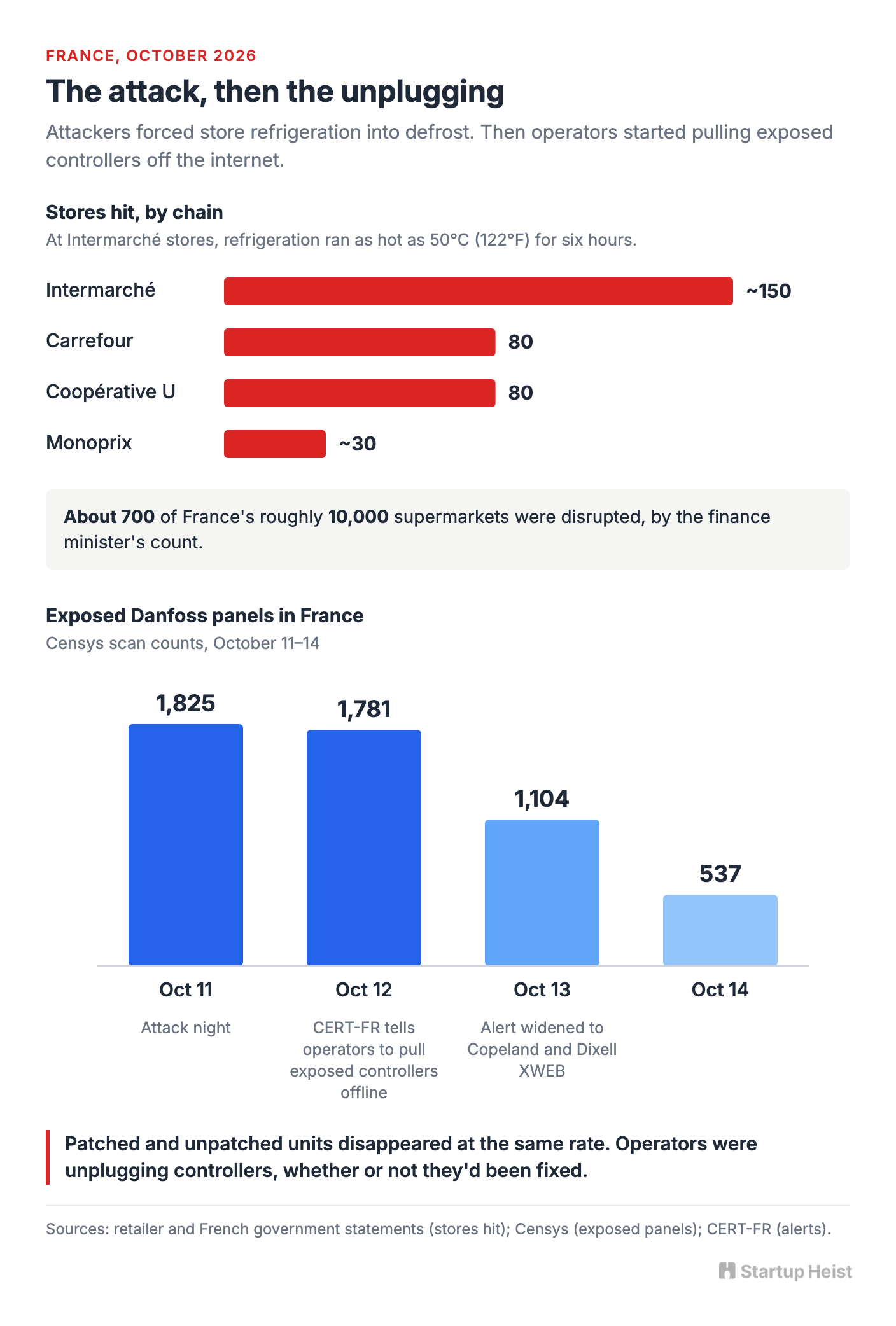
Attackers reached the internet-connected controllers that run store refrigeration and forced the cases into defrost. At roughly 150 Intermarché stores, refrigeration ran as hot as 50°C (122°F) for six hours. Carrefour reported 80 stores hit, Coopérative U another 80, and Monoprix about 30. By the count of France's finance minister, Roland Lescure, about 700 of the country's roughly 10,000 supermarkets were disrupted. Intermarché's chief executive, Thierry Cotillard, put the losses at tens of millions of euros nationwide in a single day, and two supermarkets in Alsace alone reported €270,000 in spoiled stock. The Paris prosecutor opened a criminal investigation.
The machines involved were ordinary. Danfoss, the Danish controls maker, said most affected units were legacy models it no longer updates: the AK-SM 800 and the AK-SC 355, phased out in 2016. Some newer AK-SM 800A units were running outdated firmware. On August 9, 2026, two months before the attack, Claroty's Team82 had published research on the AK-SM 800A describing an authentication bypass built on a daily password derived from the device's date, plus a command-injection flaw leading to remote code execution. Danfoss had already shipped fixes, yet a Censys scan cited by Claroty found 2,765 of those controllers worldwide still reachable from the open internet. Investigators haven't tied those specific flaws to the attack, and the case doesn't depend on them. Store refrigeration controllers were sitting on the public internet in the thousands.
On October 12, CERT-FR, France's national cyber response team, told operators to pull exposed controllers offline. A day later it widened the alert to Copeland and Dixell XWEB systems, and a further update warned that the attack campaigns were probably still ongoing. For American grocers, the Copeland addition is the one to watch. Copeland, which owns Dixell, also makes the E2 and E3 supervisory controllers common in U.S. supermarkets, and in September 2025 Armis disclosed ten vulnerabilities in those two products, including a default admin account with a predictable daily password.
The Censys numbers that followed show where the opening is. Exposed Danfoss panels in France fell from 1,825 on October 11 to 537 on October 14, and patched and unpatched units disappeared at the same rate. Operators were unplugging controllers, whether or not they'd been fixed.
Pulling the plug also cuts off the refrigeration contractor who watches those cases at 2 a.m. Somebody has to restore the technician's secure remote access without restoring the attacker's, and in the United States nobody clearly owns that job yet. The company that packages it as a managed service for commercial refrigeration contractors gets the work.
Here's the opportunity:
The money: 20 contractor partners with 25 paying sites each at $35 a month is $17,500 MRR, before the audit and retrofit fees that dominate year one.
Inside:
• Three-layer offer: audit, retrofit, assurance
• Wholesale and end-customer pricing tables
• Nine-module MVP built around verified fixes
• Six-week plan with a contractor cold email
The Contractor Already Has the Keys
The U.S. has 45,575 supermarkets doing $1 trillion in annual sales, according to FMI, and every one of them depends on refrigeration it can't afford to lose for a night. Big chains have IT departments, national service providers, and vendor monitoring contracts. The other end of the market looks different. An independent grocer with eight stores might have a refrigeration contractor, a local IT shop, and an internet provider, with none of them owning the security of the rack controller in the back room. The contractor set up remote access years ago, maybe through a port forward on a router someone has since replaced, using credentials a previous service company left behind. Ask a typical contractor these four questions and count the documented answers:
- Which customer controllers can be reached from the public internet, and is their firmware still supported?
- Which remote connections are still in use, and by whom?
- If direct internet access disappears tomorrow, can a tech still answer an overnight high-temperature alarm?
- Who notices when a router swap quietly re-exposes the controller?
The refrigeration contractor is the natural channel for fixing this. Selling cybersecurity directly to grocers is an expensive, store-by-store slog, and the owner has a fair objection: why should a security startup touch equipment the refrigeration tech is responsible for? A contractor-led model removes that friction. The contractor already has the relationship, the equipment knowledge, and physical access to the machine room, so your job is to supply the assessment method, approved access hardware, documentation, monitoring, and the escalation path. The contractor resells it inside an existing maintenance agreement and turns a one-off emergency into recurring revenue.
The right first customer is a regional commercial refrigeration firm with roughly 5 to 30 technicians, 20 to 200 commercial sites, maintenance contracts, and after-hours alarm response. Look for supermarket specialists with central-controls experience and skip residential HVAC shops. Firms like these have enough connected equipment to need a standard process, rarely have an operational technology (OT) security practice, and hold the one thing a new security company can't buy: permission to be in the equipment room.
Plenty of Tools, No Owner
Remote monitoring is already well served. Danfoss runs its Alsense platform and a Baltimore operations center that, by the company's own count, handles more than 11 million alarms a year for some 14,000 food-retail stores. Monnit sells sensor-monitoring software starting at $45 a year. Industrial remote-access vendors such as Secomea and HMS's Ewon sell hardened gateways with multifactor login, permissions, and session logs. Shodan and Censys will show anyone which devices are listening on the internet. What none of them takes responsibility for is the job in the middle: confirming which controllers a contractor actually services, finding the unsafe access path, replacing it without breaking alarms, and proving the work was done.
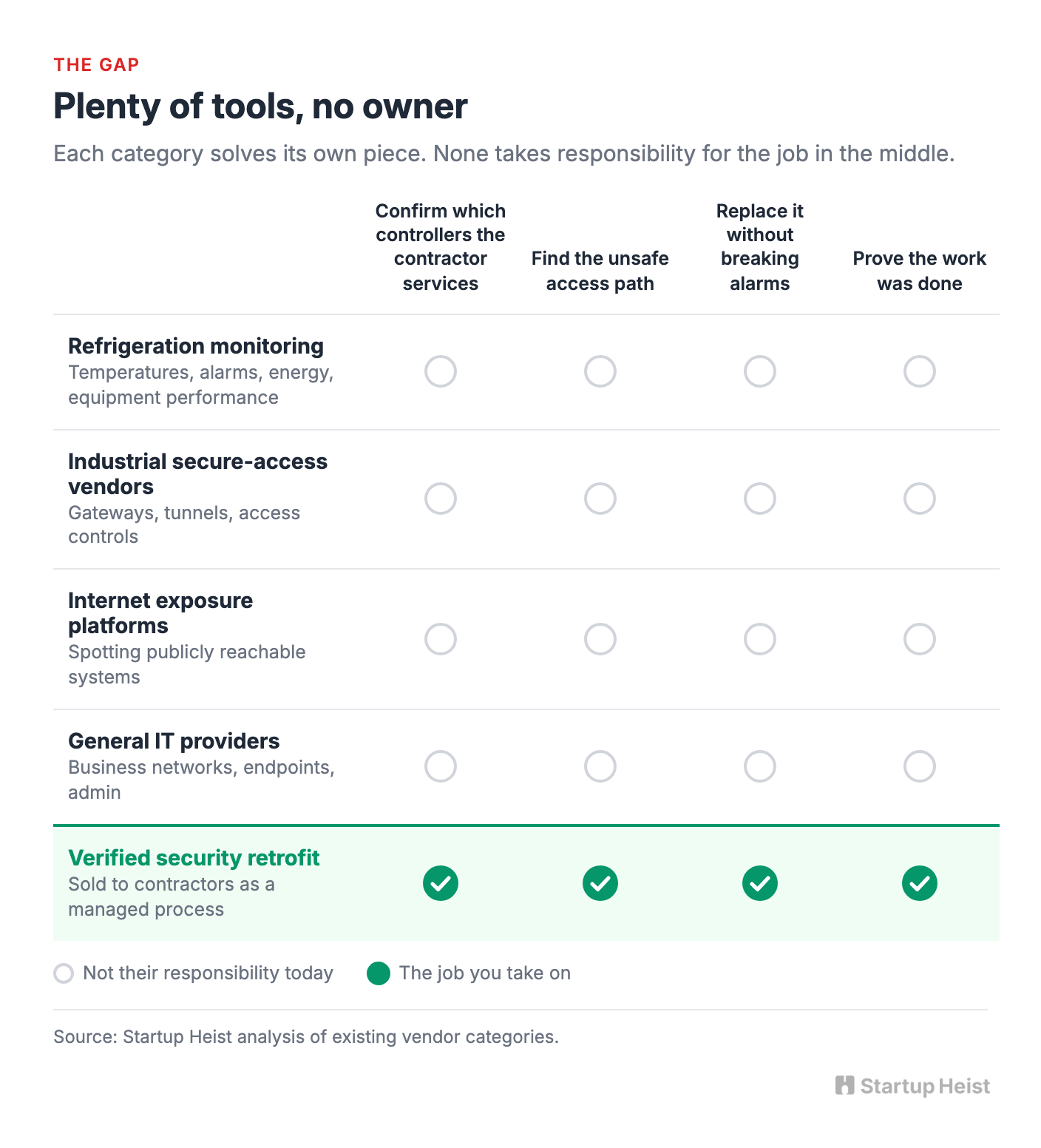
The product is a verified security retrofit, sold as a managed process. A contractor opens your portal, picks a customer's store, and sees the controller inventory, exposure status, firmware, how remote access works, and the date of the last check. If a controller is exposed, the contractor opens a remediation work order with a model-specific checklist. When the tech finishes, the system records proof that the public exposure is gone, remote access still works, and alarms still reach the people who answer them. The store gets documented risk reduction, and the contractor gets a defensible, repeatable process for a responsibility it currently handles by memory.
You Can't Just Pull the Plug
An old remote-access setup can be insecure and essential at the same time. Techs use it to answer high-temperature alarms, diagnose compressors, adjust defrost schedules, and watch stores overnight and on weekends. Many grocers buy refrigeration performance as a service, and those providers need a constant data feed to guarantee temperatures and keep cold-chain records. Cut the connection blindly and the next failed compressor goes unnoticed until the morning crew finds warm milk.
Unlock the Vault.
Join founders who spot opportunities ahead of the crowd. Actionable insights. Zero fluff.
“Intelligent, bold, minus the pretense.”
“Like discovering the cheat codes of the startup world.”
“SH is off-Broadway for founders — weird, sharp, and ahead of the curve.”


