


Most directories died because they made the same mistake: they went broad, lazy, and generic. They chased tech novelty, built undifferentiated databases, filled them with thin pages and recycled copy. Google's Helpful Content system, now embedded in core ranking, systematically devalued them. Users bounced. Revenue followed.
But the directory model isn't dead. The lazy execution of it is.
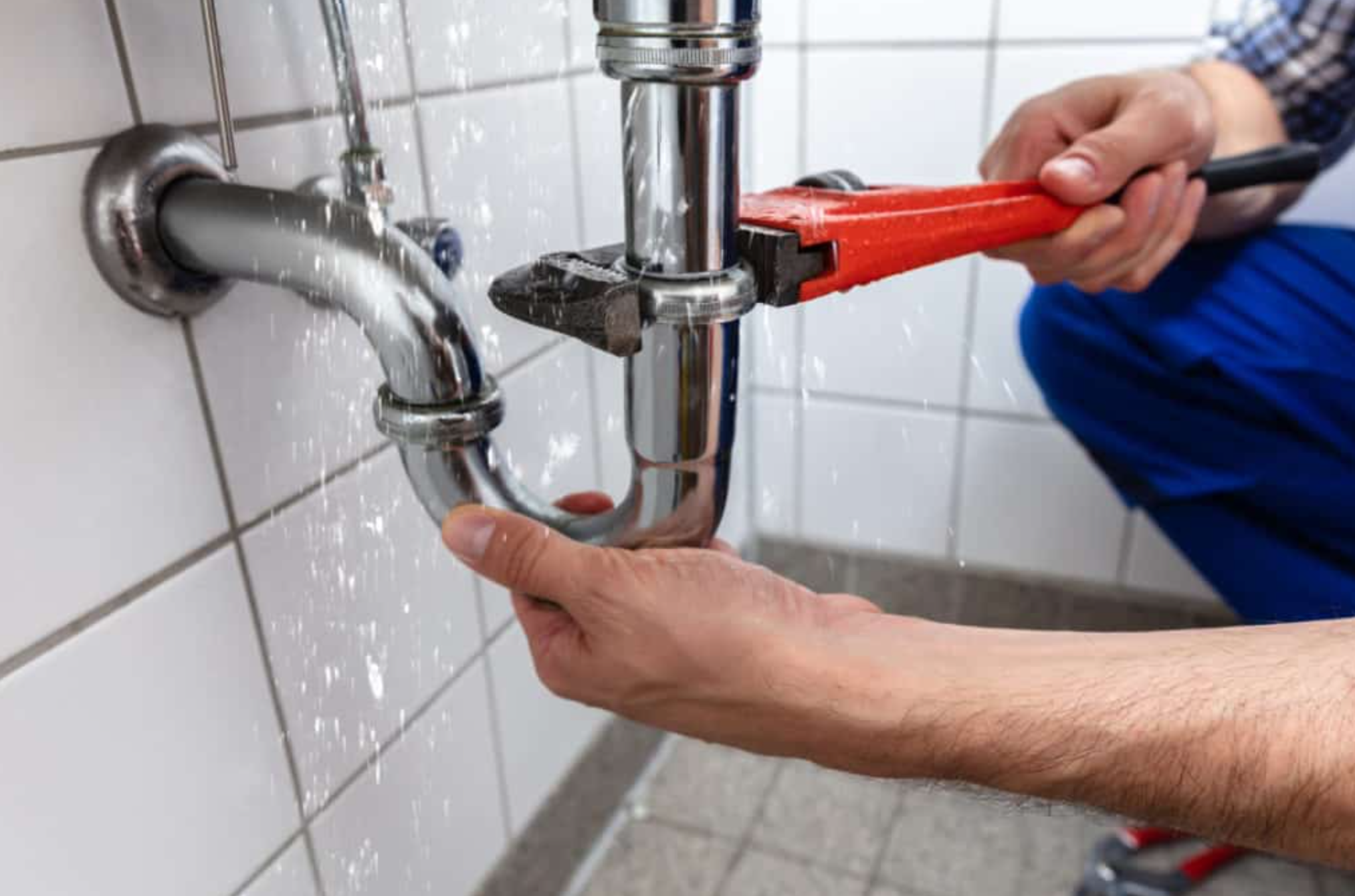
The live opportunity is narrower and more practical: build ultra-fast, high-intent local micro-directories for ugly but valuable service categories, then monetize them like lead engines, not media properties. Think "Emergency Plumbers in Mesa Open Right Now," not another generic listings site.
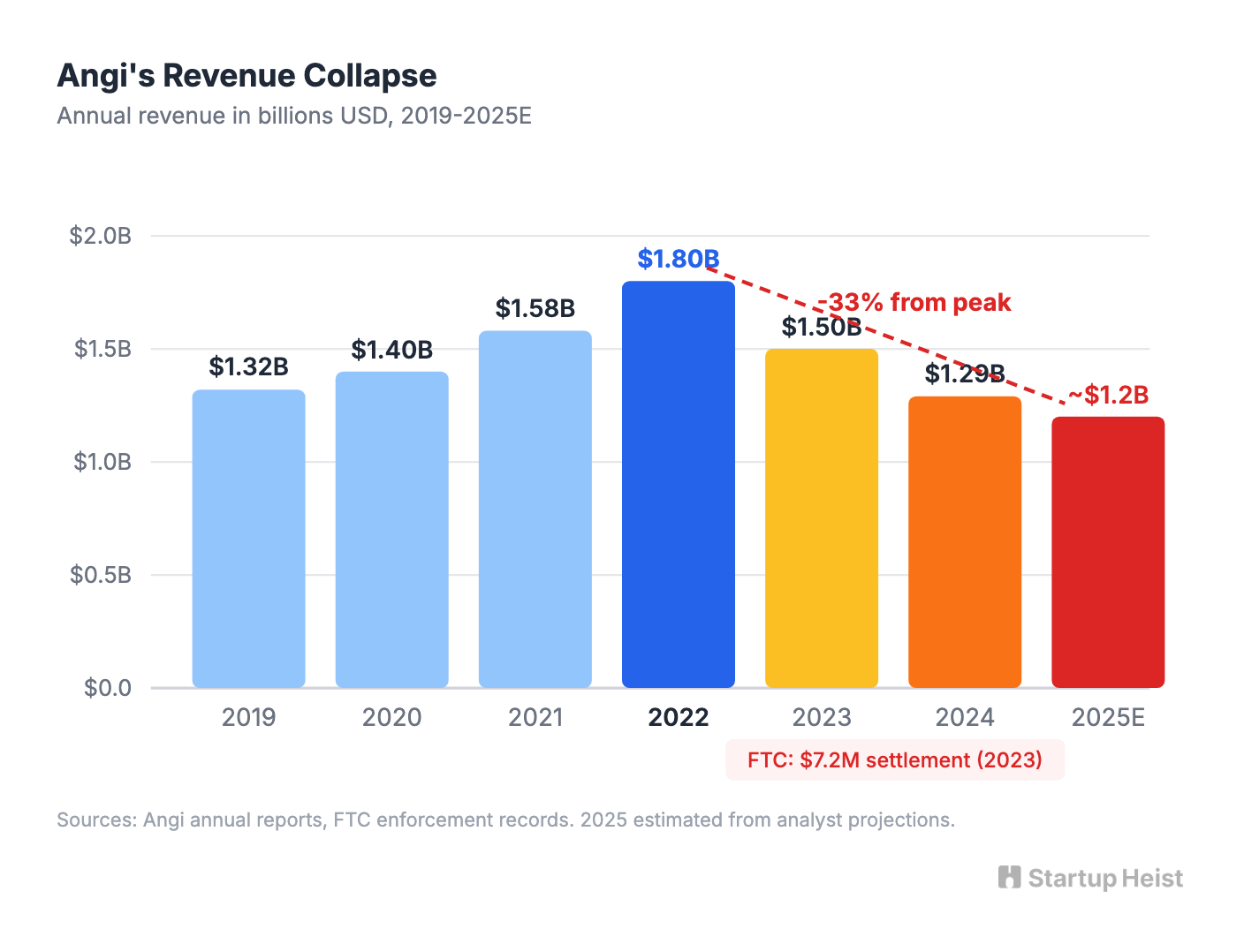
The money: A solo operator can hit $5K-$10K/month within a year from lead fees and city exclusivity deals. Angi's 33% revenue collapse is clearing the field.
Inside:
• Full MVP scope: one vertical, 10-20 cities
• Four-layer monetization stack
• Cold outreach scripts that close contractors
• Defensibility playbook against lazy competitors
The Opportunity
Build and own programmatic-SEO-powered micro-directories for high-value local service niches: emergency plumbers, HVAC repair, roof leak specialists, water damage restoration, cosmetic dentists. Categories where intent is immediate and the economics justify middlemen.
The stack is straightforward: a structured data source like Airtable or Google Sheets, Next.js for static page generation, AI-assisted copy for metadata and editorial summaries, and local lead capture built into every page.
The business model works because you can monetize the same asset four ways: pay per lead, flat monthly exclusivity by city, featured placement or sponsored listings, and sale of the underlying template to agencies and indie builders. That last one matters. The first business is lead generation. The second business is selling the machine that made the leads.
Why This Works Now
AI has collapsed the cost of localized content production. A solo founder can generate city-by-city pages, including meta descriptions, review summaries, and structured landing page copy, in hours instead of weeks. One developer used Next.js static generation to pre-render 500+ unique programmatic SEO pages, hitting a 98+ mobile performance score. The production bottleneck that used to require a content team doesn't exist anymore.
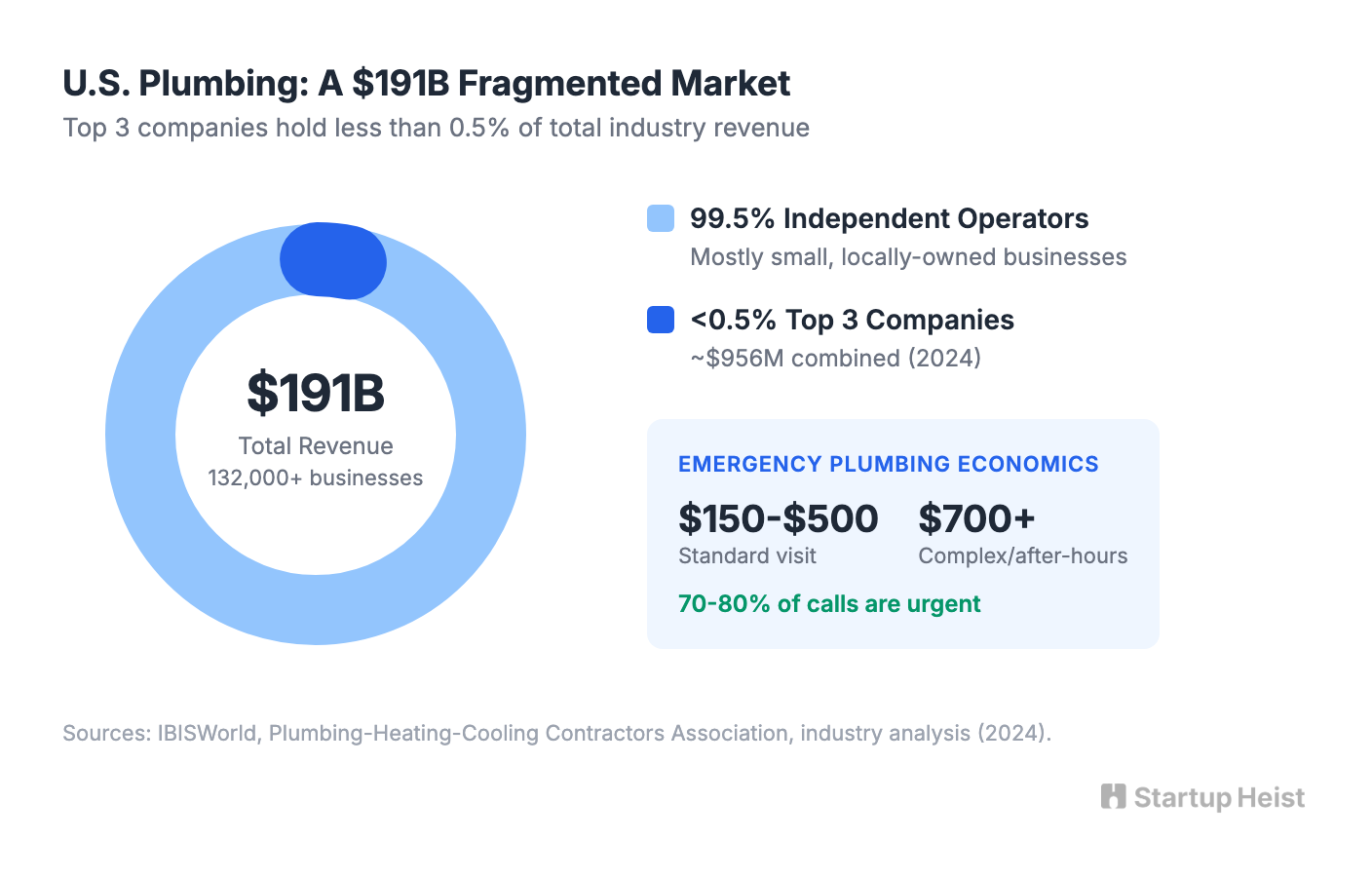
Local service markets remain deeply fragmented. The U.S. plumbing industry alone represents approximately $191 billion in revenue across more than 132,000 businesses, most of them independently owned. The top three plumbing companies combined generated roughly $956 million in 2024, less than half a percent of total industry revenue. No single company holds meaningful market share. Emergency plumbing visits typically run $150 to $500 for standard jobs, scaling to $700+ for complex or after-hours work. Seventy to eighty percent of plumbing calls are urgent or time-sensitive. A qualified lead is worth real money to these operators.
The incumbents are bleeding while Google clears the field behind them. Angi's revenue has dropped roughly a third from its 2022 peak of nearly $1.8 billion. The FTC levied a $7.2 million settlement in 2023 for misleading lead quality claims. Contractor reviews on the BBB average 1.96 out of 5 stars. Google's December 2025 core update introduced stronger engagement-signal weighting, and sites where a significant share of pages show poor engagement now face site-wide ranking penalties. That update had an 87% negative impact rate on mass-produced AI content without expert oversight. The spam operators mass-generating thin city pages are getting cleared out. For a quality operator building genuinely useful pages, the SERPs are opening up.
These platforms want "best plumbers in Dallas." A sharper operator goes after "24-hour plumber in Richardson" or "emergency slab leak repair in Tempe." That's where intent gets expensive, and where the big players leave room.
Where the Real Play Is
The naive version of this idea is "build lots of pages." The real leverage comes from building pages attached to transaction intent.
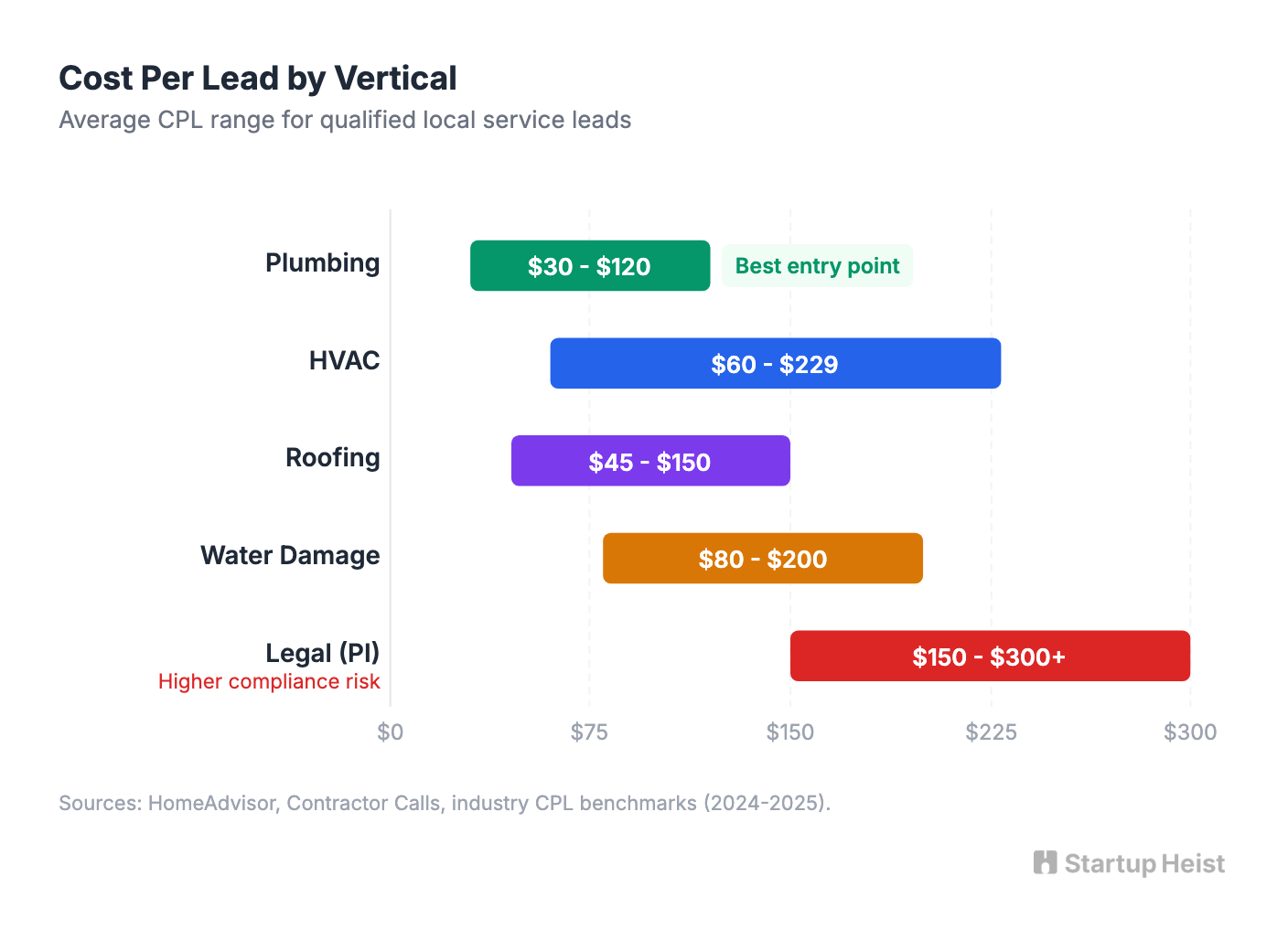
Emergency and time-sensitive home services are the best wedge. Plumbers, HVAC, roofing, water damage, electricians, garage door repair. Ugly categories with strong lead economics and weak digital execution from the underlying businesses. The U.S. home services market is valued at approximately $842 billion in 2026. Cost per lead runs $30 to $120 for plumbing, $60 to $229 for HVAC. Plumbing leads convert in days, not the 30-to-90-day cycles typical of other verticals. A fast directory page that answers the immediate question, surfaces three to seven credible options, and makes the call button obvious wins in these categories.
High-ticket professional services like personal injury law, cosmetic dentistry, and restoration can be more lucrative per lead but carry more compliance risk and heavier competition. Start with home services. Simpler, less regulated, proven willingness to pay.
What Makes This Defensible
This isn't a forever moat if you do it lazily. The defensibility comes from doing the work that lazy builders won't.
Manual data quality. Build a database that's actually curated: verified business names, correct NAP data, service-area specificity, hours, emergency availability, financing notes, review patterns, call tracking setup, and city-to-subcity matching. Google's algorithms now explicitly reward pages built on proprietary data that competitors can't easily replicate. That sounds boring. It is boring. That's why it works.
Real utility on the page. A page should help a visitor choose, not just rank. Clean comparison tables, mobile-first layout, obvious call and quote buttons, map coverage, filters, trust signals, editorial notes, and service-specific sections like "burst pipe," "drain backup," or "after-hours dispatch." If your page is a wall of SEO paragraphs, you lose. Google's December 2025 update demoted pages with high impressions but low engagement, exactly what happens when users land on content-farm pages and bounce.
Narrow vertical specialization. Every vertical behaves differently. Plumbing has one logic. Dentists have another. Lawyers are a different planet. The winners here won't be the most general. They'll be the most opinionated about their category. Compare: "Done-for-you emergency plumbing lead engine for underserved U.S. suburbs" versus "AI local directory platform for every niche." The second pitch sounds bigger. The first one makes money faster.
The MVP
A real MVP isn't 50 verticals and 5,000 pages. It's one vertical, 10 to 20 cities, and a page architecture tight enough to scale once the first cluster proves itself.
Recommended V1
Unlock the Vault.
Join founders who spot opportunities ahead of the crowd. Actionable insights. Zero fluff.
“Intelligent, bold, minus the pretense.”
“Like discovering the cheat codes of the startup world.”
“SH is off-Broadway for founders — weird, sharp, and ahead of the curve.”


