


Yahoo Just Validated a Real Product Category by Accident
On April 1, 2026, Yahoo dropped what looked like a throwaway bit: the "Scrōll Stoppr," a $4.99 weighted thumb ring advertised as a cure for doomscrolling, shipped in a nostalgic box that plays the old Yahoo yodel when opened. The gag was the punchline. The product was real. Listed on Yahoo's TikTok Shop. Sold out.
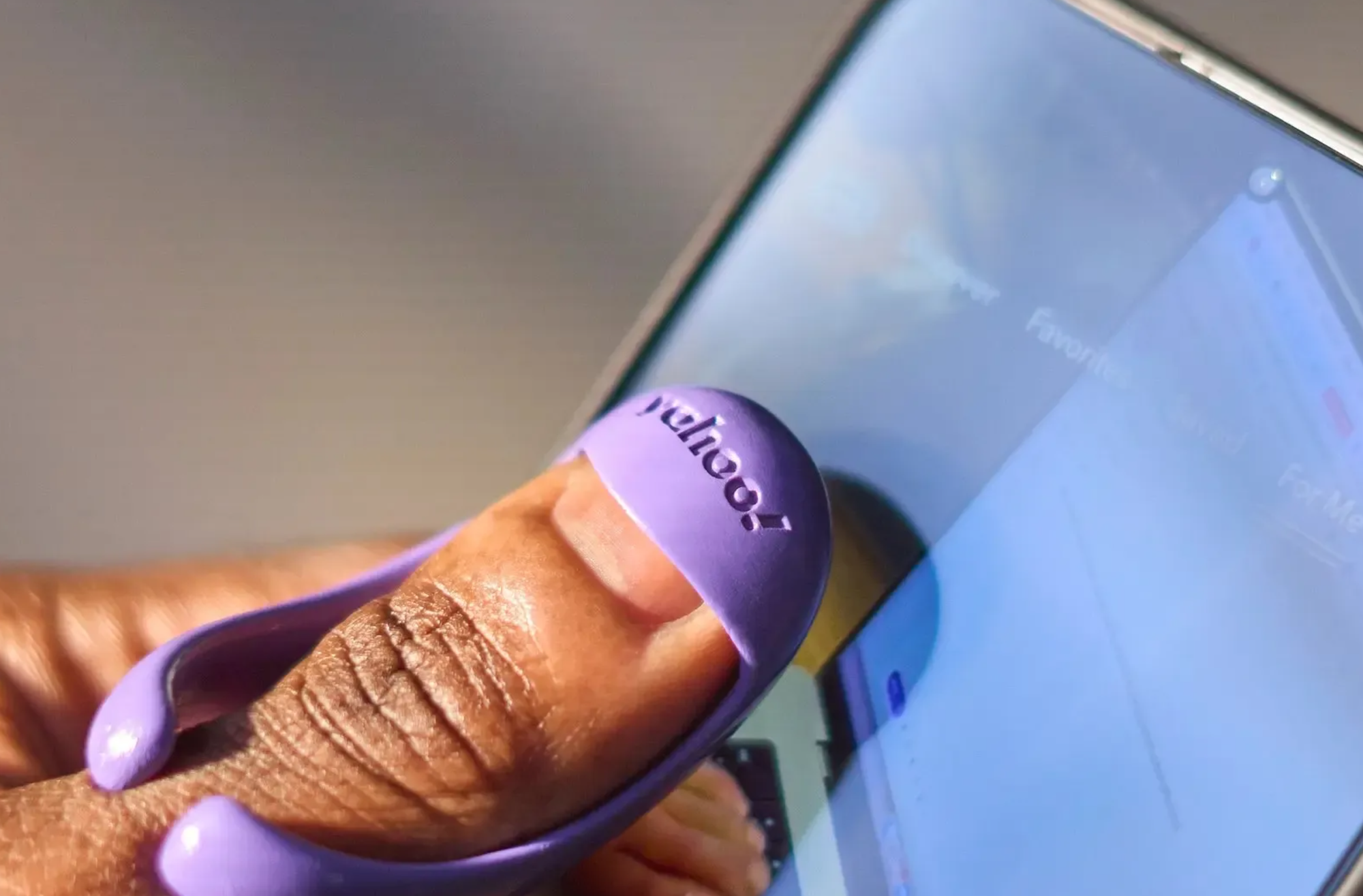
Kemma Kefalas, Yahoo's Head of Creative Lab, framed the stunt around a real behavioral pattern — Yahoo's products, she has said on the record, are "built to help you accomplish your goals, not go down rabbit holes." Creative Bloq featured the Scrōll Stoppr among the strongest April Fools launches of the year precisely because it stopped being satire the moment the first units shipped. This is Yahoo's second year running the play. In 2025 they sold a "Touch Grass Keyboard." It sold out in 20 minutes.
Two data points is a pattern, and the pattern isn't about Yahoo. It's about the category Yahoo accidentally revealed.
Here's the opportunity:
The money: $50K–$150K/month in year-one gross sales is realistic for a content-led novelty brand. Liquid Death ran the same playbook on tap water to a $1.4B valuation.
Inside:
• Five-SKU opening lineup with landed costs
• Four-week MVP: source, shoot, pick, launch
• Three-tier impulse pricing plus bundle math
• Creator outreach template that actually converts
The Real Signal
This is a distribution story dressed up as a hardware story.
Consumers aren't lining up for premium digital wellness devices. The category has two anchors: Light Phone III at $800 retail and Brick at $59. Both are well-reviewed. Both assume the user has already declared war on their own attention span. The signal from Yahoo is that there's a much larger audience sitting one step back, willing to pay $5 to $25 for a physical object that's funny, legible in one second of video, and cheap enough to buy before the rational brain shows up.
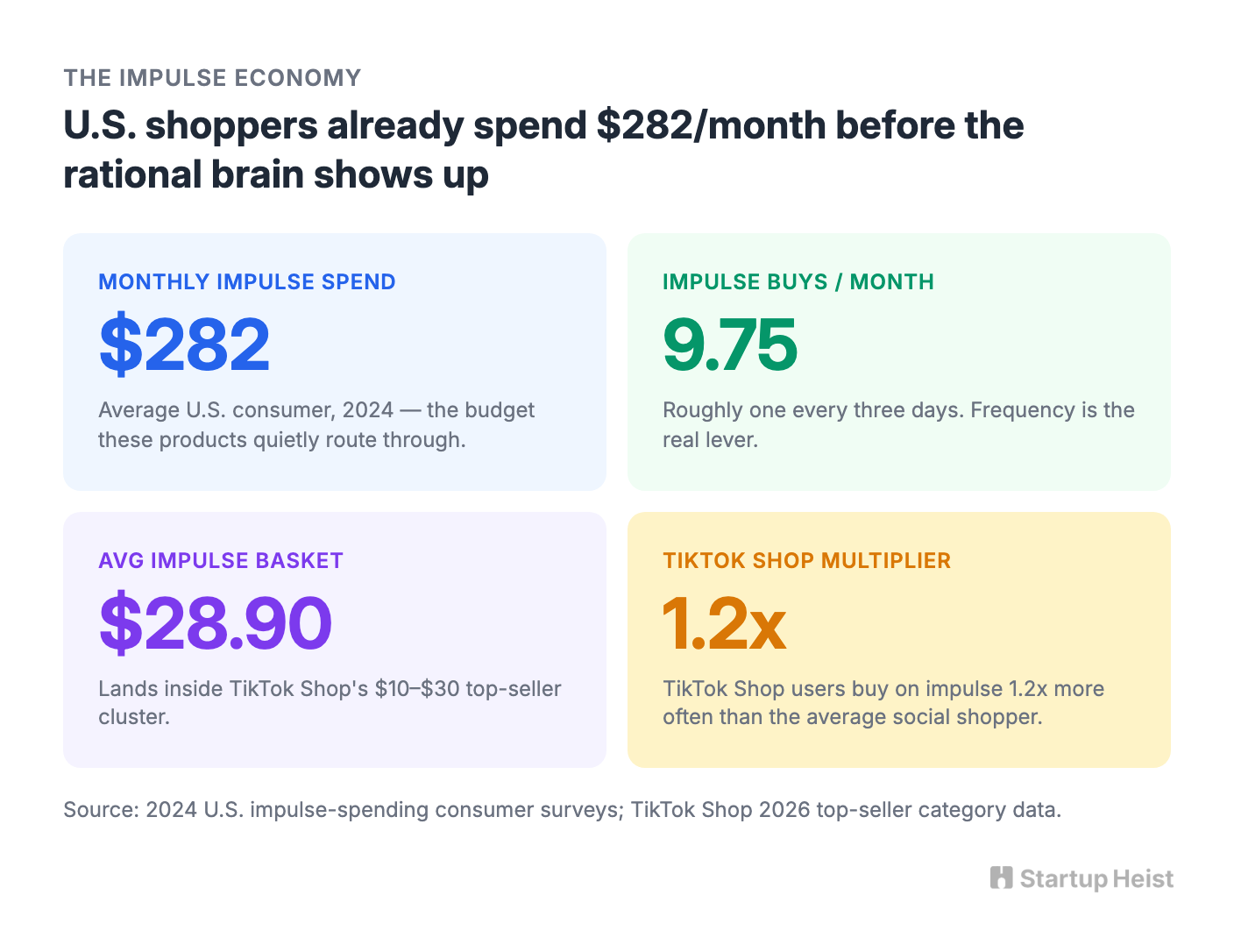
The spending data lines up. The average U.S. consumer spent an estimated $282 per month on impulse purchases in 2024, averaging 9.75 impulse buys monthly at roughly $28.90 each. TikTok Shop users are 1.2x more likely than the average social shopper to buy on impulse. And 2026 TikTok Shop performance data keeps landing on the same sweet spot: top-selling items cluster in the $10 to $30 band. Yahoo priced the Scrōll Stoppr right inside the impulse tier and let the video do the rest.
The play isn't to build the next Light Phone. It's smaller, weirder, and faster: launch a Shopify brand selling absurd physical anti-scrolling gadgets through TikTok Shop. Call it Friction Co. or something equally direct. The promise is playful self-sabotage, not wellness theater. Liquid Death is the template — take a real behavior problem, wrap it in irony, make the object visually legible, and let the packaging do half the talking. Liquid Death turned tap water into a $1.4 billion brand using that exact move.
Why the Lane Is Open
The cultural backdrop is real. Flip phone revivals, "digital detox" covered as a straight economic beat on Yahoo Finance, screen time as a mainstream anxiety. Light Phone III shipped on March 27, 2025 and made Time's best inventions list. The conversation has moved from novelty to intentional phone use.
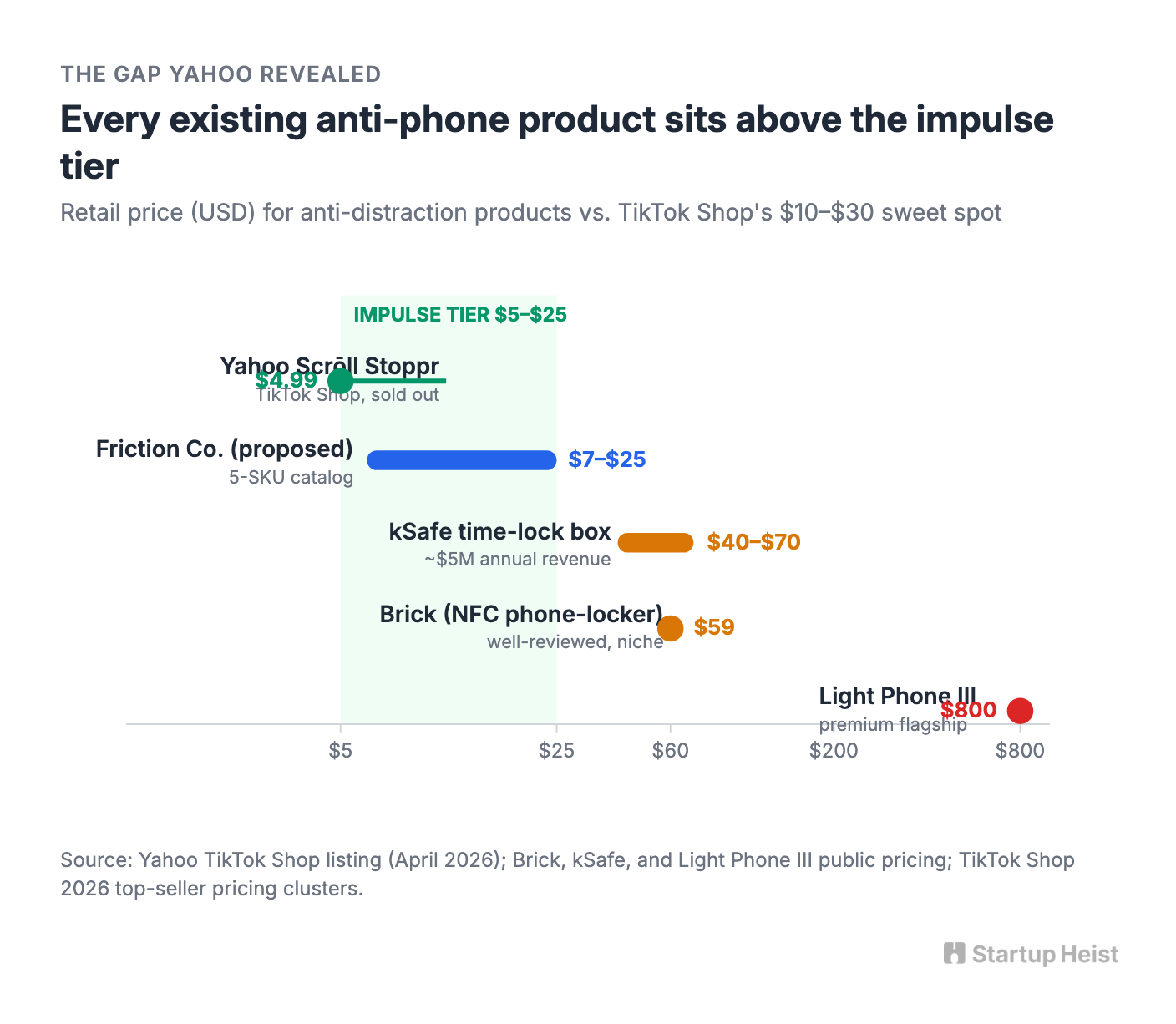
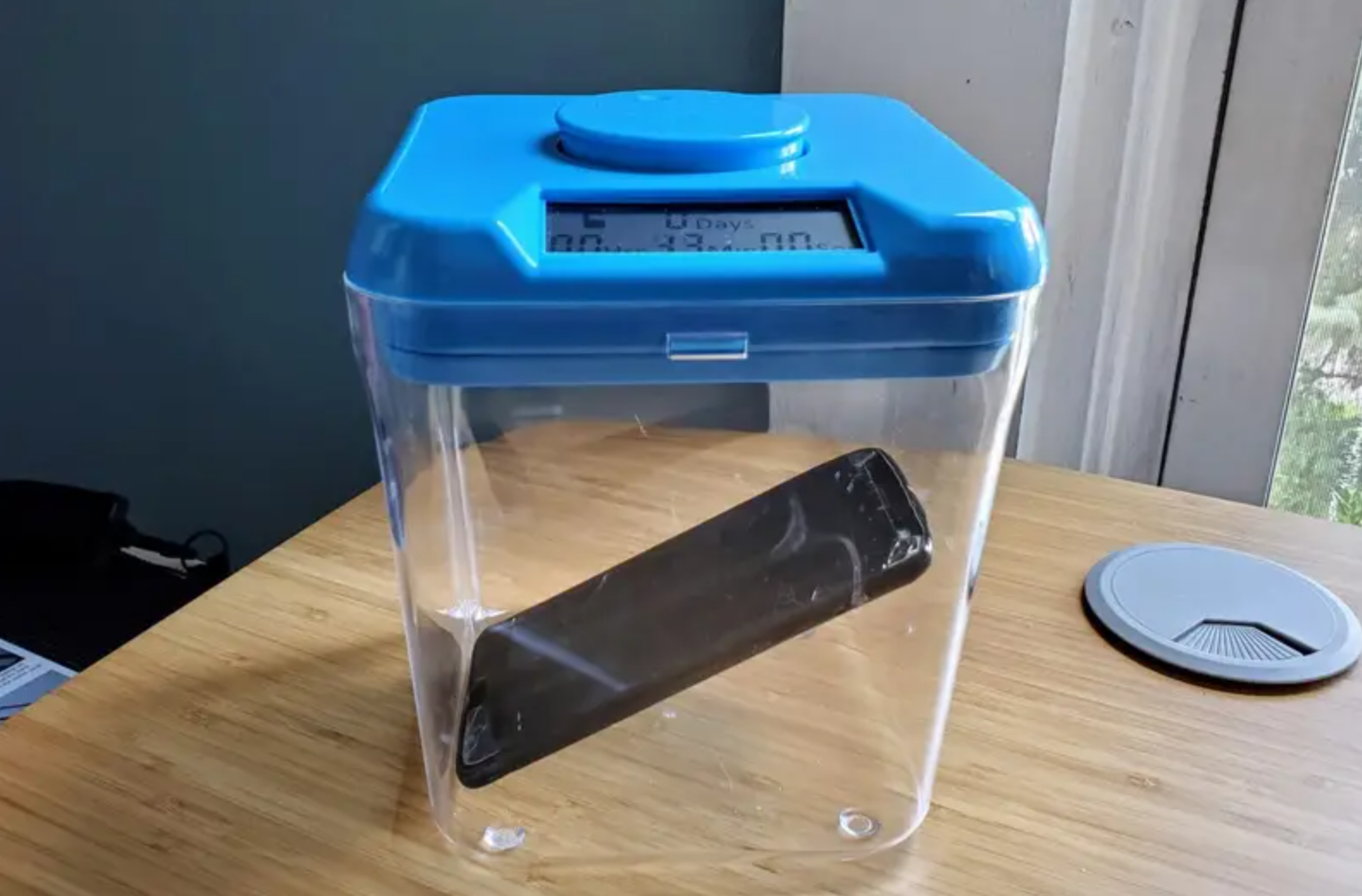
The existing market, though, is overpriced, over-serious, or overbuilt. kSafe, the time-lock container from Shark Tank, has proven people will buy physical commitment devices — post-show coverage cites roughly $5 million in annual revenue. Respectable. It's also a plastic box that costs $40 to $70 and looks like discipline rather than entertainment. Brick is clever engineering with an NFC tag and a paired app, but at $59 and the size of a palm puck, it sits outside the TikTok impulse tier. Light Phone III sits even further up the premium ladder.
Underneath all three sits a yawning gap: cheaper, more giftable, more instantly understandable, more TikTok-native. Yahoo just proved the joke version of the product already has native demand. That's the opening.
What to Actually Build
The trap is launching one hero product and pretending you're building a hardware company. That turns a content-commerce play into a dropshipping grind.
Launch a catalog of tiny friction objects instead. A catalog lowers creative risk: if one SKU flops, the brand lives. It turns content into a machine, since every object has its own demo format, reaction format, stitch format, and "POV: you needed this" format. And it builds a moat that's emotional rather than technical. You can't patent a silicone sleeve or a weighted ring. What you can own is taste, rotation velocity, creator partnerships, and the ability to keep shipping the next absurdly useful object before copycats catch up.
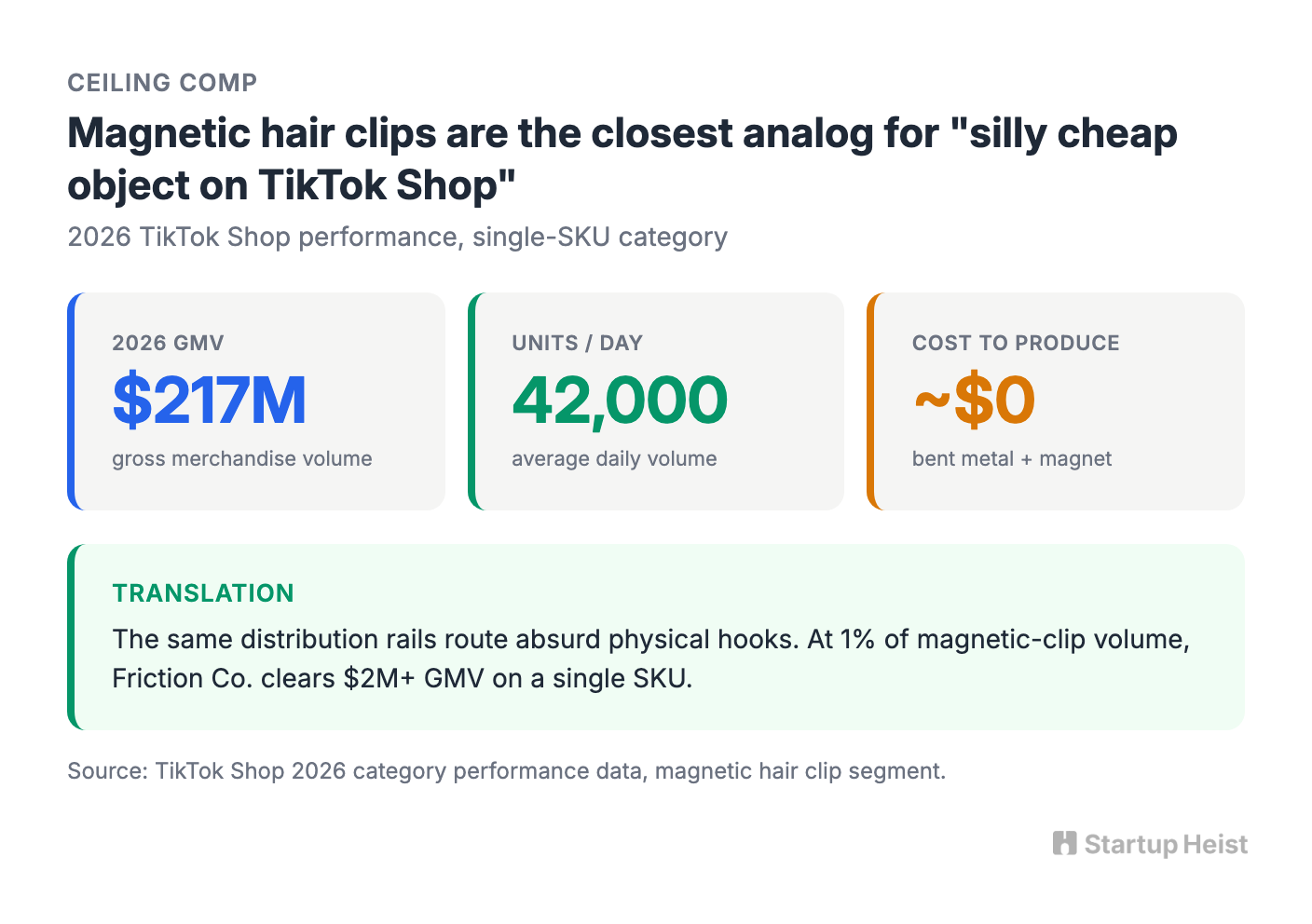
This is merch economics. Aim for 3x-plus landed markup before platform fees and creator commissions. Contribution margin comes from bundles and repeat launches, not from one genius invention. For a parallel that raises conviction: magnetic hair clips pulled $217 million in GMV on TikTok Shop in 2026, averaging 42,000 units sold per day, off a product that costs almost nothing to make. Absurd physical hooks route through the same pipes.
What This Business Is, and Isn't
Be honest about the shape of the prize. This is a fast, branded commerce heist, not a venture-scale platform.
Good outcome: a content-led novelty brand doing $50K to $150K per month in gross sales within year one, climbing toward a low-seven-figure annualized run rate with workable margins, powered by TikTok Shop, creator affiliates, and a steady rhythm of new drops. That's a meaningful micro-brand. It's very unlikely to become a category-defining hardware company. The products are easy to source, easy to copy, and not technically protected.
The model has to reflect that reality. Win attention through demo-native content. Convert through impulse pricing. Expand basket size through bundles from day one. Launch new SKUs before the first wave commoditizes. Capture owned audience (email, SMS) immediately, because platform dependence is the single biggest risk. The long-term moat is brand plus distribution. That's also how Liquid Death survived the moment its formula became copyable. The water got commoditized. The brand kept earning attention.
Opening Lineup
A strong first five SKUs to source and test:
Unlock the Vault.
Join founders who spot opportunities ahead of the crowd. Actionable insights. Zero fluff.
“Intelligent, bold, minus the pretense.”
“Like discovering the cheat codes of the startup world.”
“SH is off-Broadway for founders — weird, sharp, and ahead of the curve.”


