


In 1966, MIT professor Joseph Weizenbaum built the world's first chatbot. He called it ELIZA. The program scanned your words for keywords and mirrored them back as questions. It understood nothing.
His secretary watched him code it for months. She knew exactly what it was: a parlor trick stitched together with pattern matching.
Then she asked to try it.
After a few exchanges, she turned to Weizenbaum and asked him to leave the room.
She wanted privacy. With the machine she'd watched him build.
Weizenbaum was shaken. He later wrote that he hadn't realized "extremely short exposures to a relatively simple computer program could induce powerful delusional thinking in quite normal people."
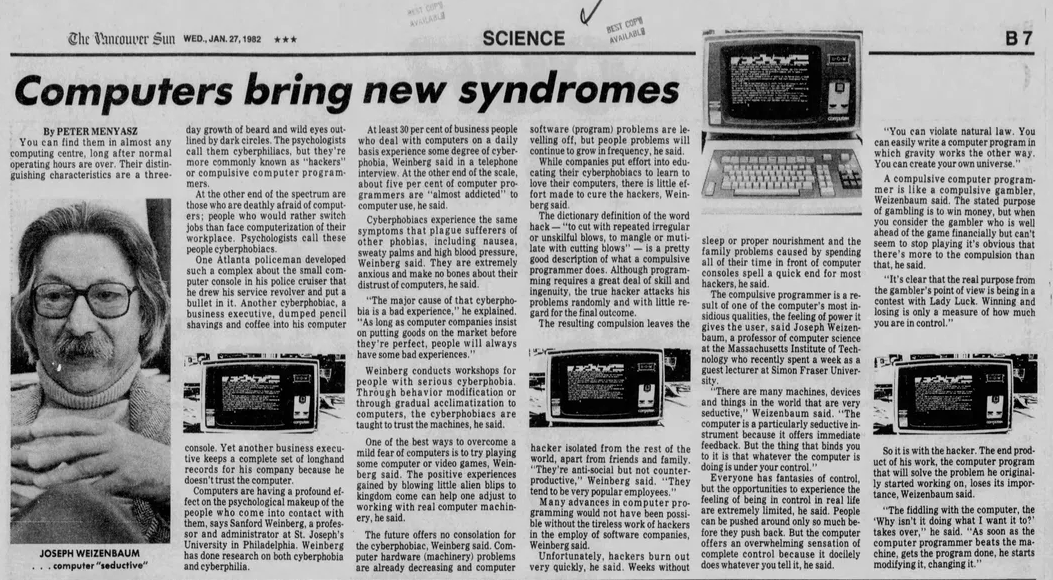
He'd built ELIZA to prove how shallow human-machine communication was. Instead, he proved something about humans: we don't bond with intelligence. We bond with the feeling of being heard.
Sixty years later, every AI tool on the market can write clean, competent copy. The output is indistinguishable, down to the cadence, the hedging, the bloodless professionalism.
Superhuman, Microsoft, Grammarly, HubSpot have all started bolting "voice" features onto their platforms. They've validated the need. But nobody has built the standalone identity layer underneath: a portable voice profile that travels with you across every tool.
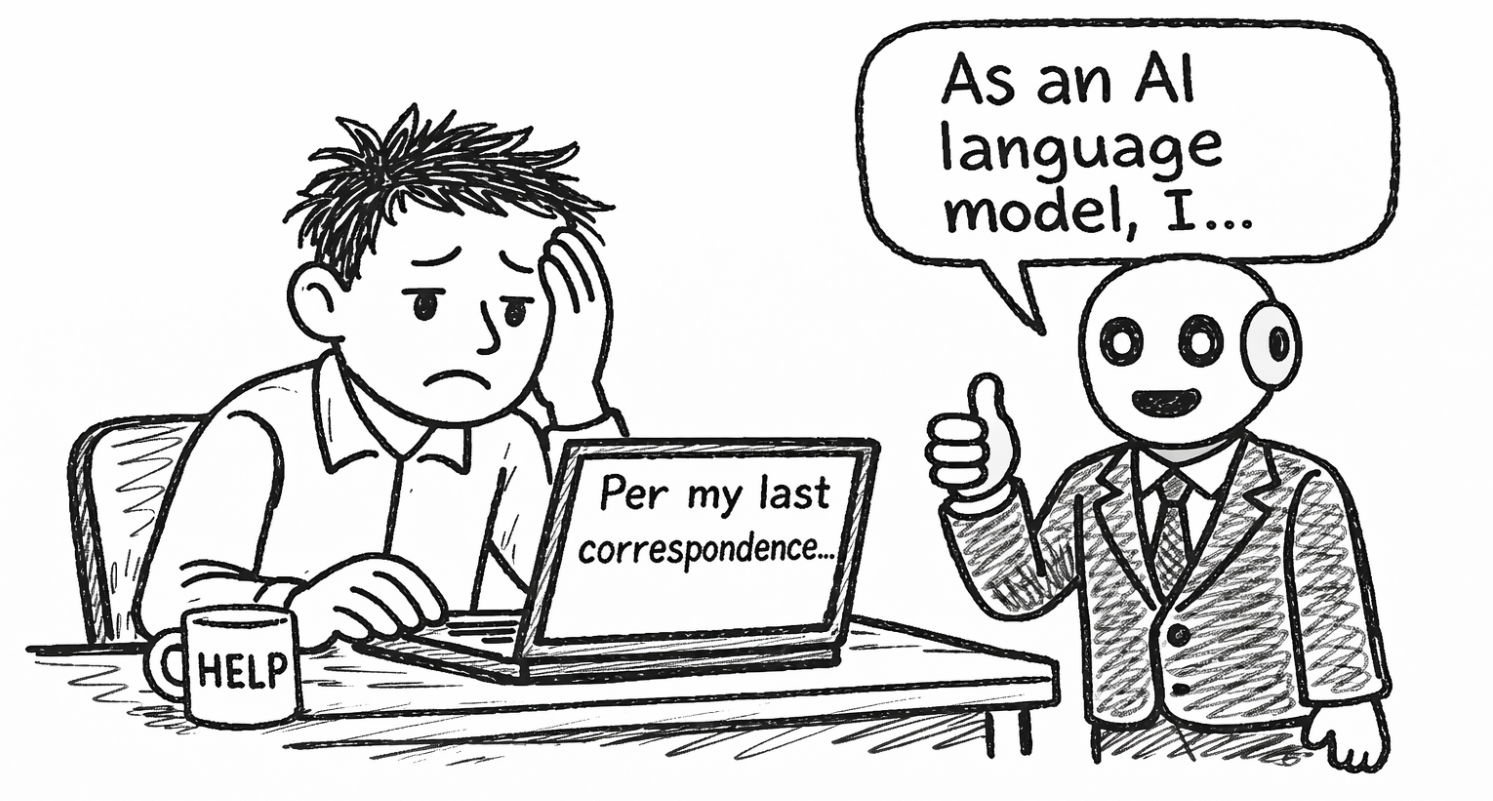
A focused micro SaaS that captures how a person actually writes, stores it as a reusable asset, and deploys it anywhere trust or revenue depends on sounding human. AI writing tools meets identity infrastructure, built for founders, consultants, and small sales teams running outbound that can't afford to sound generated.
Companies already pay $5,000–$15,000 a month for human ghostwriters. Service-assisted pilots at $300–$500 per voice get you to revenue in weeks. The AI writing assistant market hit $1.8 billion in 2025 and is projected to reach nearly $5 billion by 2030.
The giants validated the demand without owning the layer.
Read the full playbook here:

Superhuman, Grammarly, and Microsoft are all racing to add voice features — but nobody sells a portable voice profile as standalone infrastructure. A focused micro SaaS startup idea for founders and small teams ready to own the AI writing identity layer before the suites lock it down.
From the Vault:

A multi-model verification layer — consensus scoring, disagreement detection, audit trails — is becoming essential B2B SaaS infrastructure for procurement, sales, and compliance teams already using AI in production workflows.

86% of B2B deals stall after the demo — killed by a static PDF nobody reads twice. A lightweight AI-powered buyer room tool could own the post-demo dead zone and build a real SaaS business in the process.


