


The 30-Second Brief
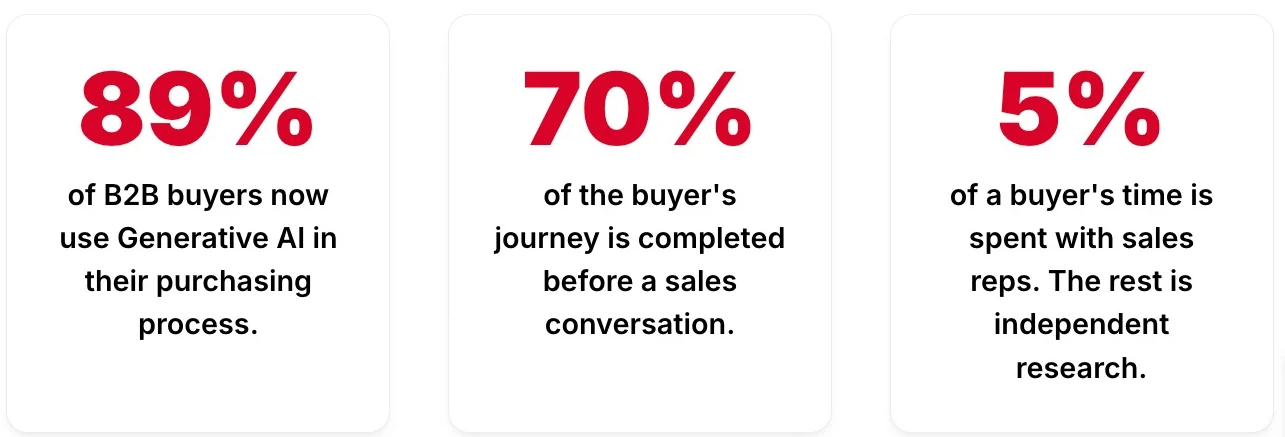
Every B2B buyer now starts with the same move: they ask an AI. Forrester's data shows 89% of B2B buyers already use generative AI as a self-guided research source across their entire purchasing process. By 2025, it became the single most cited "meaningful interaction type" for evaluating vendors. The models favor authentic customer evidence — reviews, outcomes, community experiences — over polished vendor copy. If your wins aren't structured for machines to read, you don't exist at the moment the shortlist gets made.
The opportunity is a B2B SaaS idea at the intersection of sales enablement automation, answer engine optimization, and customer marketing infrastructure. You're building the operational layer that turns scattered customer wins into structured, machine-readable proof assets — then pushes them across every surface where buyers and AI models look.
Why This Matters Now
Forrester's 2024 Buyers' Journey Survey is the clearest signal. Nearly nine in ten B2B buyers have adopted generative AI somewhere in their purchasing process, and that happened in under two years. Follow-on research shows 95% plan to keep using it. Forrester's 2026 State of Business Buying report describes the emerging pattern: buyers start with AI, then move to peers, experts, and providers to validate. Buying groups are getting larger, procurement is joining earlier, and reliance on trials to reduce risk keeps growing.
Answer engines outperform social media by 12 percentage points across discovery, evaluation, and commitment stages. If your customer proof isn't feeding both AI answers and peer validation channels, you're invisible when decisions get made.

Google still handles roughly 373 times more searches than ChatGPT — about 14 billion daily queries versus 37.5 million search-like prompts, per SparkToro's analysis with Datos. Google's volume even grew 21.6% year-over-year. If you price this opportunity based on "AI traffic vs. Google traffic," you'll miss the point entirely.
B2B doesn't get paid by traffic. B2B gets paid by shortlists, perceived credibility, and sales cycle compression. Buyers ask the model first, and customer evidence is what makes an answer "safe" to recommend. Gartner predicts 25% of organic search traffic will shift to AI chatbots by 2026. Zero-click Google searches jumped from 56% in 2024 to 69% in 2025. The proof layer you build serves all three channels: AI answers, traditional search, and direct buyer research.
The Core Thesis: You're Selling a Customer Proof Graph
Most B2B companies already have proof. It's scattered across a dozen systems and formats nobody can find.
Gong and Zoom call clips with champion quotes buried in 45-minute recordings. Support tickets and QBR decks with "before/after" narratives. Case study PDFs that marketing produced once and never updated. G2 quotes locked behind third-party platforms. "We love your product" emails sitting in someone's inbox.
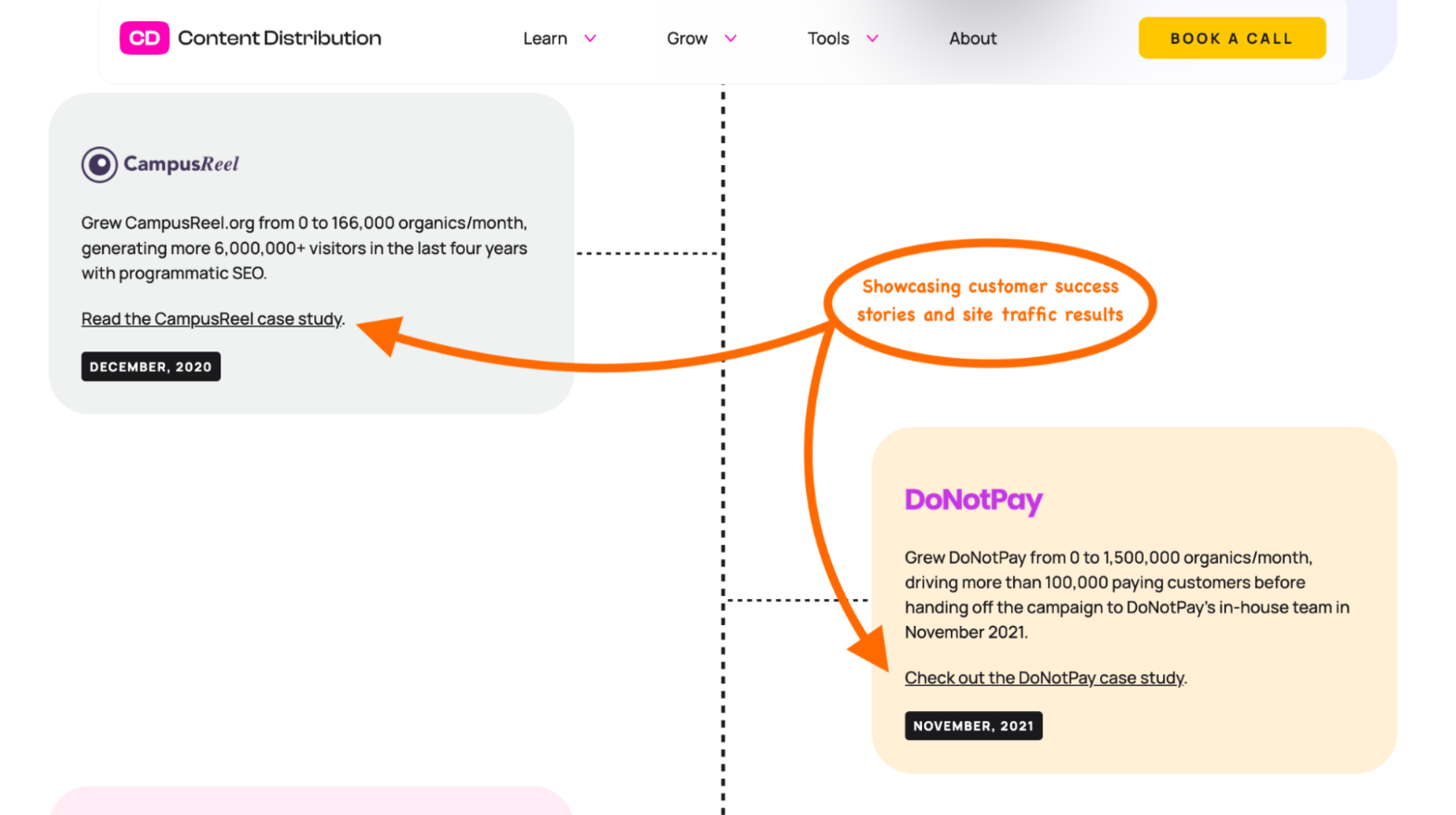
AI systems and human buyers both prefer specificity: who said what, in what context, with what outcome, and how recently. UserEvidence's own research found that 53% of B2B sellers have lost or delayed deals because they couldn't provide relevant customer evidence when it counted.
You're not building a case study generator or a micro SaaS testimonial widget. You're building infrastructure that turns customer outcomes into structured, reusable proof units — embeddable anywhere, updated continuously, and traceable to real customers with real metrics.
What Customer Proof Ops Actually Looks Like
Three connected systems.

1. Proof Ingestion (The Connectors)
Start with sources that already contain customer wins. Most companies have this data but can't extract it.
Unlock the Vault.
Join founders who spot opportunities ahead of the crowd. Actionable insights. Zero fluff.
“Intelligent, bold, minus the pretense.”
“Like discovering the cheat codes of the startup world.”
“SH is off-Broadway for founders — weird, sharp, and ahead of the curve.”


