


Camp Cart
Every year, otherwise rational adults turn into ticket scalpers for eight-year-olds.

Summer camp registration in dense U.S. metros has become a coordination nightmare. Dozens of fragmented providers, wildly different registration dates, brittle online forms, sibling scheduling conflicts, inconsistent refund policies, and a handful of high-demand camps that sell out in minutes. The Wall Street Journal called camp sign-up a "full-contact sport." Chicago Park District had to completely redesign its 2026 registration process after years of parent complaints so severe that WTTW compared the old system to the Hunger Games. The Summer Camp at Episcopal saw nearly every session sell out in 2025.
The opportunity worth building sits on the parent side of this mess.
The money: 2,000 parents at $10/month seasonal = $20K MRR. Camp-side backfill tools add a second revenue layer. Camply already charges $8.49/month in Atlanta.
Inside:
• Metro-first MVP with 10-week build plan
• Two-act business model breakdown
• Local demand moat and data flywheel
• Outreach templates for parents and camps
The money behind the chaos
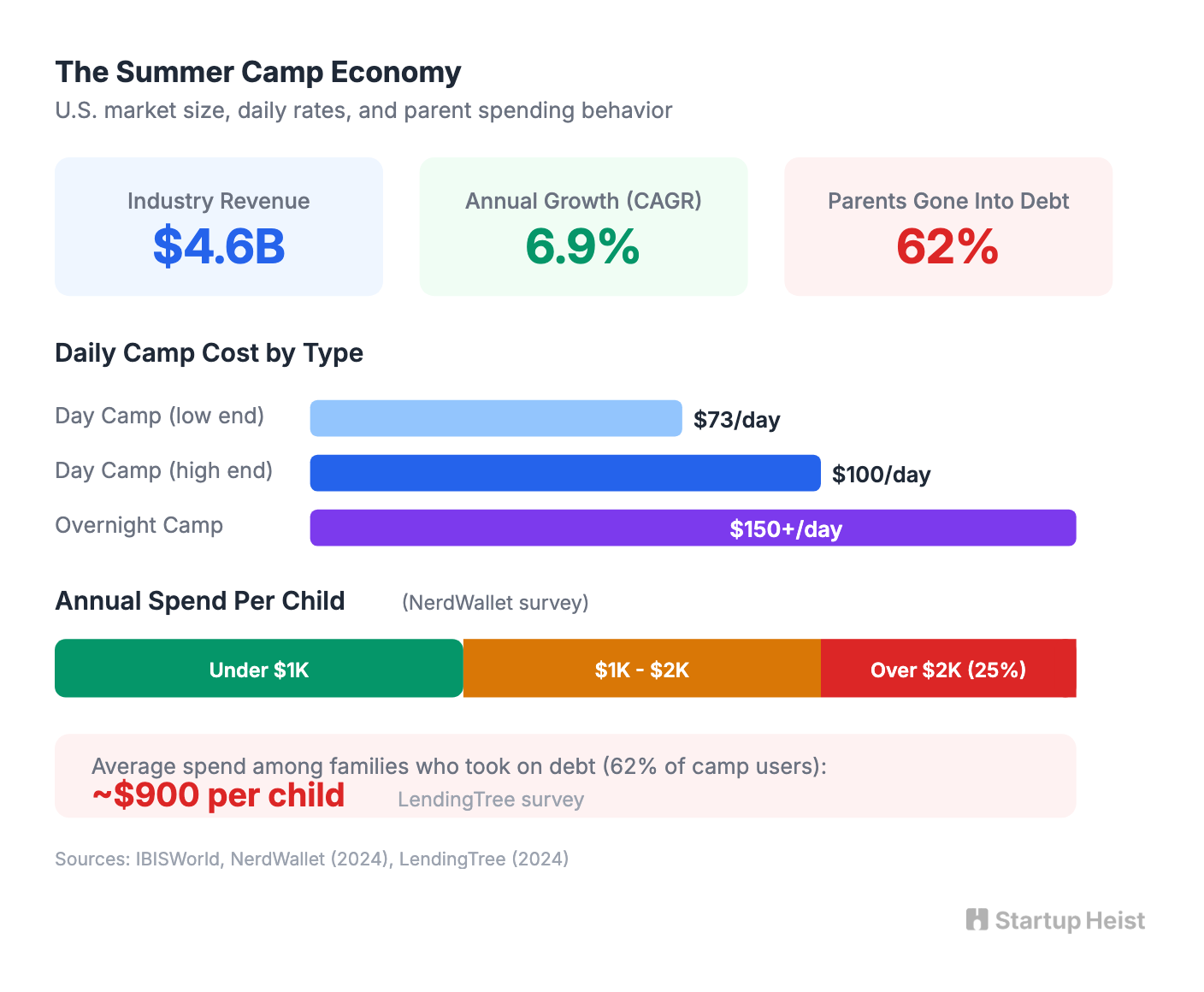
The U.S. summer camp industry generates roughly $4.6 billion in annual revenue across nearly 6,000 businesses, growing at a compound annual rate of 6.9%. A NerdWallet survey found 25% of parents spend over $2,000 per child on summer camp. Seventeen percent said they'd consider going into debt to cover it. A LendingTree survey put it more starkly: 62% of parents who used summer camps have gone into debt, spending nearly $900 per child on average. Day camp averages $73 to $100 per day depending on metro and program type. Overnight camps push past $150.
Then add the time cost. Parents spend hours researching camps that fit schedule, budget, and interests, often starting months before summer. Many families begin securing summer childcare before the previous calendar year ends. When families are spending that much money and that much time, a planning layer is insurance against wasted summer weeks.
The parent-side gap
CampDoc, ACTIVE Network, Regpack, and similar camp management software tools help camps run their own registration stack: enrollment, payments, sessions, internal waitlists. None of these tools solve the parent's actual workflow. A parent planning summer in any metro might compare YMCA camps, private arts programs, rec department sessions, museum camps, coding camps, and neighborhood day camps within the same month. Those are scattered across different portals, policies, and registration clocks. Camp software is camp-centric. The pain is cross-camp.
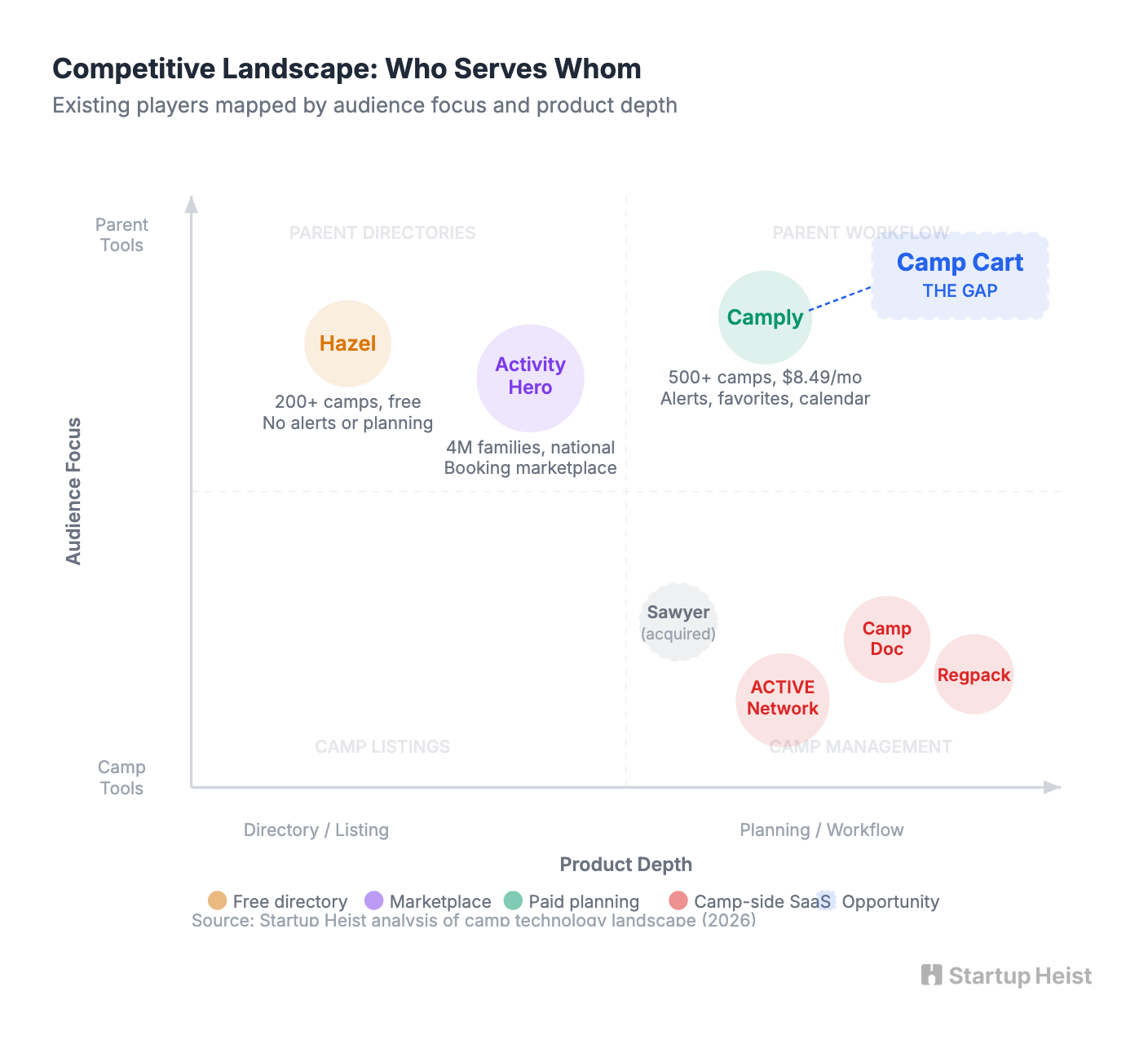
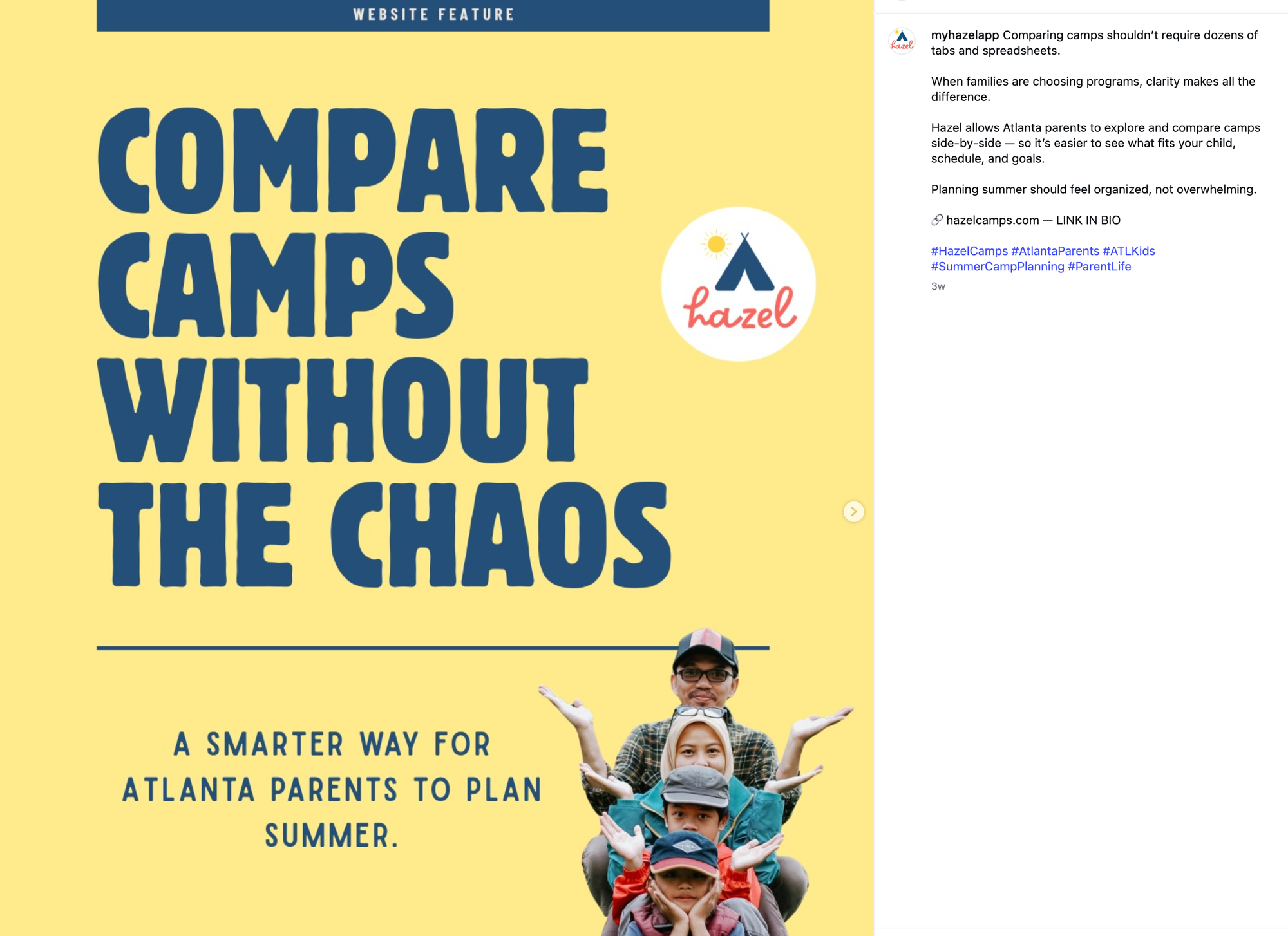
A few companies have started chipping at the edges. In Atlanta, Camply lists over 500 metro camps and charges $8.49 per month for planning features: favorites, calendars, registration alerts, shareable planning. Camply deliberately chose a website over a mobile app after parents said they didn't want another app for something seasonal. Hazel, also Atlanta-based, indexes 200-plus camps searchable by theme, location, and age, but it's a free directory with no alerts or planning tools. ActivityHero has grown to 4 million families nationally as a camp discovery and booking marketplace, though its revenue model is provider-side: camps pay to list. Sawyer raised $23 million to become the "OpenTable of kids' activities" before being acquired by DaySmart Software in October 2023, but Sawyer was always a tool for camps to manage enrollment, not for parents to coordinate across camps.
The pattern across all of these: none of them own the parent's cross-camp planning workflow. The directories list camps. The marketplaces help camps sell. Nobody tells a parent what to do when their first-choice camp fills at 9:02 a.m. on registration day.
Camp Cart sits above all of it. Think Shopify versus Honey. One runs the store. The other helps the buyer navigate the market. Camp Cart is the buyer's tool: a parent-owned operating layer that centralizes camp discovery, tracks registration windows, stores kid profiles, flags policy differences, and helps families move faster when registration opens. Once you own the local demand graph, you sell a lightweight waitlist-yield and cancellation backfill tool to camps themselves.
The MVP
Parents don't need another camp directory. They need a tool that collapses a messy, multi-week decision into an executable plan. The MVP covers four workflows:

Unlock the Vault.
Join founders who spot opportunities ahead of the crowd. Actionable insights. Zero fluff.
“Intelligent, bold, minus the pretense.”
“Like discovering the cheat codes of the startup world.”
“SH is off-Broadway for founders — weird, sharp, and ahead of the curve.”


