


The Office Focus Pouch
A photo on X did the marketing for an entire category.
In early March 2026, Palantir's head of strategic engagement posted a picture of a Lucy-branded nicotine pouch vending machine inside the company's Washington, D.C. office, stocked with pouches free for any employee or guest over 21. Fortune covered it. Slashdot covered it. The Wall Street Journal covered it. Within a week, "tech companies are giving workers nicotine to make them work harder" was a national story.
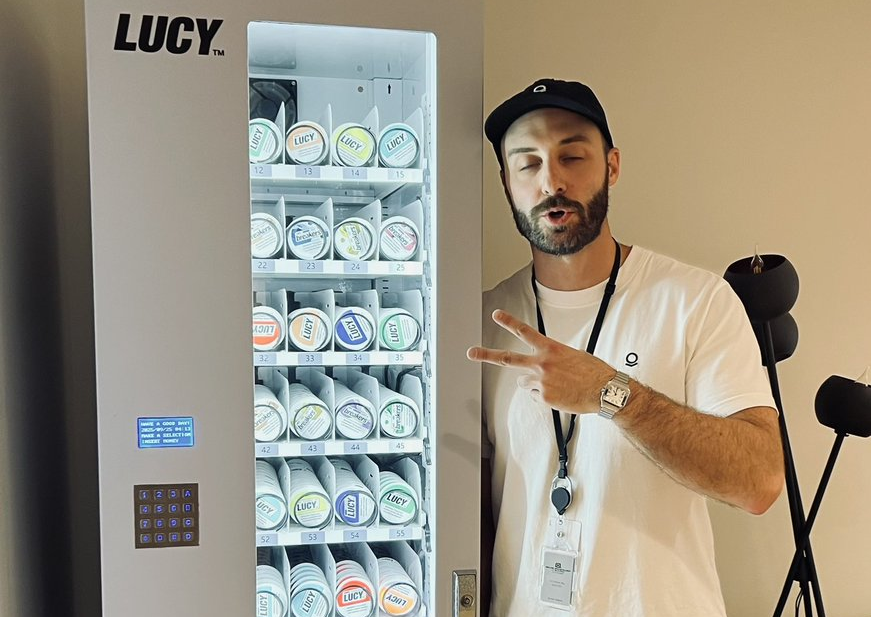
The framing wasn't smoking cessation. It was focus and performance.
Starting another nicotine pouch company is the wrong move. That trade is crowded, regulated as a tobacco product, politically loaded, and dominated by players with more capital and legal patience than any solo founder should want to fight. ZYN's parent, Philip Morris International, just won the first-ever FDA marketing authorization for nicotine pouches in January 2025 across 20 products. Lucy and Sesh are venture-backed and well past the seed stage. Sesh alone raised more than $40 million from Joe Lonsdale's 8VC, with Post Malone, Diplo, and Andrew Schulz on the cap table.
The opening is the ritual itself, separated from the liability. Build a B2B office focus pouch subscription: nicotine-free oral pouches with caffeine, L-theanine, and B vitamins, sold to startups and tech-forward offices as the clean, sugar-free alternative to the new "productivity nicotine" trend.
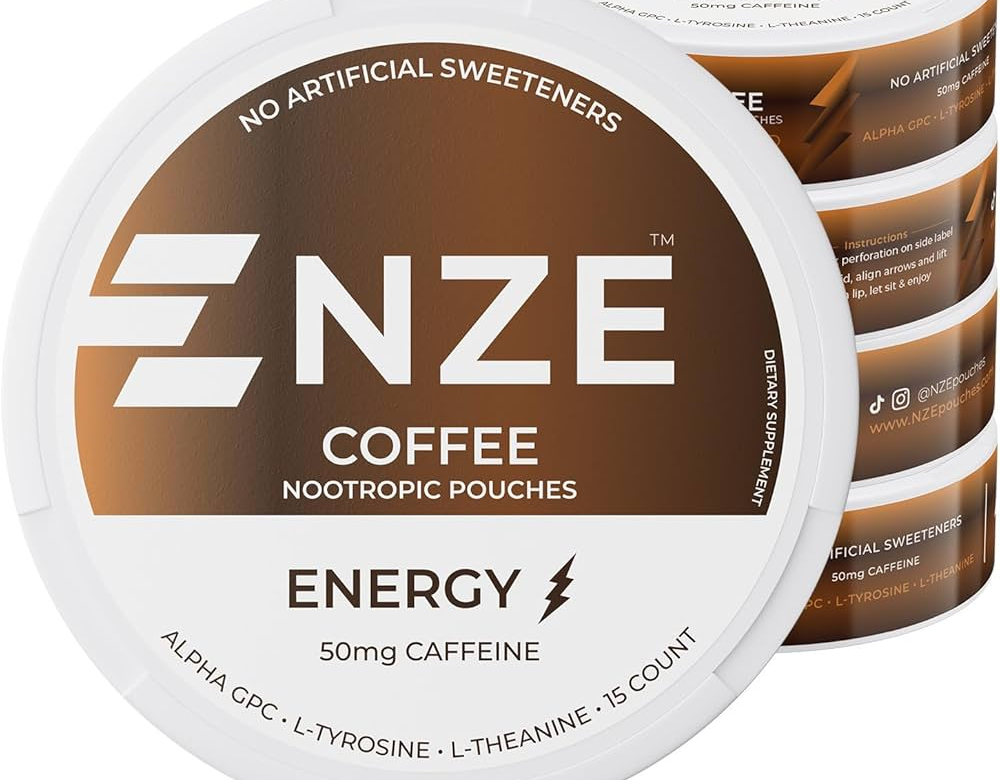
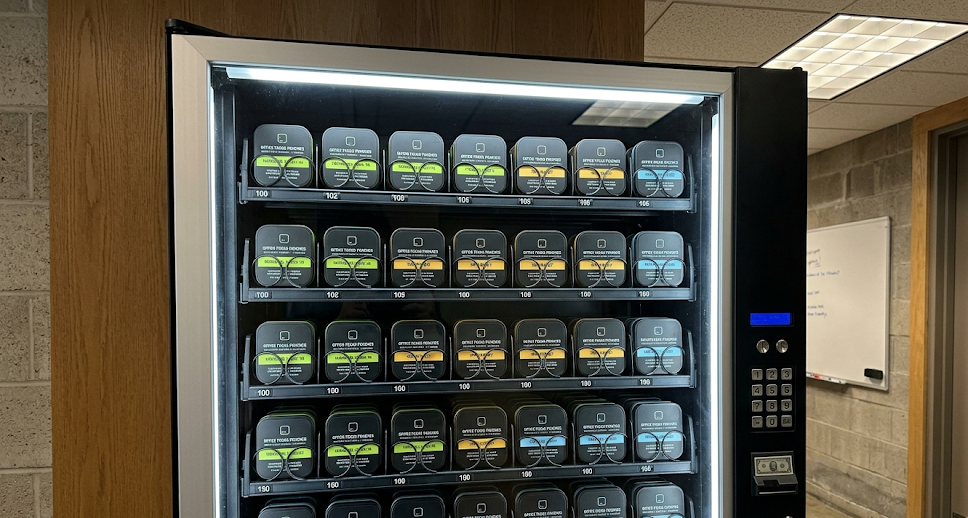
No tobacco. No nicotine. No 21+ vending machine. No HR memo explaining why the company is officially handing out an addictive stimulant. Just a small tin on the snack shelf that says "3pm Reset."
This isn't a venture-scale company on day one. It's a sharp micro-CPG wedge with real timing, simple distribution, and a plausible path to $20k–$80k MRR if executed well. The bigger upside comes later, if the brand can own the workplace focus ritual before Industrious or SnackNation notices.
Here's the opportunity:
The money: 200 small offices at $300/month is $60k MRR. 500 at $250/month is $125k MRR. SnackNation already moves $249 boxes monthly.
Inside:
• Three-SKU MVP and copacker shortlist
• Office subscription pricing tiers that survive use
• Cold email and DM scripts that work
• Four moats and the 90-day execution plan
Why The Window Is Open Right Now
The tech office has always absorbed whatever the founder class turns into a performance ritual. Cold brew became infrastructure. Athletic Greens turned supplement powder into a morning identity. Soylent became a meal-replacement personality. ZYN turned the nicotine pouch into a discreet productivity tool instead of a tobacco product.
The pouch format works in offices because it's quiet, portable, and invisible. No fridge, no cup, no shaker bottle, no meeting interruption. You park it in your lip, keep typing, and nobody knows.
That's why nicotine pouches spread quickly through engineering teams, and also why nicotine can't be the official version. A company can tolerate employees bringing their own ZYN. Stocking it is a different act. Now it's not private behavior. It's an employer-endorsed stimulant, with the FDA and 50 state attorneys general watching. The enforcement record is real: in April 2024, the FDA issued 119 warning letters and 41 civil money penalty complaints over underage sales of flavored ZYN.
Even a healthcare founder couldn't resist the format. Alex Cohen, founder of Austin-based AI healthcare startup Hello Patient, stocked a nicotine pouch fridge in the office and posted it to social media with the caption "We're hiring." He said he "accidentally got addicted" after going through two to three pouches a day, then told Fortune the addiction line was "intentionally hyperbolic." He still uses them. At work.
If the founder of a healthcare company is going through three pouches a day, the buyer for an office-safe alternative isn't theoretical.
The Adjacent Players
Three groups already operate in the neighborhood, and none of them own the wedge.
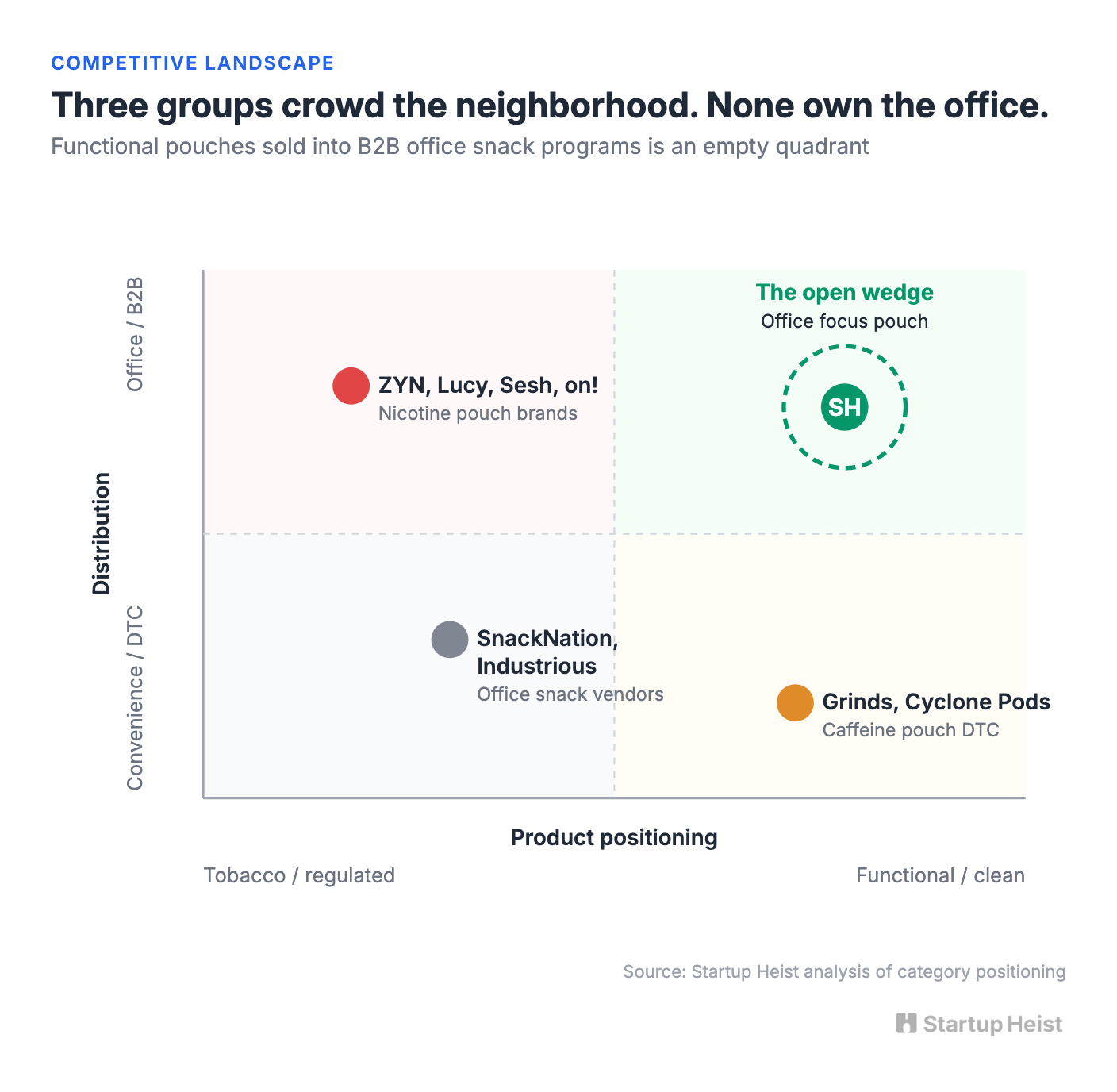
Nicotine pouch brands like ZYN, Lucy, Sesh, and on! have the format and the cultural moment, but their advantage is also their cage. They look exciting when the press calls it "Silicon Valley's new productivity perk" and toxic the moment the framing shifts to "companies are dosing workers with addictive substances to extract more output." They can't escape that gravity. Caffeine pouch brands like Grinds and Cyclone Pods sell into convenience, gym, and gas station channels — DTC supplement playbooks, not office playbooks. They aren't building the workplace ritual story. Office snack vendors like SnackNation already have the corporate relationships and the recurring budgets, but big snack companies add SKUs after demand is obvious. They won't invent the category. They'll buy it later.
So don't compete with snack vendors. Become the functional pouch layer they eventually want to carry.
The Regulatory Math
Nicotine makes this hard. Caffeine makes it manageable.
Nicotine pouches are tobacco products under FDA oversight. New entrants must clear the Premarket Tobacco Application pathway, which is slow, expensive, and not a game for a small founder. A nicotine-free caffeine pouch sidesteps tobacco law entirely. It still has to behave as a serious food or dietary supplement, but the rulebook is one most CPG founders can navigate.
Positioned as a dietary supplement, the company falls under 21 CFR Part 111, the current good manufacturing practice for supplements. Industry best practice recommends disclosing total caffeine content on labels, especially for products serving more than 100 mg per pouch. Claims must stick to structure-function language and avoid disease language. So the brand can't say "treats burnout" or "boosts cognition by 40%." It can say "caffeine + L-theanine focus pouches," "designed for your afternoon reset," "nicotine-free, tobacco-free, no crashy energy drink ritual."
Compelling copy. Much harder to get sued over. The opportunity isn't "unregulated stimulant." It's "simpler compliance than nicotine, if you behave like an adult."
The Buyer Already Has The Budget
The office snack subscription market was about $3.8 billion globally in 2024, projected to roughly $10.4 billion by 2033. SnackNation alone charges around $249 per box, multiple boxes per month for a typical office. The buying motion is mature: a People Ops lead or office manager already approves a snack PO every month and hates having to justify it.
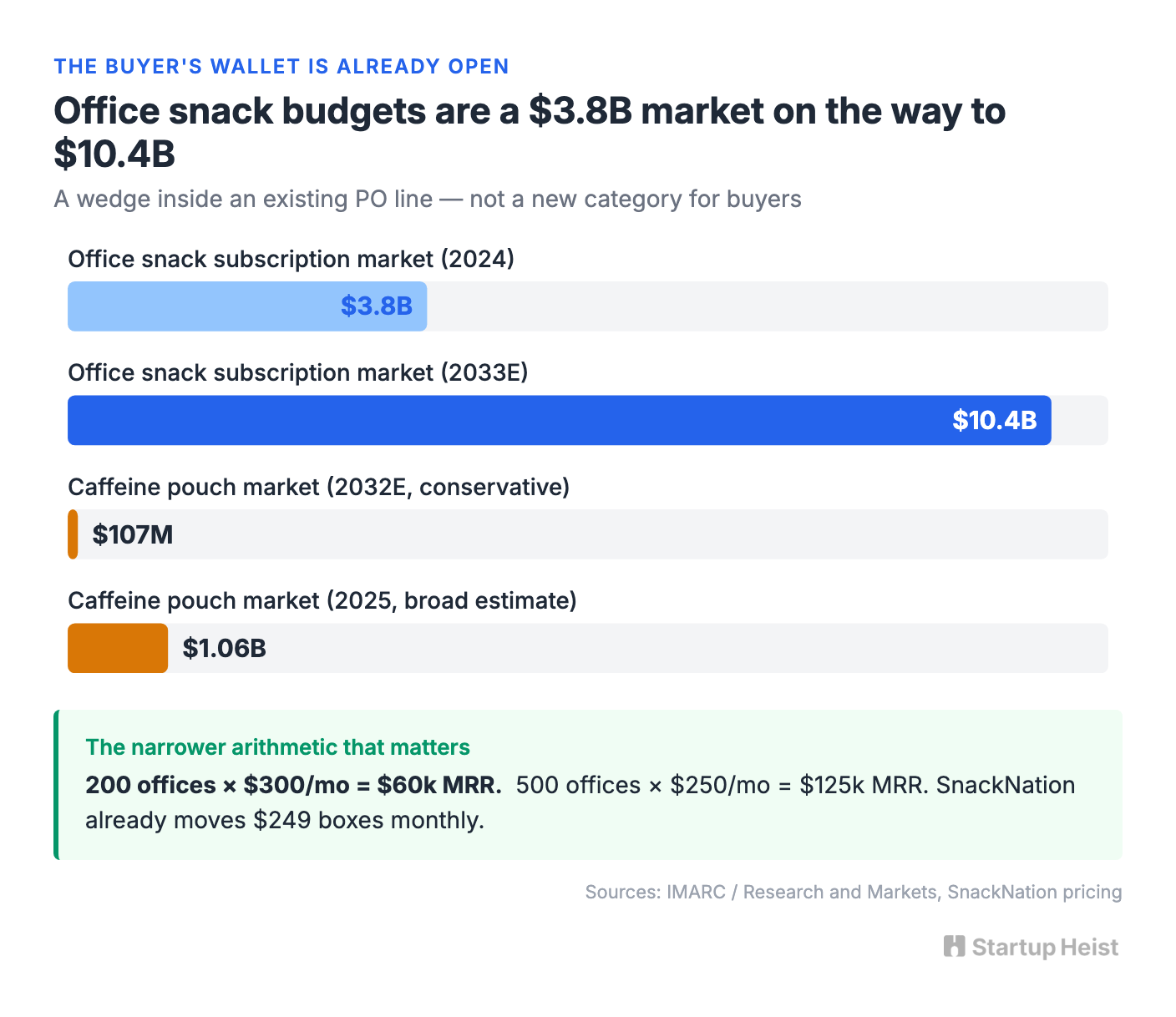
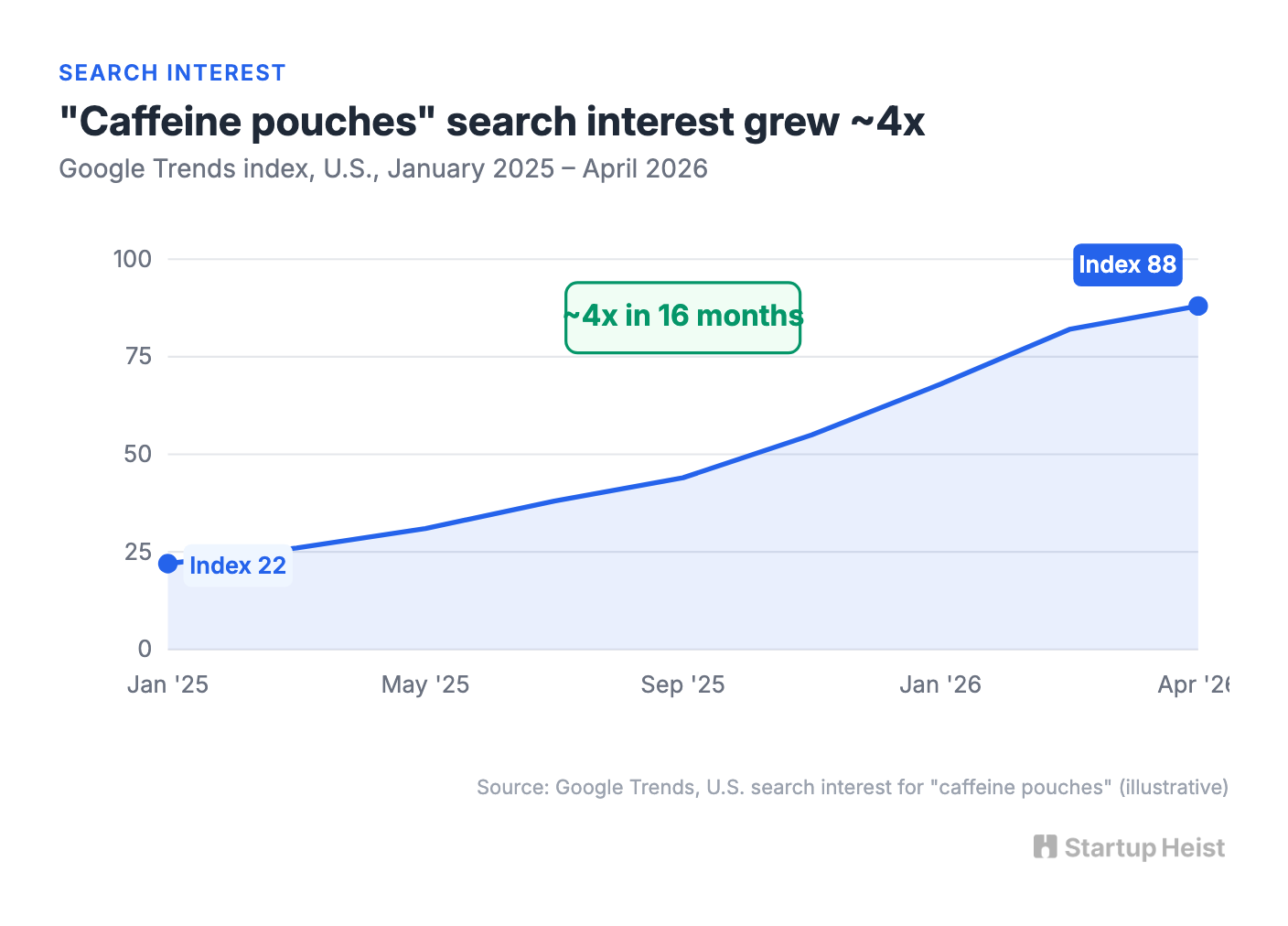
Caffeine pouches are still niche. Estimates vary wildly. Research and Markets pegs the broader caffeine energy pouch market at $1.06 billion in 2025; more conservative analysts put it at $67 million growing to $107 million by 2032. Google Trends shows search interest in "caffeine pouches" growing roughly 4x between January 2025 and April 2026.
The spread tells you not to build the pitch on a giant TAM slide. The real arithmetic is narrower: 200 small offices paying $300/month is $60k MRR. 500 offices paying $250/month is $125k MRR. No mass retail required. Just a tight brand, reliable fulfillment, and disciplined outbound to a buyer category that already has the credit card out.
The Palantir story has already done the cold open. Now somebody has to build the answer.
The MVP
The mistake would be launching with six flavors, a vending machine, a Slack app, a founder community, and a manifesto about human performance.
The MVP should be boring. One product line. Three SKUs. One buyer. One purchasing flow.
Three SKUs at launch:
Unlock the Vault.
Join founders who spot opportunities ahead of the crowd. Actionable insights. Zero fluff.
“Intelligent, bold, minus the pretense.”
“Like discovering the cheat codes of the startup world.”
“SH is off-Broadway for founders — weird, sharp, and ahead of the curve.”


