


In 2011, two Harvard researchers asked 266 people to book flights on a fake travel website. Some got results instantly. Others sat through up to a minute of the site visibly "working," airline names scrolling past one at a time. The results were identical.
The people who waited liked the site more.
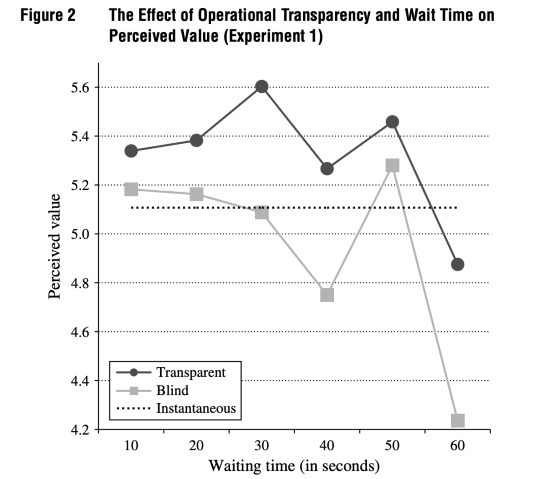
Ryan Buell and Michael Norton called it the labor illusion. When a service shows you its effort, you value it more, even when the effort buys you nothing. In their data, watching the work raised the perceived value of the exact same result by about 8%.
Kayak still scrolls airline names while it searches. Domino's built an entire tracker so you can watch someone named Carlos lay pepperoni on your pizza. The pizza arrives no faster. You just trust it more, because you saw a human sweat over it.
So why is the entire AI industry sprinting the other way?
Every answer online is instant now, and shoppers have started reading instant as cheap. Today's idea sells the opposite signal: a Shopify widget that drops a small badge next to Add to Cart. Not sure? Ask a real person. Average reply: 7 minutes. That wait is the labor illusion working for you.

The numbers behind it:
- Shoppers who use live chat convert at 2.8x everyone else.
- 79% of Americans still want a human when the question involves judgment.
- Nobody is selling that human presence as a conversion tool yet.
You start with one category. Run $750 pilots on footwear brands' highest-friction pages, then move merchants onto $499 to $3,000 monthly plans. Do the math: 200 merchants at $750 a month is $1.8M ARR, and 1,000 gets you to $12M. The software takes about six weeks to build, and the category has no owner.
Read the full playbook here:

AI handles the easy questions. This $499–$3,000/month Shopify widget captures the sales lost when shoppers need a real person — and nobody’s selling that layer yet.
From the Vault:

GLP-1 prescriptions doubled in 18 months, but most patients get no fiber or symptom guidance between visits. A narrow clinic workflow tool is the opening no consumer tracker owns.

The U.S. has no equivalent to the UK’s Settld. A state-focused aftercare portal for independent funeral homes and estate attorneys could reach $10–20K MRR with 20 pilot locations.


