


In 1998 a rabbi in Los Angeles had a logistics problem. The young Jewish singles in his community were scattered across a giant car-dependent city with no good way to find each other. So Yaacov Deyo pulled a few friends into his living room to brainstorm, one of them a game-show producer (of course). What they came up with was rows of tables, timed conversations, and a Purim noisemaker to tell everyone when to switch partners. They ran the first one at a Peet's Coffee in Beverly Hills.

Within a year the format had escaped the Jewish community entirely. Deyo trademarked "SpeedDating," but you can't patent a party, so it spread to every bar on earth without him. The whole invention fit in a duffel bag: a seating chart, a timer, a noisemaker.
Twenty-eight years later you can buy event matchmaking software for $19.99. So why did a photo booth in Union Square have a line down the block?
That machine appeared outside a Manhattan taco shop this July. Answer 26 questions, pay $10, and it prints a strip with your photos on one side and a stranger's face on the other. That's your match. You can't message them, and you can't scroll past them hunting for someone better. By early August it had matched roughly 3,500 people.
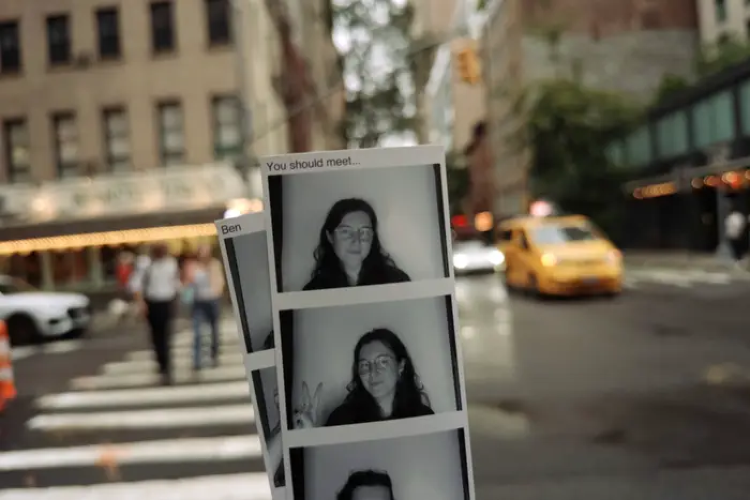
Today's featured idea is the layer underneath that booth. The matching software is a commodity, so the money sits in the reveal: a white-label system that lets any event organizer match a room full of strangers and stage the payoff live. Founder dinners, weddings, conferences, festivals. You price it like a photo booth, $800 to $1,500 a night, instead of like software, because nobody expenses a SaaS seat and everybody expenses an activation. Managed activations build to $18K a month, and 75 licensed operators at $300 each is $22,500 in MRR.
Read the full playbook here:
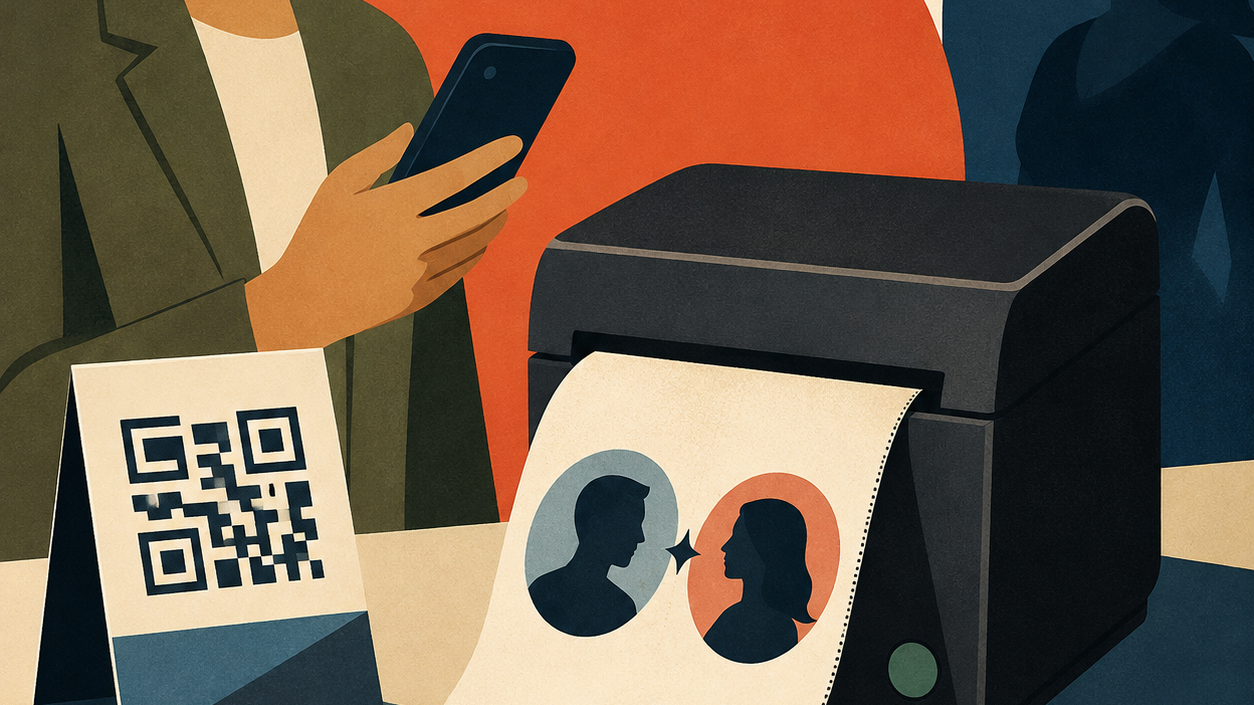
A Union Square photo booth matched 3,500 strangers with printed receipts. Event matchmaking software sells for $19.99; the staged reveal that organizers actually book bills like a photo booth.
From the Vault:

Shopify merchants see AI referral traffic from ChatGPT and Perplexity convert 50% better than search, with no idea what those shoppers were actually trying to buy.

Shark's $149.99 ChillPill became Europe's summer status object, with TikTok Shop sales up 1,200%. Owners want theirs personalized, and nobody sells the attachment point Crocs proved is worth $271M.


