


Every feed looks the same right now. Loud hooks, fast cuts, someone talking into a ring light with the energy of an auctioneer. It works — until it doesn't. And for a growing slice of DTC and premium brands, it has stopped working.
Here's the content agency idea most people overlook: silent, texture-forward, ambient product video holds attention in places where shouty UGC has burned out. The creative itself is easy to copy. What isn't easy to copy is a Calm-First Funnel — a repeatable system that replaces high-arousal, trend-chasing creative with low-stimulation performance assets engineered for watch time, saves, and repeat exposure, then proves the results with data.
A solo operator packaging calm creative into structured shoot-and-edit bundles can hit $10–30K/month with spec-first outbound and tight positioning.
Layer in a monthly retainer — testing, fresh assets, performance reporting — and a book of 5–8 clients puts you at $30–48K/month in recurring revenue. That's a real media production business idea with margins that most service agencies would kill for, reachable within 6–12 months if you pick the right vertical and sell outcomes instead of aesthetics.
Why Now: Three Forces Converging
Platforms are paying for retention, not virality. Instagram serves roughly 3 billion monthly active users with Reels as its primary growth engine. YouTube Shorts clocks around 200 billion daily views. Instagram's algorithm now explicitly prioritizes watch time, likes-per-reach, and sends-per-reach as its three core ranking signals — and Reels Insights now surfaces DM shares directly, meaning privately shareable content carries real algorithmic weight. Adam Mosseri has confirmed that the first three seconds are a pass/fail gate: if viewers don't stay past that threshold, the algorithm buries the Reel regardless of follower count. The old playbook — loud hooks, fast cuts, energetic voiceover — still works at scale. But differentiation is getting more expensive when everyone runs the same format. Content that holds attention through visual rhythm, texture, and ambient pacing can achieve comparable retention without competing in that crowded lane.
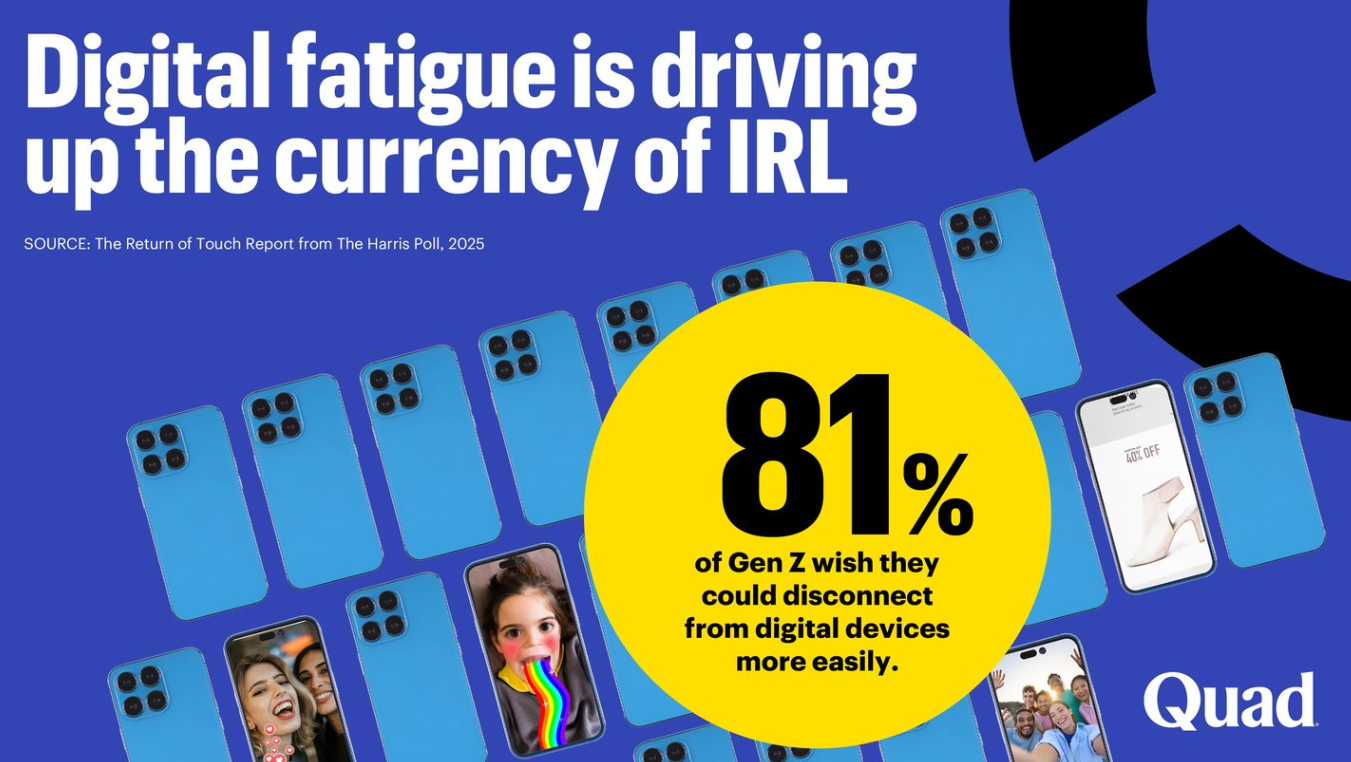
"Slow social" is real consumer demand. A 2025 Harris Poll/Quad study found 81% of Gen Z say digital detoxes should be routine and that they wish it were easier to disconnect — and a large majority prefer brands that blend tech with more controlled, physical experiences. The industry is seeing a broad shift toward intentional, crafted, slower content, with strong predictions of a rise in creators who offer calm. This is a behavioral shift driven by content fatigue across demographics, not a niche aesthetic trend.
Sensory marketing has proven the economics. The global ASMR content market hit $1.42 billion in 2024 and is projected to reach $5.21 billion by 2033 at a 16.8% CAGR. IKEA's 25-minute ASMR product ad drove a 5% lift in both in-store and online sales. Peer-reviewed research confirms ASMR-style sponsored content can measurably improve brand perception — though it can backfire for audiences who don't respond to the sensation. The opportunity isn't "make everything whispery." It's segmenting, testing, and deploying calm creative where it actually wins, then measuring the delta against a brand's existing baseline.
The Actual Business: Sell the System, Not the Aesthetic
A "silent video studio" is easy to copy and hard to defend. A Calm-First Funnel is harder to replicate because it's a packaged creative operating system with three layers:

Unlock the Vault.
Join founders who spot opportunities ahead of the crowd. Actionable insights. Zero fluff.
“Intelligent, bold, minus the pretense.”
“Like discovering the cheat codes of the startup world.”
“SH is off-Broadway for founders — weird, sharp, and ahead of the curve.”


