


Every hardware founder hits the same wall. CAD software is cheap. Crowdfunding is cheap. But turning a file into a physical part still requires emailing five shops, chasing quotes for two weeks, praying the tolerances hold, and wiring money to a supplier you found on Alibaba at 2 a.m. The internet collapsed the cost of designing products but barely touched the cost of making them. That gap between "designed" and "delivered" is one of the best B2B startup ideas hiding in plain sight.
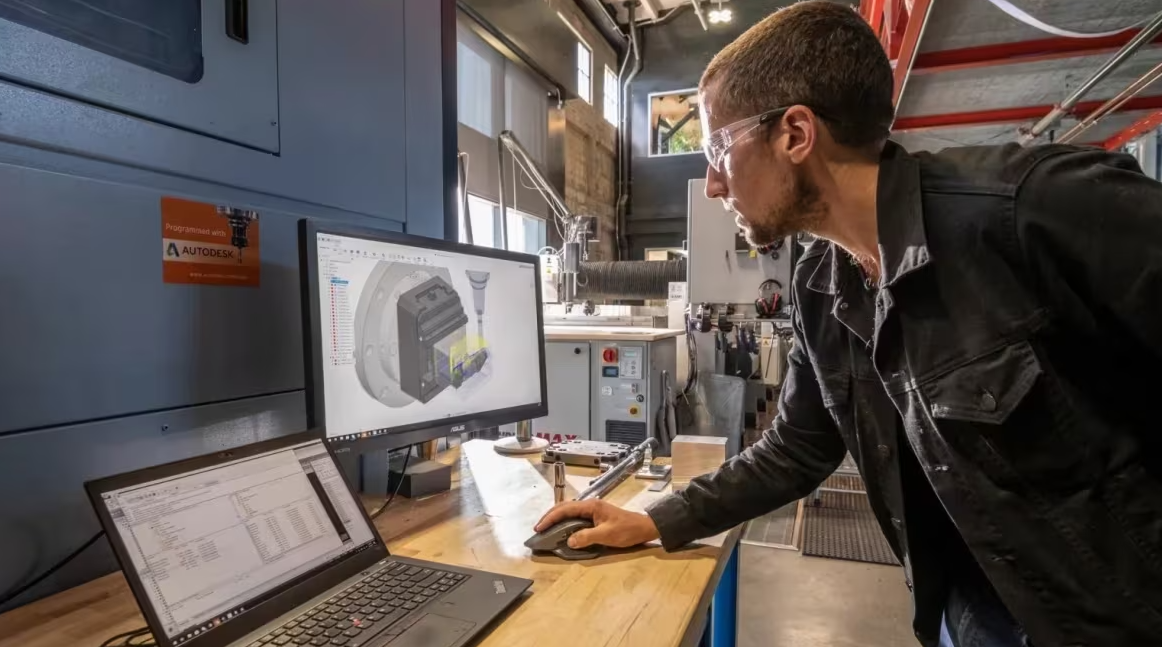
A single CNC job routed through a vetted Monterrey shop nets $600–$1,000 in gross margin after QA, customs, and logistics.
Scale to 20 jobs per week — realistic within the first year if you land a few design agencies and repeat hardware buyers — and you're clearing $50K–$80K in monthly gross margin on a 10–20% take rate.
The custom manufacturing market globally is approaching $1 trillion. Xometry alone posted $630 million in marketplace revenue last year with 30% growth. Nobody owns the nearshore manufacturing corridor between the U.S. and Mexico for small teams. That's the opening.
The opportunity is a managed manufacturing layer — upload a CAD file, get a fast RFQ, route work to vetted Mexico shops, and wrap the whole thing in QA, escrow, and cross-border logistics. Stripe didn't build banks; it built the API layer that made payments invisible. Same concept, applied to physical production.
Why Mexico. Why now.
Mexico closed 2025 with a record $40.9 billion in foreign direct investment, up roughly 11% year over year and its fifth consecutive year of growth. New investments surged 133% to $7.38 billion, signaling fresh project commitments beyond reinvested profits. Manufacturing captured the largest share at 37%, concentrated in corridors like Monterrey and Querétaro. Mexico's business council for foreign trade projects exports will hit $700 billion by 2026, with about 90% in manufactured goods — driven by nearshoring strategies that prioritize proximity over price.

Big multinationals relocating to Mexico have procurement teams and existing supplier relationships. Hardware startups, indie product teams, and small U.S. OEMs do not. They want the nearshoring advantage — same time zone, ground shipping under 48 hours, USMCA tariff benefits on qualified products — without becoming cross-border manufacturing experts. And with the 2026 USMCA review introducing policy uncertainty, demand for a trust-and-ops layer that absorbs that complexity keeps growing.
Three forces are converging:
Demand pull. U.S. hardware teams want nearshore alternatives now. Asia lead times remain long, trade policy keeps shifting, and 25% tariffs on goods outside USMCA coverage have a way of focusing minds.
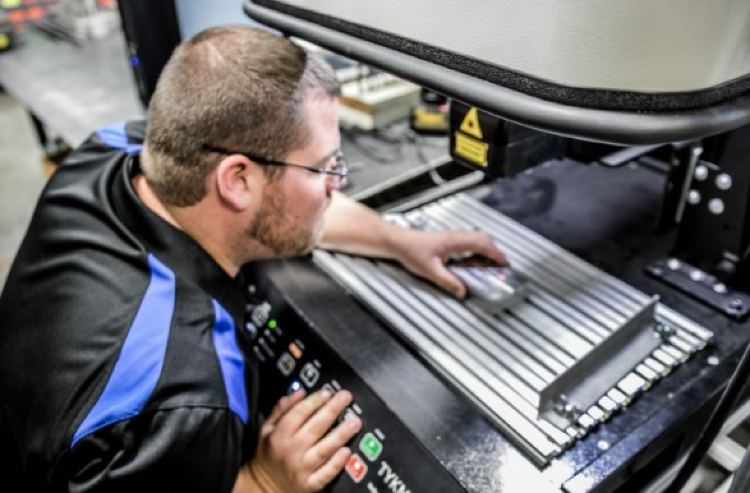
Workflow expectations are already set. Platforms like Xometry and Protolabs trained buyers to expect "upload CAD, get quote." The market doesn't need education. It needs a better lane.
Supply push. Mexican shops want consistent U.S. demand but lack an English-language sales motion, standardized quoting, and payment assurance. Workflow and trust are your wedge.
The competitive map
The on-demand manufacturing space has real incumbents.
Xometry is the gorilla — roughly $687 million in total 2025 revenue, with $630 million from the marketplace alone, over 80,000 active buyers, 5,000+ global suppliers, and an AI quoting engine that prices parts in seconds. Scaling toward $1 billion.
Protolabs runs a hybrid model — in-house automated facilities for speed, plus a partner network for overflow. Simple parts ship in as little as one day.
Fictiv operates a managed marketplace with roughly 300 partners, rigorous vetting, on-the-ground quality employees, and DFM feedback. Around $200 million raised in private markets.
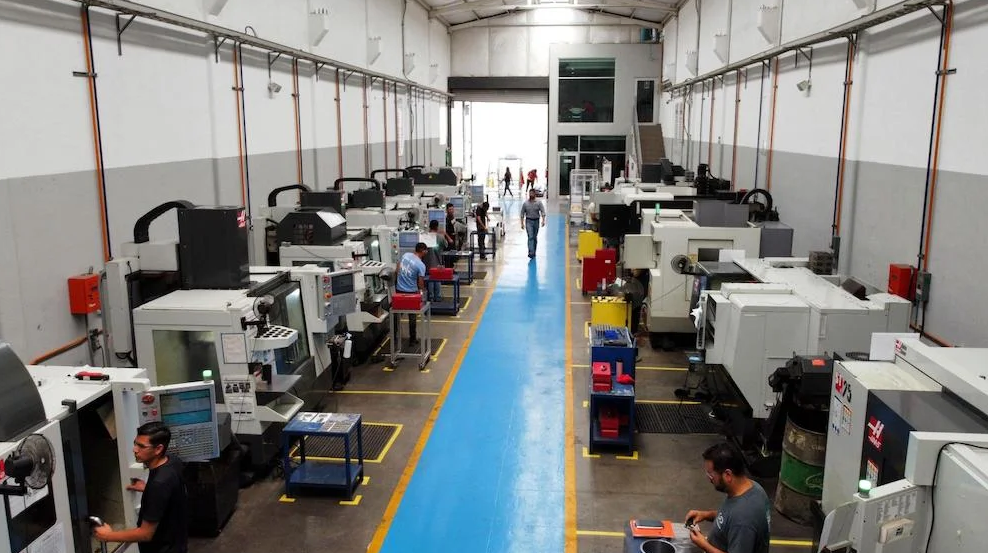
All three are global generalists. They route jobs worldwide based on capability and price. None are purpose-built for the Mexico nearshore corridor. None specialize in the cross-border pain points — customs documentation, Incoterms handling, bilingual QA, peso-denominated supplier payments — that make nearshoring hard for small teams.
The wedge: become the Mexico nearshore specialist.
You win by being faster (same time zone, ground shipping), more predictable (standardized QA and cross-border compliance baked in), more accessible (low MOQs and founder-friendly terms), and cross-border fluent (customs paperwork, USMCA qualification, bilingual coordination handled for the buyer).
A corridor specialist can build a denser, more intimate supplier network — 20 to 50 high-trust shops with deep knowledge of their machine lists, utilization, and operator strengths — instead of managing thousands of thin relationships globally. That density is what lets you route smarter and deliver faster than the generalists on this specific lane.
What you're actually selling
Don't sell a marketplace. Sell risk removal.
Unlock the Vault.
Join founders who spot opportunities ahead of the crowd. Actionable insights. Zero fluff.
“Intelligent, bold, minus the pretense.”
“Like discovering the cheat codes of the startup world.”
“SH is off-Broadway for founders — weird, sharp, and ahead of the curve.”


