


On February 10, 2026, Judge Jed Rakoff of the Southern District of New York ruled for the first time in any court that a criminal defendant's conversations with a consumer AI tool were not protected by attorney-client privilege or the work product doctrine.

The case: United States v. Heppner. Bradley Heppner, a Dallas financial services executive facing securities and wire fraud charges, used the consumer version of Claude to prepare legal defense strategies. He fed information from his lawyers at Quinn Emanuel into the tool, generated 31 documents, and shared them with his legal team. The FBI seized the documents from his home. His attorneys claimed privilege. Judge Rakoff rejected every argument on three independent grounds:
Strike one: An AI tool is not a lawyer. No license, no duty of loyalty, no attorney-client relationship.
Strike two: No reasonable expectation of confidentiality when the platform's privacy policy permits data collection, training on inputs and outputs, and third-party disclosure.
Strike three: Heppner created the documents on his own. His lawyers didn't direct him to use AI. Without attorney direction, work product protection doesn't attach.
The kicker: Rakoff signaled that sharing privileged information with a consumer AI may waive privilege over the original attorney-client communications upstream.
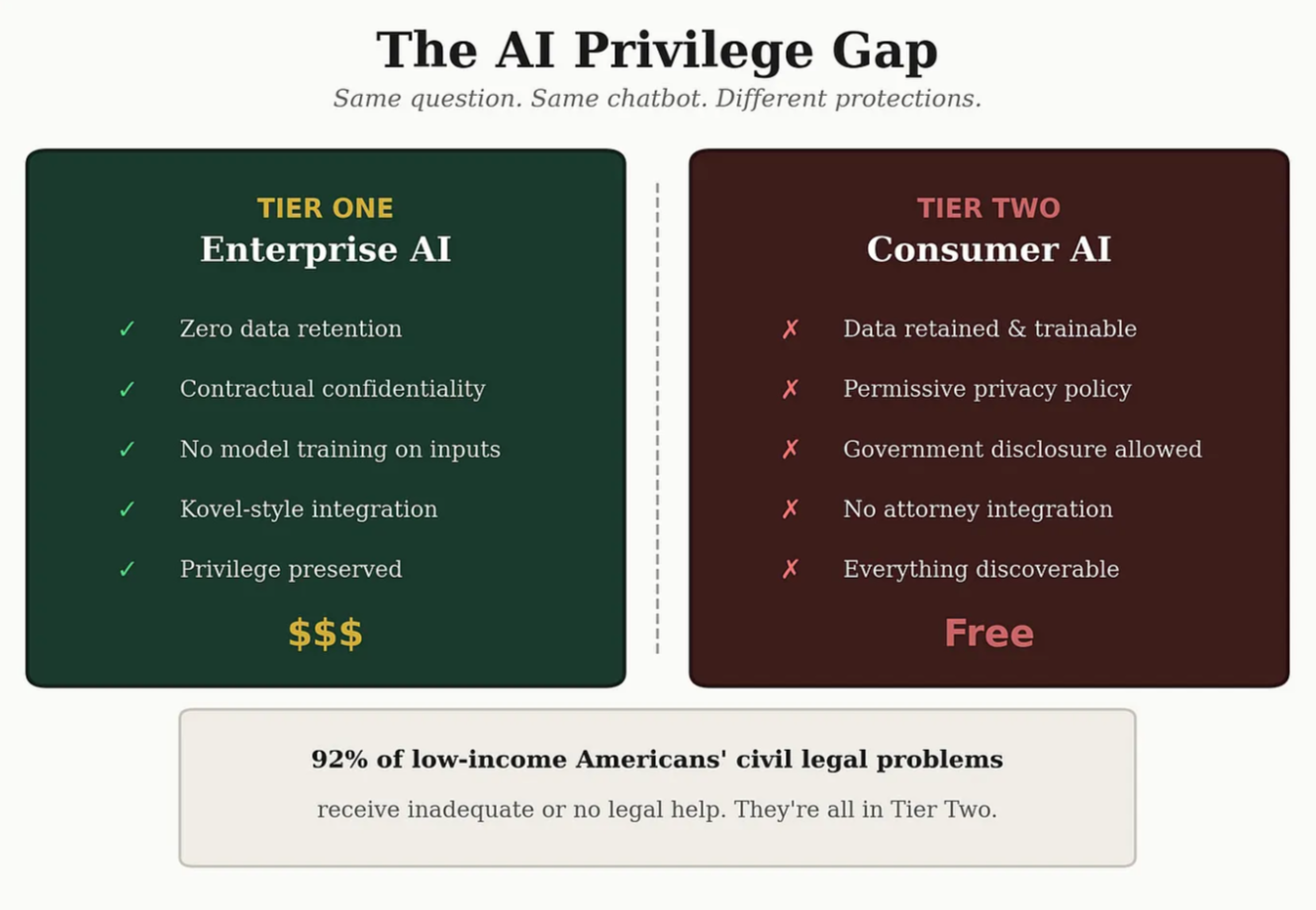
Heppner is narrower than the headlines suggest. The opinion itself invokes the Kovel doctrine—the framework courts use for non-lawyer agents operating under attorney direction—and suggests that a different fact pattern involving attorney-directed use of an enterprise platform with enforceable confidentiality terms might preserve privilege. But law firms don't buy nuance. They buy certainty. Risk committees care about what's defensible in front of a judge, and the simplest defensible answer is: "Our privileged material never left our building."
If you're hunting for AI startup ideas in legal, compliance automation tools for law firms, or micro SaaS opportunities in regulated industries, the timing here is unusually specific. The legal AI market sits at roughly $1.45 billion and is projected to reach $3.9–$12 billion by 2030, depending on whose estimate you use. Law firms increased tech spending 9.7% in 2025—the fastest real growth the industry has tracked. Yet within this boom, a specific buyer is underserved: firms, departments, and regulated entities that won't trust any external platform with privileged material, regardless of how many SOC 2 badges it carries. These buyers already purchase premium on-premise appliances for eDiscovery, data loss prevention, and hardware security modules. They're used to high-ticket capex plus maintenance contracts. Your price points fit their mental model.
The Opportunity: A Privilege Appliance, Not an AI Wrapper
Forget "legal AI" as a category label. The better frame is privilege infrastructure.
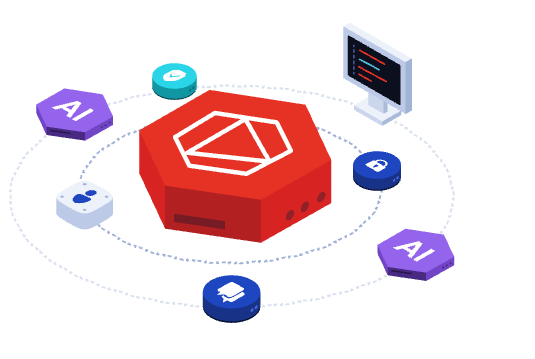
The product is an offline, air-gapped, on-premise AI appliance. A physical box running a local large language model with zero outbound network connections. No SaaS third party. No "trust us" privacy policy. Data never leaves the building.
Unlock the Vault.
Join founders who spot opportunities ahead of the crowd. Actionable insights. Zero fluff.
“Intelligent, bold, minus the pretense.”
“Like discovering the cheat codes of the startup world.”
“SH is off-Broadway for founders — weird, sharp, and ahead of the curve.”


