


Men are re-learning adornment. And brooches — small, cheap, wildly photogenic — are the loudest entry point.
The U.S. men's jewelry market hit $5.64 billion in 2024 and is projected to grow at 8.4% annually through 2034, outpacing the broader jewelry market by a wide margin. The primary demo is men 25–44, household income $50K–$150K, online-first and spending more on personal expression than any prior generation. The accessible middle of this market — between $5 Etsy pins and $6,000 Chopard heirlooms — is completely empty.
That gap is the opportunity.
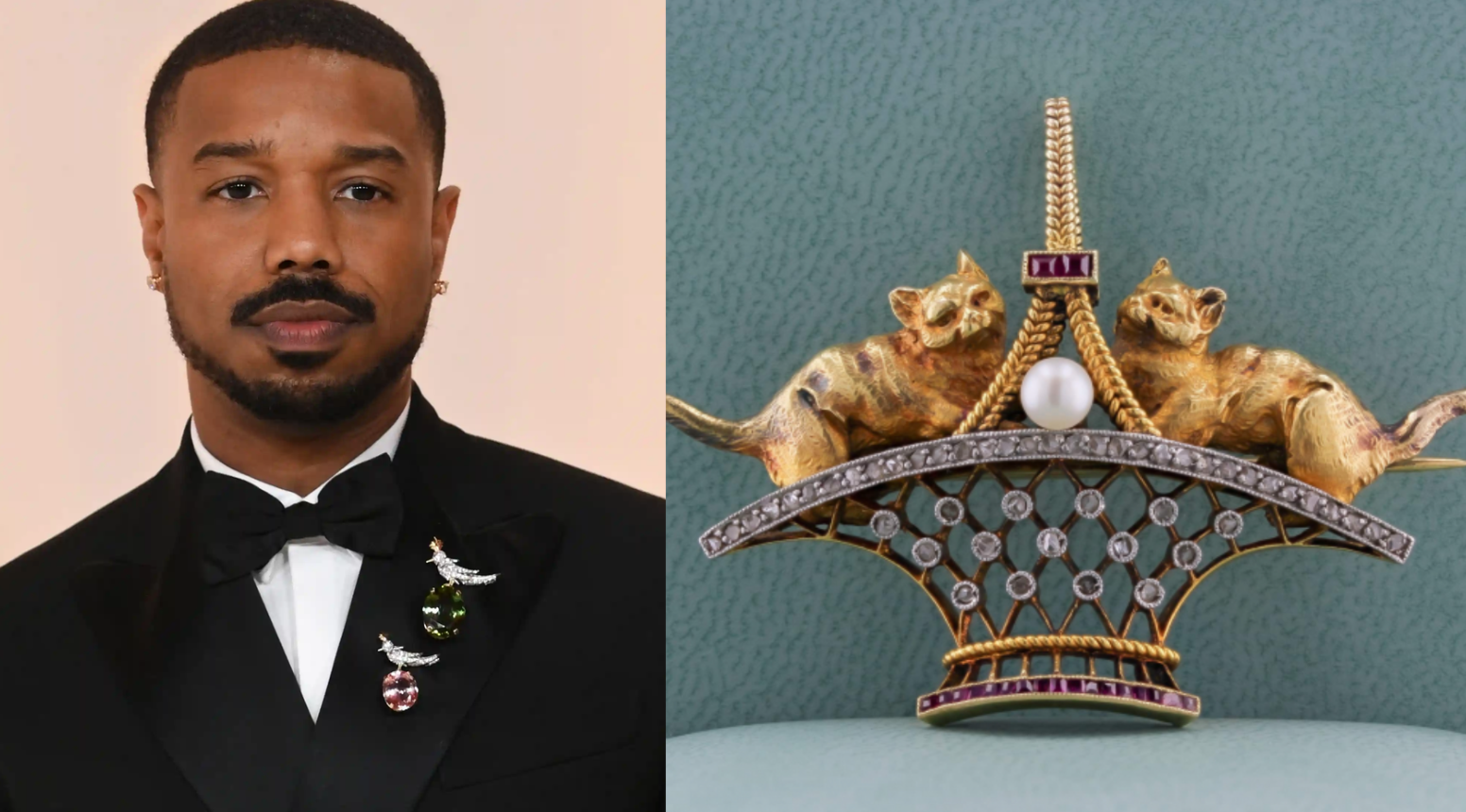
As far as men's accessories business ideas go, the startup costs are negligible, the unit economics are forgiving, and the cultural timing is about as good as it gets.
Within that wave, brooches and lapel pins are having a specific, verifiable moment. Pinterest's 2026 trend forecast — which has a strong track record of calling consumer behavior before it goes mainstream — names "Brooched" as a breakout category. Searches for "brooch aesthetic" are up 110%, "maximalist accessories" up 105%, "brooch for men suit" up 90%, driven primarily by Millennial and Boomer men. The 2025 Oscars confirmed it on the biggest stage in fashion: Omar Apollo wore a Chopard lizard brooch, Colman Domingo pinned a vintage 1956 Boucheron ribbon clip, Adrien Brody accepted Best Actor wearing a diamond bird brooch, and Kieran Culkin showed up in a Fred Leighton pin set with his family's birthstones. Variety called brooches the menswear accessory of the night.
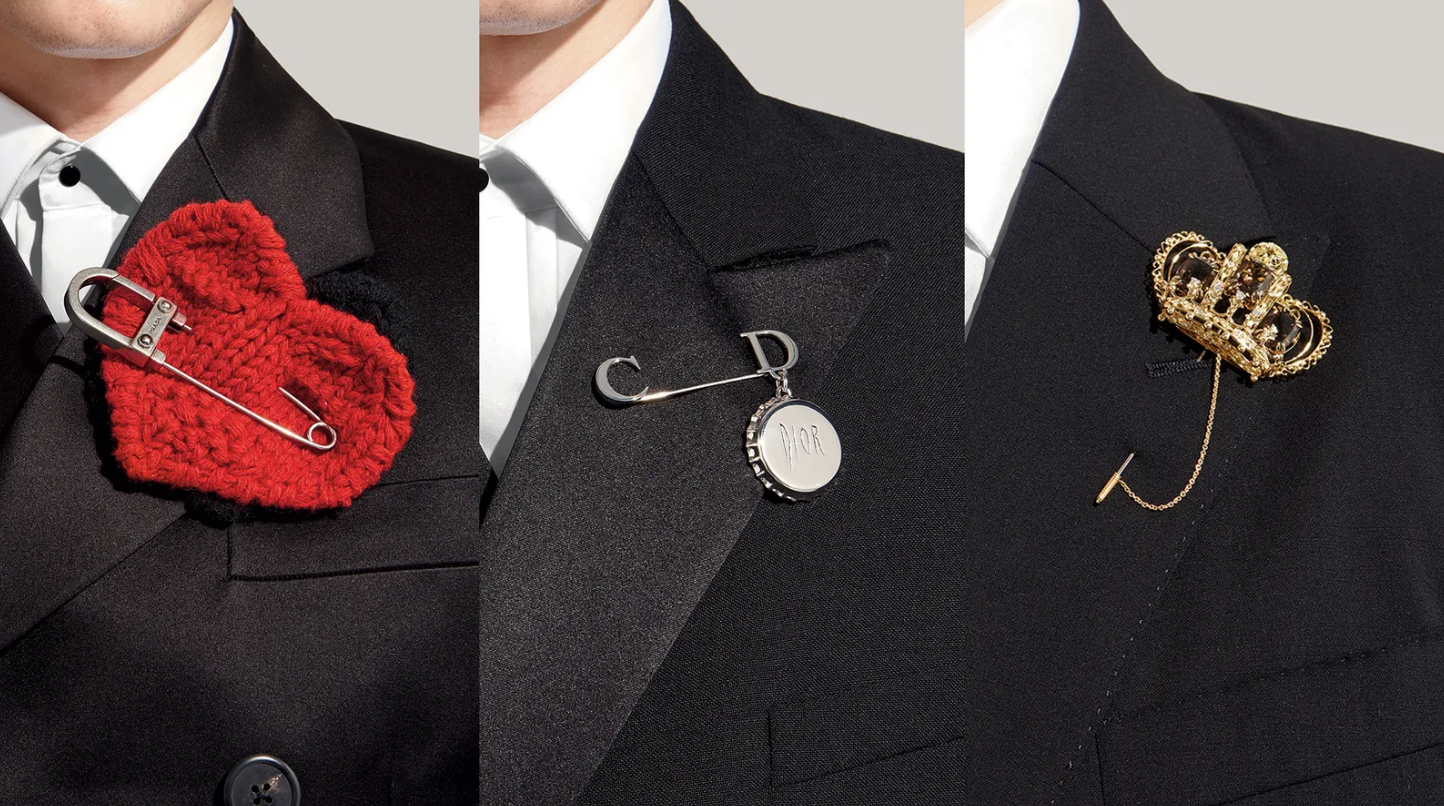
GQ ran a separate piece documenting the "brooch parade." Milan's FW 2026/27 runways leaned in further — Dolce & Gabbana showed ornate gold brooches with embedded watches, Armani added subtle lapel pins, Prada accessorized with gemstone cufflinks in lapis lazuli and tiger's eye. And Who What Wear's London Fashion Week coverage from February 2026 flagged "brooch maxxing" as one of five street-style trends dominating the city.
When a trend moves from red carpet to runway to street, and predictive search data from hundreds of millions of monthly users backs it up, you're past the validation phase. You're looking at an adoption wave.
What you're actually selling
You're selling taste, permission, and a wearable conversation starter — the kind of thing that creates organic "where'd you get that?" referrals without spending a dime on ads.
Brooches make a strong beachhead product into two durable currents: men's jewelry adoption and the shift toward vintage and resale as the default source for unique pieces. The energy mirrors early streetwear resale — fragmented market, passionate micro-communities, no clear infrastructure — with smaller items, easier fulfillment, and bigger storytelling leverage. If you've been looking for a low-risk DTC brand idea with real cultural momentum behind it, this is a category worth studying.
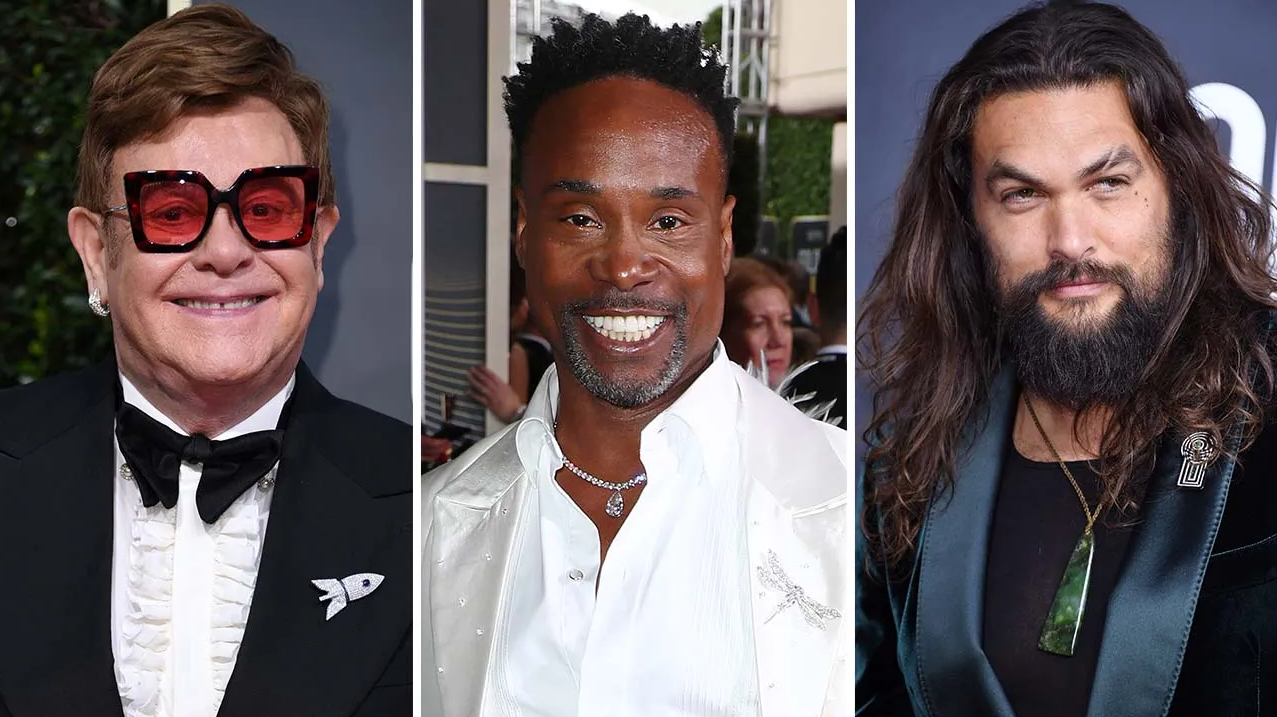
Most men who want to try a brooch face three problems.
Discovery. There's no credible men's-focused brooch brand. The market is fragmented across vintage dealers, Etsy shops, and luxury houses charging $6,000+ per piece. Nobody owns the accessible middle.
Permission. Men need to be shown how to wear this. A brooch on a product page is inert. A brooch on a denim jacket next to a blazer photo next to a hoodie shot is education. That's the unlock.
Context. When to wear it, how to pair it, what it says about you. The styling carries the product. The brooch is the vehicle.
The business model (two paths)
Unlock the Vault.
Join founders who spot opportunities ahead of the crowd. Actionable insights. Zero fluff.
“Intelligent, bold, minus the pretense.”
“Like discovering the cheat codes of the startup world.”
“SH is off-Broadway for founders — weird, sharp, and ahead of the curve.”


