


AI storyworlds are no longer a demo. They're a real entertainment business — and if you're looking for AI startup ideas that don't require a research lab or a $10M seed round, this might be the most underbuilt consumer category in the U.S. right now.
South Korea's Wrtn exited 2025 at a $70 million annualized revenue run rate, expects to surpass $100 million in 2026, and reports that average users spend roughly two hours per day inside the product. Paying-user retention sits above 70%. The company has over 5 million monthly active users across Korea and Japan, plans to enter the U.S. by mid-2026, and is targeting an IPO as early as 2028.
Those are entertainment economics. And they point to a gap that a small, taste-driven team can exploit before the window closes.
Scale to 200,000 free users with 10% conversion and you're past $240K MRR. The revenue math is aggressive but internally consistent with current companion app economics, where revenue per download climbed from $0.52 in 2024 to $1.18 in 2025.
Most attempts at this will stall. The ones that nail taste and distribution will overshoot dramatically. That's the bet.
The real wedge is genre-specific AI entertainment built for American cultural niches that already have obsessive demand and weak product infrastructure: romance, teen mystery, sports drama, creator universes, interactive fiction for fandoms. If you've been hunting for micro-SaaS ideas or creator economy business opportunities and everything feels picked over, this is a category where the product barely exists yet.
Three conditions make this viable right now:
First, people will pay for AI-native emotional entertainment. Wrtn's two-hour daily sessions mean the product is competing with streaming, gaming, and social feeds for attention. And winning time. AI companion apps had generated $221 million in cumulative consumer spending worldwide by mid-2025, with category revenue up 64% year over year. The top 10% of companion apps capture 89% of total category revenue — meaning if you win one niche, you capture the economics of that niche decisively.

Second, the raw behavior already exists in adjacent formats. Wattpad and WEBTOON's combined ecosystem reaches approximately 160 million monthly active users globally. Romance fiction alone generates over $1.5 billion in annual sales and has been the fastest-growing print book category, with 51 million units sold in the trailing twelve months as of mid-2025. That's more than double the volume from four years earlier.
Third, incumbents haven't locked up the format — but the clock is ticking. Netflix killed all interactive content in May 2025, pulling Bandersnatch and walking away entirely. Character.AI pivoted toward entertainment and reached roughly 20 million MAU and $32 million in 2024 revenue, but it's a general-purpose platform, not a genre-tuned narrative product. Its engagement validates the demand without capturing it well. And Wrtn is planning its U.S. entry by mid-2026 with heavy funding. This is a 12–24 month window, not an open decade.
There's behavior and spending. There isn't yet a dominant U.S. product built for structured AI storytelling.
Where the Play Actually Is
Don't build "AI entertainment" as a broad category. Too vague, too expensive, too exposed to better-funded generalists.
Build one story engine for one taste cluster.
The strongest opportunities share four traits: users already consume lots of serialized or parasocial content; they enjoy self-insertion or identity play; existing products feel generic, anime-coded, or culturally off for American audiences; and there's a clean monetization ladder beyond a single subscription tier.
1. Romance / Emotional Drama
The most direct U.S. wedge and the one with the strongest data support. Romance is the highest-earning fiction genre. Print unit volume has more than doubled since 2021. Dark romance, romantasy, and sports romance are all showing triple-digit growth. Nearly half of romance readers are 18–44, and 70% discovered the genre between ages 11 and 18.
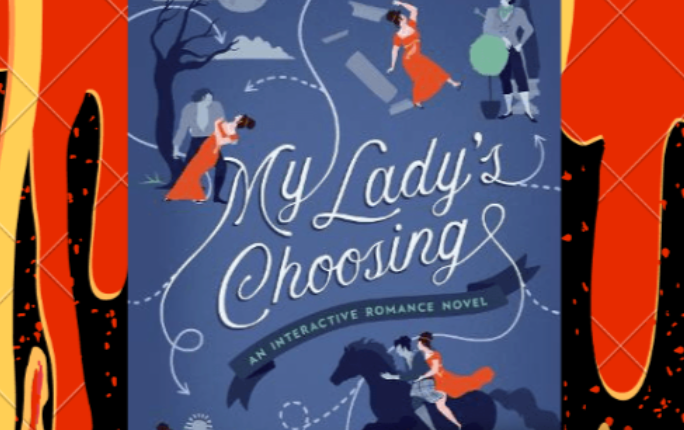
The trick is building episodic, replayable, emotionally intelligent narrative arcs with persistent memory and premium branches. Think of it as what Kindle Unlimited would feel like if the reader were the protagonist and the story adapted to their choices — pacing, jealousy arcs, consent dynamics, and payoff structures that feel earned. Romance readers already consume at least one novel per week at rates of nearly 50%. Give them a format that replaces dead time between book releases.
Distribution is already mapped. BookTok is a massive discovery engine for romance readers, and the community infrastructure (TikTok, Kindle-adjacent groups, romance influencers) is built and waiting for a product to plug into.
2. Teen Mystery / Thriller
Cleaner than open-ended roleplay because structure matters here. Clues, reveals, suspect maps, evidence boards, branching endings. The product feels more like a story engine than an infinite chatbot. Psychological thrillers grew 29% in 2025, dark fantasy grew 23%, and horror grew 13%. Mystery has built-in session structure. Each episode has a natural endpoint and a natural reason to come back.
3. Parenting Storygames
The least flashy option, but possibly the best small-team wedge. Parents already pay for educational and bedtime content. A co-created bedtime app where the child's name, fears, interests, and recent life events become part of the narrative is sticky, safe, and positioned away from the regulatory minefield around teen-facing AI companions. Clear boundaries, limited memory in sensitive categories, and a parent-in-the-loop design make the safety profile radically better than anything in the companion space.
4. Creator-Owned Worlds
This may become the strongest B2B2C wedge over time. YouTubers, podcasters, webcomic creators, sports media brands, and authors license a "live world" where fans step inside the IP. That converts audience into subscription, upsells, merch, and licensing. WEBTOON's ecosystem hosts tens of millions of creators globally — proof that creator-driven storytelling can reach massive scale. The difference: you give creators AI-powered tools to make their worlds interactive, not just readable.
For the first 6–9 months, do not split focus across multiple genres. Treat the other wedges as future "worlds" once the core engine and safety stack are proven.
The Insight: The Moat Isn't Model Quality
Most builders will assume the moat is model quality. Wrong.
It's taste calibration plus canon control.
General-purpose models can already produce fluent prose. Table stakes. What users stay for — what drives 70%+ paying retention like Wrtn's — is a system that understands the emotional rules of the genre. Wrtn's own CPO frames this explicitly: the AI acts like a dungeon master running a tabletop RPG, constructing narrative in response to what users do, but within rules that keep the story coherent and satisfying.

Romance readers care about pacing, jealousy, consent, payoff, tone, whether an arc feels earned. Mystery fans care about clue fairness, reveal timing, red herrings, coherence. Kids' narratives need reassurance, repetition, rhythm, clear boundaries. Creator universes need lore consistency, character voice integrity, referenceable canon.
That's hard to clone because it's a thousand small decisions encoded into prompts, memory rules, moderation layers, content rails, arc templates, evaluation systems, and community feedback loops.
The winning company here will look less like a model lab and more like a narrative operating system. Invest scarce engineering time in world bibles with explicit constraints, a visual episode/branch editor that non-technical writers can use, memory schemas that track relationships and secrets in a structured way, and evaluation harnesses that automatically check continuity, tone, and safety violations on each branch. Use off-the-shelf or API models for generation. Build the orchestration layer that makes the output feel like it was written by someone who actually reads the genre.
Fast Heist or Long-Term Moat? Both, in Sequence.
Phase 1: Fast Heist (Months 1–6)
Unlock the Vault.
Join founders who spot opportunities ahead of the crowd. Actionable insights. Zero fluff.
“Intelligent, bold, minus the pretense.”
“Like discovering the cheat codes of the startup world.”
“SH is off-Broadway for founders — weird, sharp, and ahead of the curve.”


