


The Squishy Toy Boom Is Hiding a Better Business
Don't fight TikTok resellers for a $6 toy. Build the procurement-ready sensory system schools can buy, clean, track, and replenish.
Schylling sold a full year's worth of NeeDoh inventory in the first nine weeks of 2026.
Sales are running about six times their 2025 pace. The company paused new orders on its own site in late April 2026 and fell 8 to 10 weeks behind on shipments to retailers. The filling compound needs curing time, the factories are in China, and Lunar New Year shut production down in February 2026, right as the TikTok demand curve went vertical.
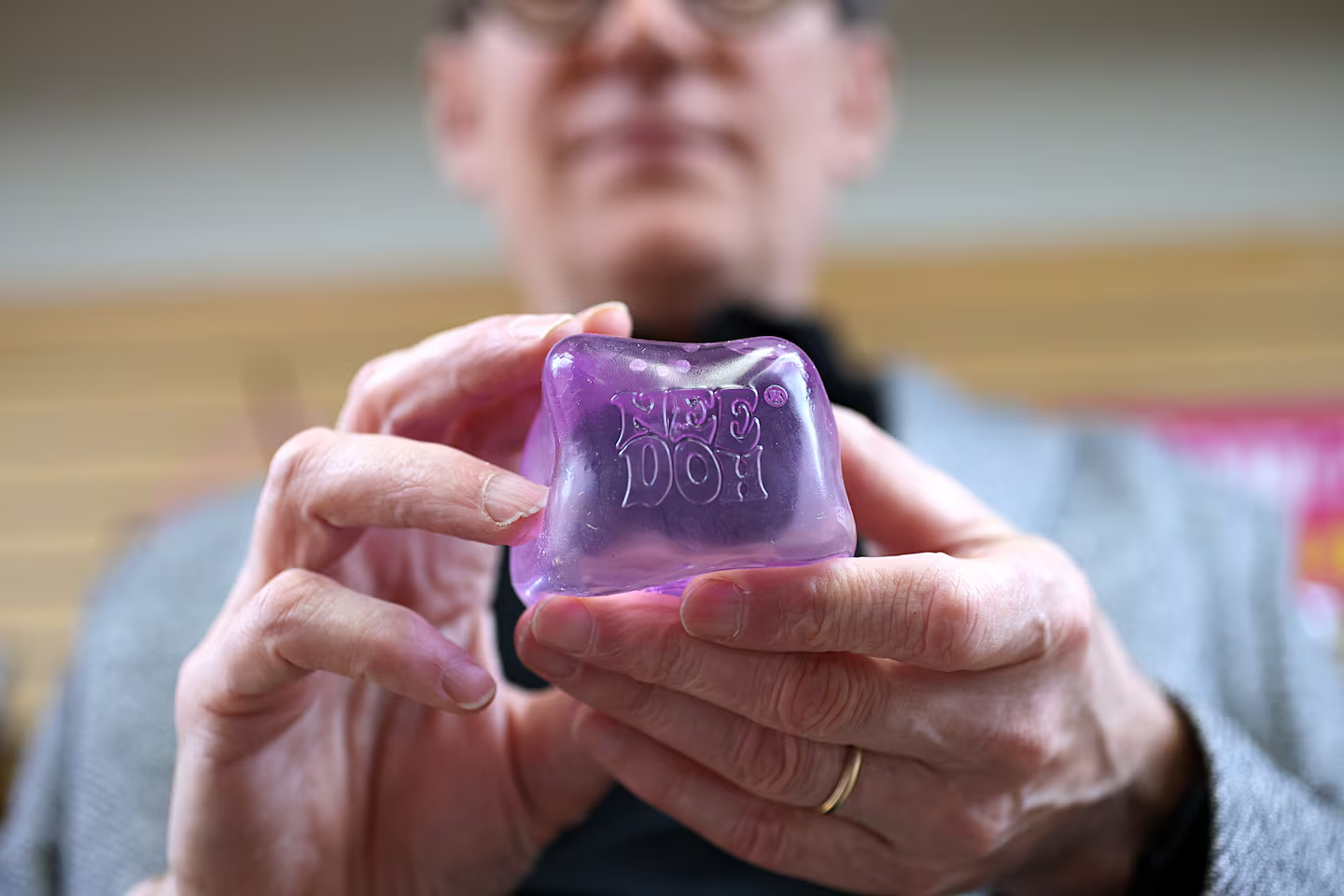
That looks like an invitation to launch a squishy brand.
By the time a cheap physical product becomes a viral obsession, though, the consumer market is the worst place to enter. You'd be competing against the original brand, counterfeiters, TikTok Shop sellers, Amazon aggregators, Temu factories, toy stores, and fourth-graders reselling scarce inventory to each other at recess. The product is easy to understand, easy to copy, and impossible to defend.
The better opportunity is sitting one layer beneath the trend.
The money: 30 districts at eight kits each plus 50 clinics puts year one near $120,000 to $170,000. A strong year three runs $1M to $3M.
Inside:
• Full 18-item kit spec and the no-go list
• Pricing ladder from $349 kit to $4,900 district
• Paid pilot script and OT outreach emails
• Six moats built from compliance paperwork
Sensory tools used to be a strange therapeutic category known mostly to occupational therapists. Now millions of parents, teachers, and administrators know what a fidget is supposed to do. The consumer boom paid the category's awareness bill, and it handed you the receipt.
Schools and pediatric clinics don't need more toys. They need sensory tools that survive an institution: reliable safety documentation, a defined cleaning protocol for shared items, individually replaceable components, guidance so teachers know when to offer what, and every piece of paper a purchasing department asks for — quotes, W-9s, POs, certificates, stable SKUs. Administrators need a budget line, not another Amazon receipt.
That's the business: a sensory kit sold as an institutional consumable system. One standardized, OT-informed classroom setup with documented cleaning instructions, permanent SKU numbers, replacement inventory, staff guidance, and a prepaid annual replenishment plan. Fixed contents, fixed part numbers, restocked on a schedule.
No one should mistake this for a billion-dollar software company. It's a focused physical-products business that could plausibly become a profitable multimillion-dollar education supplier. The starter kit is the wedge. Procurement relationships, replenishment revenue, training, and usage data are where the durable value piles up.
The demand that doesn't depend on TikTok
The squishy boom is the attention-grabbing signal. The institutional demand underneath it is slower and much larger.
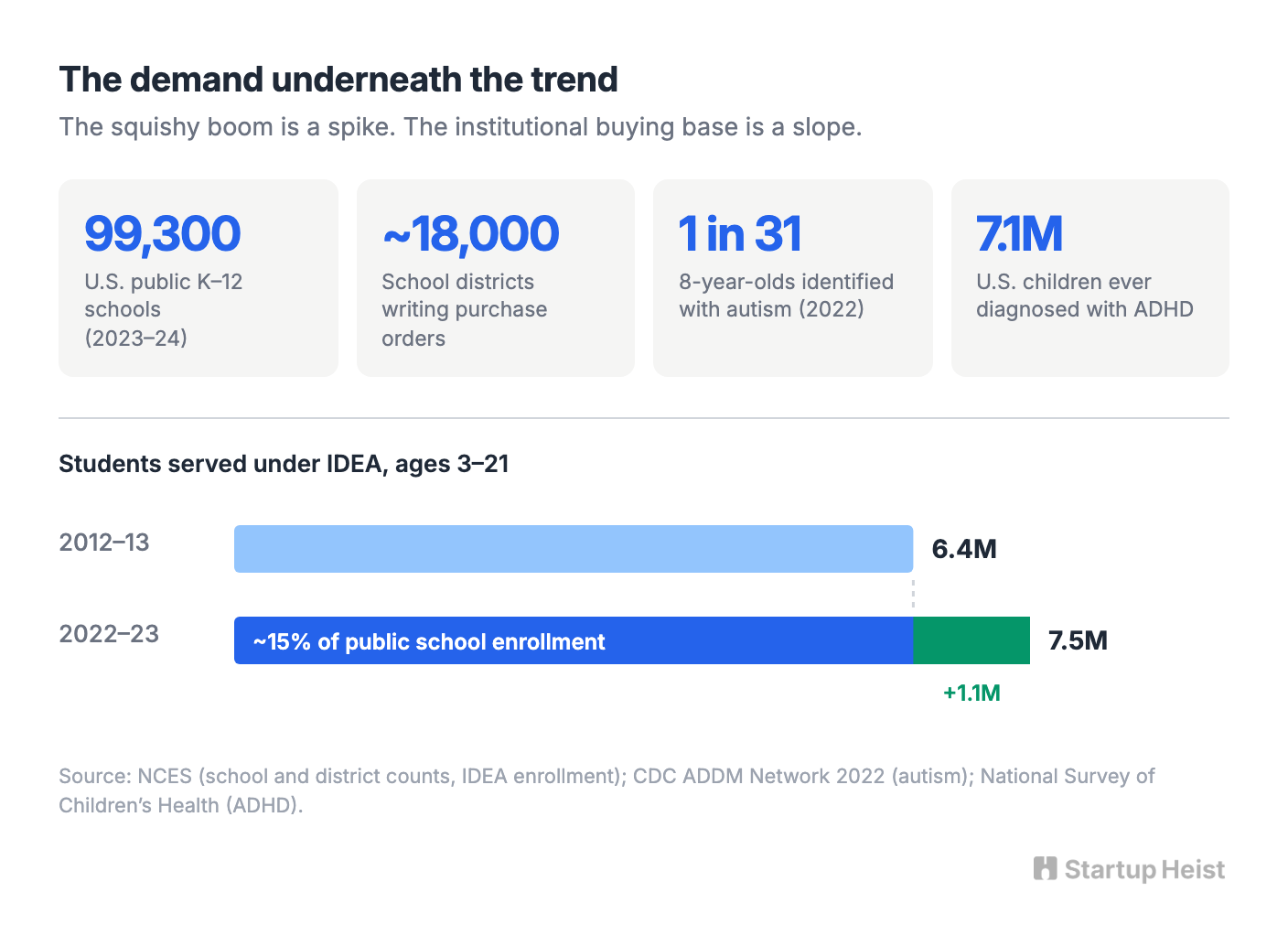
CDC's monitoring network identified about one in 31 eight-year-olds with autism in 2022, up from one in 36 in 2020. Roughly 7.1 million U.S. children ages three through 17 have received an ADHD diagnosis at some point, about one in nine. And 7.5 million students ages three through 21 were served under IDEA in 2022–23, up from 6.4 million in 2012–13, and now about 15% of public school enrollment.
Not every one of those kids needs a fidget. Sensory supports shouldn't be handed out like pencils, and any business built on pretending otherwise deserves to fail.
But the buying base is enormous and unglamorous. The U.S. ran close to 99,300 public elementary and secondary schools in 2023–24, spread across roughly 18,000 districts. Every one of them already buys calming corner supplies, break boxes, classroom fidgets, sensory room equipment, and OT consumables.
You aren't creating demand. You're organizing it.
What the incumbents actually sell
Look at what schools can buy today and the gap draws itself.
School Specialty's Abilitations line sells Self-Regulation Sensory Kits that run somewhere between $220 and $390 depending on grade level and whatever discount is live that week, and its Calming Sensory To Go Kit ships a theraputty tub, a jellyfish fidget, feeling heads, a Yuck-E ball, a Tangle, a zig-zag timer, and Wikki Stix in a lidded bin. Fun and Function sells classroom break boxes in the mid-hundreds. Lakeshore Learning sells simpler calming kits. Therapy Shoppe assembles teacher kits chosen by school-based OTs. These are real companies with real education channels, and their existence is the best news in this article: schools already understand the category and already spend several hundred dollars on a bundle.
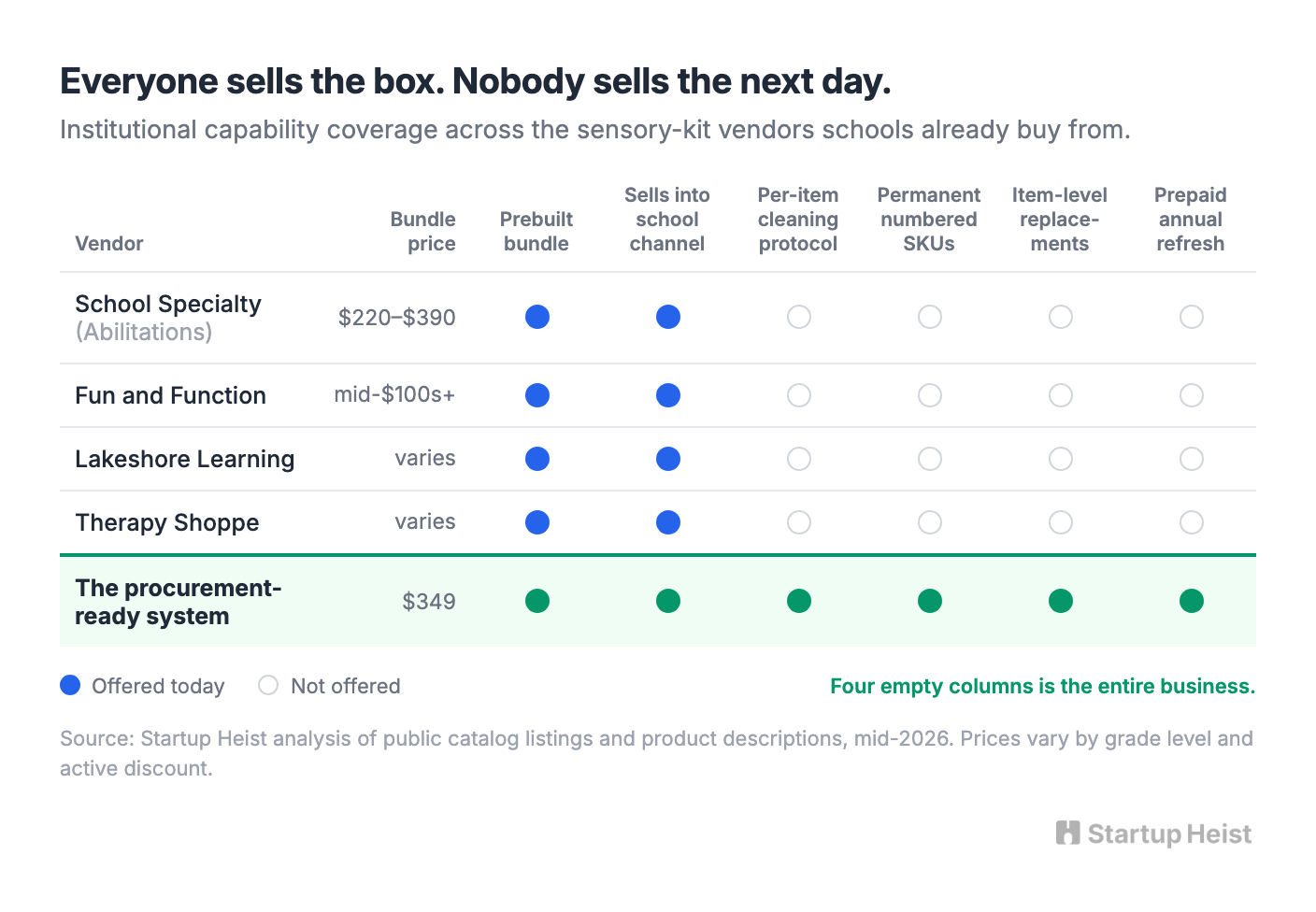
What none of them sell is the part that starts the day the box arrives. Which pieces belong in a shared kit and which get assigned to one student? How is each item cleaned? What happens when the blue band snaps? Can the school reorder the exact silent fidget that worked, or is it hunting a catalog again? Did the manufacturer quietly change the material? Where's the safety certificate? Who trains the substitute?
Every vendor above optimizes for one of two models: a giant catalog the OT must assemble a solution from, or a prebuilt assortment sold once and forgotten. Neither one answers a single question on that list.
Those questions sound boring. Boring is where the institutional margin lives.
Design the kit as a system
Unlock the Vault.
Join founders who spot opportunities ahead of the crowd. Actionable insights. Zero fluff.
“Intelligent, bold, minus the pretense.”
“Like discovering the cheat codes of the startup world.”
“SH is off-Broadway for founders — weird, sharp, and ahead of the curve.”


