


The Beige Box Lifeboat
The most important computer in a small factory may be a 28-year-old PC nobody is allowed to touch. Leave it running and sell the owner a tested escape plan for the day it dies.
Walk into the right 20-person machine shop and you'll find a strange piece of infrastructure sitting beside a $150,000 machine tool: a beige PC running Windows 98 or DOS, with a PS/2 keyboard, a parallel port, and an expansion card nobody on staff can identify. Taped to the monitor is a handwritten note that says DO NOT TURN OFF.
The owner keeps it because the PC runs a CNC machine, an optical comparator, a coordinate-measuring machine, an engraver, or a test bench that still does perfectly good work. The software came from a vendor that closed decades ago, and its installer lives on a floppy somewhere in a filing cabinet. A license dongle hangs off the parallel port, and one employee remembers the startup sequence. Everyone knows the setup is fragile, and nobody wants to be the person who finds out how fragile.
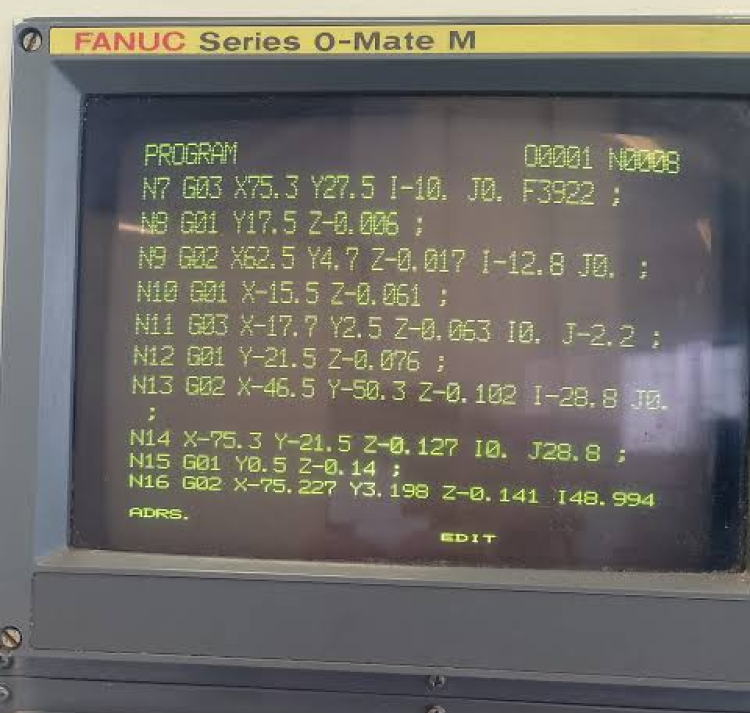
Modern disaster recovery doesn't reach this machine, and neither does old-fashioned field service. The opportunity sits in between: a productized continuity service for legacy production computers. You audit the old machine, image it, photograph everything, map its dependencies, test what can safely be tested, identify the irreplaceable parts, and write down the operator rituals. Then you hand the owner a plain answer to one question: if this computer dies Tuesday morning, can we get production running again?
Call it OldBox Lifeboat. The short version:
The money: 40 audits at $3,000, 60 drills at $1,500, and 80 vaults at $149/month make roughly $353,000 in a steady-state year, before emergency recovery work.
Inside:
• The six-phase field audit procedure
• Pricing from $2,500 audits to annual drills
• Cold email and call scripts for CNC shops
• A partner SKU for machine-tool technicians
The Old Computer Is the Cheapest Part of the Machine
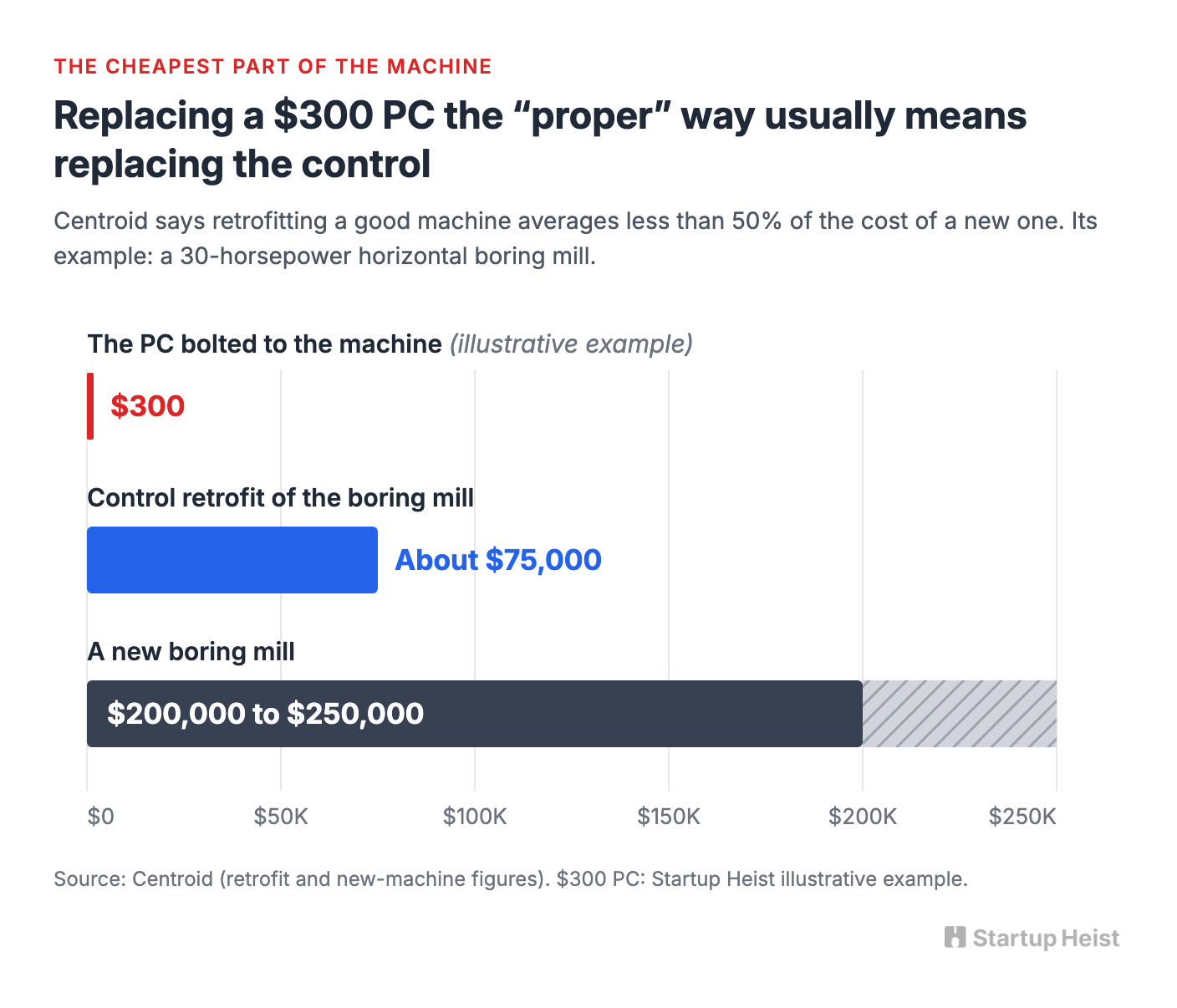
Say a shop has 18 employees and six machine tools. One machine was bought in 1999. It still holds tolerance, it's fully depreciated, and customers have approved its output. The vulnerable component is the $300 computer bolted to it. Replacing that computer the "proper" way usually means replacing the CNC control. Centroid, a retrofit vendor, says retrofitting a good machine averages less than 50% of the cost of a new one, and cites a 30-horsepower horizontal boring mill at about $75,000 to retrofit against $200,000 to $250,000 new. So the owner keeps the PC alive rather than fund a control retrofit for a problem that hasn't happened yet.
On September 25, 2026, a Hacker News thread asking "Who's still keeping a DOS machine up because the business depends on it?" drew roughly 300 comments of exactly this. An IT consultant described a customer running a 386 with an ISA interface board connected to an optical comparator. A contract electronics manufacturer runs its wave-soldering machine from an MS-DOS PC built into the control cabinet, talking to industrial I/O over the parallel port. A gear-cutting job shop kept its bevel-gear setup calculations in version 1 of TK!Solver under DOSBox rather than pay $5,000 to upgrade, or $500-plus per setup to have Gleason run the numbers.
The same thread shows the psychology you're selling against. A wool-testing operation runs an ISA-card imager from a DOS machine. Its owner kept a storage room of period PCs in case the machines failed, yet didn't have much of a backup plan for the imaging hardware itself. A room of old computers feels like a plan until you ask what's actually been tested. The owner already knows the technology is old, so your opening line goes straight to the gap: you have a six-figure machine depending on a computer whose recovery procedure has never been tested. Before anyone changes anything, let's find out what happens when it stops booting.
Why the MSP's Backup Can't Save It
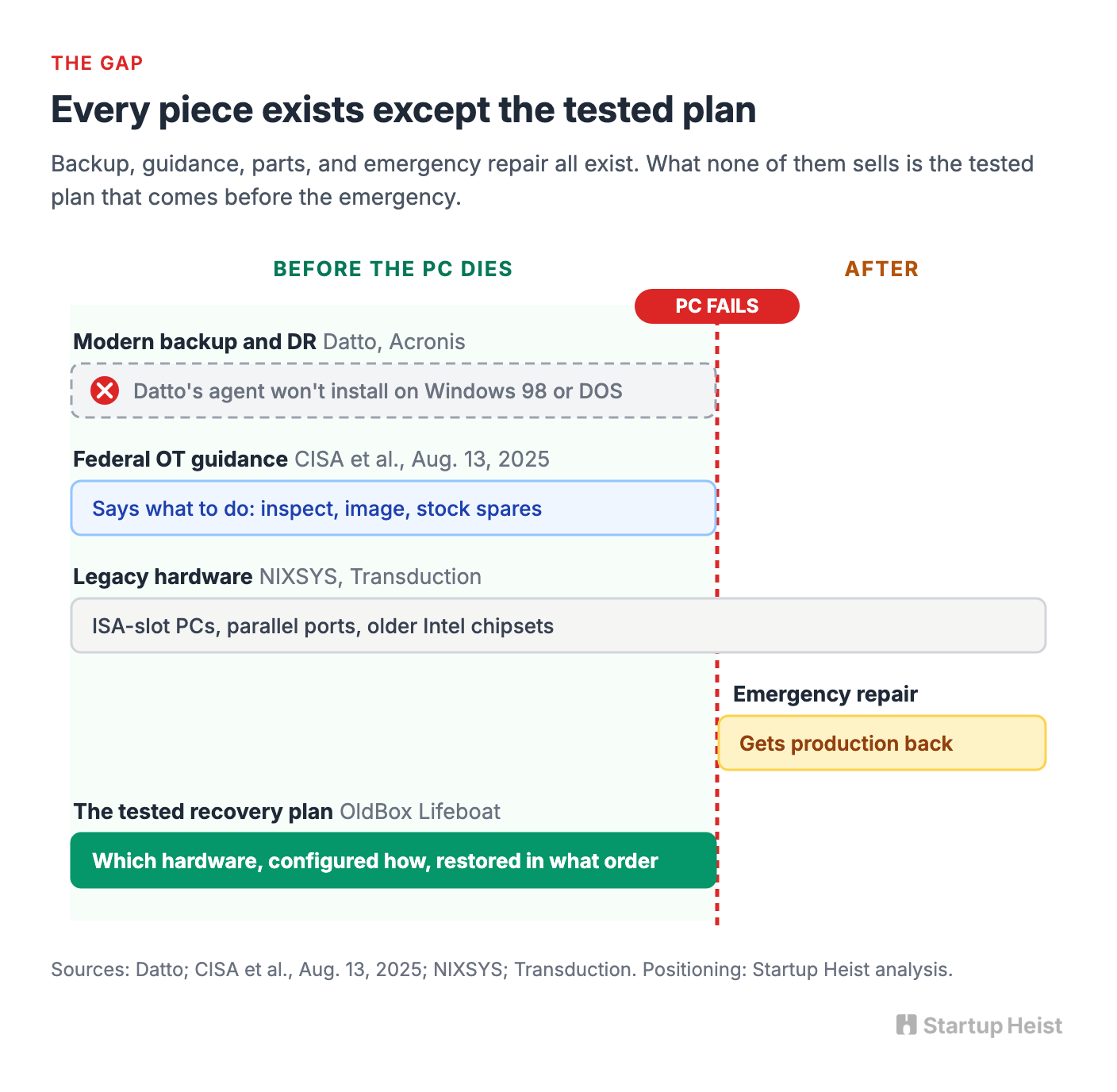
The managed service provider's toolkit is built for modern machines. Datto's SIRIS appliances take image-based backups, boot each one in a sandbox to confirm it boots, and can virtualize a failed system locally or in Datto's cloud. Acronis sells backup and disaster recovery too. None of it touches the beige box: Datto's Windows agent, from version 2.2 on, requires Windows Server 2008 or newer, so it won't install on Windows 98, let alone DOS.
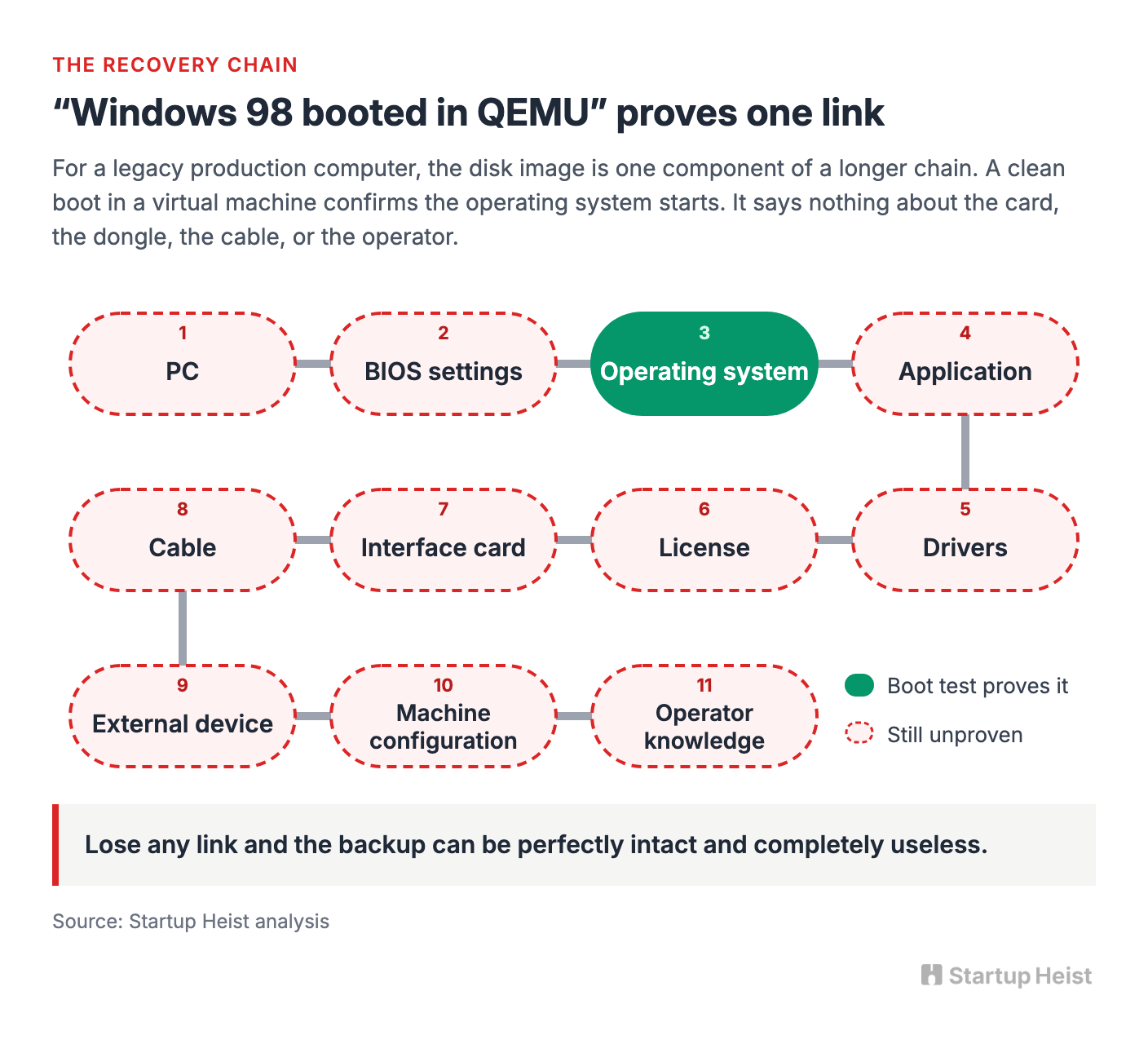
Suppose you image the drive by hand and it boots cleanly in a virtual machine. You still don't know whether the VM can drive the proprietary ISA motion card, whether the application reads the parallel-port dongle, whether the software writes straight to hardware that modern operating systems abstract away, whether a specific GPIB card revision matters, whether the CNC expects a fixed COM-port address, or whether a USB-to-parallel adapter behaves like the motherboard port. A green "backup verified" checkmark can't answer any of that.
For a legacy production computer, the disk image is one component of a longer chain: PC, BIOS settings, operating system, application, drivers, license, interface card, cable, external device, machine configuration, and operator knowledge. Lose any link and the backup can be perfectly intact and completely useless. So OldBox's positioning line is simple: We find out whether you can recover the machine your old computer keeps running.
Why Now
Federal agencies have already written your statement of work. On August 13, 2025, CISA, the NSA, the FBI, the EPA, and cyber agencies from five allied countries published asset-inventory guidance for operational technology (OT). It tells operators to physically inspect assets, identify process dependencies, maintain backup strategies, record whether a known-good image exists to aid post-incident recovery, analyze whether the stockpile of spare OT components "sufficiently covers the critical assets identified," and "compare the costs of potential downtime or degraded services with the cost of replacing these vulnerable systems (if they are legacy)." Few owners of a 20-person shop will ever read it, and fewer have anyone on staff to carry it out.
Those owners are everywhere. Small and medium-sized manufacturers make up 98% of the U.S. manufacturing base, according to NIST, and its Manufacturing Extension Partnership reaches them through nearly 1,400 advisers at more than 450 locations. The customer base is enormous, fragmented, local, and already served by trusted advisers, which makes it a field-sales market and a poor fit for self-serve software.
The parts supply exists too. NIXSYS sells new-build computers for DOS through Windows 11 with ISA slots, parallel ports, and floppy drives. Transduction stocks older Intel chipsets so clients can match an original design, and describes the Intel 865G as the last Intel chipset that supports industrial ISA legacy cards. Emergency repair exists as well: an Australian IT firm has described getting a 5-axis CNC mill back into production after its Windows 98 system failed to boot. What none of them sells is the tested plan that comes before the emergency, the one that tells a shop which hardware, configured how, restored in what order.
What You're Selling: The Critical Machine Continuity Audit
Name the first product something painfully literal. The customer picks one production machine that depends on an aging PC. You document the complete recovery chain without making unnecessary changes to production, and the owner receives a one-page Recovery Readiness Map.
Unlock the Vault.
Join founders who spot opportunities ahead of the crowd. Actionable insights. Zero fluff.
“Intelligent, bold, minus the pretense.”
“Like discovering the cheat codes of the startup world.”
“SH is off-Broadway for founders — weird, sharp, and ahead of the curve.”


