


The 3 P.M. Soda Bar: Turn a Restaurant's Existing Fountain Into a New Revenue Stream
Big chains are building entire businesses around customized drinks, and independent restaurants already own most of the equipment. Sell them the menu, the setup, and the proof that it works.
On October 22, 2026, PepsiCo and Taco Bell renewed their U.S. beverage partnership for another 11 years, through 2036. The announcement covered more than Baja Blast. It committed both companies to "crafted, functional and energy beverages" built to unlock new morning and afternoon occasions, across Taco Bell, Taco Bell Cantina, and the chain's drink-forward Live Más Café locations.
Taco Bell has said it wants $5 billion in annual beverage sales by 2030. At that size, its drink business alone would rival the systemwide sales of Raising Cane's or Olive Garden.
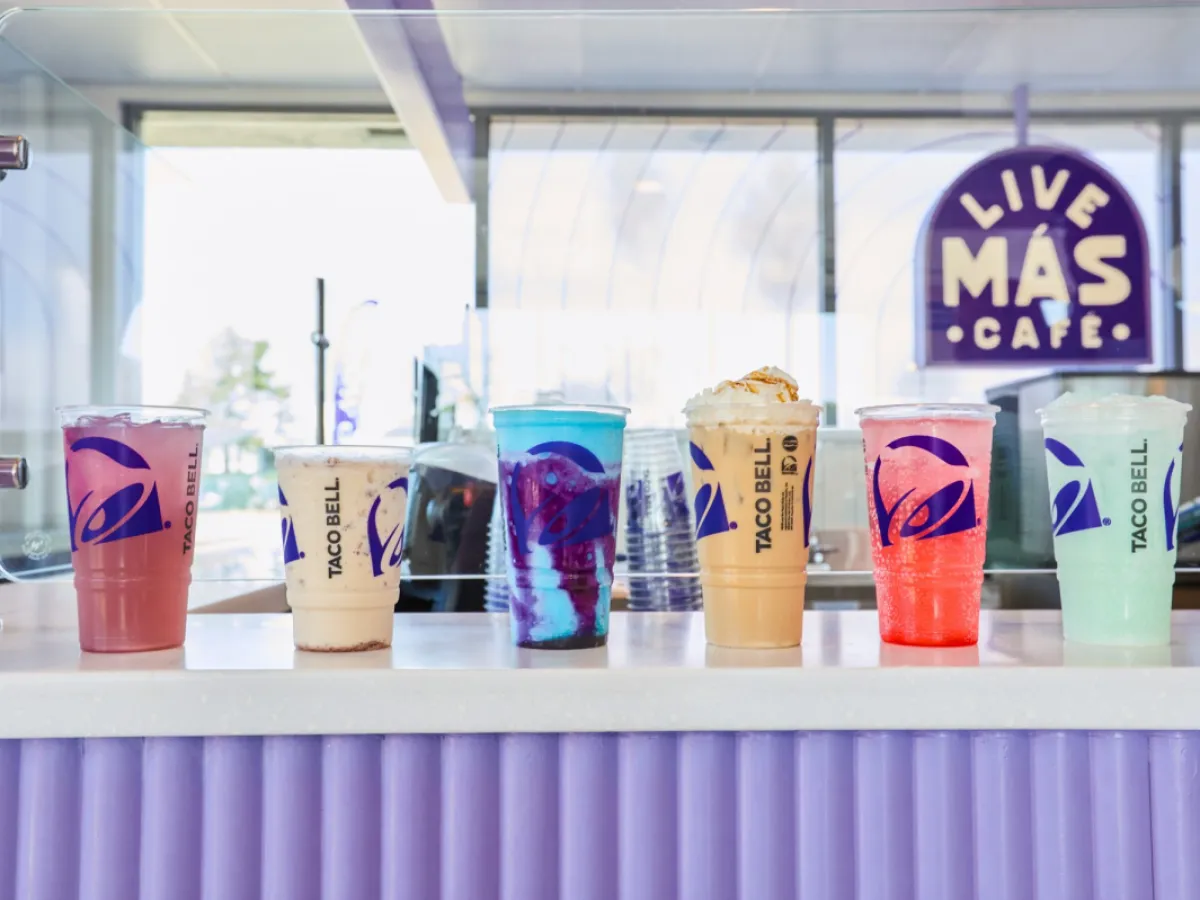
The rest of fast food is moving the same way. On May 6, 2026, McDonald's added three Refreshers and three crafted sodas, including a Dirty Dr Pepper, to its permanent national menu. Sonic, which has sold dirty sodas since 2024, rolled out an iced fall lineup on August 24. Jack in the Box has run Twisted Sodas with sweetened cream since 2024, and KFC launched $3.49 Go Buckets on October 5 to chase the same slow afternoon window. Every one of these chains is betting that a customer who may not spend $12 on a second meal will often spend $4 on a treat at 3 p.m.
The independent taco shop down the street already buys syrup, makes ice, stocks cups, pays staff, and runs card payments. Its drink menu reads Coke, Sprite, Dr Pepper, even though the hardware for a $4.25 specialty soda is sitting right behind the counter. What it lacks is a beverage program: costed recipes, a menu that makes people want the drink, POS buttons, staff cards, and a reason to come in after lunch.
Sell independent restaurants a ready-to-launch specialty soda program, installed in their existing Square system, for a setup fee and a modest monthly subscription.
In effect, you'd be installing a miniature drink shop inside dozens of restaurants that already have the fountain.
The money: 100 locations at $89/month is $8,900 MRR, plus a $449 setup fee per shop. Swig built nearly 170 stores on the same soda, syrup, and cream.
Inside:
• Six-drink menu and per-cup margin model
• Three-phase MVP built on Square's APIs
• 90-day pilot plan with outreach email
• Distributor channel for the next 100 shops
The Afternoon Is the Only Daypart With Room to Grow
Quick-service restaurants are stuck. Revenue Management Solutions reported that in Q3 2026, U.S. QSR traffic fell 2.6% year over year while prices rose 2.6%, and net sales grew just 0.6%. Fully 56.2% of stores were in "traffic-driven decline," up from 36.3% in Q2. Only 19.4% grew both traffic and check.
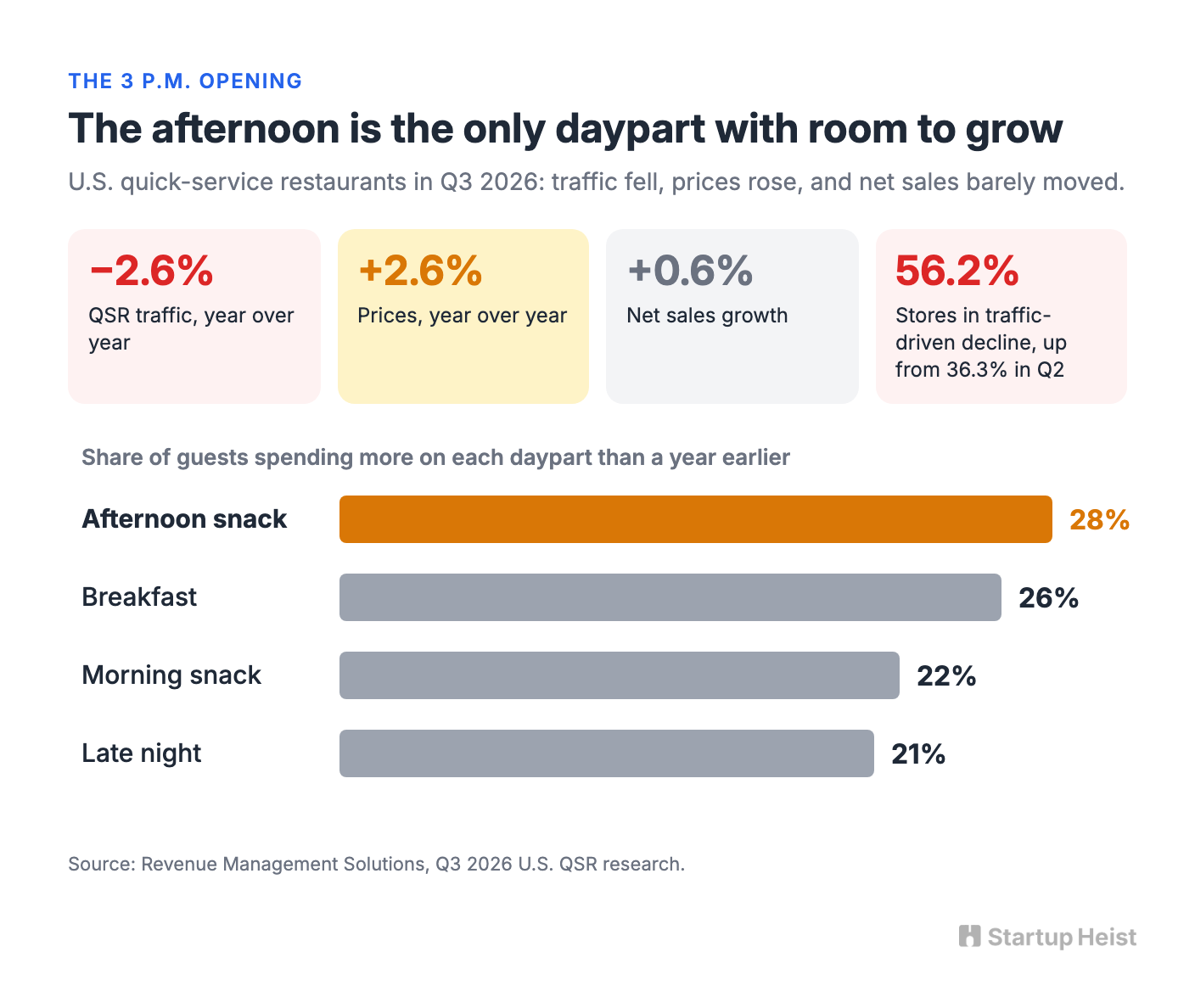
Raising entrée prices has stopped working. Operators need new visits and higher-value add-ons, and the afternoon snack daypart is where guests are still opening their wallets. The same RMS research found 28% of guests spending more on the afternoon snack than a year earlier, ahead of breakfast (26%), the morning snack (22%), and late night (21%). The National Restaurant Association's August 25, 2026 beverage report adds the demographic: Gen Z and millennials drive beverage-only visits, especially mid-afternoon.
There's a real headwind. A September 30, 2026 Popmenu study of 3,000 consumers found 67% spending less on restaurants than the year before and 52% ordering water instead of a paid drink. A flavored soda won't sell itself just because its margins look good on a spreadsheet. It has to look like a treat worth $4, sit where people can see it, and come out of the kitchen fast. The business lives in the gap between a menu item and a working program.
The Demand Is Proven and the Recipes Are Free
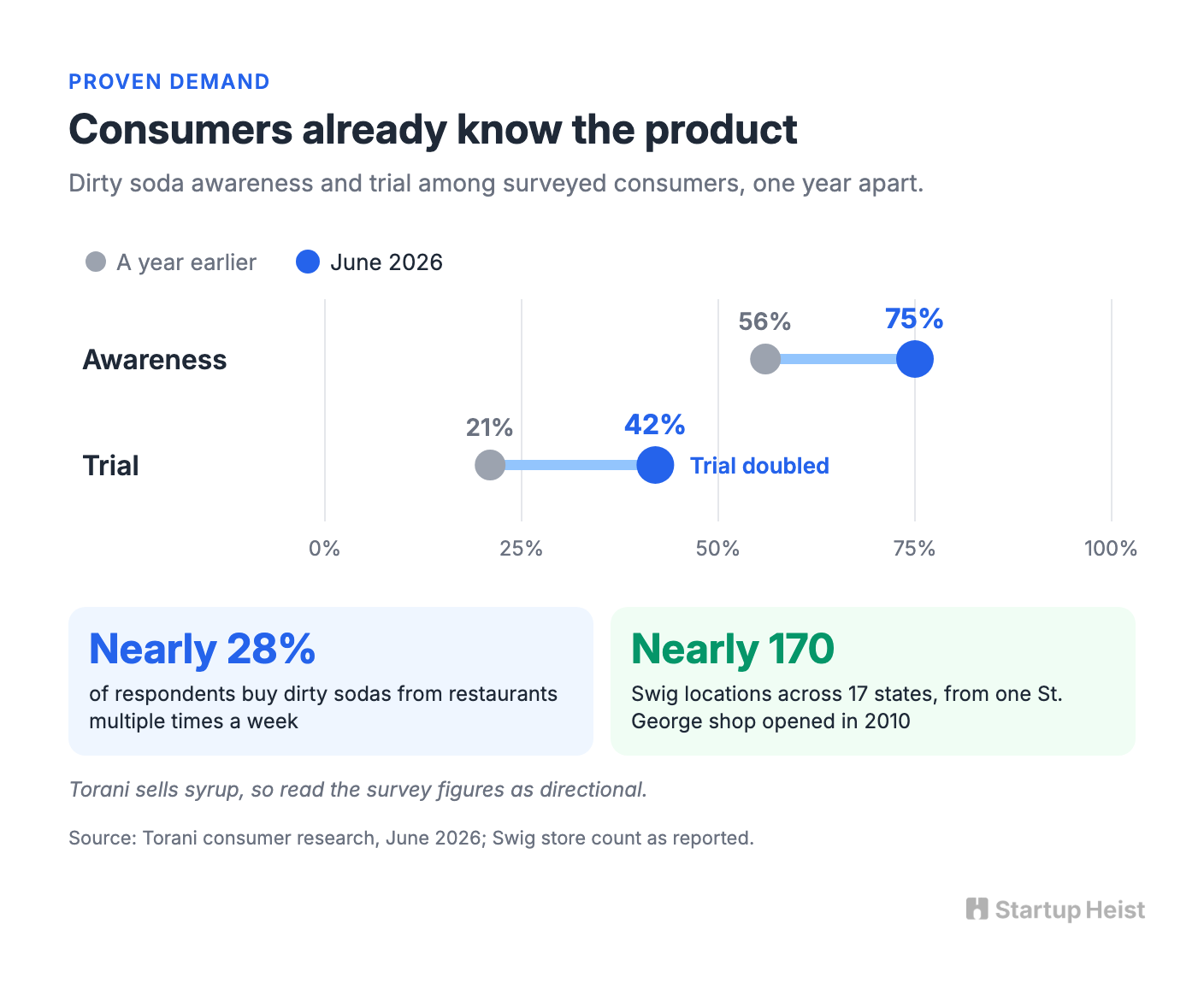
Consumers already know the product. Torani's June 2026 research found dirty soda awareness rose from 56% to 75% in a year, trial doubled from 21% to 42%, and nearly 28% of respondents said they buy them from restaurants multiple times a week. Torani sells syrup, so read those numbers as directional. The store counts are harder to argue with: Swig, the Utah chain that opened its first shop in St. George in 2010, now runs nearly 170 locations across 17 states and is bidding on shuttered Salad and Go drive-thrus out of bankruptcy.
Swig's lesson for independents is operational. Its menu looks endless, but every drink is a base, a few flavors, and a mix-in, built from a short list of recurring ingredients. Customers order named drinks from a fixed board, and a restaurant can copy that structure without building a new store.
Monin already mails food and beverage operators a free kit twice a year with eight signature recipes and matching counter cards. Recipes and signage are commodity goods that suppliers give away to move syrup. What nobody hands an independent owner is the installed version, and that's what you charge for: drinks priced against their own costs, built into their Square menu on a 2-to-5 p.m. schedule, taught to their staff, and measured against last month's sales.
The Product: A Soda Bar in a Box
Call it Afternoon Bar. The promise: launch a branded specialty-drink menu using your current fountain and Square account, live within a week.
A launch package includes six signature drinks, a constrained build-your-own option, measured recipe cards, a cost sheet, Square configuration, a branded menu page with QR codes, print-ready signage, and a 20-minute staff training. At a neighborhood burger counter, the menu might look like this:
Unlock the Vault.
Join founders who spot opportunities ahead of the crowd. Actionable insights. Zero fluff.
“Intelligent, bold, minus the pretense.”
“Like discovering the cheat codes of the startup world.”
“SH is off-Broadway for founders — weird, sharp, and ahead of the curve.”


