


The Book Isn't the Product. The Reader Identity Is.
A Korean convenience-store chain sold 1.6 million buns because each one hid a literary bookmark. Coach sells $95 miniature books you clip to a handbag. Between those two price points sits room for a $20 literary-accessory brand built on numbered bookmark collections and pocket classics.
The Heist
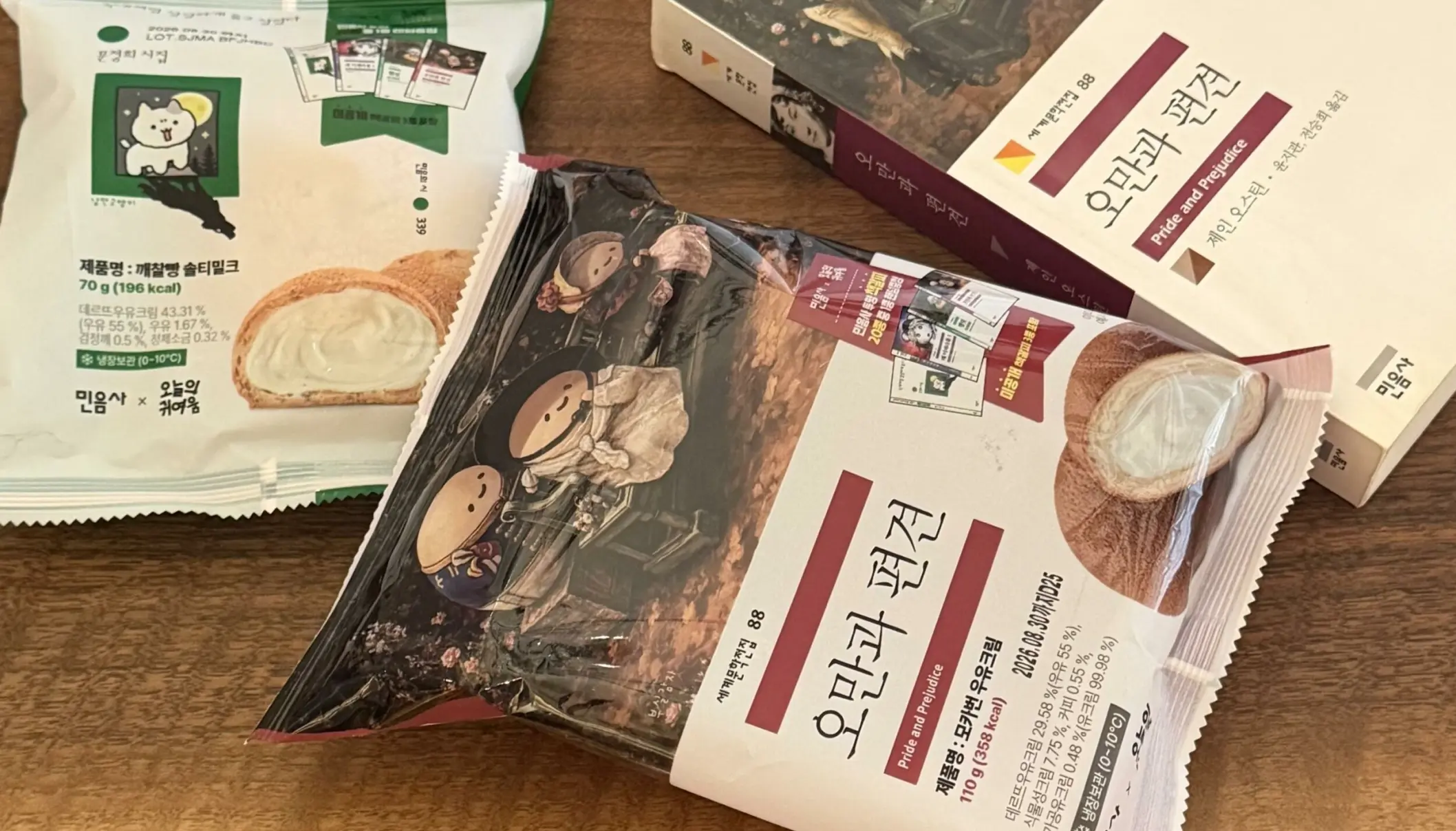
On August 21, 2026, Korean convenience-store chain GS25 launched a line of breads with Minumsa, one of the country's best-known literary publishers. Each bun came in packaging styled after a Minumsa title. Inside was one transparent bookmark, drawn at random from 20 designs: 15 based on Minumsa's World Literature series covers and 5 from its poetry line.
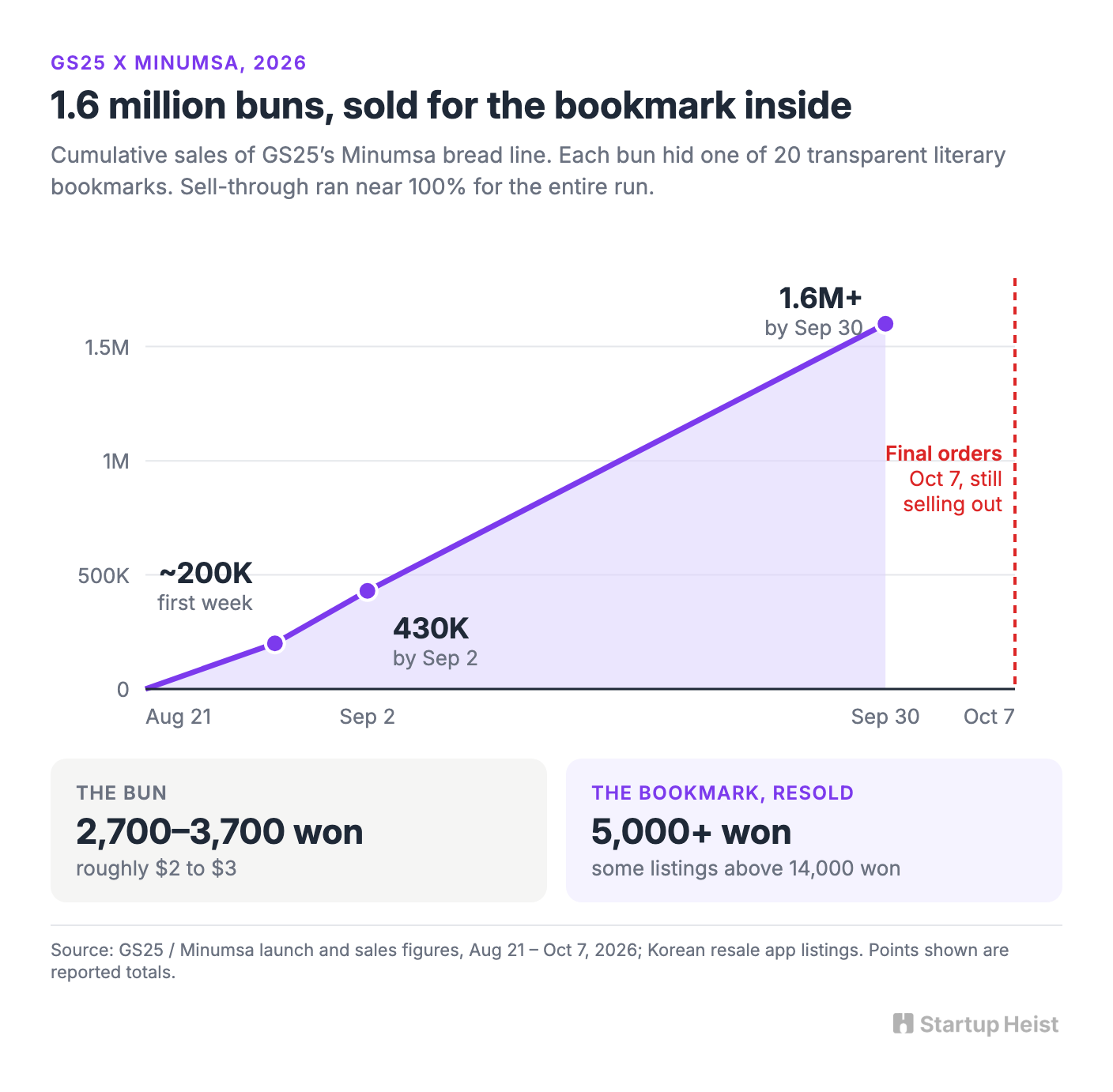
The buns cost 2,700 to 3,700 won, roughly $2 to $3. They sold about 200,000 units in the first week and passed 430,000 by September 2. By September 30, cumulative sales had topped 1.6 million, with sell-through near 100% for the entire run. Customers burned vacation days hopping between stores. Bookmarks traded on Korean resale apps for 5,000 won and up, with some listings above 14,000 won, several times the price of the bread they came in. GS25 took its final orders on October 7, ending the line while it was still selling out. The bread was only ever the delivery vehicle for the bookmark.
Six months earlier and an ocean away, Coach reached the same conclusion from the luxury end. On February 25, 2026, it unveiled book bag charms made with Penguin Random House: miniature, fully readable hardcovers with hardware for clipping to a bag, priced at $95. The charms went on sale in early March, and some titles sold out within days.
A 3,000-won bun and a $95 charm sell the same thing: proof that the buyer is a reader. Between them sits a wide-open middle for a small, design-led brand. Sell the collectible literary accessory first, then use a beautifully made miniature classic to anchor the brand. Think $18 bookmark packs, $20 pocket books, and $33 gift bundles.
The money: 1,500 three-packs a month through TikTok Shop yields about $10,665 in monthly contribution before overhead and ads. GS25's bookmark buns topped 1.6 million sales in under six weeks.
Inside:
• Unit economics: TikTok Shop vs. Shopify flats
• Blind-pack rules under TikTok Shop policy
• An eight-week launch plan with an RFQ checklist
• A $129 reading-night kit for venues
Why Reading Became an Accessory
Korea has a name for this: text hip, the pull of books, quotes, handwriting, and reading aesthetics among people in their 20s and 30s. GS25 cited the trend by name when it launched the Minumsa line.
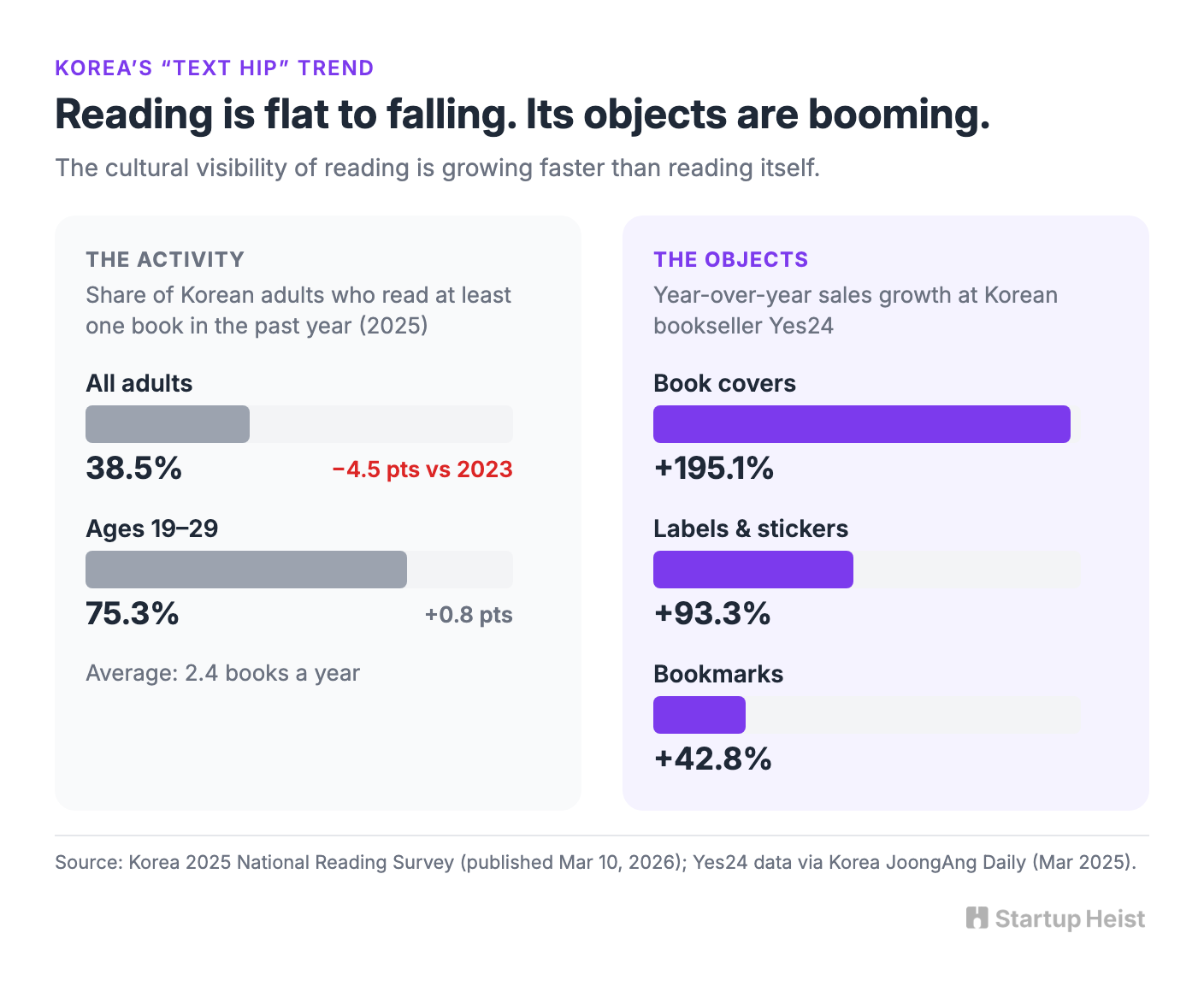
The numbers underneath are stranger than the hype. Korea's 2025 National Reading Survey, published March 10, 2026, found that only 38.5% of adults read at least one book in the past year, down 4.5 percentage points from 2023, at an average of 2.4 books. Adults aged 19 to 29 posted a 75.3% reading rate, up just 0.8 points. Reading is flat to falling while the objects around it boom. Citing Yes24 data, Korea JoongAng Daily reported in March 2025 that book-cover sales at the bookseller had jumped 195.1% year over year, labels and stickers 93.3%, and bookmarks 42.8%.
The cultural visibility of reading is growing faster than reading. Vinyl, film cameras, and mechanical keyboards followed a similar arc: the activity stayed niche and its objects became identity signals. An accessory brand can sell a new bookmark collection every season to someone who reads four books a year. A publisher has to wait for that reader to finish one.
The Channel Is Already Built
In the U.S., BookTok turned reading into a social-commerce category. One widely cited analysis of Circana BookScan totals tied roughly 59 million U.S. print book sales in 2024 to BookTok videos, about one in every thirteen print books sold. On March 19, 2026, TikTok reported that BookTok-recommended titles sold more than 50 million copies across six European markets in 2025, generating €800 million. In the UK, TikTok Shop's books lead says the platform sells three books every minute.
These are attribution estimates from interested parties, so treat them as directional. They still point one way: bookish merch that looks good in a 15-second video can be found and bought in the same app, with no bookstore buyer standing in the way.
The Gap in the Market
The players already in the category outline the gap. Coach owns the luxury end at $95. Minumsa owns a Korean literary identity and, through GS25, put it in thousands of convenience stores. Penguin Minis and Barnes & Noble's collectible editions sell the book as an object, and Out of Print sells licensed literary apparel. At the bottom, Etsy and Faire are full of independent acrylic bookmarks; one bestselling floral design from Birdie & Co. lists on Faire at an $8 suggested retail price.
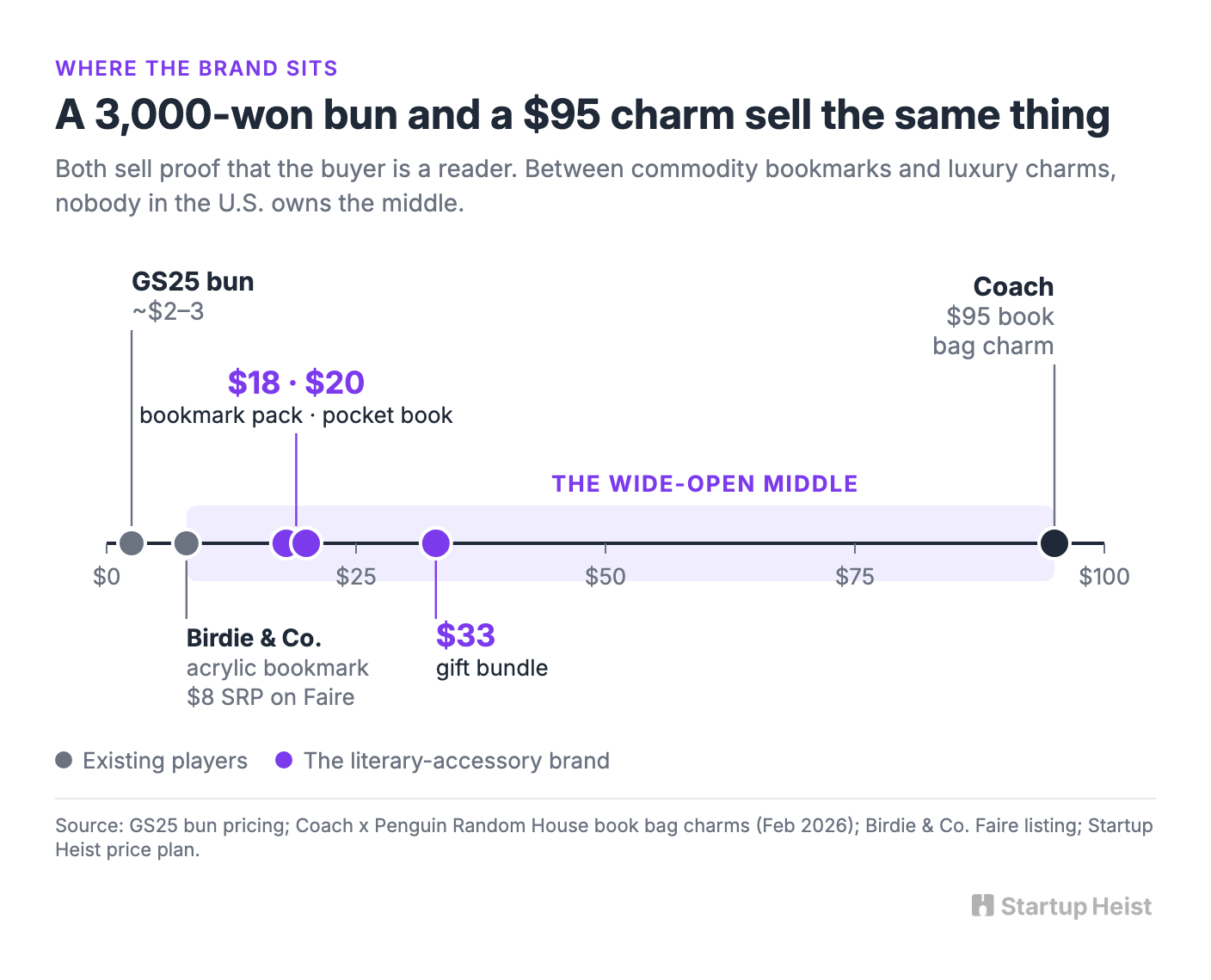
Nobody in the U.S. owns the combination: a distinctive English-language literary aesthetic, a numbered collecting system, and social-commerce distribution. Pretty bookmarks on their own are a commodity. A numbered library of them, with a coherent world and a checklist, starts to look like a franchise.
Each design still has to stand up without the surprise. A plain bookmark at $9 feels overpriced. A beautifully made collectible that happens to hold your page feels like an affordable luxury at the same price. The job is to deliver the second experience on purpose, at a margin that survives U.S. shipping.
The Product: A Numbered Library of Bookmarks
The first product is a transparent PET bookmark collection. GS25 showed that the collectible triggers the purchase and the literary work gives it meaning.
Unlock the Vault.
Join founders who spot opportunities ahead of the crowd. Actionable insights. Zero fluff.
“Intelligent, bold, minus the pretense.”
“Like discovering the cheat codes of the startup world.”
“SH is off-Broadway for founders — weird, sharp, and ahead of the curve.”


