


The Back Office for Bigfoot
Small-town America found a tourism machine that runs on legend instead of capital.
Not a resort. Not a food hall. A monster.
Mothman in West Virginia. Bigfoot in Pennsylvania, Ohio, Illinois, Washington, and a dozen other states. UFO fairs in upstate New York. Frogman festivals in Ohio. Haunted lantern tours, paranormal museums, cryptid conventions. A growing circuit of towns, chambers of commerce, and volunteer committees is turning local folklore into weekend foot traffic.
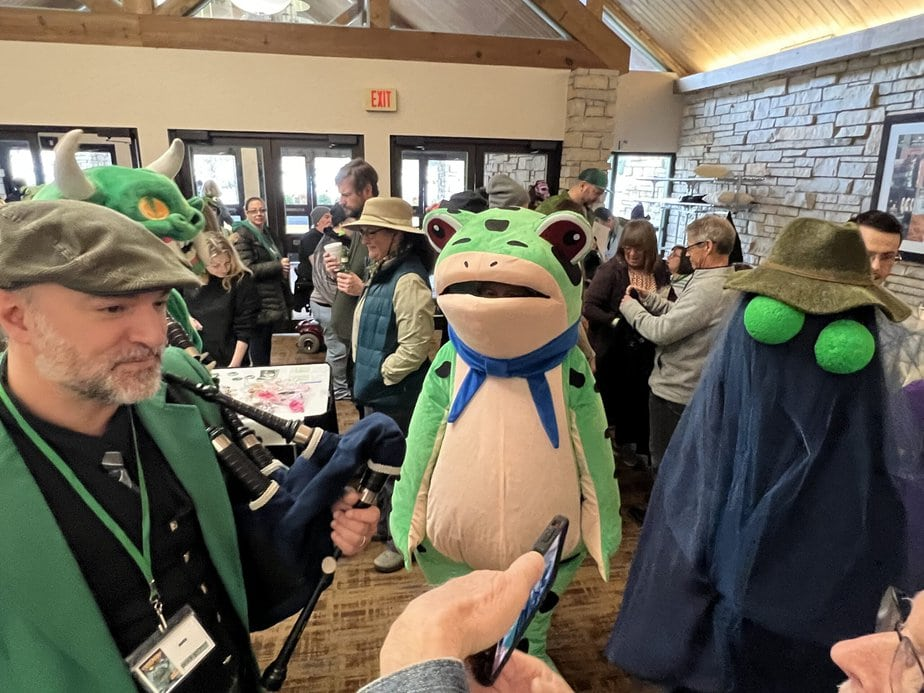
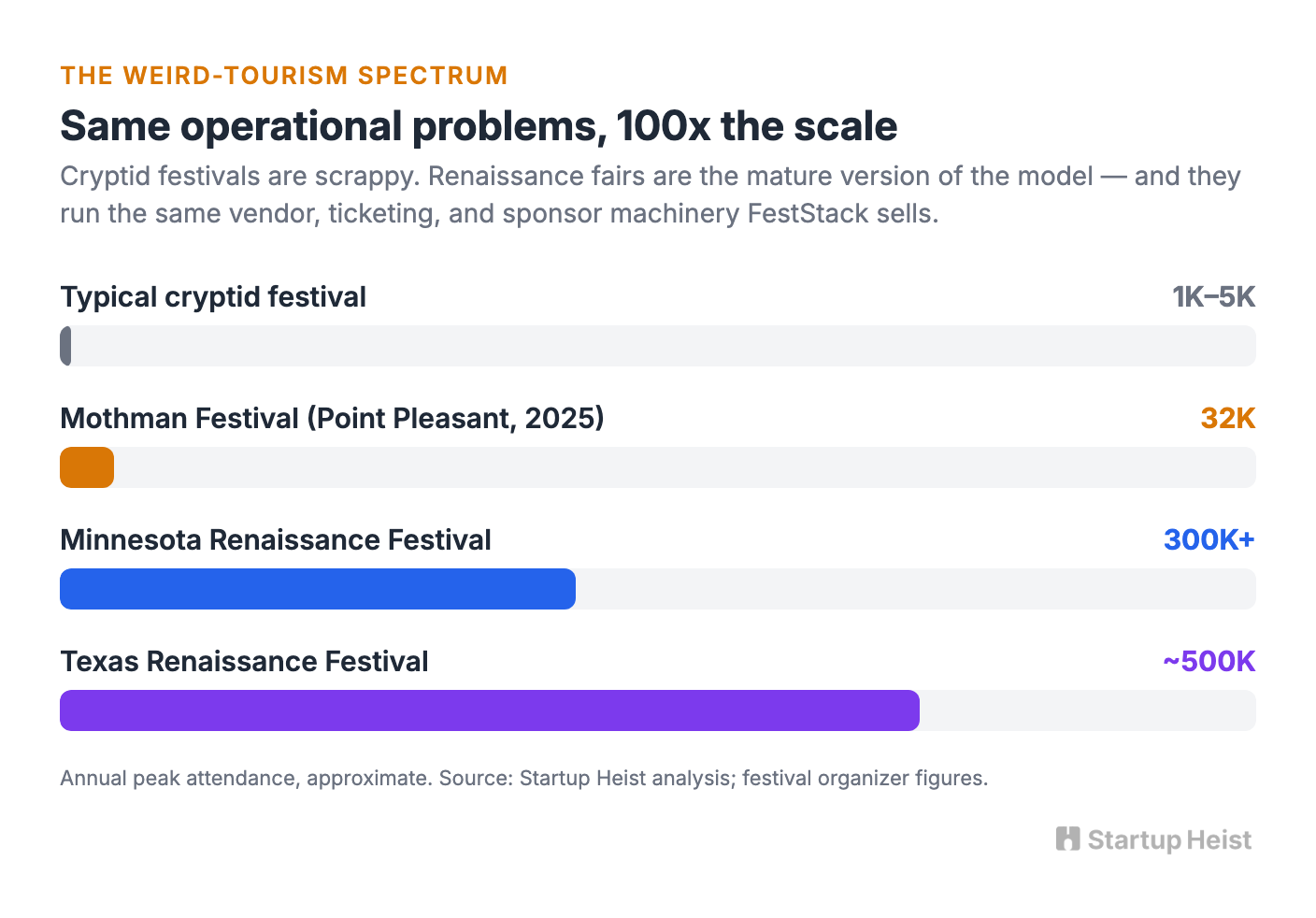
Point Pleasant, West Virginia is the proof. Its Mothman Festival, built on a 1966 winged-creature sighting, drew a record 32,000 visitors in 2025, roughly six times the town's population, with nearly 27,000 on the Saturday alone. The town's biggest asset is a story people will drive five hours to participate in.
Here's the opportunity:
The money: A solo founder can clear $100K to $200K a year on setup fees, ticket and vendor commissions, and seasonal retainers. Point Pleasant's Mothman Festival pulled 32,000 in 2025.
Inside:
• Seven-module MVP scoped for a 90-day build
• Three-tier pricing: setup fee plus commission
• Work-the-circuit GTM, not the ad auction
• Four moats that generic ticketing can't copy
These events don't need Disney infrastructure. They need a legend, vendors, speakers, food trucks, photo ops, a few paid experiences, and enough operational competence to keep the weekend from collapsing into a spreadsheet bonfire.
The obvious idea, "Eventbrite for Bigfoot," is too small and too easy to copy. The better play is a vertical operating stack for cryptid, paranormal, UFO, folklore, and oddity festivals: ticketing, vendor applications, sponsor packages, schedule pages, QR check-in, and hands-on setup for the non-technical people currently running events on Google Forms, PayPal links, and Facebook posts.
Call it FestStack.
It's not a venture-scale software company. It's a high-margin micro-agency wrapped around lightweight software. The cryptid circuit is the wedge. The weird-tourism economy is the market. The opening is simple: these festivals look unserious from the outside, the operational pain is very real, and almost nobody in software is building for the people running them.
The Small-Town Monster Economy
A cryptid solves the hardest problem in tourism, which is giving people a specific reason to go somewhere.
A generic small town has shops, a main street, maybe a trail. Pleasant, forgettable, not worth a motel booking. A town with a monster has a hook. Point Pleasant has Mothman. Marienville, Pennsylvania has the Forest County Bigfoot Festival, a weekend of craft vendors, live music, guest speakers, a 5K, and an organized "Bigfoot Hunt." Pine Bush, New York runs a UFO Fair tied to its paranormal museum, complete with a speaker tent, an alien-themed pageant, and paid lantern tours. Livingston, Illinois held its second Route 66 Bigfoot Festival in 2026. Ohio legislators went further: House Bill 821, introduced April 13, 2026, would name the Loveland Frogman the state's official cryptid, with the local festival cited as part of the economic case.
This is economic development wearing a folklore costume. A legend gives a town a reason for outsiders to visit, for businesses to stay open late, for hotels and restaurants to fill, for local media to run the story, and for attendees to flood social feeds with costumes, merch, and "only in America" content. The story distribution comes built in.
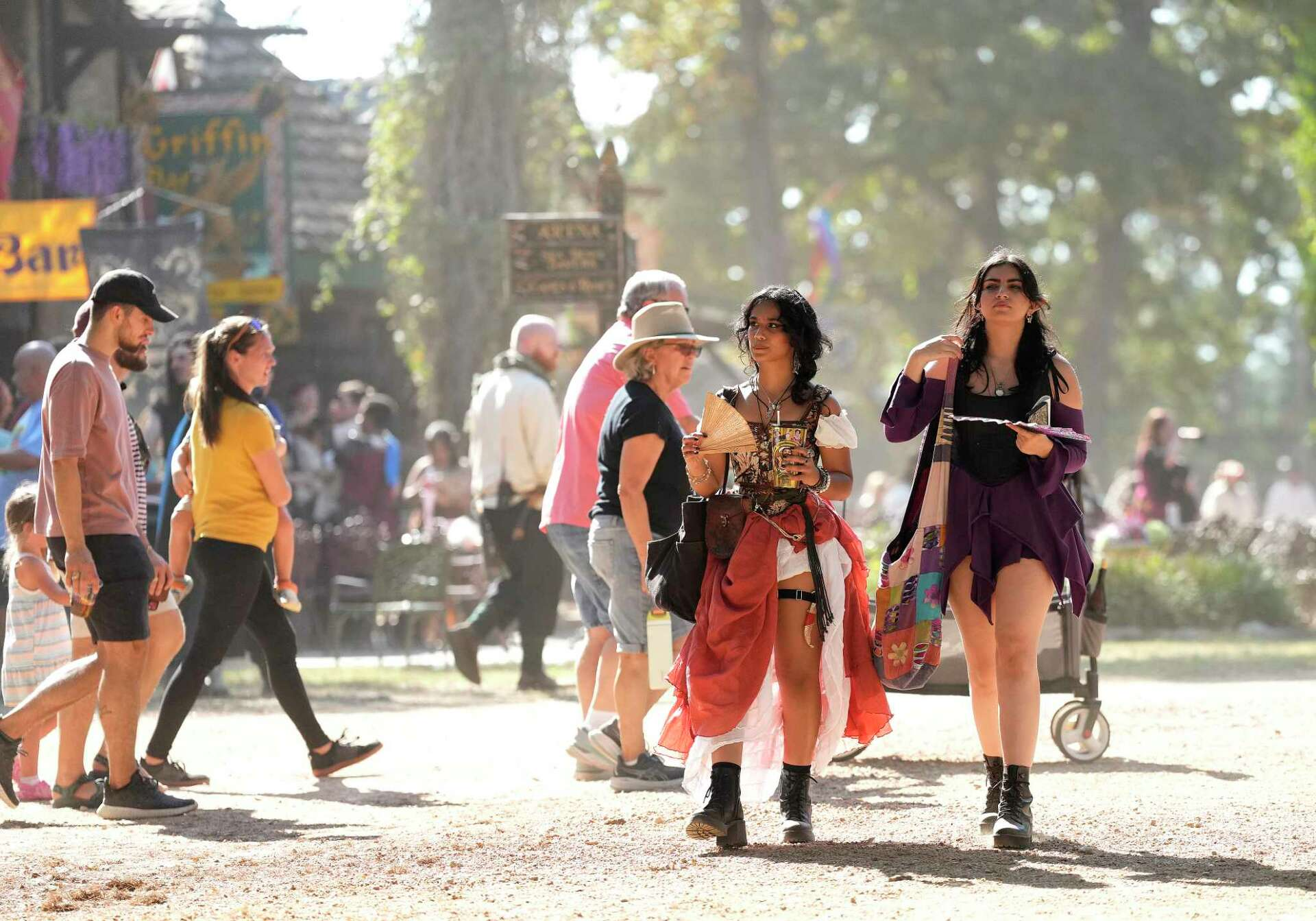
The mature version of this model is the renaissance fair. The Texas Renaissance Festival draws close to half a million visitors a season; the Minnesota Renaissance Festival pulls north of 300,000. Those events run complex vendor, ticketing, sponsorship, parking, and scheduling operations. Cryptid festivals are smaller and scrappier, which is exactly why the software gap stays wide open.
The market is tiny if you count only Bigfoot. It gets interesting when you define the customer as small-town themed tourism events with vendor, ticketing, sponsor, and experience-management problems: cryptid festivals, UFO fairs, paranormal conventions, haunted history tours, folklore weekends, oddity markets, renaissance fairs, and every "weird town" festival in between. A normal SaaS investor laughs at this list. A bootstrapped operator should study it.
Why Generic Ticketing Misses
Ticketing is solved. Eventbrite, TicketLeap, Eventzilla, FestivalPro, and Eventeny all exist. TicketLeap offers branded pages and QR check-in at roughly a dollar plus 2% per paid ticket. Eventeny handles vendor applications, sponsor tools, maps, and ticketing. FestivalPro covers applications, scheduling, contracting, and on-site scanning across hundreds of events worldwide.
So the wedge can't be QR codes. That's a commodity. The wedge is that horizontal event management tools are built for events in general. They can support a folklore festival, but they don't understand one, and they don't sell the way this market buys.
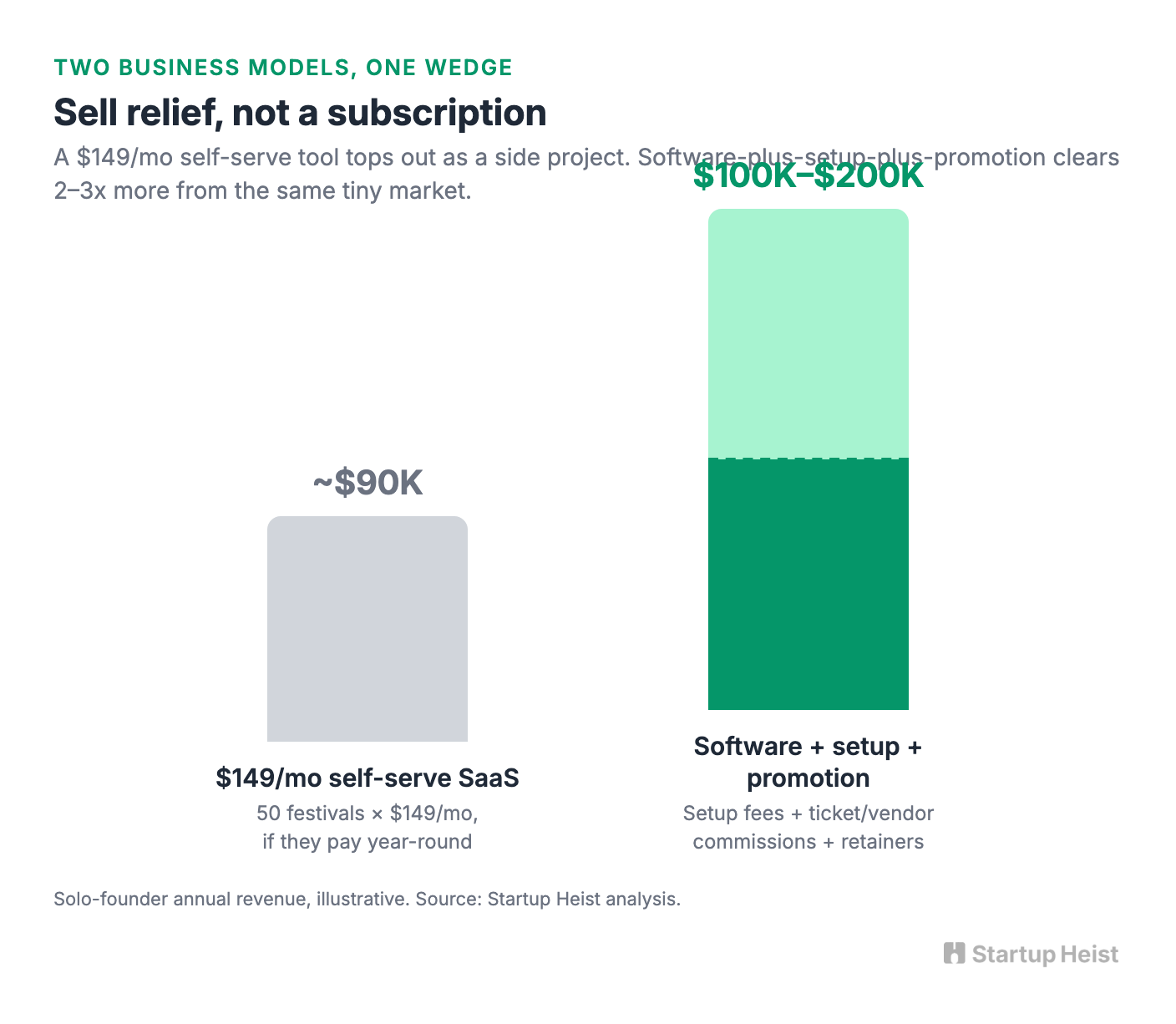
A tiny festival doesn't wake up wanting a configurable event-management platform. It wants to stop losing vendor applications in email. It wants a clean page for the VIP ghost walk. It wants to know who actually paid for booth space, and it wants sponsors to see something that doesn't look like a Facebook post. Most of all, it wants more people to come next year. A generic tool sells infrastructure. FestStack sells outcomes: organized vendors, clean ticket revenue, less volunteer chaos, sponsor packages that close, a page that looks real. The customer isn't buying software. They're buying "please make our weird little festival look legitimate." That's why this can't be $149-a-month self-serve SaaS. Too low, too passive, too easy to ignore. The viable business is software plus setup plus promotion.
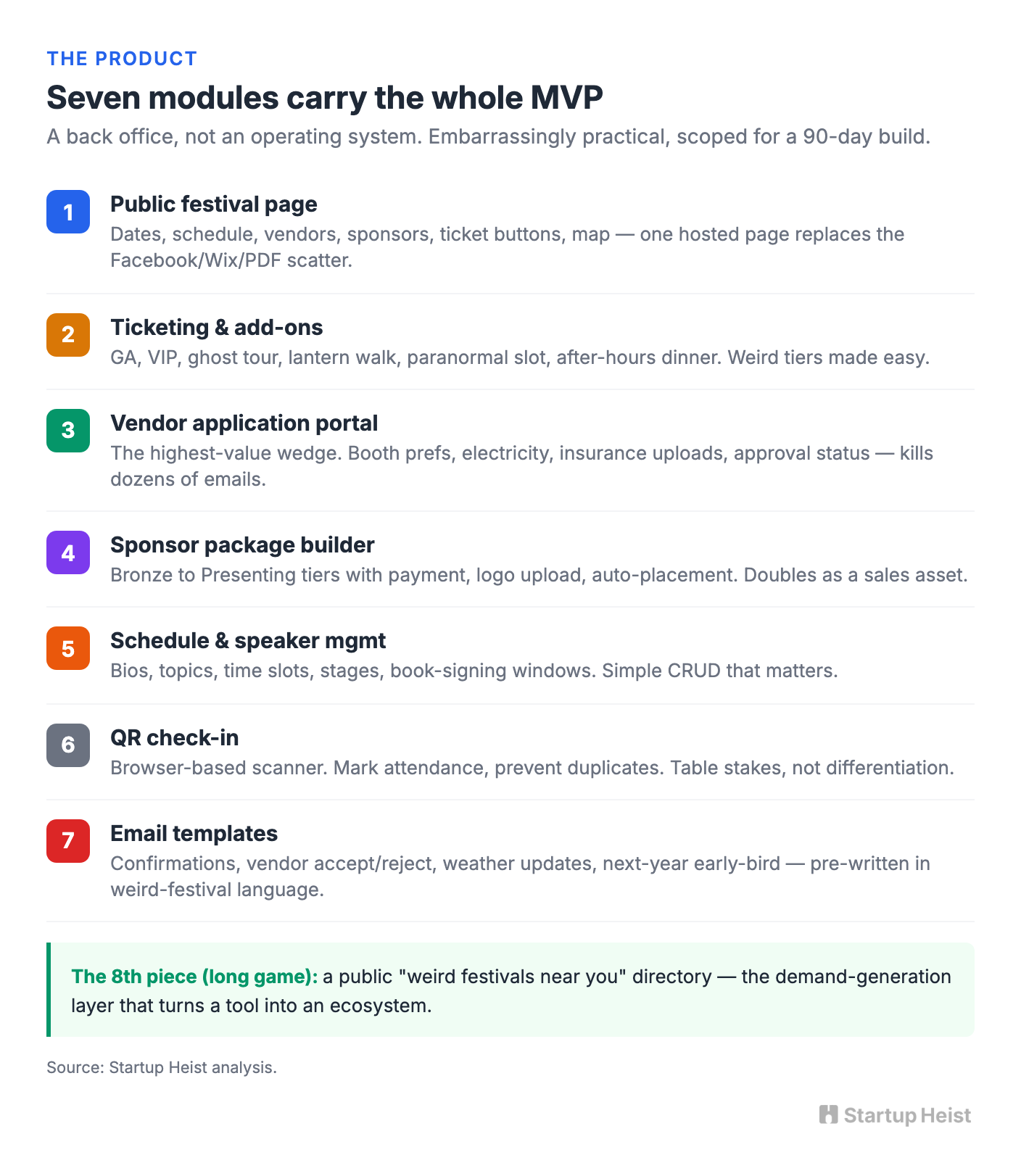
The Product: A Back Office, Not an Operating System
Unlock the Vault.
Join founders who spot opportunities ahead of the crowd. Actionable insights. Zero fluff.
“Intelligent, bold, minus the pretense.”
“Like discovering the cheat codes of the startup world.”
“SH is off-Broadway for founders — weird, sharp, and ahead of the curve.”


