


Every company now has a second reputation layer it doesn't control.
Ask ChatGPT about a mid-market SaaS company's pricing. Ask Perplexity to compare two consulting firms. Ask Claude whether a fintech startup is legitimate. The answers come fast, sound authoritative, and are frequently wrong. Outdated pricing. Confused brand identities. Invented controversies. Competitors credited with your features. The prospect never visits your website to fact-check. They just move on.
Ten clients on a $2,000/month retainer — roughly 15–20 hours of work per client once your systems are running — puts you at $240K ARR.
The entry point is a one-time audit at $1,500–$3,000 that practically sells itself, because you can show the prospect their problem before they know it exists.
ChatGPT has over 800 million weekly active users. Google's AI Overviews appear in more than half of all searches. Adobe reports that AI-driven traffic to retail sites surged by triple- to quadruple-digit percentages year-over-year during 2024–2025, with higher conversion rates for AI-originated visitors compared to traditional channels. By year-end, analysts project roughly 25% of traditional search queries will migrate entirely to AI-powered platforms. The industry calls this category Generative Engine Optimization (GEO) or Answer Engine Optimization (AEO), and the GEO services market hit $886 million in 2024 with a projected $7.3 billion by 2031 — a 34% CAGR.
Venture capital already validated the space. Profound, an 18-month-old AI visibility startup, closed a $96 million Series C at a $1 billion valuation in February 2026, led by Lightspeed with Sequoia and Kleiner Perkins participating. It serves hundreds of enterprises including a meaningful slice of the Fortune 500. Evertune, another GEO platform, processes over a million AI-generated responses per brand monthly. The AEO category went from 7 products to over 150 in just 10 months.
That's all enterprise. Dashboards. Analytics. Share-of-voice metrics. Seven-figure contracts.
A 40-person e-commerce brand or a regional B2B SaaS company doesn't have an AI visibility team. They need someone to tell them what AI is saying, flag what's wrong, fix it, and keep watching. Surveys of marketers and digital leaders show widespread awareness of AI optimization as important but low rates of active implementation — the majority are still planning or haven't started. The awareness gap is the wedge.
The Opportunity: AI Truth Ops
Skip the "defamation bounty hunting" framing. In Walters v. OpenAI, the first U.S. defamation case against an AI company, a Georgia court granted summary judgment for OpenAI. The ruling emphasized that OpenAI demonstrated no negligence because it actively works to reduce hallucinations and warn users, and the plaintiff admitted he suffered zero actual damages. Courts are still sorting out AI liability, and legal commentators read Walters as making defamation-based claims against LLM providers hard to win in the near term. The "defamation" angle spooks clients and creates unpredictable revenue.
The business framing is cleaner. Call it AI Truth Ops: a productized service (and eventually a lightweight platform) that continuously measures what AI says about a company, flags business-critical inaccuracies, and executes a repeatable correction playbook. This is a B2B service business idea built around revenue-protecting accuracy, not adversarial legal claims against model providers. The pitch to a VP of Marketing: If ChatGPT misstates your pricing, confuses you with a competitor, or invents a controversy, you lose pipeline silently and only discover it when the quarter is already over.
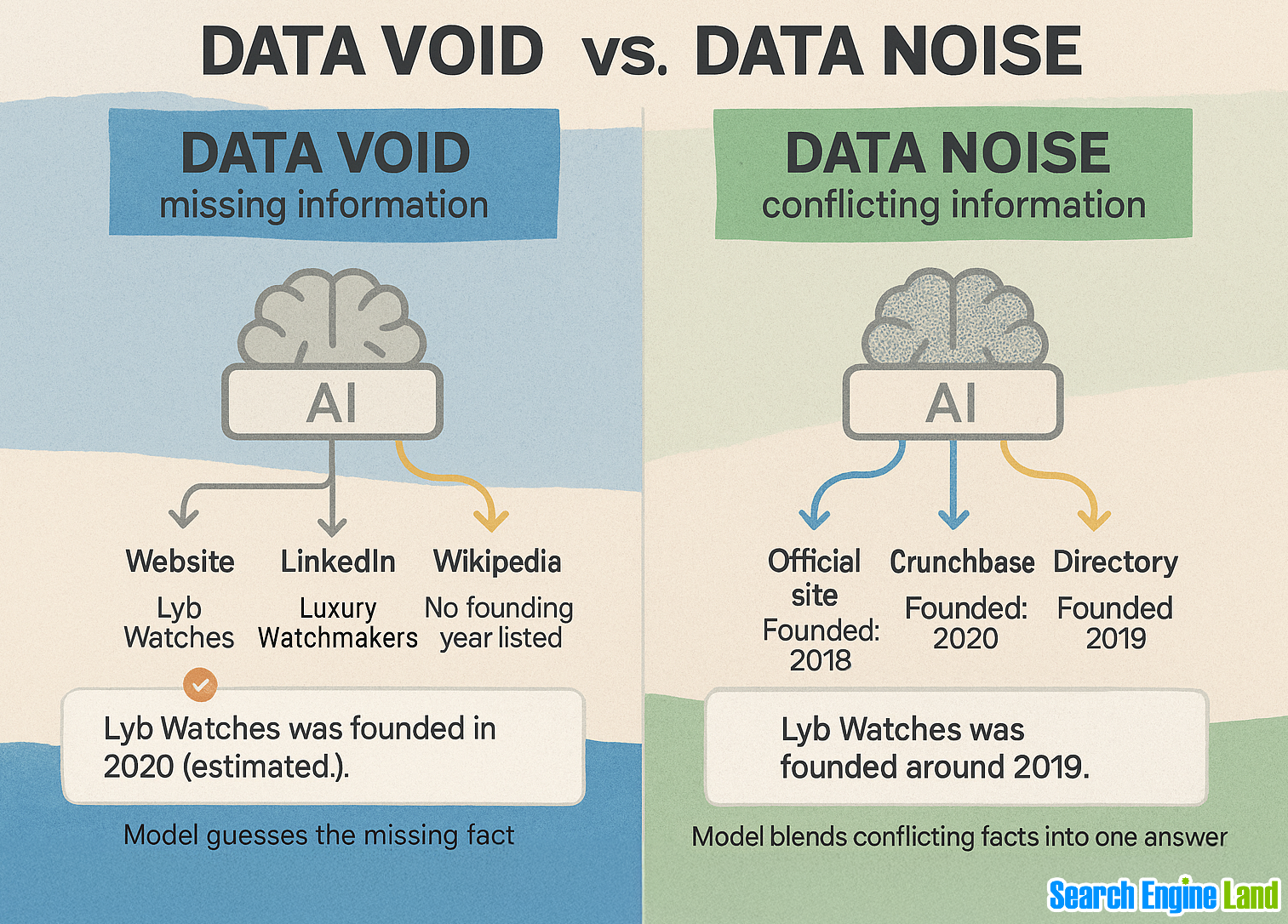
The highest-frequency failure mode isn't "AI says your CEO committed fraud." It's mundane and invisible:
Unlock the Vault.
Join founders who spot opportunities ahead of the crowd. Actionable insights. Zero fluff.
“Intelligent, bold, minus the pretense.”
“Like discovering the cheat codes of the startup world.”
“SH is off-Broadway for founders — weird, sharp, and ahead of the curve.”


