


Think retail analytics SaaS meets omnichannel attribution, sold to mid-market brands with 5–50 locations.
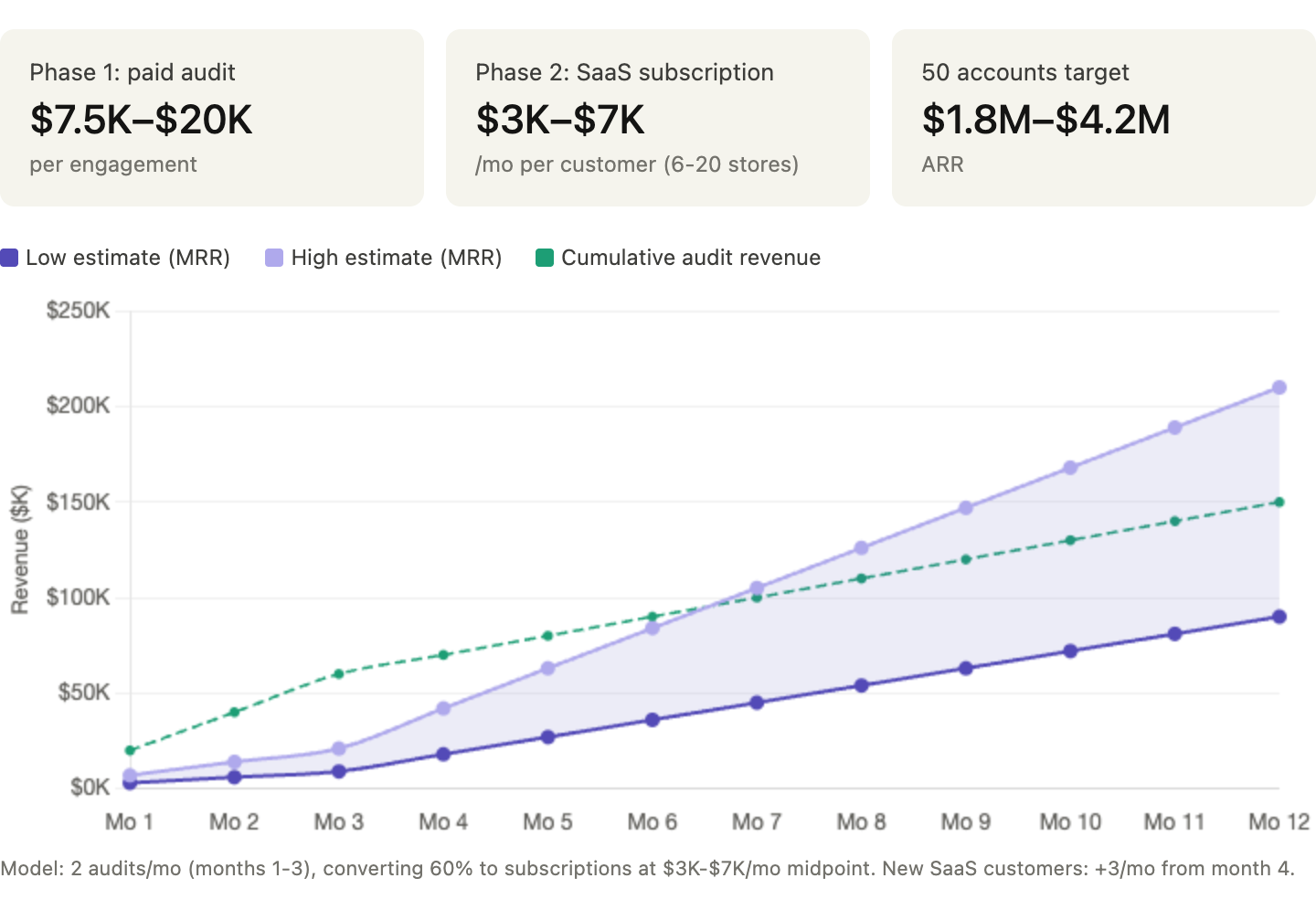
Start with paid audits ($7,500–$20K each), convert to software subscriptions ($3K–$7K/mo per customer), and build proprietary visit-to-value benchmarks by vertical that no competitor can replicate. One of the sharper B2B SaaS ideas in retail tech right now — and almost nobody is building it.
A shopper walks into a furniture showroom on Saturday, sits on a couch, checks the dimensions on her phone, texts her partner a photo, leaves without buying, and completes the purchase from her laptop that night. The store did the hard work. The ecommerce dashboard gets the credit. And the CFO starts asking why the lease is worth renewing.
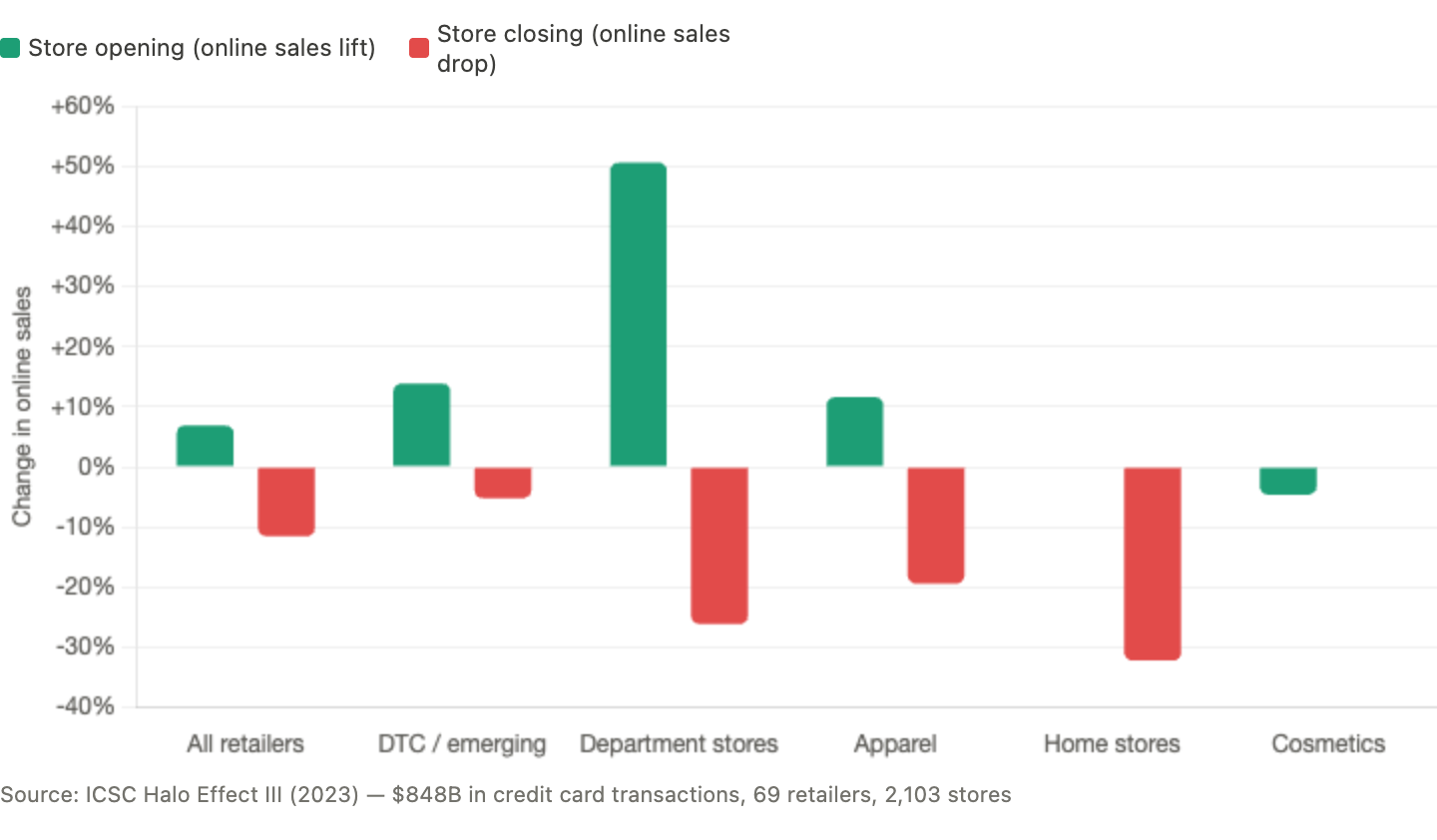
This isn't anecdotal. ICSC's Halo Effect III study analyzed $848 billion in credit card transactions across 69 retailers and 2,103 stores. Opening a physical store lifts online sales in the surrounding area by 6.9%. For DTC brands, 13.9%. Close that same store and online sales drop 11.5%. Department stores that shutter a location see total spending collapse by nearly 49%.
Gen Z shops in-store at rates comparable to Boomers — phones in hand, price-comparing on the floor, buying online later. PwC found that 70% of Gen Z prioritize mobile payments in-store and 68% say a store's app matters to their shopping decision. Manhattan Associates puts a finer point on it: 21% of online purchases are significantly influenced by in-store associate interactions. Harvard Business Review's study of 46,000 shoppers confirmed the broader pattern. Omnichannel shoppers deliver 30% higher lifetime value than single-channel shoppers, and the more channels they touch, the more they spend.
The store is a conversion accelerator. The measurement stack still treats it like a cash register. That gap is the opportunity — and it starts generating revenue fast.
Fifty accounts at that range puts you at $1.8M–$4.2M ARR. Zero hardware, zero surveillance tech, zero enterprise sales cycles.
The Obvious Feature Already Exists
Before you rush to build "showroom attribution SaaS," know what already ships.
Shopify now offers email carts inside Shopify POS. A store associate builds a cart for a browsing customer, emails the checkout link, and if that customer completes the purchase later online, the sale is attributed back to the store and the specific associate. Available on POS Pro.
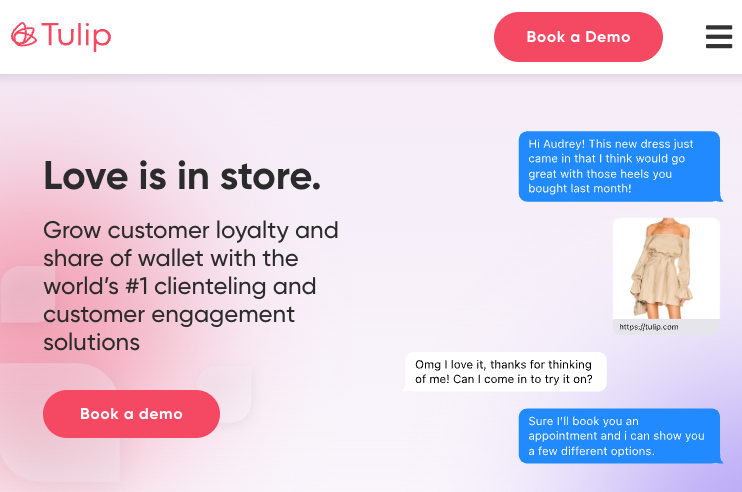
Tulip, the largest cloud-based clienteling platform serving David Yurman, Versace, and Saks Fifth Avenue, released its 2025 Benchmark Report showing clienteling-influenced sales earn 194% higher average order values and drive 63% more monthly spend per customer. Clienteling communications convert at 11%, more than five times the rate of corporate marketing campaigns.
Salesfloor pitches web sales attributed back to stores and associates through digital storefronts. NewStore offers remote-cart workflows that let associates continue the sale after a customer leaves.
So what's left to build? Everything these tools don't do.
Where the Real Gap Lives
Shopify email carts solve a transaction recovery problem. Tulip and Salesfloor solve associate productivity. None of them own the financial intelligence layer — especially for mid-market brands.
No existing product answers the question that decides leases, staffing, events, and expansion budgets: If we closed this store, how much future online revenue and lifetime value would disappear?
ICSC's data proves the halo is real at the category level, but stops there. Nobody operationalizes it into brand-level, store-level decision software. McKinsey's commerce media research confirms the same gap from the demand side: brands and advertisers explicitly want verified purchase behavior linking online and offline journeys, and only a tiny fraction of players actually measure incrementality well.
That question doesn't live in store ops. It lives in finance. Answering it is how you end up in the boardroom instead of the IT budget.
The Opportunity: Store Influence OS
Don't sell "showroom attribution." It sounds like a feature and invites immediate comparison to Shopify POS, CDP tools, and clienteling vendors.
Sell a Store Influence OS: a system that turns physical retail from a blunt cost center into a measurable demand channel. This is a retail SaaS business idea built around a question nobody else is answering with software.
The core product answers four questions:
Unlock the Vault.
Join founders who spot opportunities ahead of the crowd. Actionable insights. Zero fluff.
“Intelligent, bold, minus the pretense.”
“Like discovering the cheat codes of the startup world.”
“SH is off-Broadway for founders — weird, sharp, and ahead of the curve.”


