


The Foreign Treasure Hunt: Build the Arbitrage Radar for Japanese Collectibles
The internet made it easy to collect almost anything. It did not make everything equally visible.
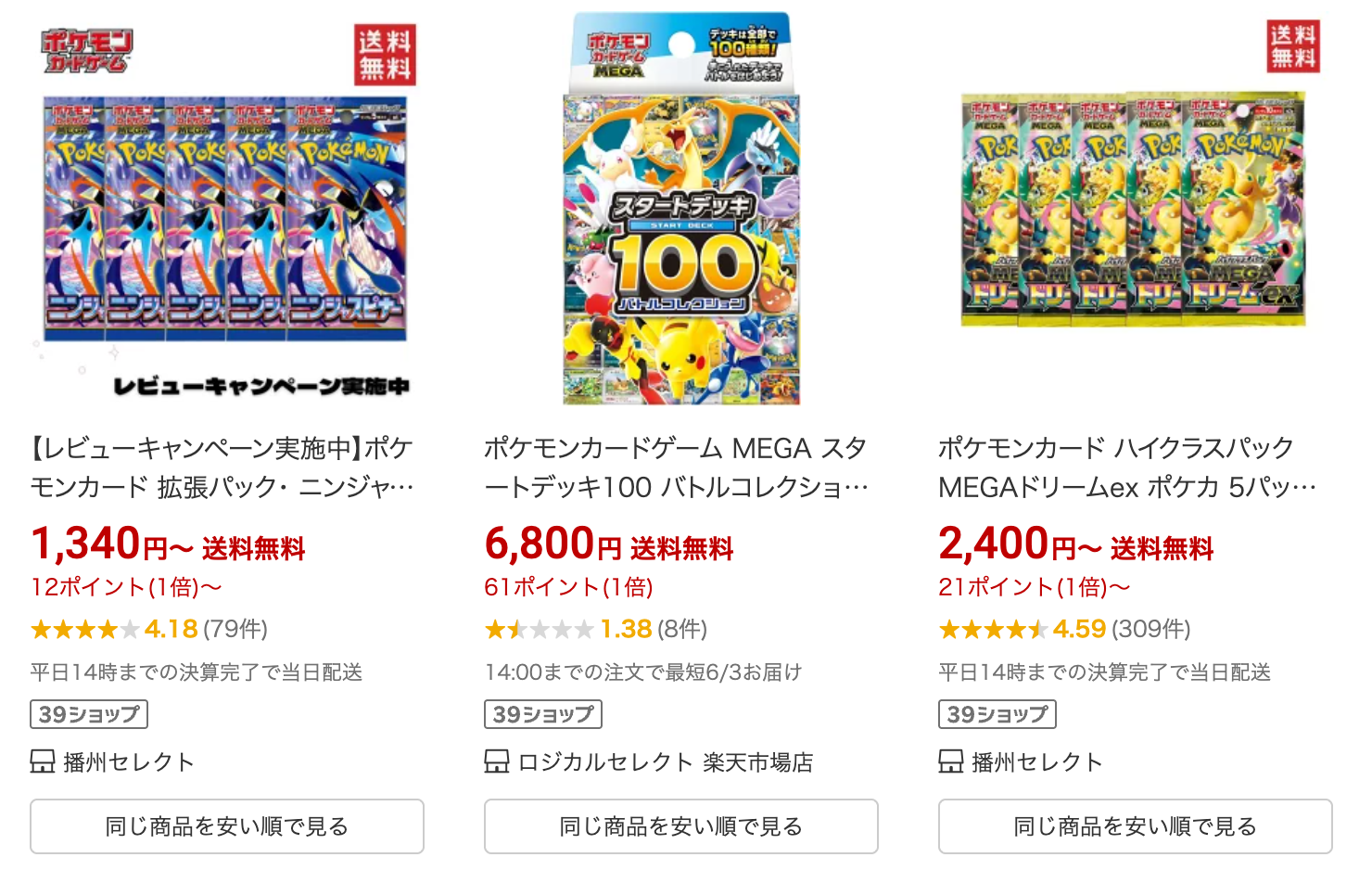
A rare Japanese Pokémon promo card can sit on Mercari Japan with a clumsy machine-translated title while an American buyer pays far more for the same card on eBay. A store-exclusive figure can appear on Yahoo! Auctions Japan at a price that looks ordinary to a Tokyo seller and unusually cheap to a Whatnot streamer hunting for fresh inventory. A foreign comic edition can stay invisible outside its home market until a handful of collectors decide it matters.
The opportunity here isn't another marketplace. It's the intelligence layer between markets: a focused cross-border arbitrage scanner that watches foreign listings, finds genuine price gaps, translates them, estimates the full landed cost, and tells serious resellers when a spread is wide enough to act.
Here's the opportunity:
The money: 100 serious resellers at ~$72/month is roughly $7,200 MRR; 200 to 300 mixed and store accounts pushes toward $16K to $28K MRR.
Inside:
• Eight-week MVP for one card subcategory
• Landed-cost math after the 2025 tariff shock
• Four-tier pricing from free to $249 store
• Five compounding moats past the scraper
The broad version of this idea is a trap. "Scan every collectible on every marketplace" becomes an endless scraping project with bad matching and no obvious customer. The sharp version works because it starts narrow: one niche where the identifiers are structured, the resale demand is real, and foreign-market fragmentation creates persistent blind spots.
This is not a venture-scale business on day one. It's a focused paid tool that could realistically clear $5,000 to $20,000 in monthly recurring revenue with a small technical team. But there's a credible path to something more durable, because the product quietly accumulates pricing history, category expertise, and logistics data no price guide has.
So the move is simple. Don't sell collectibles. Sell the radar.
The Market Is Large. The Visibility Is Uneven.
Collectibles are no longer a fringe corner of e-commerce. eBay's year-end report on 2025 named Labubu blind boxes the breakout story of the year, with search volume up roughly 2,600%, alongside continued strength in Pokémon, sports rookie cards, and sealed product. The company reads its own marketplace data like a weather map for global collecting culture.
The category got more important in 2026, not less. eBay posted $22.2 billion in gross merchandise volume in the first quarter, up 18% year over year, and called out trading cards, toys, action figures, and fashion as growth engines. Goldin, the auction house eBay owns, hit an all-time quarterly high in the same period and brokered the $16.5 million sale of a PSA 10 Pikachu Illustrator card. The ceiling on this market is now measured in eight figures, which means the destination already has the liquidity arbitrage needs. You don't have to convince Americans to care about collectibles. You have to help professional buyers find inventory before everyone else does.

A mass-market toy released worldwide is easy to price. A Japanese-store-exclusive figure, a foreign-language comic variant, an event-only promo card, or a discontinued regional game is not. Supply scatters across domestic platforms. Titles get written inconsistently. Sellers skip the English keywords American buyers search. Shipping friction scares off casual shoppers. Price guides miss the exact variant. That combination is an information gap, and the product only has to do one thing with it: find the same item priced two different ways in two different markets.
Japan Is the Best Place to Start
The first version shouldn't scan the world. It should scan Japan.
Japan has deep collectible supply, strong domestic resale platforms, pop-culture exports the whole world recognizes, and mature proxy-buying infrastructure that makes international purchasing possible without building a logistics company. Buyee, the only official partner of Mercari Japan, already serves over a million users across more than 100 countries: paste a listing link, it buys on your behalf, consolidates packages, and ships overseas. Mercari itself now runs a proxy-purchase flow for buyers in the United States, Hong Kong, and Taiwan.
So the startup doesn't have to solve every operational problem. It can begin as a decision-support layer that hands the user off to a purchasing workflow that already exists.
The best opening category isn't "Japanese collectibles." It's narrower:
Japanese Pokémon promo cards and selected Japanese TCG variants with consistent identifiers, recent US sold comps, and an expected resale value above roughly $75.
That wedge beats the alternatives, and the reasons stack up. The arbitrage isn't that Japanese cards are cheaper as a class. Hyped Japanese Special Art Rares often match or exceed their English counterparts. The real gaps live in the inventory most buyers overlook: lesser-known Japanese promos, older stock that never got an English keyword, event-distributed cards, and category-specific pricing quirks the US market hasn't caught up to. Demand is proven anyway. Sets like Prismatic Evolutions pushed raw Umbreon ex into four-figure territory at the peak, and it still trades around $1,000. Cards are easy to match, because a card number, set code, rarity, year, and image pin down identity far better than a translated paragraph. Cards are small, so a 40% spread doesn't evaporate in shipping the way it does on a bulky figure. And card sellers already think in margins, velocity, and grading, so you skip the work of teaching them what arbitrage is.
The second niche can wait: a few Japanese action-figure lines with strong identifiers and real resale volume. Foreign comics are tempting but harder, because condition, edition, cover variant, language, and grading are difficult to reconcile automatically.
The Customs Shock Made the Calculator Valuable
This idea got more interesting on August 29, 2025.
Before that date, most low-value imports entered the United States duty-free under the de minimis exemption for shipments worth $800 or less. Executive Order 14324 suspended that treatment for every country, effective August 29, 2025. Postal shipments got a temporary grace period in which carriers could choose their duty-collection method; starting February 28, 2026, US Customs and Border Protection required the ad valorem method exclusively. More than 30 national postal services briefly suspended packages to the United States while they scrambled to adapt, with only letters and small gift parcels under $100 flowing freely.
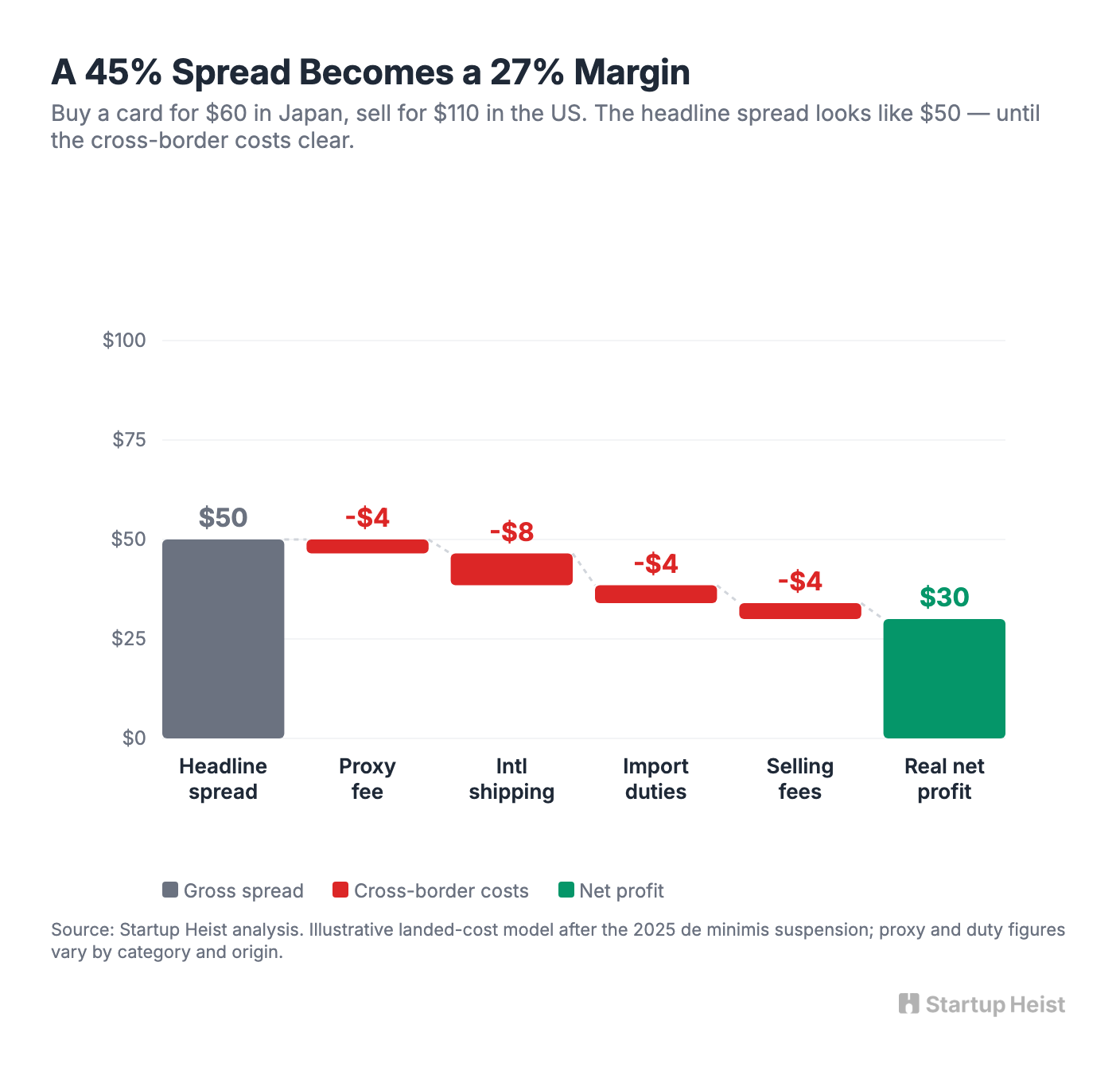
That's bad news for naive arbitrage and good news for a tool that understands landed cost. The old mental model was simple: buy for $60 in Japan, sell for $110 in the States, pocket the spread. The real math now stacks domestic shipping to the proxy warehouse, the proxy fee, international shipping, insurance, duties by origin and classification, payment friction, marketplace selling fees, and a reserve for returns or condition disputes.
The numbers are no longer abstract. Buyee raised its proxy fee to ¥500 per order in April 2026 and now folds duties directly into checkout through a delivered-duty-paid model, with category-specific tariff rates applied to the item's invoice value. It briefly used a flat rate near 15.5% before moving to per-category rates on April 21, 2026. A card that looks 50% cheaper than its US comp often lands closer to 30% cheaper once the fees clear. The scanner shouldn't celebrate a $50 headline spread when the expected net profit is $9. Most collectors can run a search. Far fewer can model the true post-2025 economics of dozens of purchases at once. The product answers the only question that matters: is this still worth buying after everything?
What the Existing Tools Miss
Online arbitrage software is a mature category. Tactical Arbitrage, SellerAmp, and Keepa already help Amazon sellers scan catalogs, compare prices, and estimate margins. The pattern is proven: collect listings, normalize identity, compare against a destination price, surface the profit.
But Amazon tooling is built for commodity products with clean barcodes. Collectibles are messy. A Japanese listing may omit the English set name. One photo may hold several cards. Condition language is vague. A limited promo looks almost identical to a mass-market reprint. Match the wrong variant once and you turn a profitable alert into a reputational disaster.
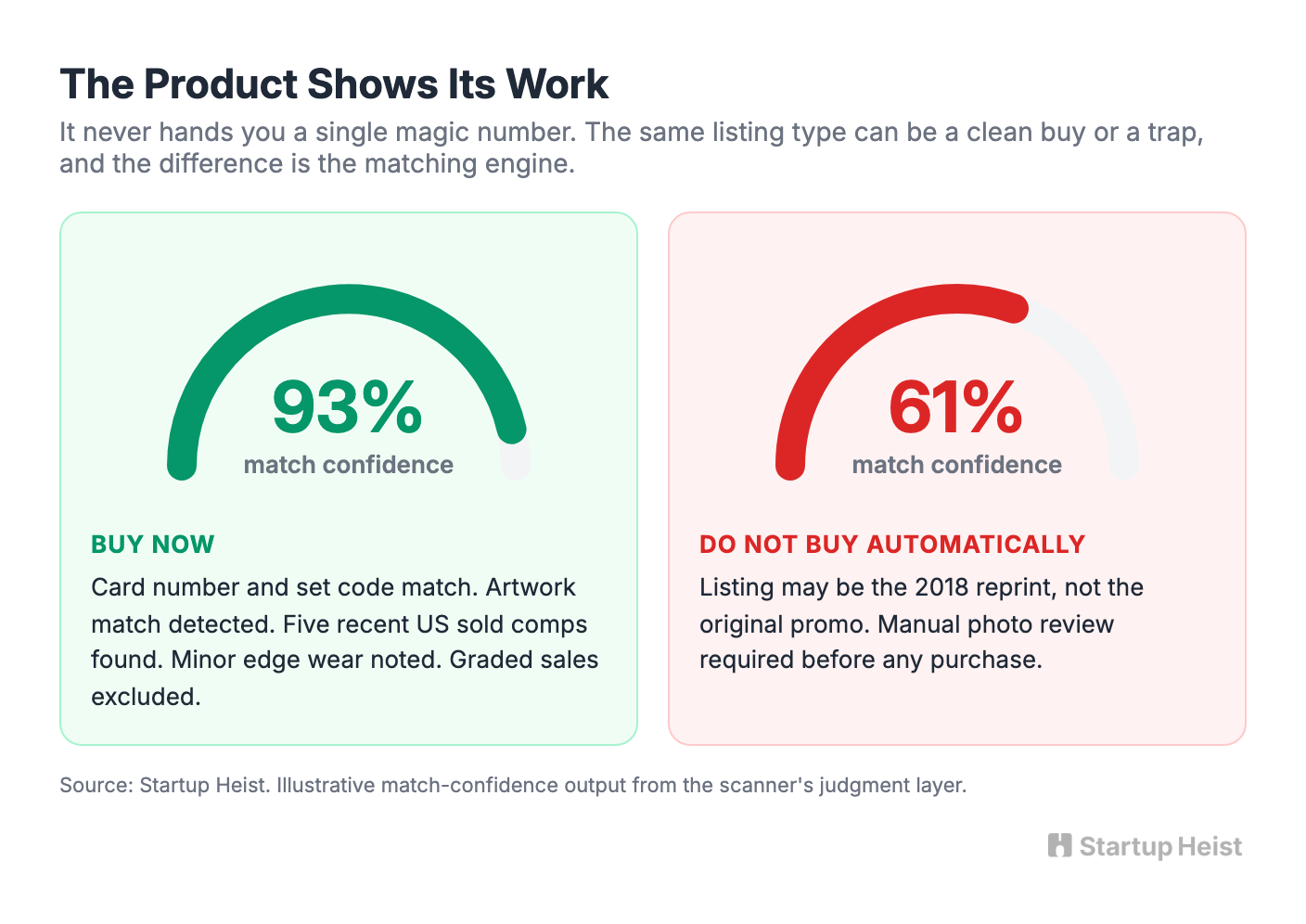
The destination data needs care too. eBay's Browse API searches active listings by keyword, category, product ID, and GTIN, but it isn't a public sold-comps endpoint. Sold-price data sits behind the Marketplace Insights API, which eBay restricts to approved partners like Terapeak; ordinary developers get pointed at Seller Hub's research tools instead. That doesn't kill the idea. It changes the MVP. Don't promise market-wide omniscience. Build a curated scanner for categories where identity can be resolved with confidence, lean on licensed data and permitted integrations and user-supplied search URLs where needed, and treat scraping as a dependency, not a moat. The real product is the judgment layer: which comps to trust, how liquid the market is, what the landed cost really is, how confident the match is, and how fast the user has to move.
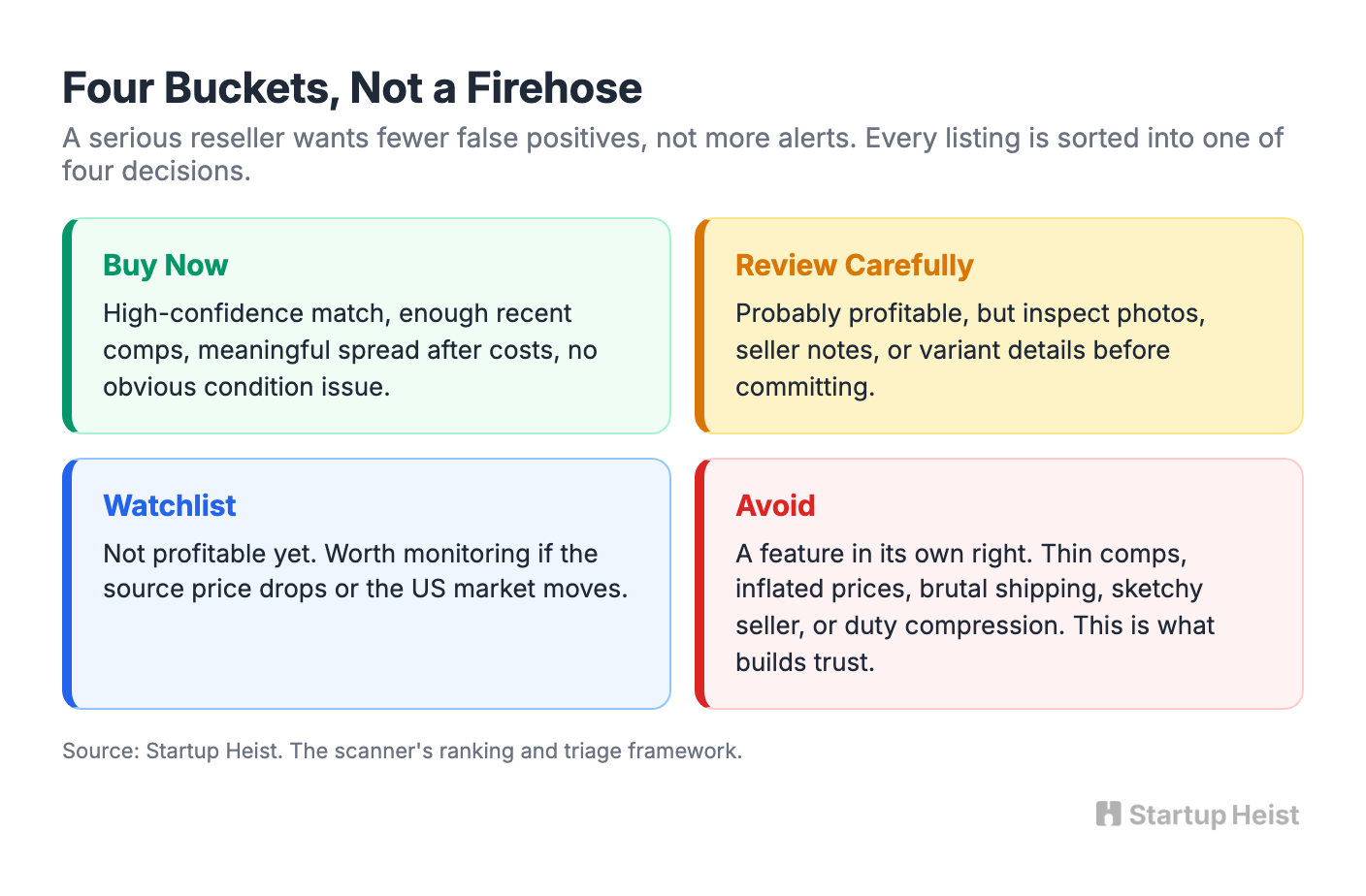
The Product: A Duty-Aware Collectibles Scout
Unlock the Vault.
Join founders who spot opportunities ahead of the crowd. Actionable insights. Zero fluff.
“Intelligent, bold, minus the pretense.”
“Like discovering the cheat codes of the startup world.”
“SH is off-Broadway for founders — weird, sharp, and ahead of the curve.”


